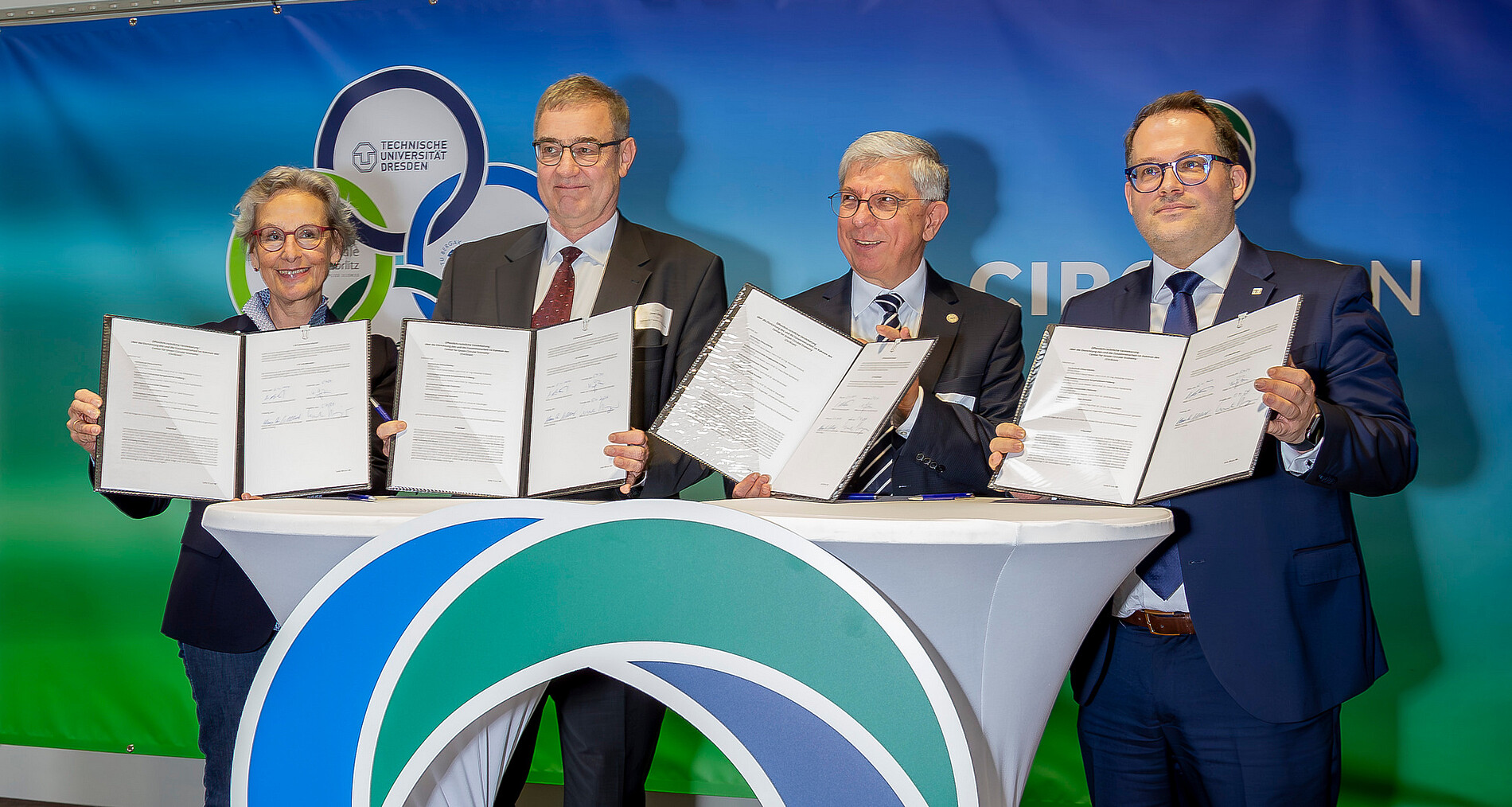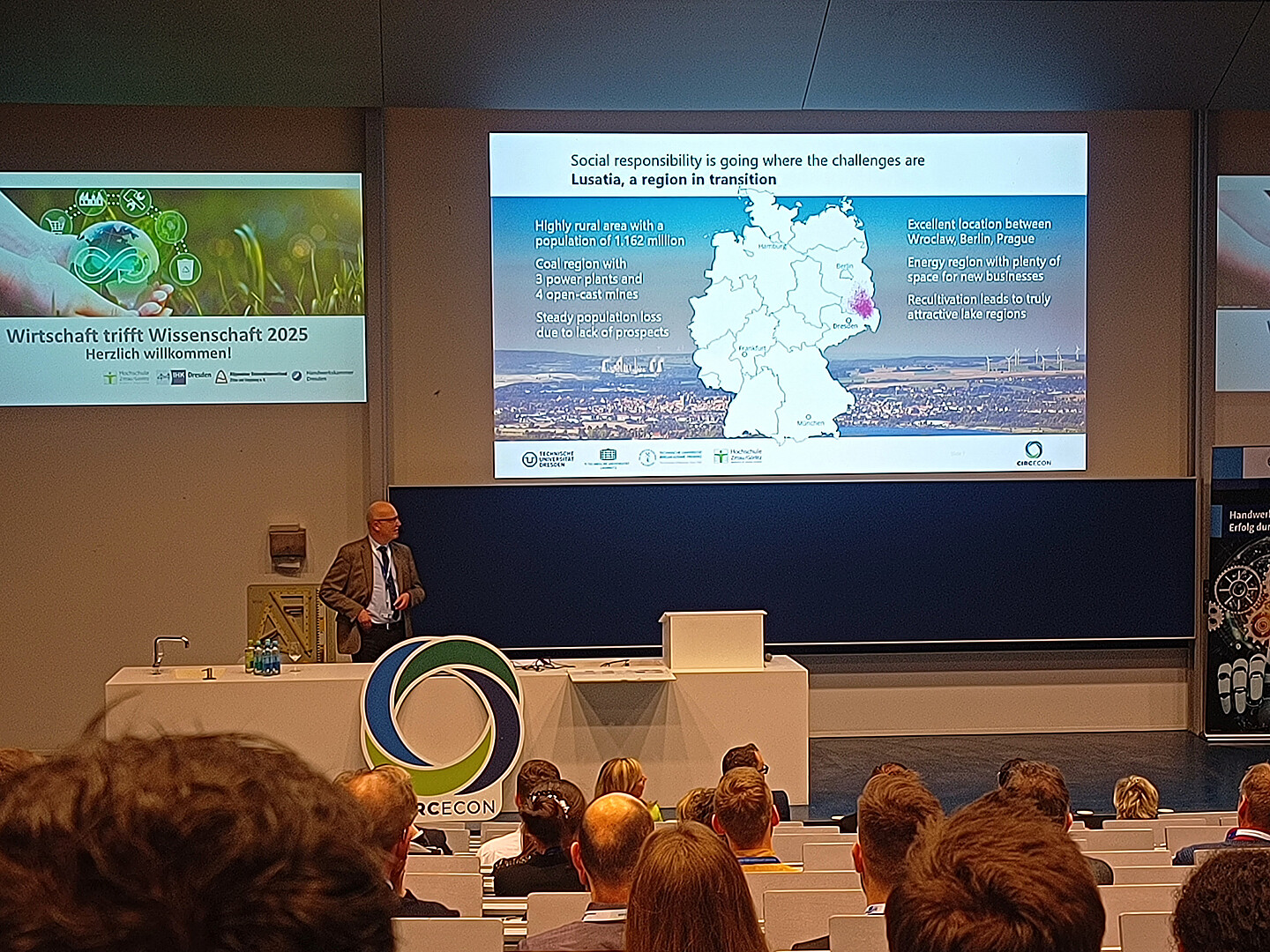
CircEcon is making the circular economy ready for industrial application: Four universities in Saxony are pooling their expertise on the circular economy at the Schwarze Pumpe industrial site. A center for recycling difficult-to-recycle composite materials is being established here in Lausitz.
We know it’s essential to keep raw materials in circulation so they can be reused multiple times. But putting this into practice keeps presenting us with challenges—for example, reusing composite materials made of metals, plastics, and fiber fabrics.
How can we make our sensor systems for sorting waste streams better adapted to the new materials of the future? What disassembly steps are necessary to dismantle cars, refrigerators, and washing machines—ideally fully automatically—and recover functional replacement parts? What processes can help us reuse the carbon bound in waste residues during their thermal recovery? Can recycled plastics be processed in a standard machine? Scientists from Chemnitz, Freiberg, Dresden, Zittau, and Görlitz, along with regional companies and experts, will soon be working together to find answers to these questions at the CircEcon site, the Schwarze Pumpe Industrial Park.
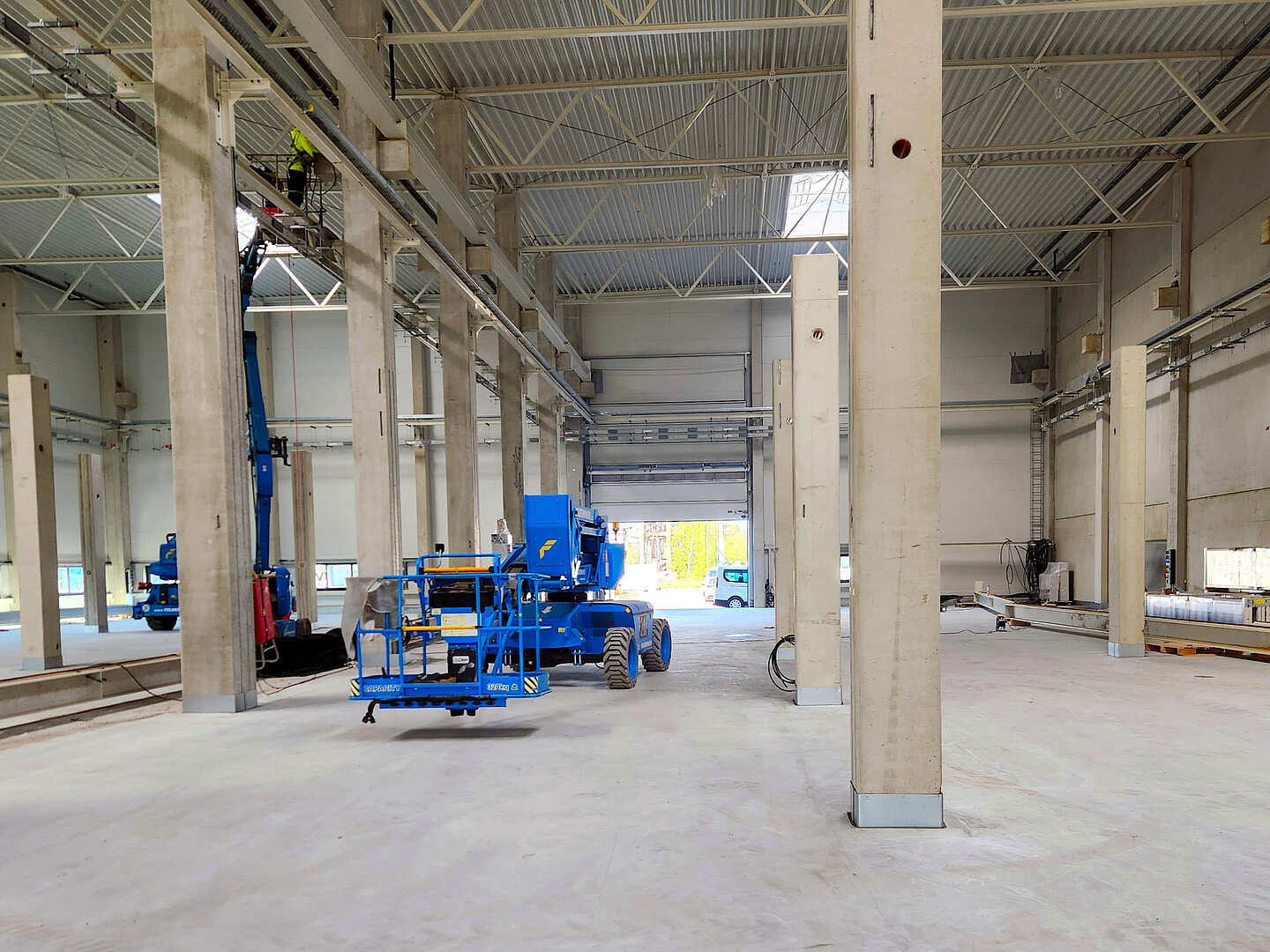
At CircEcon, researchers and users will be able to replicate the entire life cycle of composite materials, plastics, and aluminum at a single location and, using modern data management, record performance metrics such as energy consumption or the use of resources and personnel. Newly developed plant components can be tested and optimized in an industry-like environment without causing production downtime.
CircEcon offers modern workspaces for engineers and scientists who want to make a difference through the circular economy.
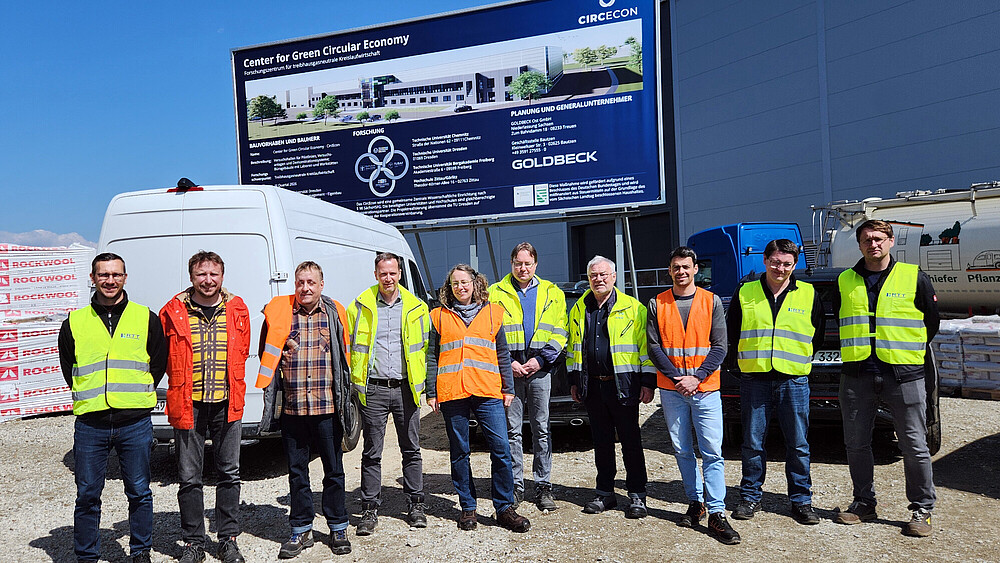
CircEcon, with its team spread across four locations, demonstrates that collaboration focused on the circular economy—with the goal of establishing a joint scientific institution—is possible. At HSZG, the core team—comprising scientists, project managers, administrative staff from various departments, and project leadership—works closely together to establish a “research factory of the future” for the region at the Schwarze Pumpe site in Lausitz.
”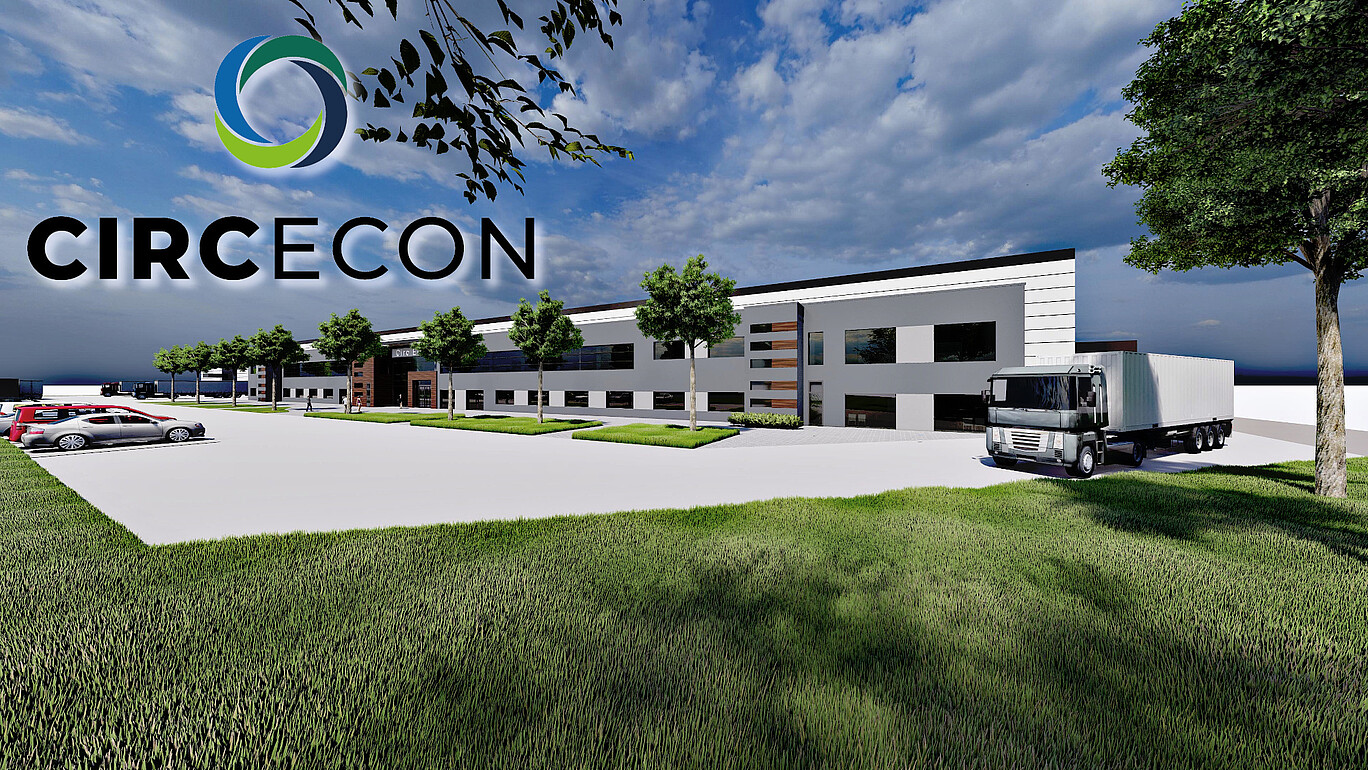
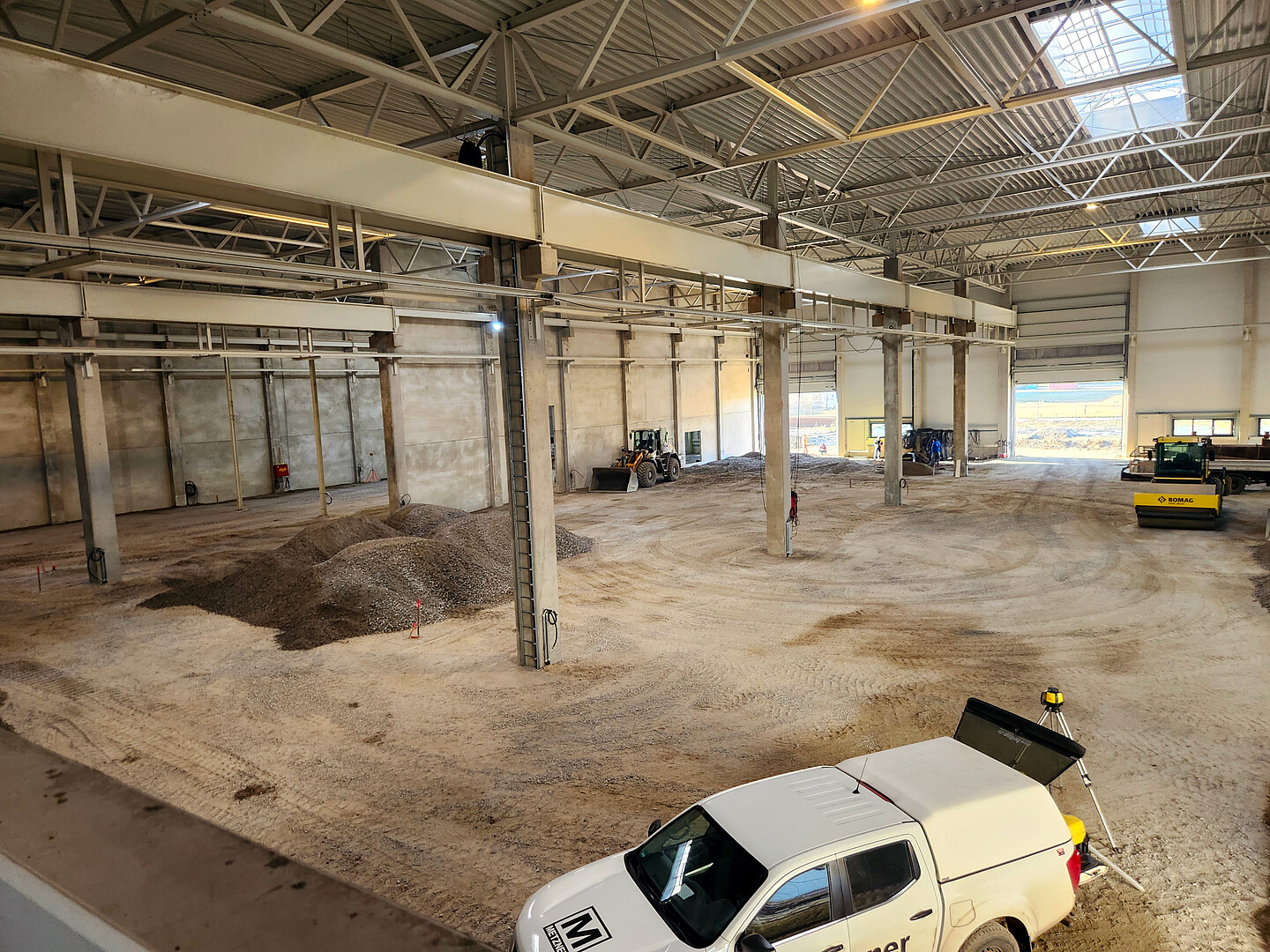
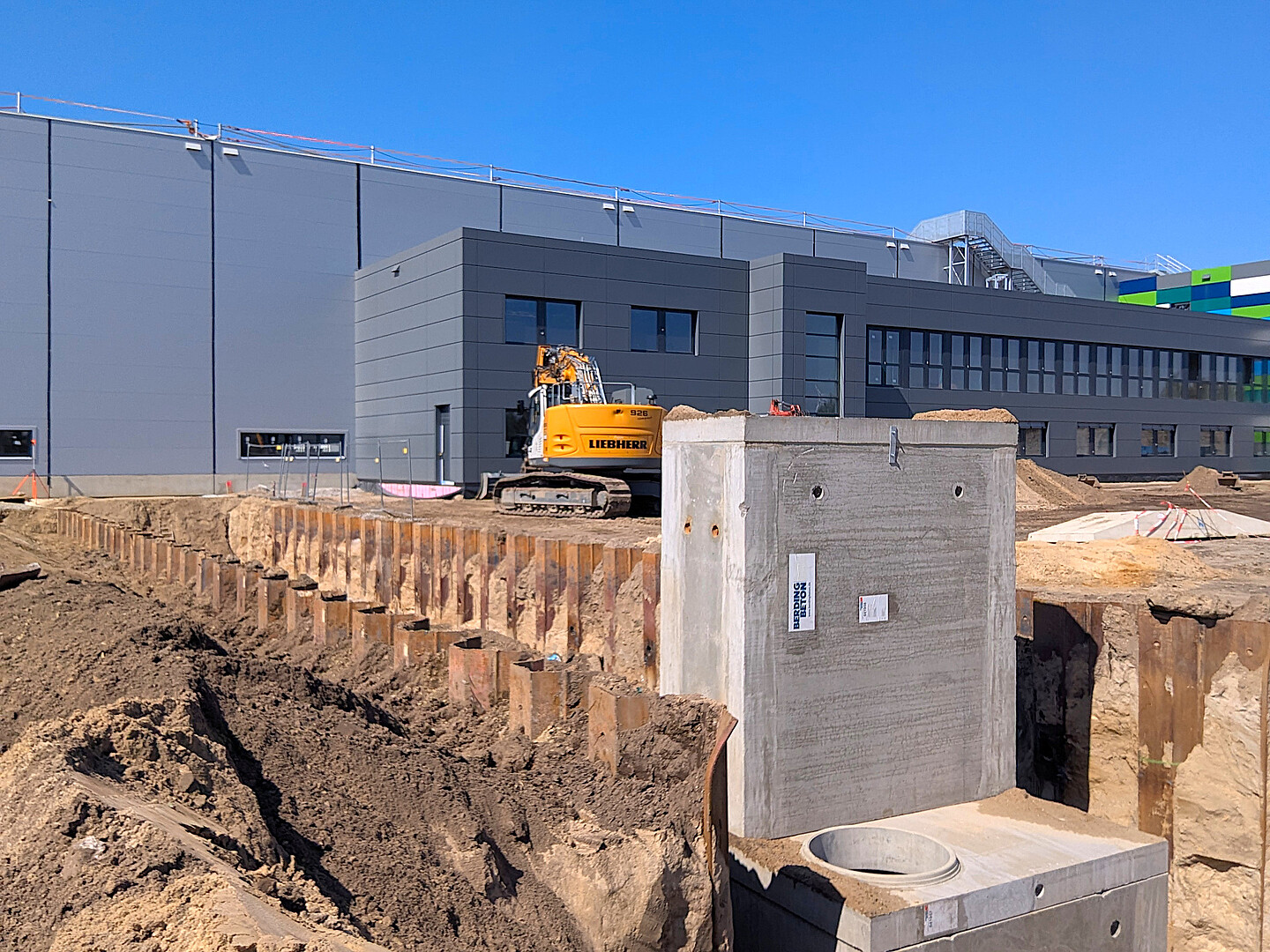
At the construction site, the structures of the building sections are already visible from a distance. At the same time, the procurement of building services equipment at the universities is in full swing. In Zittau, too, specifications are being drawn up and bidding processes are underway. We’re constantly fine-tuning the details and studying the construction company’s latest drawings to ensure everything fits into place. Project proposals are being written and consortia formed for the start-up phase—in short: minds are racing and keyboards are glowing.
I am pleased that we have succeeded in partnering with companies that value recycling just as much as we do. Here, a spirit of research meets the solution-oriented pragmatism of suppliers, giving rise to innovative systems.
”In the field of disassembly, complex technical systems are to be disassembled fully automatically, with the integration of virtual augmented reality solutions to achieve optimal recovery of parts and components.
Your contacts for this area are:
Prof. Dr. Martin Sturm
ZIRKON - Zittau Institute for Process Development, Circular Economy, Surface Technology, and Natural Products Research
Tel.: +49 3583 612-4816
Email: m.sturm(at)hszg.de
Dipl.-Ing. (FH) Daniel Fiß
IPM - Institute for Process Engineering, Process Automation, and Measurement Technology
Tel.: +49 3583 612-4749
Email: d.fiss(at)hszg.de
M.Eng. Christian Vogel
IPM – Institute for Process Engineering, Process Automation, and Measurement Technology
Phone: +49 3583 612-4984
Email: c.vogel(at)hszg.de
Equipment for sensor-based sorting of metals (with a focus on aluminum) and engineering plastics will be installed. We combine traditional metal separation as well as NIR and MIR sorting with innovative picking systems and artificial intelligence methods to process material streams efficiently and precisely.
In a wet processing area, hydrocyclones, a decanter centrifuge, scrubbers, and dryers will be installed to handle a wide range of waste streams with varying particle sizes and material densities. The plant’s processing capacity will range from 500 to 800 kg/h.
Your contacts for this area are:
Prof. Dr.-Ing. Jens Friedrich
ZIRKON - Zittau Institute for Process Development, Circular Economy, Surface Technology, and Natural Products Research
Tel.: +49 3583 612-4885
Email: jens.friedrich(at)hszg.de
Dr.-Ing. Maria Schäfer
ZIRKON - Zittau Institute for Process Development, Circular Economy, Surface Technology, and Natural Products Research
Tel.: +49 3583 612-4314
Email: maria.schaefer(at)hszg.de
Thermochemical conversion involves extracting usable energy from unused, sorted materials. To this end, we are developing systems capable of processing a wide range of waste materials—from secondary biomass (e.g., nut and oat flake shells) to plastic scraps. In an experimental gas generator, we are working with LiPro Energy GmbH to test how these materials can be converted into synthesis gas, which can be stored and later used to generate energy. Together with numerous service providers and plant manufacturers in the energy and gas conversion sector, we are working to make tomorrow’s energy supply more decentralized and reliable.
Together with UTF GmbH, we are pursuing a different approach: there, we utilize gases generated during previous production steps. Our process gas converter transforms these into solid carbon. This can be reused as a raw material; it replaces fossil fuels such as oil or coal and thus becomes part of the circular economy.
Your contacts for this area are:
Prof. Dr.-Ing. habil. Tobias Zschunke
IPM – Institute for Process Engineering, Process Automation, and Measurement Technology
Tel.: +49 3583 612-4843
Email: t.zschunke(at)hszg.de
M.Eng. Fred Haaser
IPM – Institute for Process Engineering, Process Automation, and Measurement Technology
Tel.: +49 3583 612 4983
Email: fred.haaser(at)hszg.de
Then please contact us or meet us
…and at other events in the Hoyerswerda and Spremberg areas, among others—we’ll keep you updated daily on our CircEcon project page.
By the way, the opening ceremony will take place on-site at the Schwarze Pumpe Industrial Park in December.





Please take note of our public notices!