
Fundamental studies
Foresight for your studies. Skills for life

The “Studium Fundamentale” is an interdisciplinary educational program offered by Zittau/Görlitz University of Applied Sciences. It complements students’ major-specific studies with content that contributes to their personal, social, and professional development. In interdisciplinary modules, students explore topics such as sustainability, digitalization, regional identity, equal opportunity, and personal development—regardless of their degree programme. The goal is to encourage students to think beyond their immediate field of study, strengthen key competencies, and gain a better understanding of social contexts.
First University of Applied Sciences in Saxony with a mandatory general education program
Since 1993, the “Studium Fundamentale” has been an integral part of all degree programmes at Zittau/Görlitz University of Applied Sciences. It complements specialized training with interdisciplinary and general education content, strengthens social and intellectual skills, and broadens personal horizons. Together with courses in foreign languages and ecology, the “Studium Fundamentale” program is a mandatory component of the curriculum—ensuring a holistic, future-oriented educational experience.

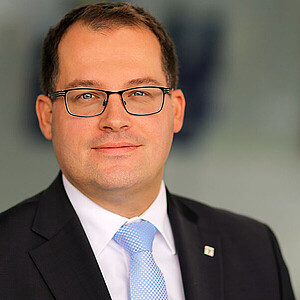
-A degree program that merely imparts specialized knowledge falls short.- The Studium Fundamentale reflects our identity as a University. We do not merely train qualified professionals, but also develop responsible individuals who are ready to help shape society. For over 30 years, the “Studium Fundamentale” has been a mandatory part of the curriculum at Zittau/Görlitz University of Applied Sciences. This made us pioneers in Saxony. The modules of the “Studium Fundamentale” encourage reflection, foster curiosity, and reveal connections that often remain hidden in specialized degree programs. Topics include sustainable development, digitalization, regional identity, questions of identity, and linguistic and intercultural competencies. In this way, our students acquire key competencies that are essential in an increasingly complex world—both for their professional lives and for active participation in democratic processes. I am convinced that those who have the courage to think outside the box will also develop the foresight needed not only to navigate change but also to actively shape it.
”