
Lausitz - Life and Technology
WE! - The Lausitz - Life & Technology Alliance together for a strong and dynamic region
How can we make our region, Upper Lusatia, more attractive? What technological and social innovations can revitalize the local economy? How can skilled workers discover exciting career opportunities while families find an appealing place to live?
To address these challenges for Upper Lusatia, companies, educational institutions, research organizations, and associations have joined forces in the Lausitz – Life and Technology (L&T) Alliance. Together, we are developing innovative tools and testing new approaches.
The Lausitz – Life and Technology Alliance impressed the judges with its strategic concept in a competition held by the Federal Ministry of Education and Research (BMBF) as part of the “WIR! – Change Through Innovation in the Region – BMBF” program and was named one of the winners. It now has a budget of 6.7 million euros at its disposal to implement projects in line with its own strategy. The implementation phase began as early as 2019, and over the following five years, a wide variety of projects were carried out in four areas of innovation.
The innovation areas of the project
Our Goals: To develop models in the field of social innovation aimed at enhancing the appeal of rural areas. The focus is on extracurricular education in STEM fields, attractive work models for rural areas, and an understanding of technical, technological, and social innovations for innovative regional development.
Our plan: Living and working in a region of scenic beauty will become a brand in its own right. The freedom to shape one’s own lifestyle in towns and villages, family-friendly working conditions, and the use of digitalization will improve the conditions that encourage people to stay and return.
With a focus on the internationalization of the alliance, L&T is developing an internationalization strategy in the second implementation phase that is tailored to the needs and opportunities of the project and alliance partners. Topics such as the international visibility of the alliance, market access, targeted networking and competence marketing will be key components of this strategy, with L&T focusing on the border triangle and building on existing communication and cooperation channels and agreements with its partners. From the perspective of SMEs in particular, it is important to determine feasibility, acceptance and potential markets in order to develop viable approaches.
The project "Innovation potentials in the border region", which is dedicated to supporting meetings and joint planning with regional stakeholders for an innovative environment in the Schluckenauer Zipfel and Upper Lausitz region, is based on the strategy of the Lausitz - Life & Technology Alliance and is the first step towards an internationalization strategy.
Both the Schluckenauer Zipfel on the Czech side and Upper Lusatia on the Saxon side face similar challenges as border regions: the effects of the brain drain (emigration of skilled workers), the low activity of companies in the area of their own innovations and the low transfer of knowledge from research institutions into practice. At the same time, this situation is not comprehensively investigated, analyzed or coordinated in the border region. The area has a strong industrial tradition that needs to be supported by, among other things, the creation of an appropriate and effective innovation environment and the development of adequate infrastructure. Two areas with great potential for innovation and transfer into practice - Mechanical Engineering and Renewable Energy and Energy Systems - have been selected for the needs of the project.
Funded projects
-
EuRopA
Project Description
The Upper Lusatia region is undergoing structural change, both economically and socially. Innovative developments in regional companies will become increasingly important, not only against the backdrop of the digital transformation of industry and society’s demand for sustainable business practices.
To address these challenges, the European Open Academy has set itself the goal of to support, in particular, small and medium-sized enterprises (SMEs) as well as large companies in the Upper Lusatia region. Their employees will be given the opportunity to participate locally in professional development programs on promising topics such as digital technologies in the context of Industry 4.0.Central Hub
The term “central hub” refers to so-called “smart learning environments”—that is, intelligent learning environments that integrate flexible and innovative learning solutions into modern work and learning settings. These are flexible physical learning spaces that are contextually enriched or augmented with digital devices. The goal of these smart learning environments is to facilitate learning not only in terms of subject-matter expertise but also in the development of digital competencies.
To meet these requirements, the plan is to develop and investigate three primary, didactically sound learning environment concepts that can be implemented in a flexible and innovative manner: the Innovative Makerspace, the Agile Learningspace, and the Instructional Learningspace.
-
Strategy development project
Project Description
The “Lausitz – Life and Technology” strategy development project aims to build and establish organizational and decision-making structures. In terms of content, the defined strategic innovation areas will be refined into concrete measures, and partnerships will be developed. The focus is on closely integrating the individual areas while taking into account the interests of the various stakeholders.
During the conceptual phase, partnerships were formed in the innovation areas of “Networked Energy Systems through Storage Technologies,” “Additive Manufacturing for More Efficient Production,” “Non-Formal Regional Education,” and “Attractive Work and Living Environments.” The goal is to expand these collaborations, find additional partners for the alliance, optimize organizational structures, and further develop the strategy for successful implementation. In line with current needs and scientific/technical developments, the strategy for the region’s development is continuously adapted.
Establishing the Alliance’s physical and digital spaces—where stakeholders can meet and exchange ideas—is one of the main tasks facing the Alliance management. The alliance consortium therefore aims to develop a “WIRkstätte” as a meeting and workspace where, through appropriate formats, various civil society groups can come together and work toward improving social cohesion. The goal is to strengthen the sense of “WIR” in the region. To establish and design this WIRkstätte, concepts must be developed and all areas of interest strategically interconnected.
Project Goals
- neo.NET e.V.: Designing the association’s structure; preparing for the association’s founding; strategic development of the association’s work
- Further development of the innovation areas
- Conceptualization and planning of the “WIRkstätte”
- Creation of media-based marketing and information tools
-
Innovation management project II
Project Description
Innovation management is required to successfully establish the alliance and ensure its effectiveness as a regional player. Through this management, organizational structures are established, processes are coordinated, and communication structures for the alliance are developed. Furthermore, as part of the overall strategy of the Lausitz – Life and Technology project, project applicants are guided and supported during the preparatory phase of their proposals. Potential project partners are matched, joint ideas are generated and planned, and specific tasks are defined. The innovation management is regularly analyzed in partner meetings and adapted as needed to meet the needs of the alliance partners.
Beyond the alliance’s work, alliance and project activities are supported, taking into account the technical and social innovation fields defined in the strategy paper.
Responsibility for innovation management lies with the newly founded association neo.Net e.V. It forms the foundation for an effective organizational and management structure for the “Lausitz – Life and Technology” alliance, which will continue to exist even after the WIR! funding program ends. In this way, it ensures the sustainability of the network’s activities. neo.Net e.V. facilitates a structured exchange of information among the partners and across project boundaries.
Project Objectives
- Establishing the alliance and building sustainable structures for network management
- Supporting partners during the pre-project phase and overseeing ongoing projects
- Providing administrative and organizational support for a Public Science Center as the hub for the alliance’s work
- Establishing a communication strategy, both internally and externally
- Operational collaboration between the strategy development project and innovation management, as well as engagement with relevant stakeholders and committees
- Establishment of a regional digital innovation platform within the framework of the general alliance platform to strengthen interdisciplinary information and knowledge transfer and promote regional innovation capacity
-
EFFECTIVE
Background Information on the Project:
The goal of the project is to research and further develop multi-laser SLM technology with a large build volume, both to achieve the necessary improvements in process reproducibility and component quality and to enable the competitive production of optimized metal components for hybrid FKV/metal lightweight structures subjected to high and combined mechanical and thermal stresses.
Using the example of a hybrid FRP/metal turbine blade for use in industrial steam turbines, the project aims to investigate and demonstrate the manufacturing technology capabilities of metal 3D printing in combination with fiber-reinforced plastic composites to achieve the highest possible degree of lightweight construction. On the one hand, the weight reduction of rotating and stator blades enables a significant increase in the power classes of steam turbines. On the other hand, however, the high and complex loads at the blade root, as well as the high tribological stress caused by droplet erosion at the leading edge of the turbine blade, require metallic components in these critical areas.
The following research objectives were defined for this purpose:
- Materials and process investigations for the production of distortion-free, industrially relevant large structures using the SLM process,
- Investigation of process- and safety-relevant manufacturing conditions for large material volumes and emission levels,
- Design and configuration of a hybrid, functionally integrated turbine blade using a load-optimized FKV/metal lightweight construction,
- Research into methods and manufacturing strategies for the additive manufacturing of an RTM mold with temperature control near the cavities.
-
CO³ (Compressor Cover & Contour)
Background information on the project:
The Institut für Luft- und Kältetechnik gGmbH in Dresden has been working on the basic technology of "water as a refrigerant" in refrigeration and heating systems since the early 1990s and plays a leading role in this field of research at both national and international level. The development and testing of various laboratory and customer systems in the application areas of classic cold water generation for air conditioning in buildings, water treatment/seawater desalination and vacuum liquid ice generation with cold storage have been successfully demonstrated since then. The core component of a supply solution operated with "water as a refrigerant" is an electrically driven compressor developed by the ILK Dresden, which makes it possible to evaporate water vapor at low temperatures and bring it to a higher pressure/temperature level.
Project objective:
The overall objective of the proposed project is to carry out a technological reconsideration and optimization of the existing design of the main assembly "cover-contour unit" from today's point of view. The focus is to be placed on the use of modern production technologies and the consideration of future cost structures. As part of the project, the main assembly is to be broken down into individual functional groups and optimized by comparing and using innovative manufacturing methods.
-
AFIIN - Additive Manufacturing of Large-Scale Mechanical Assemblies
Background Information on the Project:
The project’s objective is to develop additive manufacturing technology for large-scale mechanical assemblies, integrate this technology into digital workshop processes, and implement time-efficient maintenance processes. A further sub-goal is the development and production of a demonstrator with engineering-specific characteristics in this field.
-
GreenHeater
Background information on the project:
The aim of the research network is the prototypical development and testing of a new type of energy storage solution for supplying heat to buildings using PV. Furthermore, models are being developed as part of the project in order to be able to make statements about the long-term operation of the prototype.
-
ANKIP
Background information on the project:
Many companies, including those in Upper Lusatia, rely on energy-intensive thermal processes as part of their manufacturing operations—ranging from baking, washing, and drying to thermal forming and reshaping, as well as heat treatment processes. Since the heat required is generated primarily using fossil fuels, this results not only in high energy costs but also in significant climate-damaging emissions. The ANKIP project aims to support regional companies in developing and implementing innovative waste heat utilization concepts, thereby achieving significant savings in fuel consumption and greenhouse gas emissions.
As part of the project, tools will be developed to facilitate the analysis of waste heat sources and sinks within companies, the selection of suitable components and systems for harnessing waste heat potential, and the energy-efficient and cost-effective design of the systems. To this end, in addition to relevant guidelines (analysis methods, checklists, selection criteria), a powerful simulation tool based on the UME Designer will be developed. The tools developed will be tested in practice in close cooperation with regional companies.
-
Future learning location Upper Lusatia
Background Information on the Project:
The BMBF-funded collaborative project “WIR! – Lausitz – Life & Technology – Upper Lusatia as a Future Learning Hub – Analysis and Development of Extracurricular STEM Education” (ZukLOS) by the Zittau/Görlitz University of Applied Sciences and the Technical University of Dresden aims to lay the groundwork for the further development of the extracurricular educational landscape in Upper Lusatia—particularly in the STEM field.
The project’s objectives are:
- To assess the current state of extracurricular STEM education in the region,
- Testing exemplary teaching and learning settings in collaboration with regional educational institutions,
- Involving young people as active shapers of their own education,
- Deriving recommendations for action to further develop the already rich out-of-school educational landscape,
- Developing and promoting new, needs-based educational offerings in the STEM field that are tailored to specific target groups.
In this way, the project aims to foster STEM-related problem-solving skills in the long term, particularly among young people aged 13 to 20, and to help meet the region’s demand for skilled workers.
The project should be viewed as an initial project in which, during its one-year duration, research will first be conducted on the current state of extracurricular education in the districts of Görlitz and Bautzen.
-
Innovation potential in the border region
Project Description
The project builds on the strategy of the Lausitz — Life & Technology Alliance and takes the first step toward an internationalization strategy.
Both the Schluckenauer Zipfel region on the Czech side and Upper Lusatia on the Saxon side, as border regions, face similar challenges: the effects of the brain drain (outflow of skilled workers), low levels of corporate innovation, and limited transfer of knowledge from research institutions into practical applications. At the same time, this situation in the border region is not being comprehensively studied, analyzed, or coordinated. The region has a strong industrial tradition, which must be supported, among other things, by creating a suitable and effective innovation environment and establishing an appropriate infrastructure. Two areas with great potential for innovation and practical application—Mechanical Engineering and new energy sources and energy systems—were selected to meet the project’s needs.Specific measures to foster cross-border cooperation:
- Joint discussion, surveys, identification of interest in innovation and knowledge transfer, identification of barriers or challenges
- Identifying common ground regarding needs and establishing a shared foundation for conceptual support of innovations
- Subsequently, after processing the information gathered, participants are briefed on the results of the workshops, and proposed activities and other procedures are discussed collectively
Target audience:
- Regional economic development stakeholders (chambers of commerce, business associations, economic development and innovation agencies, companies)
- Universities/research institutions/universities (HSZG, TU Liberec, UJEP, IHI)
- Future professionals (vocational schools/higher vocational colleges)
Outcomes for the regions:
- Assessment of the potential for innovation
- Identification of potential innovation stakeholders
- Support for research institutions and universities to facilitate a more intensive transfer of scientific findings into practice
- Fostering cross-border cooperation between professional organizations and companies as key drivers of economic development
- Data analysis and development of action plans for appropriate activities to promote innovation
The project was funded by the European Union through the European Regional Development Fund as part of the 2014–2020 Cooperation Program to Promote Cross-Border Cooperation between the Free State of Saxony and the Czech Republic. (ERN-1058-CZ-03.06.2021)
-
Factory4Future
Background information on the project:
Business risks due to fluctuations in demand or supply chain disruptions generally increase along a value chain, depending on whether a company is closer to the end customer (ripple effect) or the first supplier (bullwhip effect; Ivanov 2018). Many companies in Lausitz tend to be classified as suppliers or service providers (ZWL 2020a).
There are various ways for these companies to reduce their entrepreneurial risk and increase their competitiveness (Wiendahl et al., 2014): They must become more resilient, be able to react more flexibly to today's constantly changing customer requirements (e.g. increasing variant diversity, decreasing batch sizes) and/or increase the innovative strength of their organization in order to reduce dependencies on a small number of individual (end) customers in a supply chain as much as possible. However, regional companies generally lack their own research and development capacities and resources (R&D; ZWL 2020a). In addition to organizational and technical approaches (e.g. under the keyword "Industry 4.0"; Kagermann et al. 2013), the focus is essentially on humans as reactive, innovative beings to achieve these goals - despite the possible analytical and physical superiority of machines (Breque et al. 2021; Tropschuh et al. 2021). From a regional perspective, however, this circumstance also points to another problem: the economic and social transformation processes in Lausitz, including demographic change and a shortage of skilled workers (ZWL 2020a).
Information or digital worker assistance systems, for example with the help of augmented reality (e.g. via the Microsoft HoloLens) or data glasses (e.g. the Realwear HMT-1), promise to provide user- and context-specific information by combining virtual and real worlds for the best possible support during the performance of work (Egger and Masood 2020). However, due to the novelty of these technologies, there is still a lack of reliable findings for their use in specific activities in production and their concrete psychological and physical effects on workers, on entire production systems and vice versa.
Factory4Future is therefore researching the use of these technologies in order to use (information-based) worker assistance systems in the future in a targeted manner according to the circumstances and requirements of the individual workers (technology acceptance, strain, skills, etc.), the activities to be carried out (assembly, order picking, monitoring, etc.) and the overall production goals. Demographic change and the shortage of skilled workers can be countered by using these technologies to reduce training times and costs, for example for unskilled or retrained employees, through on-the-job training and by making them more flexible (even across different locations). At the same time, the company increases its resistance to adaptation and competitiveness through more highly qualified employees and flexible, targeted use of technology.
Research questions:
Based on the problem and motivation outlined above, Factory4Future therefore addresses the following research questions in an interdisciplinary manner, both from an engineering pedagogical perspective, i.e. from the point of view of technology-supported learning during work, and from a behavioral economics perspective, i.e. from the point of view of behavior-oriented production and process management:
- To what extent do information-based assistance systems in general contribute to the learning ability of employees in socio-technical production systems and what effects do they have on the system or process performance of the entire production and thus the organization?
- In particular, how do assistance technologies influence the parameters in model production use cases of regional small and medium-sized enterprises (SMEs)?
- How can the knowledge gained under 1. and 2. be transferred into human-centered planning and design approaches of production management and made usable for regional SMEs?
-
LOWEX
Background information on the project:
In conventional heating networks (80/60°C), the sometimes very low population density generates high annual losses of up to 30%. In the "LowEx" (low losses) project, a multiple low-loss heat supply network is to be demonstrated, which requires significantly lower flow and return temperatures. The aim is to demonstrate the coupling of renewable energies with a year-round efficient heat supply. Heat potential from geothermal probes, solar thermal energy, waste heat from biogas plants or future hydrogen electrolysers can thus be used effectively. However, it should also be possible to feed heat from e.g. wood chip heating systems into the system. In addition, the geothermal energy on the uninsulated mains return line acts as a heat source. The heat is extracted via heat pumps of the grid users. As a result of the ongoing expansion of renewable energy systems and a lack of grid compatibility, unused surpluses from wind and PV power are likely to occur more frequently in the future, which can then at best be used to operate heat pumps on site.
This first LowEx research and development project focuses on combining this grid technology with large-scale mobile PCM storage systems. By using large mobile heat storage units, such grids can be implemented in stages, making them easier to finance and therefore also very interesting for energy cooperatives. However, due to the different fluctuating processes in waste heat output (heat sources) and heating demand in the "growing" network (heat sinks), the problem is also very challenging. The "LowEx" research project aims to develop a solution to this problem. To this end, waste heat sources within a maximum radius of 10-12 km are being investigated and equipped with data technology - the more, the more effective. The LowEx tool to be developed as part of the project, a digital intelligent tool, will then automatically calculate the optimum times for the storage changes and inform the truck driver in good time. This will make it possible to organize a tour effectively and keep costs low.
In future, the multiple supply network will pursue new approaches in terms of both its properties and its structure: For example, two low-loss DC lines and a data cable can also be laid to make PV electricity from roofs directly usable for heat pumps, for example, and to ensure automated system communication for demands and offers.
Project objective:
The aim of this research project is to develop a sector-coupled neighborhood supply system with high energy efficiency and digital intelligence. Regional technological innovations based on scientific research play just as important a role as the amendment of the EEG 2021 or the German government's climate targets.
The development focuses on an operating system as well as digital tools and instructions that can ensure professional production, efficient operation and a supply based exclusively on renewable energies. In a follow-up project, the supply system is to be validated on the basis of at least two model projects in Lausitz, in the character of real laboratories, and a system provider is to be formed from the project participants and other stakeholders. Sustainable regional added value will be created both through investments in the application and through the supra-regional marketing of the manufacturing partners associated in the future system provider.
-
EDWENIA
Background information on the project:
From laundries to steel mills, approximately 625 billion kilowatt-hours of process heat are generated annually in Germany, only a fraction of which comes from renewable energy sources. The main reason for the low share of renewable energy is the comparatively high temperature required in industrial processes. While underfloor heating requires a flow temperature of around 40°C, industrial processes typically require temperatures between 100°C and 300°C. A survey conducted by the Zittau/Görlitz University of Applied Sciences among companies in Lausitz revealed that currently, about 80% of the heat demand is met by fossil fuels.
Since the high temperature requirements make it difficult to replace fossil fuels, the use of recycled energy is an obvious solution. The necessary “Development of Unpressurized Heat Storage Systems for the Efficient Use of Industrial Waste Heat (EDWENIA)” from exhaust gases, exhaust air, or water vapor is the focus of the research project launched in May at Zittau/Görlitz University of Applied Sciences. The primary focus is on the technological advancement of two-phase storage systems. Two-phase storage systems consist of a (mineral) bed, which serves as the storage medium, and a thermal oil, which is used as the heat transfer fluid.
The respective advantages of the two combined storage media—which exist in different physical states—are being harnessed: solids such as granite, basalt, or other solid materials under investigation have a relatively high heat capacity. These also represent the more cost-effective component. On the other hand, thermal oils are an ideal complement, since the liquid storage medium requires a component that can be used without pressure even at temperatures above 100 °C. This project will therefore further explore the concept of a hybrid sensible heat storage system, as there remains a significant need for research regarding its design, as well as its materials, thermal, and fluid dynamics aspects.
-
ENER-STRIX
Background information on the project:
Ener-STRIX addresses the need to develop energy-saving technologies for greenhouse gas-reduced manufacturing processes and products.
A key component is being developed and researched which opens up the technology of "minienvironments" for battery cell production on an industrial level. This can save energy for air conditioning and ventilation technology by up to a factor of 5 in the manufacturing process of such cells. The consortium is in a position to subsequently utilize such a component and the minienvironment technology and plans to build up the necessary capacities in Upper Lusatia.
Networked action by regional businesses will expand their unique selling points and thus enable economic growth in the important future fields:
- Electromobility,
- Industry 4.0
- Climate-neutral manufacturing
- Additive manufacturing
-
LAUSITZWIND
Background Information on the Project:
The use of wind energy helps offset the natural fluctuations in solar power production over the course of both a day and a year. In rural areas and offshore, conventional horizontal-axis wind turbines are well established and represent the optimal solution for energy generation. For use in urban areas with limited space and higher population density, however, vertical-axis wind turbines are the ideal choice. The disadvantages of this design include lower power coefficients, uneven torque on the rotor shaft, and an inability to start up on its own. In this project, two different approaches will be pursued to address these issues—first, the use of corrugated leading edges on the rotor blades, and second, active control of the angle of attack via a mechatronics system. Both variants have already demonstrated their effectiveness in preliminary studies.
A general challenge facing all wind turbines is their sustainable production and the recycling of materials at the end of their service life. Natural-fiber-reinforced plastics represent an environmentally friendly alternative to conventional composites made of carbon or glass fibers. One goal of the project is therefore to manufacture rotor blades from natural-fiber composites in cooperation with the LaNDER3 project (Lausitz Natural-Fiber Composites – Decentralized Energy, Raw Materials, Resources, Recycling).
The project falls under the innovation areas of “Additive Manufacturing” and “Networked Energy Storage Systems” within the “Life and Technology” alliance.
Project Objective:
The goal of the LausitzWind project is to develop a sustainably manufactured wind turbine with high achievement and low acoustic emissions for use in urban areas.
-
INNOVA.GEIST
Background information on the project:
What leads to the fact that the Lausitz structural change projects focus primarily on economic and technology-driven developments and that the complex target corridors of sustainability in the ecological and social dimension are weakly addressed in "Lusatia as a model region" and only a few sustainability goals (sustanaible development goals, SDG for short) are taken into account (Retkowski 2021)? How does the separation of technical-technological (TI) and social innovations (SI) come about in the vast majority of funded structural change projects in (Upper) Lausitz?
The core objective is to address and research social innovations as an essential component of regional development in Lausitz in close interaction with technical innovations. Can we succeed in outlining an inclusive regional innovation strategy that addresses technical and social solution potential?
Aim of the project:
The aim is to reconstruct the significance of social innovations for economic and social development in regional structural change in an actor-oriented manner and to identify both obstacles that limit their scope and factors that promote their success and dissemination. Building on these findings, the practical needs of social innovations that arise in technical-economic innovation processes of sustainable energy supply in regional value chains are identified in cooperation with the young Zittau-based company AQVA Synergy. For example, the need for skilled workers, an attractive working environment and new working models, including for women in the STEM sector, as well as stakeholder participation in technology development. In the transfer phase, the research-based knowledge on social innovations is translated into concrete instruments in line with the formulated needs. The aim is to develop an experimental procedure for linking the various innovation methods and to test it in practice.
The aim is also to strengthen the openness of regional stakeholders towards complex innovations. To this end, the practical and application cases in the region and within the WIR alliances for linking social and technical innovations are prepared for transfer through research. The aim is to develop and build up innovation skills and capabilities and to promote the (further) development of complex innovative project ideas that interlink technical-economic and socio-ecological dimensions.
Contact person
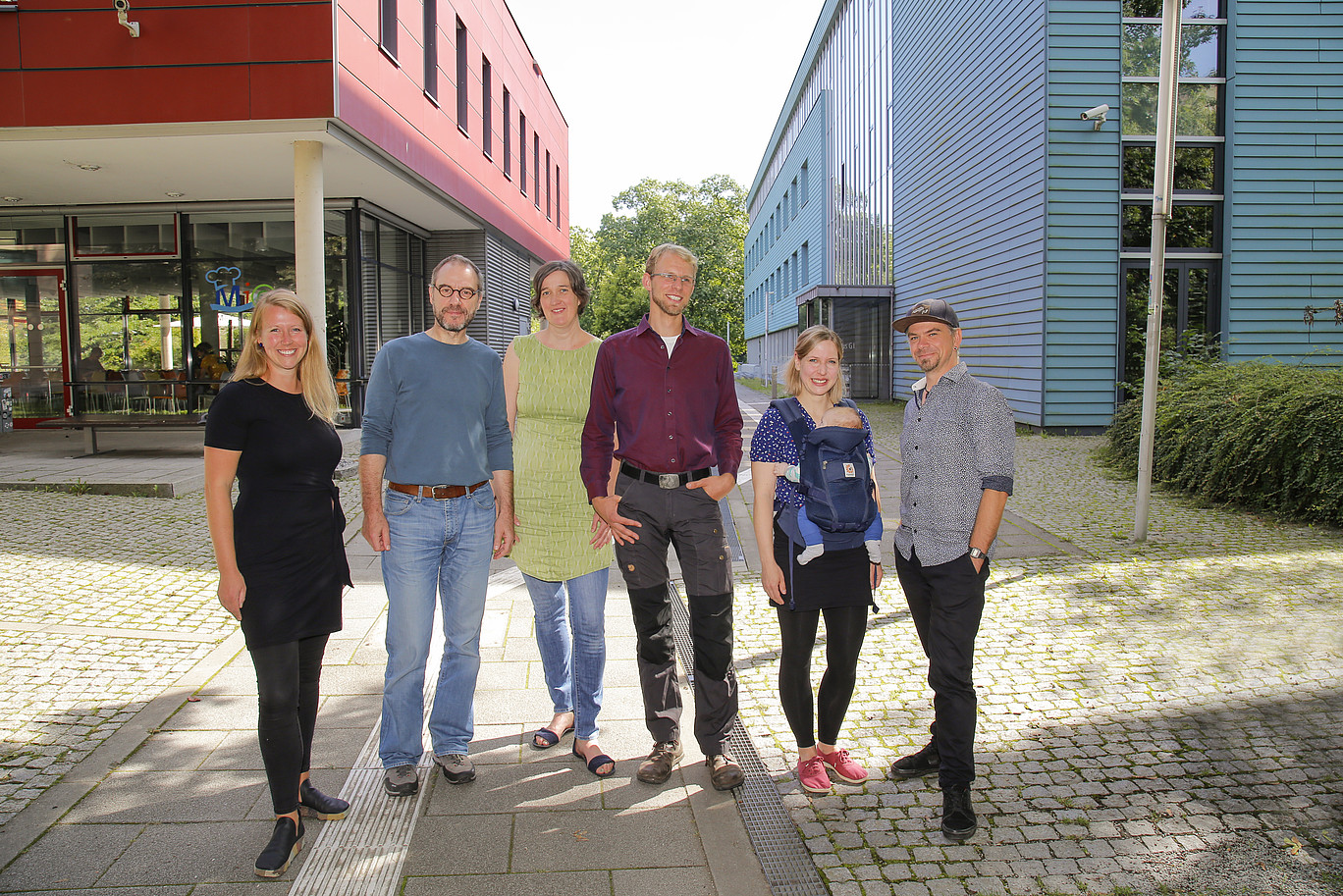
Lausitz – Life & Technology is a collaborative project between Zittau/Görlitz University of Applied Sciences, the Görlitz District, ULT AG, and the Fraunhofer Institute for Machine Tools and Forming Technology (IWU).
Prof. Raj Kollmorgen is the project manager for the strategy development project at Zittau/Görlitz University of Applied Sciences. Prof. Tobias Zschunke is the spokesperson for the L&T Alliance.
2nd upper floor
2nd floor right

4th upper floor
2nd upper floor
4th floor
4th upper floor
4th upper floor
2nd upper floor