
HSZG launches Family Business Initiative
The kick-off meeting of the "Family Business Initiative" focused on cooperation approaches between science and business on topics such as succession, innovation and growth of Saxon family businesses.
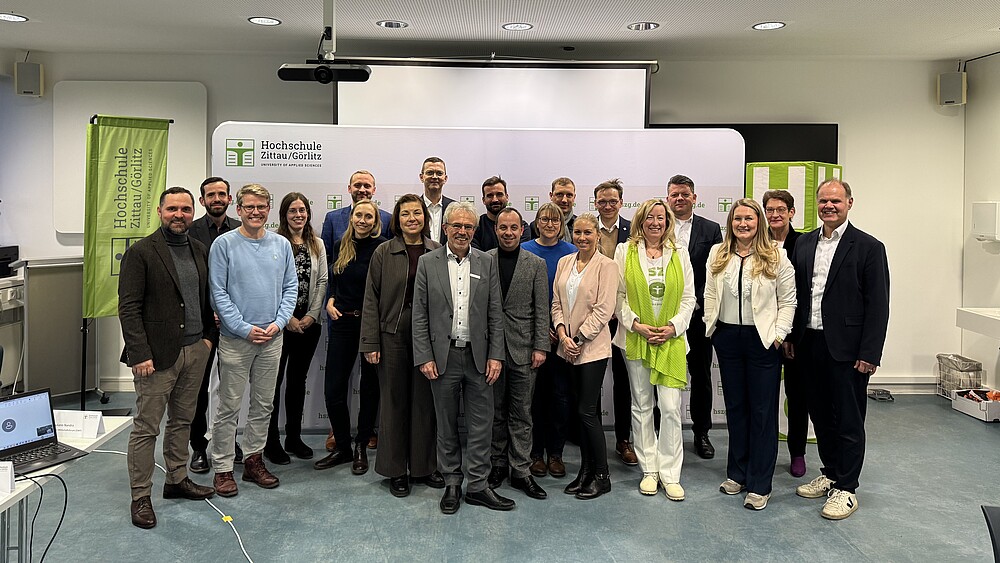
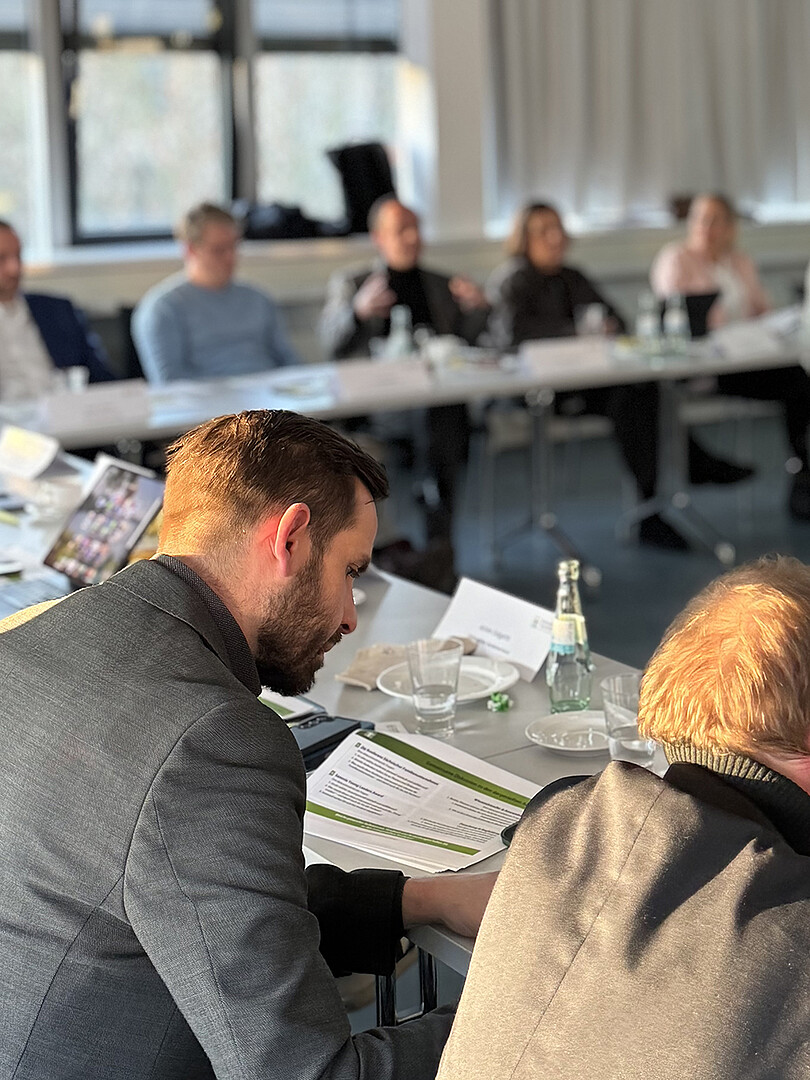
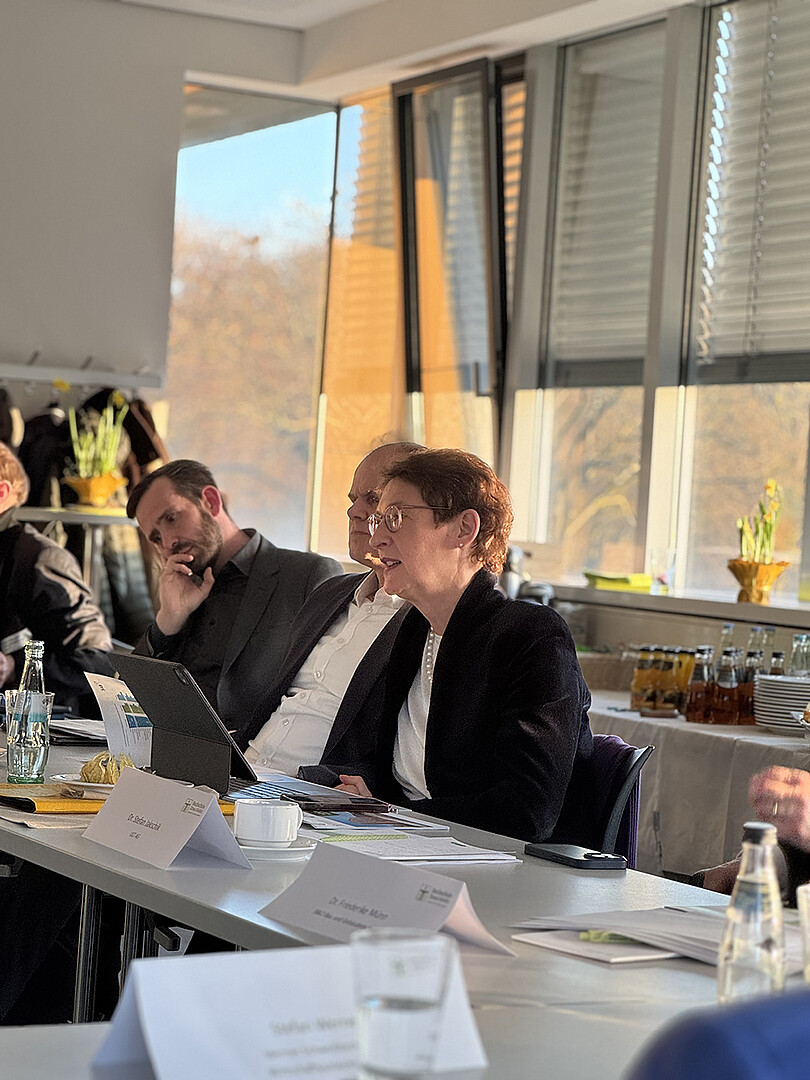
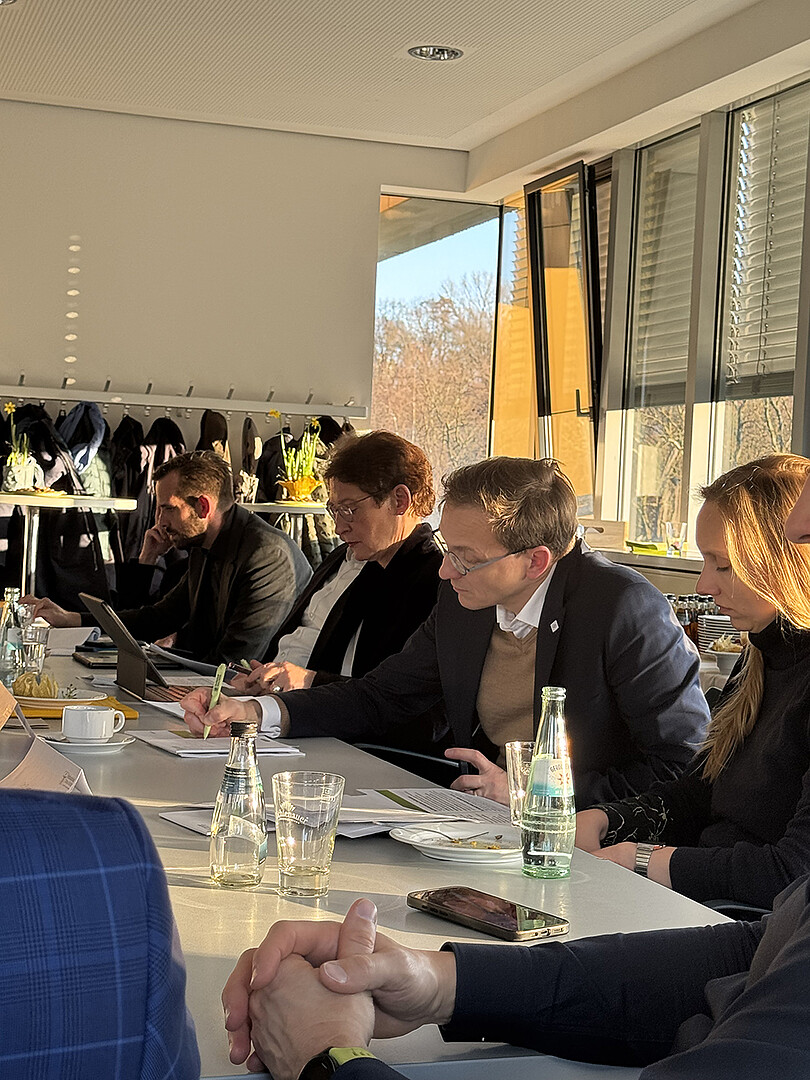
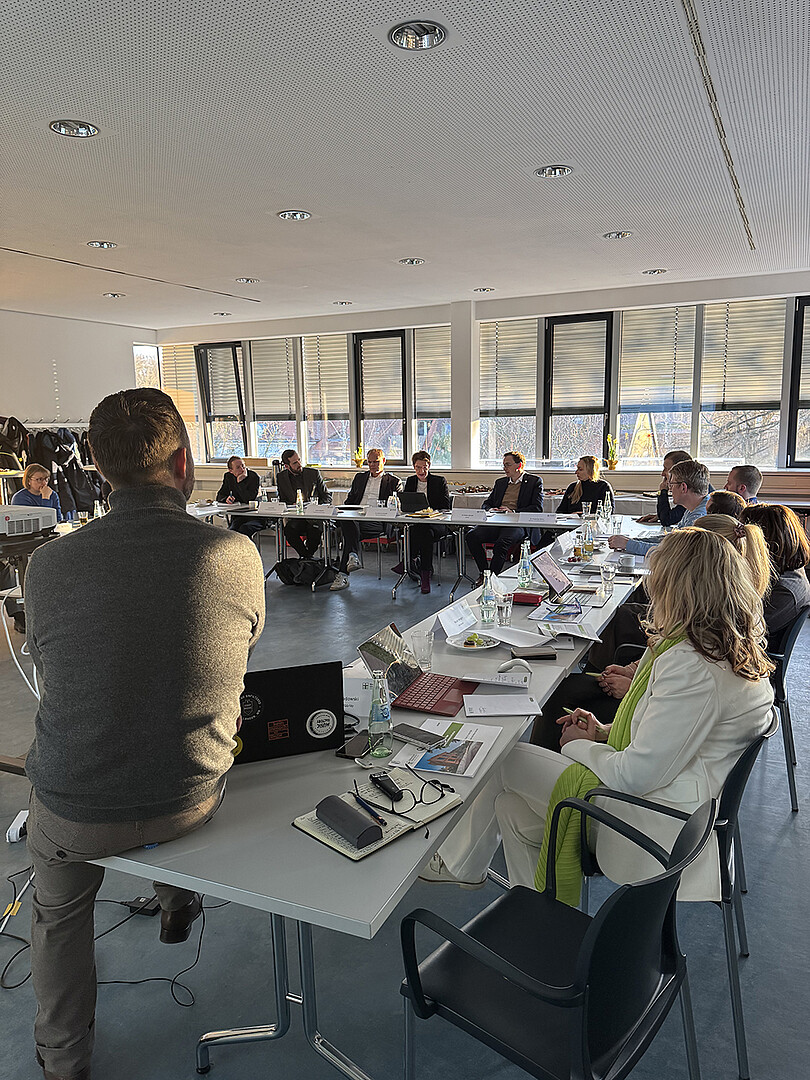
The kickoff meeting of the “Family Business Initiative for Innovation and Succession in Saxony (FBI@HSZG)” held on January 19 at the Görlitz campus of the Zittau/Görlitz University of Applied Sciences (HSZG) discussed approaches and ideas for how academia and industry can successfully collaborate on the topics of succession, innovation, and growth in Saxon family businesses. With four concrete solutions within the “Family Business Initiative,” the HSZG aims to work together with the regional business community to dynamically address the topics of innovation, entrepreneurial practice, the spirit of entrepreneurship, and succession planning in Saxony.
The Saxon State Ministry of Economic Affairs has estimated that 1,500 businesses in the Free State of Saxony will be up for succession each year through 2030. Due to demographic trends, it is becoming increasingly difficult to find a suitable successor. Ensuring that as many business successions as possible are successful is of great economic policy importance—as a guarantee of Saxony’s capacity for innovation and economic strength.
“Family-owned businesses are a major building block of economic development—right here, in this region. These businesses also have strong ties to the region. This interplay—we have our roots here, we grow out of the region, and we create growth for the region—is, in my view, a successful symbiosis. We should focus our efforts on further strengthening (regional) family businesses,” says Dr. Katrin Leonhardt, Chairwoman of the Board of the Sächsische Aufbaubank, one of approximately 25 participants at the kickoff event for the “Family Business Initiative.” Also in attendance were Octavian Ursu, mayor of Görlitz; Thomas Zenker, mayor of Zittau; as well as entrepreneurs and representatives of several business associations, including the East German Economic Forum (OWF) and the Dresden Chamber of Commerce and Industry (IHK Dresden).
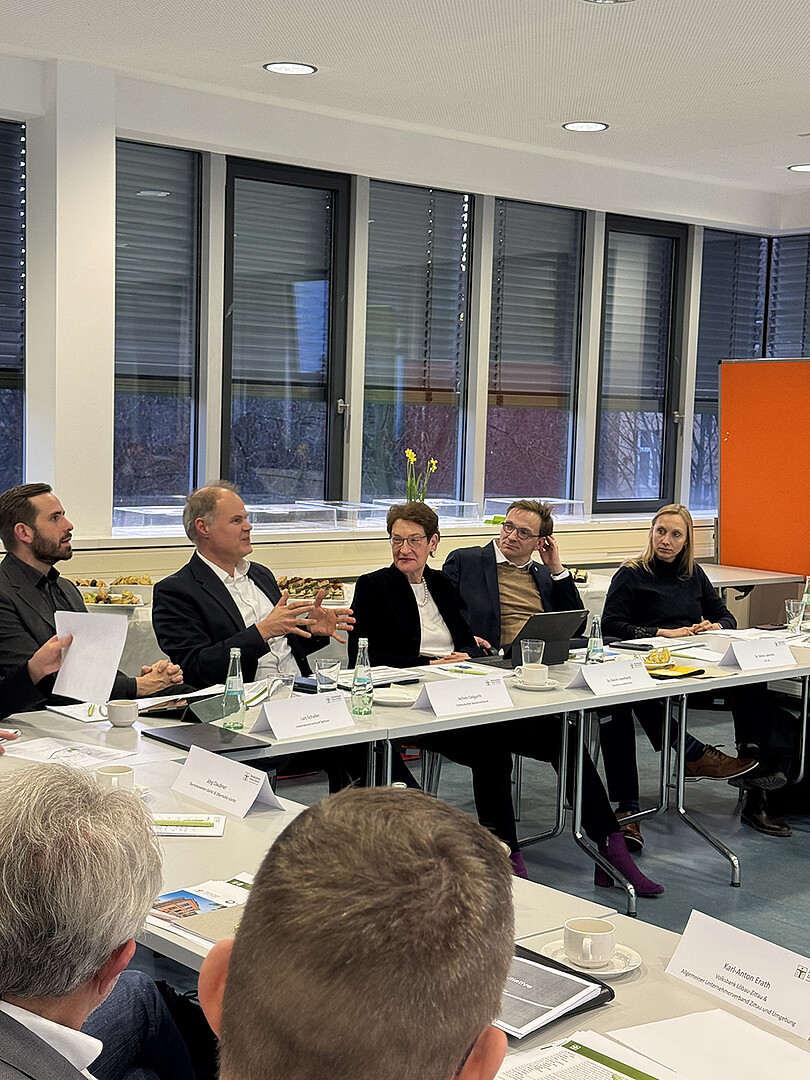
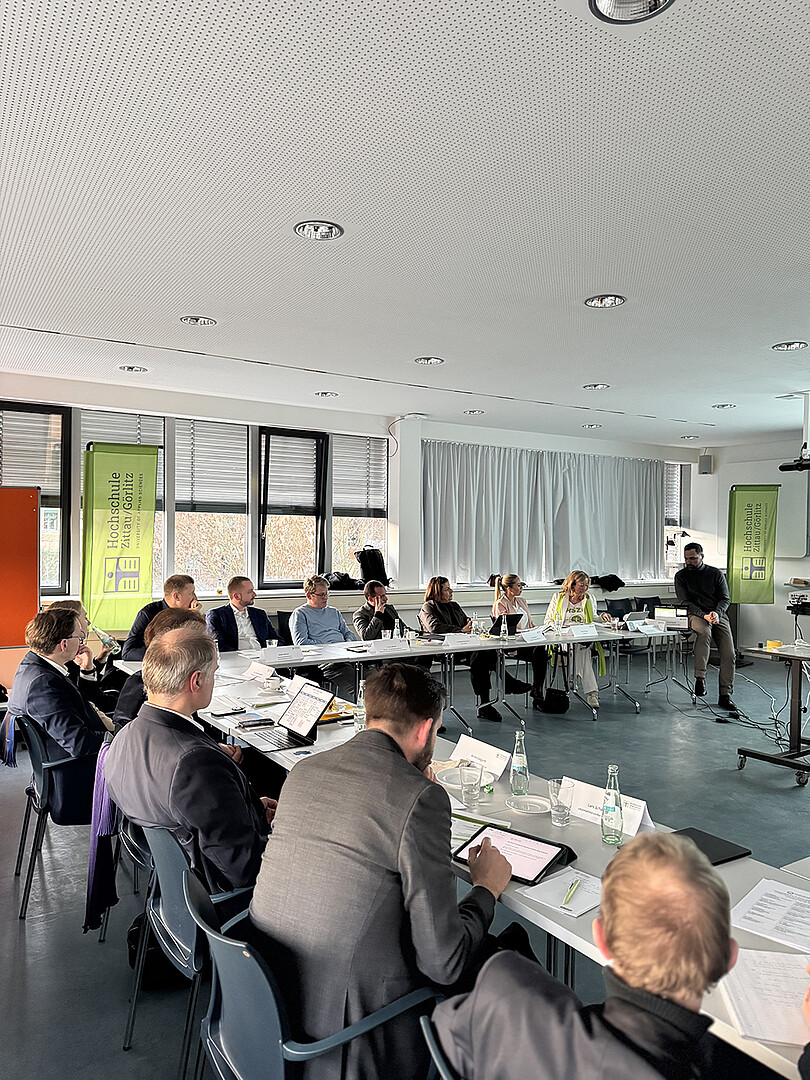
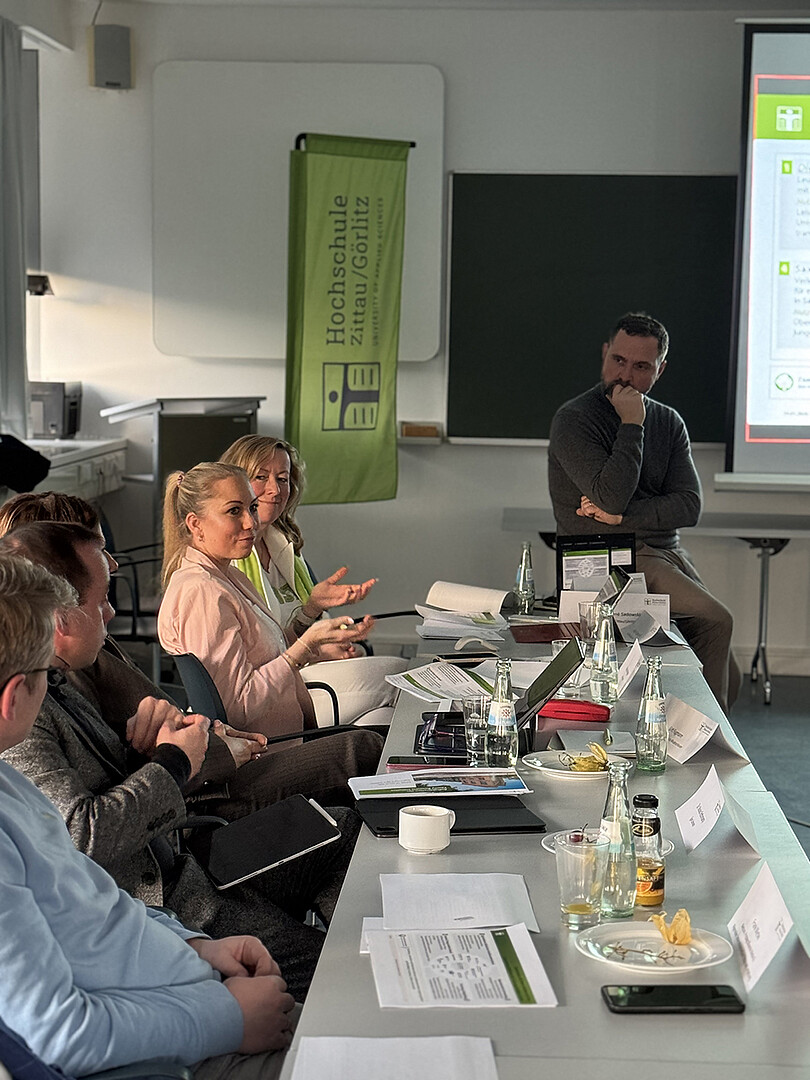

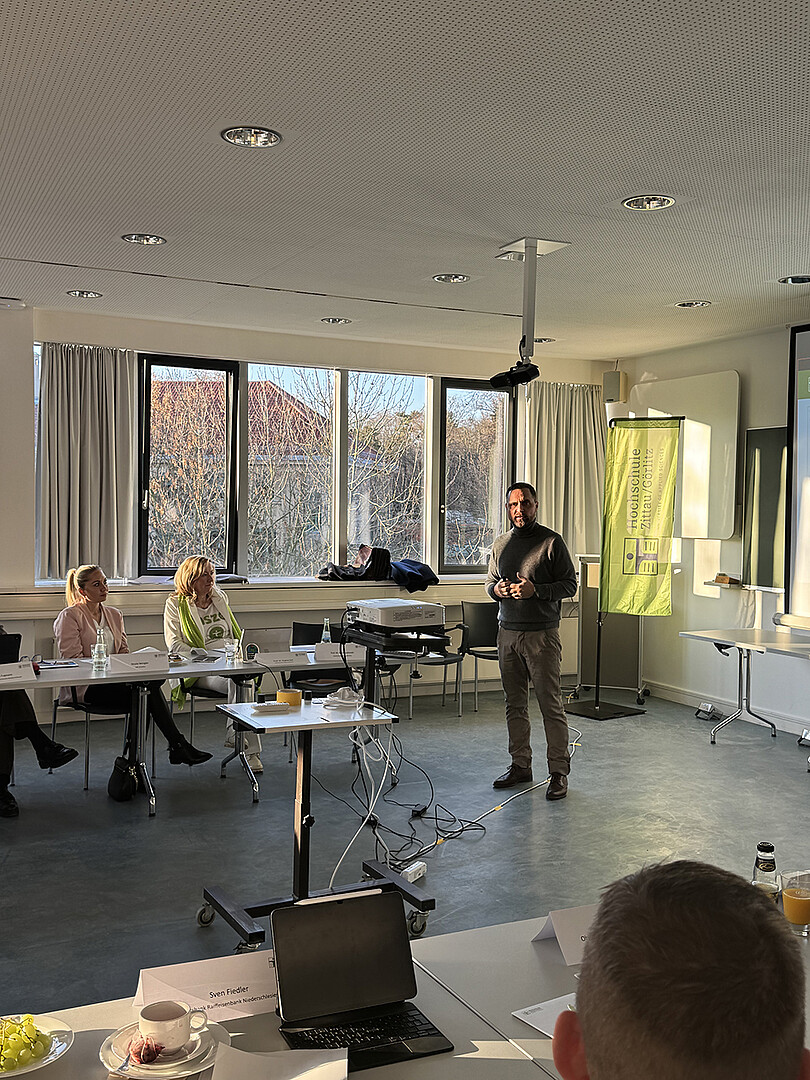
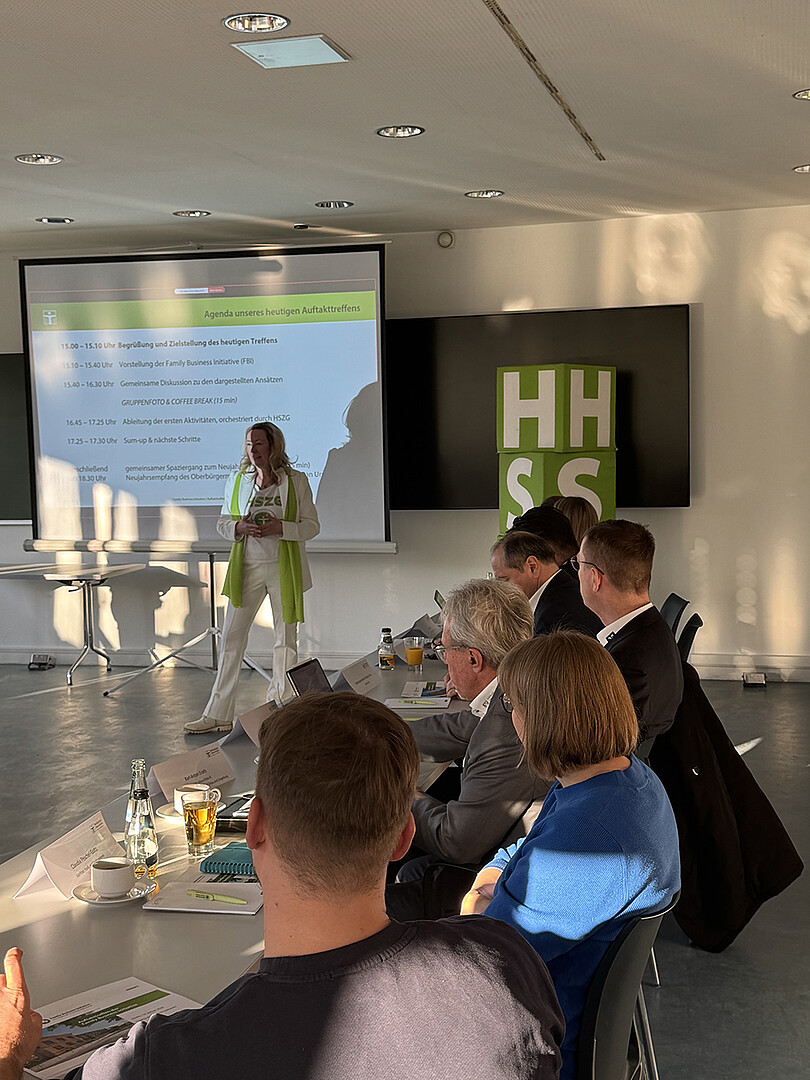
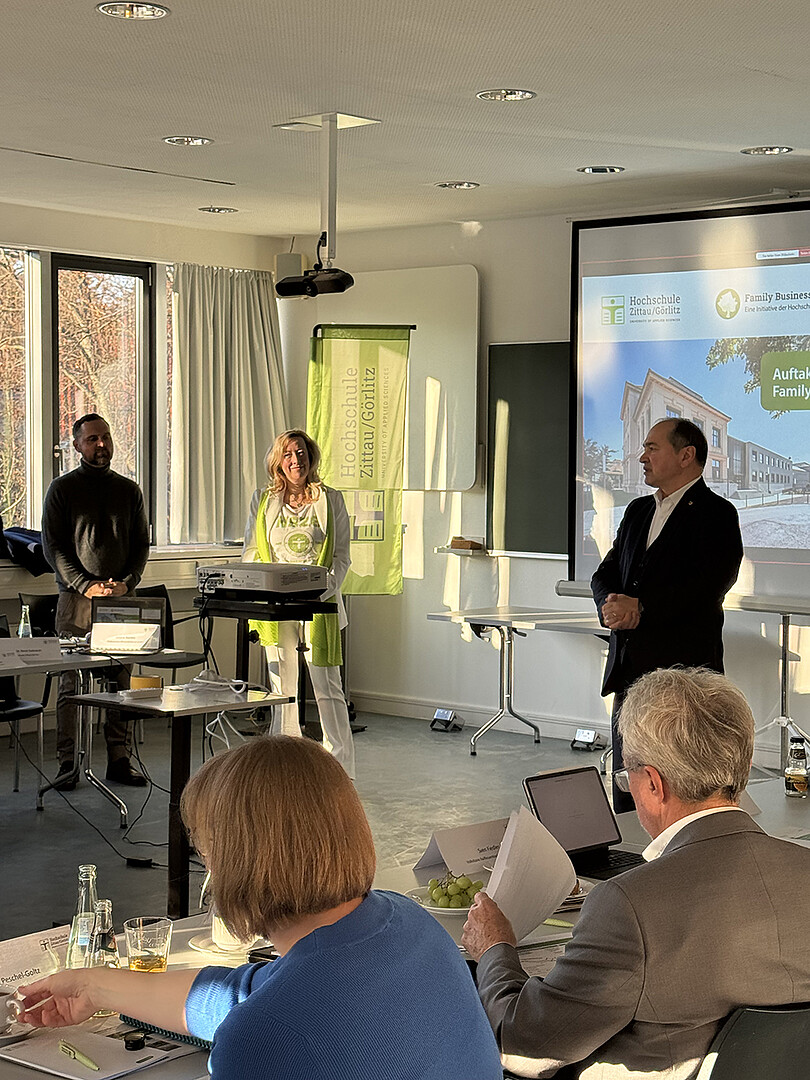
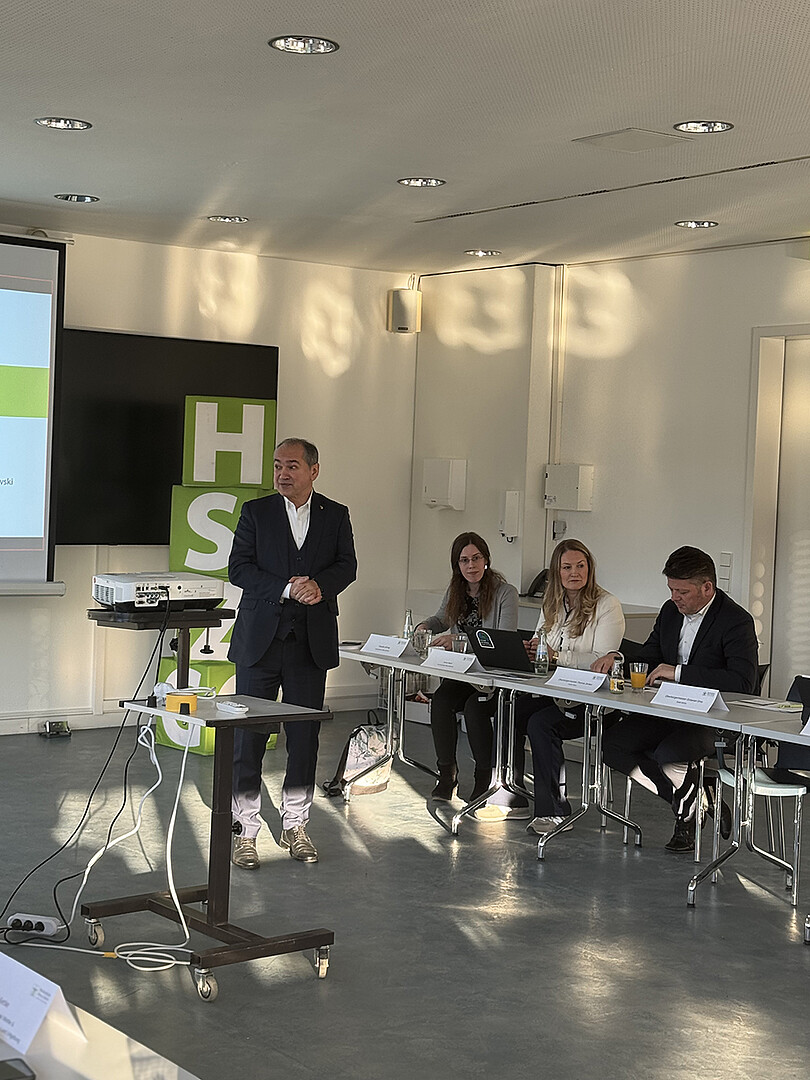
Family-owned businesses are anchors of stability for the regional economy
“Family businesses are a key anchor of stability for our regional economy. Through the university’s ‘Family Business Initiative,’ we support entrepreneurs and successors, empower young talent to pursue entrepreneurship, and build strong networks—including through an annual flagship conference that serves as a platform for exchange, inspiration, and collaboration. At the same time, as a university, we develop technologies and innovations for new business sectors. In this way, we actively shape structural change, ensure business succession, strengthen innovative capacity, and make a sustainable contribution to regional development,” says Prof. Dr. Sophia Keil, Vice President for Research, Transfer, and International Affairs.
Four concrete steps of the “Family Business Initiative”: Annual Conference, Further Development of Degree Programs, Entrepreneurial Trend Barometer, Saxonia Young Leaders Award
The HSZG specifically presented four concrete steps of the “Family Business Initiative.” First, an annual “Conference of Saxon Family Businesses” is to be launched as a flagship event with a different focus each year—serving as a showcase for Saxon entrepreneurship and technology transfer, as well as a platform for networking and dialogue. In the area of knowledge transfer and application, the HSZG—in collaboration with the regional business community—aims to further develop degree programmes in a curricular and modular manner and to expand subject-specific seminars. The region could benefit from this, particularly by fostering entrepreneurship among the younger generation. As a third step, a planned “Saxon Entrepreneurship Trend Barometer” and a 10-year panel under the motto “Now & NextGen” could provide targeted support to the regional economy and identify current and key challenges. Last but not least: By presenting an annual award—the Saxonia Young Leaders Award for outstanding succession planning in Saxony—young entrepreneurs would gain attention and media coverage, which could also benefit the region on a broader scale.
Family-owned businesses must constantly reinvent themselves
But what sets family businesses apart, and what are the remaining weaknesses for family-run businesses in Saxony? “I think what distinguishes family businesses above all else is a long-term perspective. A family business owner often thinks about passing the business on to the next generation—not just for the next quarter, but truly on a long-term scale. And a particular challenge for Eastern Saxony is that family businesses here tend to be smaller than in the western federal states. They also don’t yet have such a high level of capital. On the other hand, they are very innovative and must constantly reinvent themselves. And as we know, limited resources foster creativity, ” says Dr. Stefan Jakschik, managing partner of ULT AG, providing an overview of the status quo in Saxony. “Successfully planning a succession isn’t just a brief moment in the company’s history, but in some cases a lengthy process that can take years,” notes Claudia Peschel-Goltz, managing partner of Görlitzer Hanf- und Drahtseilerei, during the at times very lively discussion.
Anchoring Entrepreneurship More Firmly in Academia, the Public Sphere, and Politics
“We can be very glad that family businesses exist. In Eastern Saxony and Upper Lusatia, there are a great many small and medium-sized enterprises, a large number of which are family businesses. The ‘Family Business Initiative’ was formed to enable these businesses to develop further—for example, by improving succession planning—and this is very much in the interest of the local communities,” says Thomas Zenker, mayor of the city of Zittau. Octavian Ursu, Mayor of Görlitz, adds: “We have a strong interest in seeing the Zittau/Görlitz University of Applied Sciences present and position itself here.”
Achim Oehlgarth, Executive Director of the East German Banking Association, sees the HSZG’s “Family Business Initiative” as a good foundation for further networking activities and collaborations: “The ‘Family Business Initiative’ offers a good foundation for raising the profile of family businesses in the Free State—with greater appreciation and strategic depth. Particularly positive is the approach to embedding entrepreneurship more firmly in academia, the public sphere, and politics. It will now be crucial to bring together the existing stakeholders and institutions in Saxony more closely in order to unleash academic, practical, and communicative impact,” said Oehlgarth.
Saxony Is the Entrepreneurial Heartland of Eastern Germany
“Saxony is the entrepreneurial heartland of eastern Germany. The many family businesses in particular—many of which were founded after reunification—now face critical challenges regarding succession and continued growth. We at HSZG are grateful that, as part of the ‘Family Business Initiative,’ we were able to bring together 20 representatives from renowned organizations across various sectors to explore concrete solutions, offerings, and synergies resulting from our joint commitment. We’ve made a start—now it’s time to build on this momentum together,” says Prof. Dr. René Sadowski of the Faculty of Business Administration and Engineering Management at HSZG.
This momentum was immediately and successfully capitalized on following the kickoff event for the “Family Business Initiative.” That same evening, the HSZG also presented the initiative at the City of Görlitz’s New Year’s reception—in the presence of approximately 300 guests and representatives from business, academia, civil society, the media, and politics. Saxony’s Minister President Michael Kretschmer was also in attendance.
Text: Frank Leberecht
Photos: HSZG Social Media

1st floor