Success without borders: HSZG young scientists impress internationally at ACC conference - 2nd place for Maria Zimmermann.
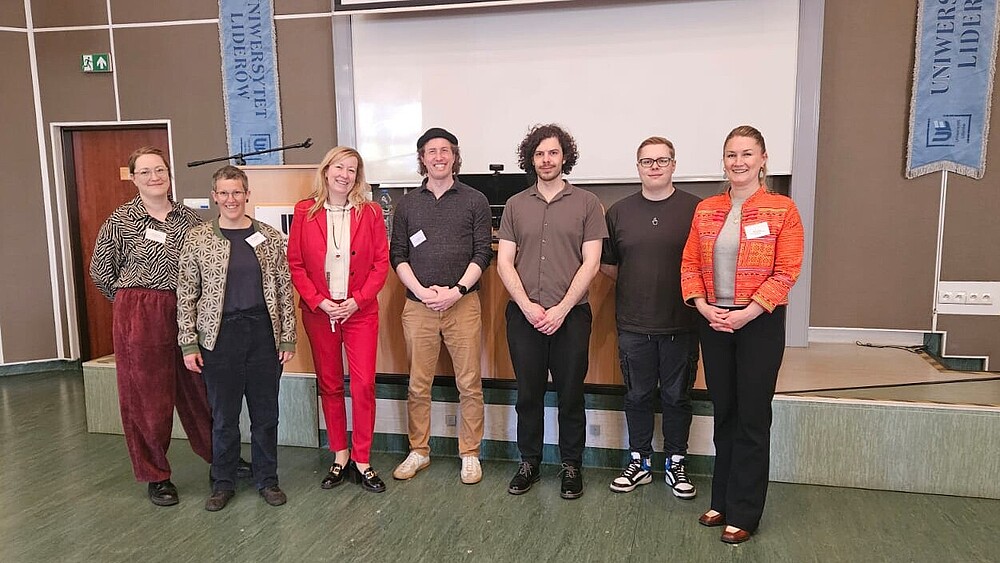
Six participants from the university, diverse research projects and an outstanding success: Zittau/Görlitz University of Applied Sciences once again demonstrated its strong international presence at the 19th International Conference of Young Scientists of the Academic Coordination Center (ACC) in Jelenia Góra.
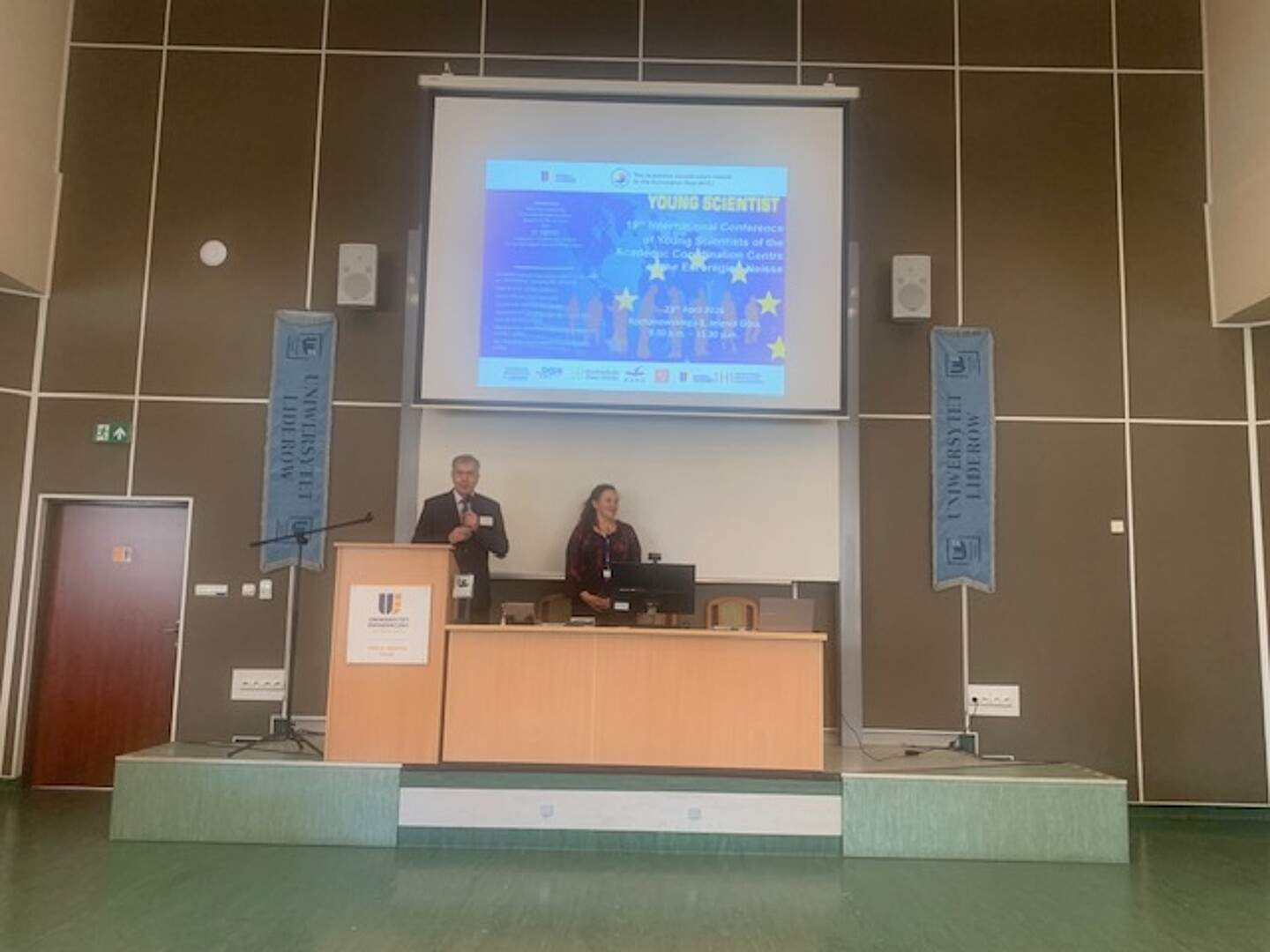
This year, Zittau/Görlitz University of Applied Sciences (HSZG) was once again part of the International Conference of Young Scientists of the Academic Coordination Center (ACC) in Jelenia Góra, Poland. On April 23, 2026, the 19th edition of the conference once again brought together committed students and doctoral candidates from the three-country region.
The conference is much more than a traditional specialist meeting: it offers young researchers a real stage. Students from Bachelor's, Master's and doctoral degree programs presented their own research projects as well as the activities of scientific groups - whether in lectures or poster formats.
For many participants, this is their first step into the international world of science. The exchange across subject boundaries, new perspectives and direct contacts with universities from Germany, Poland and the Czech Republic make the event an important source of inspiration for their own academic development.
Such international formats are invaluable, especially for our students. They enable them to make their own research visible, try things out and gain new perspectives across national borders. It is impressive to see the commitment and quality with which our young academics make use of this opportunity.
”With six participants, the HSZG was once again visibly represented in 2026. They took the opportunity to present their research to an international audience and receive feedback.
The HSZG students' contributions impressively demonstrated the breadth of research at the university - from social issues to theoretical analyses and AI applications:
For example, Maria Zimmermann (graduate of the Management of Social Change Master's program) examined in her Master's thesis how strongly young people in the German-Polish-Czech border region identify with their homeland and why many nevertheless leave the region. Her findings make it clear that, in addition to structural challenges, a lack of future prospects plays a major role - and that more opportunities to help shape the future and cross-border offers could motivate young people to stay or return.
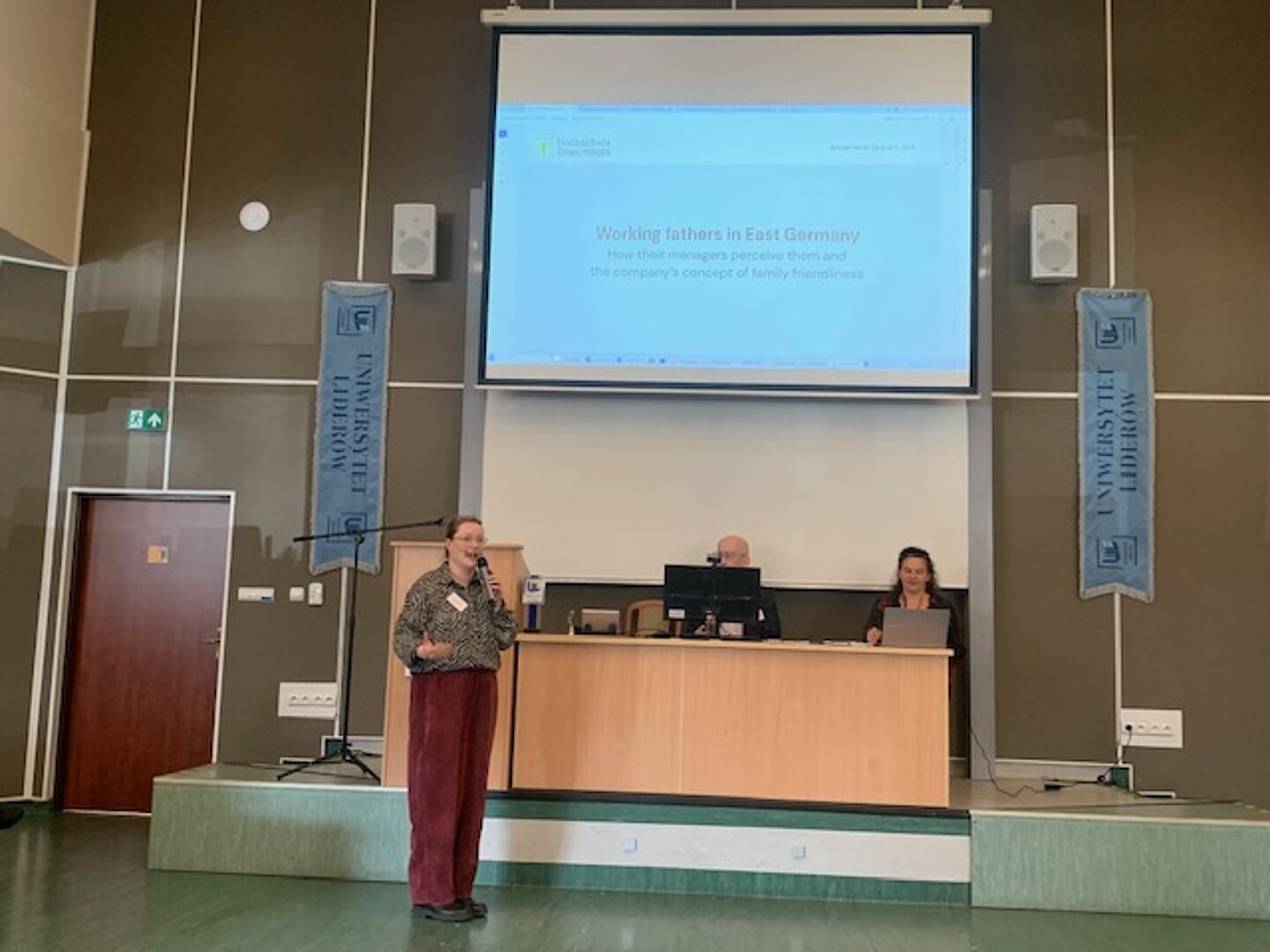
Annemarie Grünert (Master's degree in the management of social change) addressed the issue of work-life balance from a perspective that has received little attention to date: that of men in management positions. Her study shows that traditional role models continue to have a strong impact and that fathers are usually seen primarily as breadwinners, while care work remains predominantly with women.
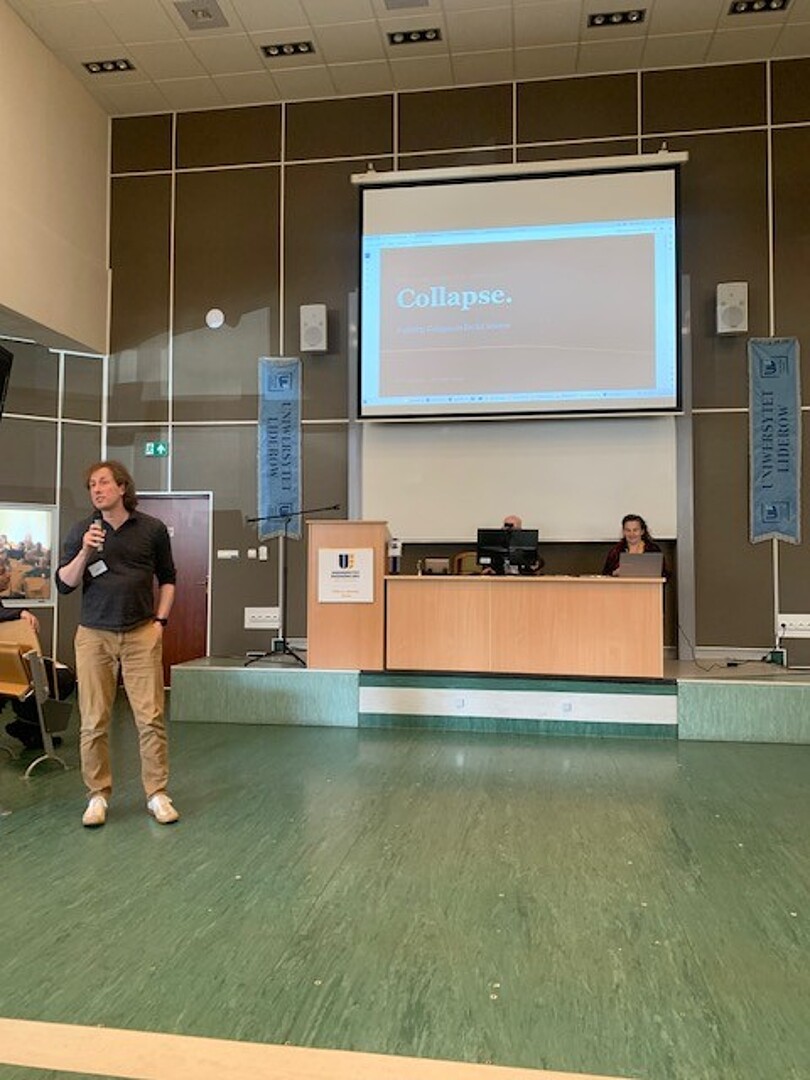
Uwe Jaschke (Master's degree in the management of social change) dealt with a fundamental theoretical question: What does it actually mean when people talk about a "social collapse"? His contribution argued for a more precise term based on systems theory and showed that it often refers to transformation processes rather than actual collapses.
A technical focus was set by Vincent Montag (Master's program in Computer Science), who investigated in a research project how reliably AI models can translate natural language into database queries. His results show that systems that learn from real feedback work much more precisely than those that rely solely on static rules.
The presentations were supplemented by poster contributions from Franz Fregin (Dipl.-Soz., doctoral scholarship holder F-S) and Cemil Ceylan (Bachelor's degree program Business and Computer Science Management). Franz Fregin dealt with regional networks between universities, business and infrastructure in Saxony, highlighting key players, resources and framework conditions. Cemil Ceylan presented an innovative approach to analyzing IT security requirements and showed how AI-supported methods can be used to make complex standards understandable and comparable.
The conference opens up valuable opportunities for young people in particular: making their own ideas visible, gaining self-confidence and becoming part of an international network.
The Zittau/Görlitz University of Applied Sciences was not only present with its own research contributions, but was also actively involved in shaping the conference: Prof. Dr. Sophia Keil and Inna Hauf were part of the international jury. In this responsible role, they evaluated the participants' contributions, accompanied the discussions and contributed their professional expertise to the selection of the best papers.
In this way, the HSZG underlines its dual role at the conference - as a source of inspiration for young researchers and at the same time as an active contributor to an international dialog on scientific quality.
After an HSZG student received an award last year, the university is building on this success in 2026:
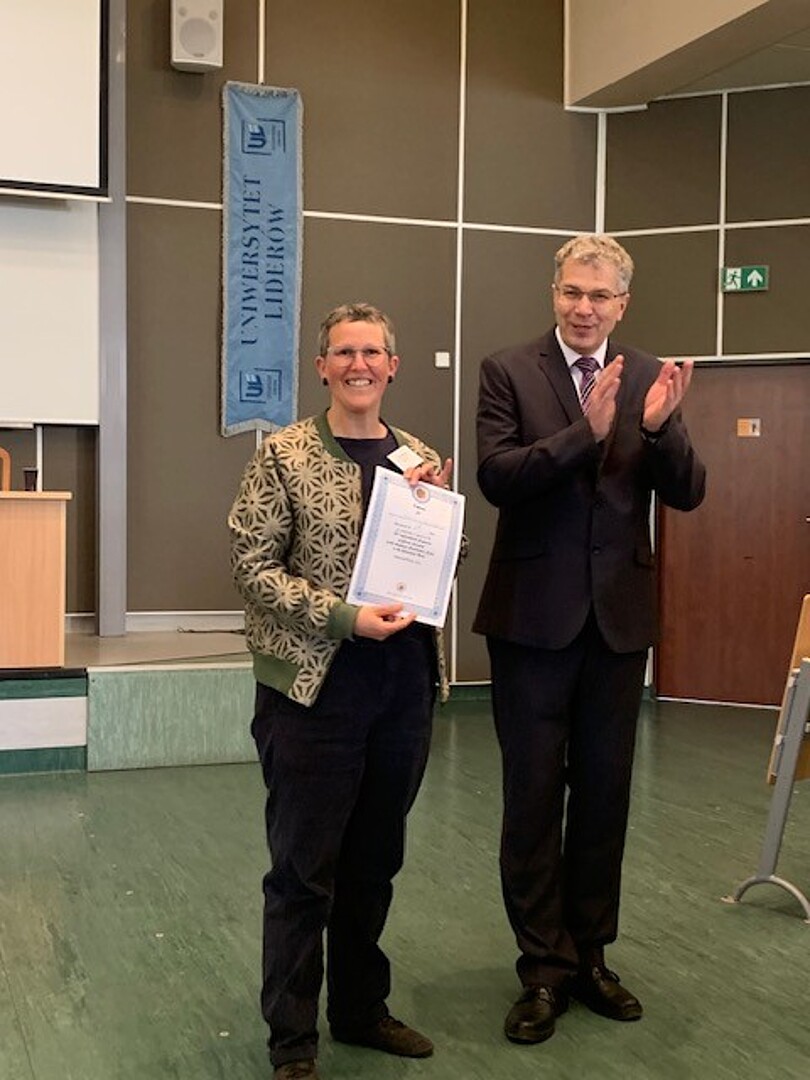
Maria Zimmermann impressed the jury with her qualitative research as part of her Master's thesis and achieved 2nd place out of 24 participants. Particularly noteworthy: she not only prevailed against students, but also against doctoral students. "I'm delighted that the relevance of my topic was recognized with second place at the ACC conference. I find the question of how the region will develop in the coming years particularly exciting - and what role young people themselves play in actively shaping perspectives in the three-country region," says the graduate of the Master's degree course in the management of social change.
Vice President Sophia Keil warmly congratulated Maria Zimmermann on this outstanding success: "Second place at the international ACC conference is a special award and recognizes both the high academic quality of her work and her personal commitment. My special thanks also go to her supervisor, Prof. Dr. Raj Kollmorgen, who accompanied her on this scientific path with great professional expertise. It is a great pleasure for me to be able to accompany committed and talented students on their academic path."
Prof. Dr. phil. habil. Raj Kollmorgen from the Faculty of Social Sciences also paid tribute to the graduate: " The award shows how relevant and at the same time scientifically sound young research is in dealing with the challenges of our region. Ms Zimmermann's work addresses a central topic for the future and combines analytical depth with social relevance - that is exactly what we demand from good social science research."
This repeated success impressively demonstrates the potential of the students at the HSZG - and how practice-oriented and research-intensive the education at the university is.
The Academic Coordination Center (ACC) has stood for active international cooperation in the Neisse Euroregion for many years. The conference is an example of how academic exchange transcends borders and encourages young people to develop their ideas in an international context.
The Academic Coordination Centre ( ACC ) was founded in 1991 in the Neisse Euroregion. Its aim is to coordinate university education and the academic and research activities of university teachers and academic staff at universities located in the Czech-German-Polish border region.
The ACC's partner universities are (each in the local language) the Techniká Univerzita v Liberci, the Zittau/Görlitz University of Applied Sciences, the International University Institute Zittau, the Uniwersytet Ekonomiczny we Wrocławiu (Jelenia Góra site), the Karkonoska Akademia Nauk Stosowanych w Jeleniej Górze, the Politechnika Wrocławska (Jelenia Góra site) and the Duale Hochschule Sachsen.