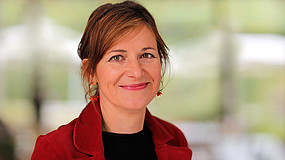
Prof. Dr. Martina Zschocke explains what travel does to us.
Author: Sebastian Benad
Why do people set off? What are they looking for in faraway places? And why can a trip not only relax, but also influence perception, thinking and personal development? Prof. Dr. Martina Zschocke from the Faculty of Managerial and Cultural Studies at Zittau/Görlitz University of Applied Sciences addresses these questions in her new book "Reisepsychologie. Why people go on trips", which was published by UVK Verlag in 2026.
The book combines psychological principles, tourism science perspectives and practical examples. It is aimed at students, teachers, researchers and people working in tourism who want to gain a better understanding of the motives, expectations and experiences that shape travel.
The book focuses on the four phases of travel: the time before the trip, being on the road, arriving and the phase after returning. Prof. Dr. Zschocke examines which psychological processes influence travel decisions, what role personality and life situation play and why certain places, landscapes and forms of travel can have particularly strong effects.
It is not just about classic vacation motives such as recreation, variety or relaxation. The book also looks at how travel can promote creativity and cognitive flexibility, why movement, sensory perception and a sense of time are of particular importance when traveling and how travel affects the body, psyche, memory and identity.
A special emphasis is also placed on current developments: Travel behavior today is also shaped by social media, travel photography and digital recommendation apps. The publication thus addresses issues that are equally relevant to tourism, communication and management.
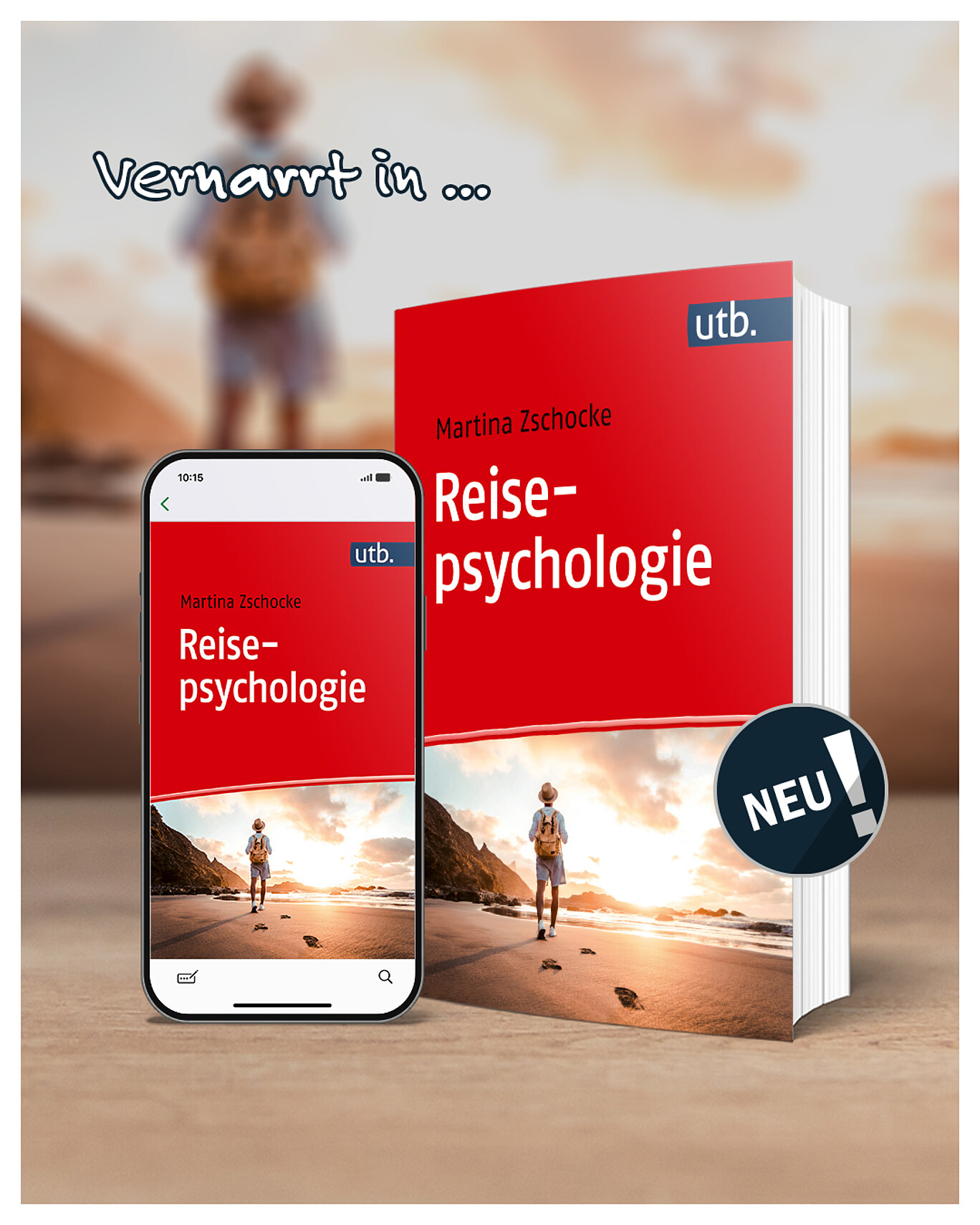
"Travel Psychology" is suitable for teaching and learning at colleges and universities as well as for tourism practice. The publication combines theoretical principles with numerous examples and practical impulses. This makes it a very good fit for the profile of the Faculty of Managerial and Cultural Studies, which combines professional expertise, interdisciplinary perspectives and practical application.
A special design element of the book are artistic works by José Augusto Castro. They structure individual sections of the publication and provide additional access to the topic of travel: not only analytically, but also visually and atmospherically.
The book comprises 358 pages and has been published under ISBN 978-3-8252-6190-0. It is available as a printed and digital edition.
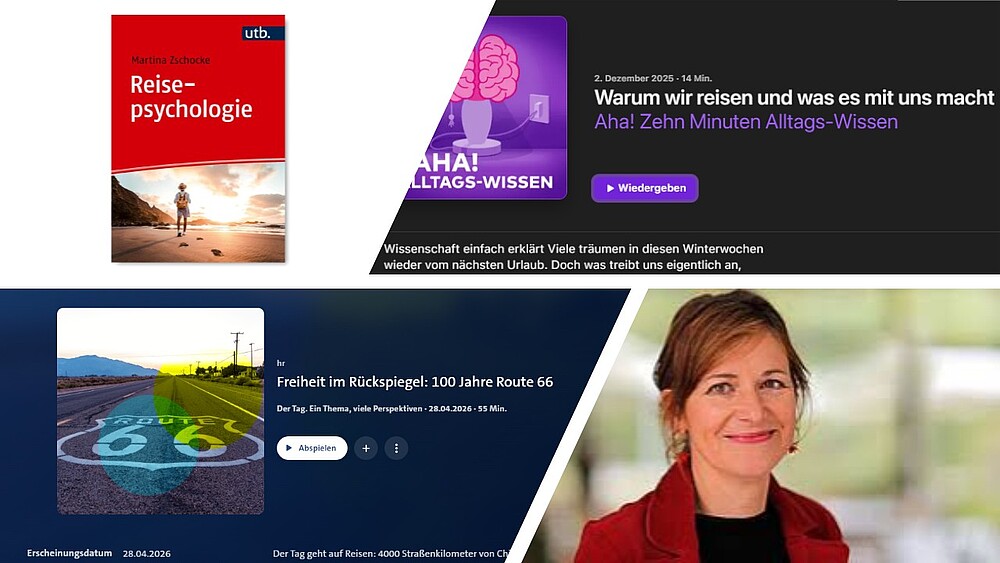
Prof. Dr. Martina Zschocke’s expertise is also in demand in national media. She was a guest on WELT’s science podcast “Aha! Ten Minutes of Everyday Knowledge” in the episode “Why We Travel and How It Affects Us.” Among other things, the episode explores why people want to escape their daily routines, why some individuals seek out new experiences more than others, and how travel can influence perception, mood, and personal development.
Hessischer Rundfunk also covered the topic of travel. The April 28, 2026, episode of “DER TAG,” titled “Route 66: Freedom in the Rearview Mirror,” explored the symbolic significance of one of the world’s most famous travel routes. Route 66 stands not only for mobility and wanderlust, but also for notions of freedom, new beginnings, and finding one’s place in life.
The current issue of *Psychologie heute* (1/2026) also features an in-depth interview with Martina Zschocke on the topic of travel. Among other things, she discusses how our personality influences our travel behavior and where different preferences come from, how travel is linked to creativity, and why longer trips can sometimes have significant transformative potential.
For the Faculty of Managerial and Cultural Studies, this media attention demonstrates how relevant academic perspectives on tourism, leisure, psychology, and social change are to a wider audience. At the same time, it highlights how research and teaching at the HSZG address topics that are relevant far beyond the university context.
• More information about the book: www.utb.de/doi/10.36198/9783838561905
• WELT Podcast – “Aha! Ten Minutes of Everyday Knowledge”: podcasts.apple.com/de/podcast/aha-zehn-minuten-alltags-wissen/id1637836095
• hr program “DER TAG” / ARD Sounds – “Route 66: Freedom in the Rearview Mirror”: https://www.ardsounds.de/episode/urn:ard:episode:618c0bd5ba36c431/
• Interview with Prof. Dr. Martina Zschocke in *Psychologie heute* (1/2026): https://www.psychologie-heute.de/leben/artikel-detailansicht/45035-wir-sehen-unser-leben-aus-einer-anderen-perspektive.html