
Learning for tomorrow at "Apprenticeship Day 2026"
The theme of Teaching Day in 2026 was: “University as a Space for Shaping a Sustainable Future.”
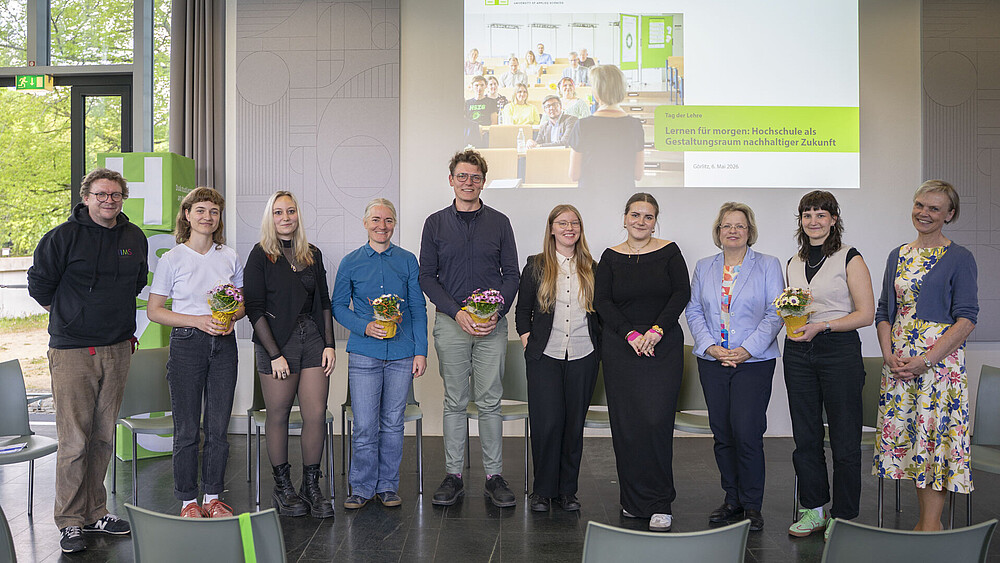
How can higher education empower and strengthen students to actively and responsibly help shape the future? This question was the focus of the Teaching Day 2026 on May 6, 2026, in the auditorium on the Görlitz campus.
Under the theme “Learning for Tomorrow: The University as a Space for Shaping a Sustainable Future,” university faculty, staff, and guests gathered to discuss future-oriented university teaching, education for sustainable development, transformation, and the skills needed for tomorrow.
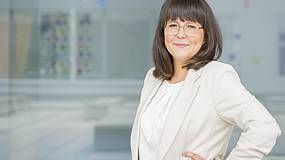
Teaching Day is important because it creates a space for us to reflect together on the future of education. Especially in the context of sustainability, it becomes clear that universities are far more than just places for imparting knowledge—they are spaces for shaping responsible action and social cohesion. For me, sustainability means not only climate protection or technological innovation, but above all a mindset. In addition to academic excellence, universities have a responsibility to foster values such as respect, responsibility, and a sense of community. After all, the future needs not only qualified professionals, but people with a mindset who can help shape progress in a responsible way.
”


An Overview of the Keynotes
Keynote 1:
Can Universities Drive Sustainable Transformation? – Developing Practical Skills to Address Urgent Societal Challenges
Speaker: Dr. Annett Kaldich, Faculty of Physics and Earth System Sciences, University of Leipzig
Dr. Annett Kaldich , recipient of the Ars legendi Award for Excellence in Higher Education Teaching, kicked off the event by asking what role universities can play in societal transformation processes and what practical skills students need to responsibly shape pressing issues such as climate change, digitalization, demographic change, or the use of AI. She framed sustainable transformation as an interplay between the practical, political, and personal spheres and made it clear: Teaching is most effective when it combines knowledge, values, and the ability to take action. She provided examples of how transdisciplinary learning environments, a focus on application and problem-solving, and “future skills” can be integrated into academic programs and teaching.
Keynote 2:
The Future Isn’t in Any Course Catalog—Or Is It?
Speakers: Julia Jurczyk (Bachelor’s in culture and management) and Annika Thomas (Master’s in management of social change), HSZG Student Council
From a student’s perspective, Annika Thomas and Julia Jurczyk asked how “future-oriented teaching” can be put into practice when societal developments often outpace curricular adjustments. Their key point: The future isn’t “ready-made” in the course catalog—it becomes visible when courses and exams are consistently geared toward competencies, responsibility, and the ability to take action . This requires, among other things, clear, competency-based course descriptions, appropriate learning and assessment methods, and more room for student involvement. At the same time, they made it clear that student participation, particularly in committees, should also be understood as a learning space where communication, cooperation, and evaluation skills are developed in practice.
This year’s Teaching Day demonstrated that student participation is more important than ever. We hope that the university will actively integrate future-oriented topics such as sustainability and skills development into all degree programs and strengthen student committees over the long term. This will enable students to have the freedom to develop innovative solutions and ideas.
”Keynote 3:
Who Turns Off the Tap? Competency-Based University Teaching at the Intersection of Engineering, Systems Analysis, and Change Agency
Speaker: Dipl.-Ing. Markus Will, Faculty of Natural and Environmental Sciences
Using a vivid metaphor—the “proper way to turn the faucet”— Markus Will bridged the gap between classical engineering logic and systemic thinking: not just solving problems and optimizing, but understanding connections, recognizing interactions, and dealing with uncertainty. Using typical examples from system dynamics (including “Balancing Process with Delay”), he illustrated how easily good intentions can produce unexpected effects. His conclusion: If universities want to be spaces for creativity, the transmission of knowledge alone is not sufficient—systemic competence, anticipation, the ability to take action, and “change agency” are essential building blocks of future-oriented teaching.
Keynote 4:
Shaping STEM Education for the Future: From Problem Subject to Key Moment
Speaker: Prof. Dr. rer. medic. Sonja Schellhammer, Faculty of Natural and Environmental Sciences
In her presentation titled “Shaping Future-Oriented STEM Education: From Problem Subject to Key Moment,” Prof. Dr. Sonja Schellhammer, recipient of the 2025 Saxon Teaching Award, outlined perspectives on how learning processes—particularly in foundational and “challenging subjects”—can be designed to not only strengthen students’ subject-specific knowledge but also foster motivation, understanding, and future-oriented skills.
Specifically, this approach is evident, among other places, in the module“Physics with Project Workshop”( Green Engineering degree programme): Here, she integrates sustainability, inclusion, digital pedagogy, and project-based learning, linking foundational subject knowledge with socially relevant issues. In her presentation, she also clarified what she means by “individualization as an attitude”: Students are provided with a variety of learning approaches and can experiment to find the one that suits them best. This also includes, among other things, clear, self-explanatory, visually appealing, and pre-provided materials that can be used as lecture notes, reduce barriers (e.g., through screen-reader-friendly alternative texts), and transparently document exam requirements. This creates space for alternative explanations, repetitions, and motivating examples—ranging from everyday life and hobbies to socially relevant contexts.
We can create new approaches and build bridges for students through application and everyday references, clear and modern teaching materials, low-threshold interaction opportunities and an appreciative, encouraging attitude.
”


Panel Discussion: Between the Lecture Hall and the Future
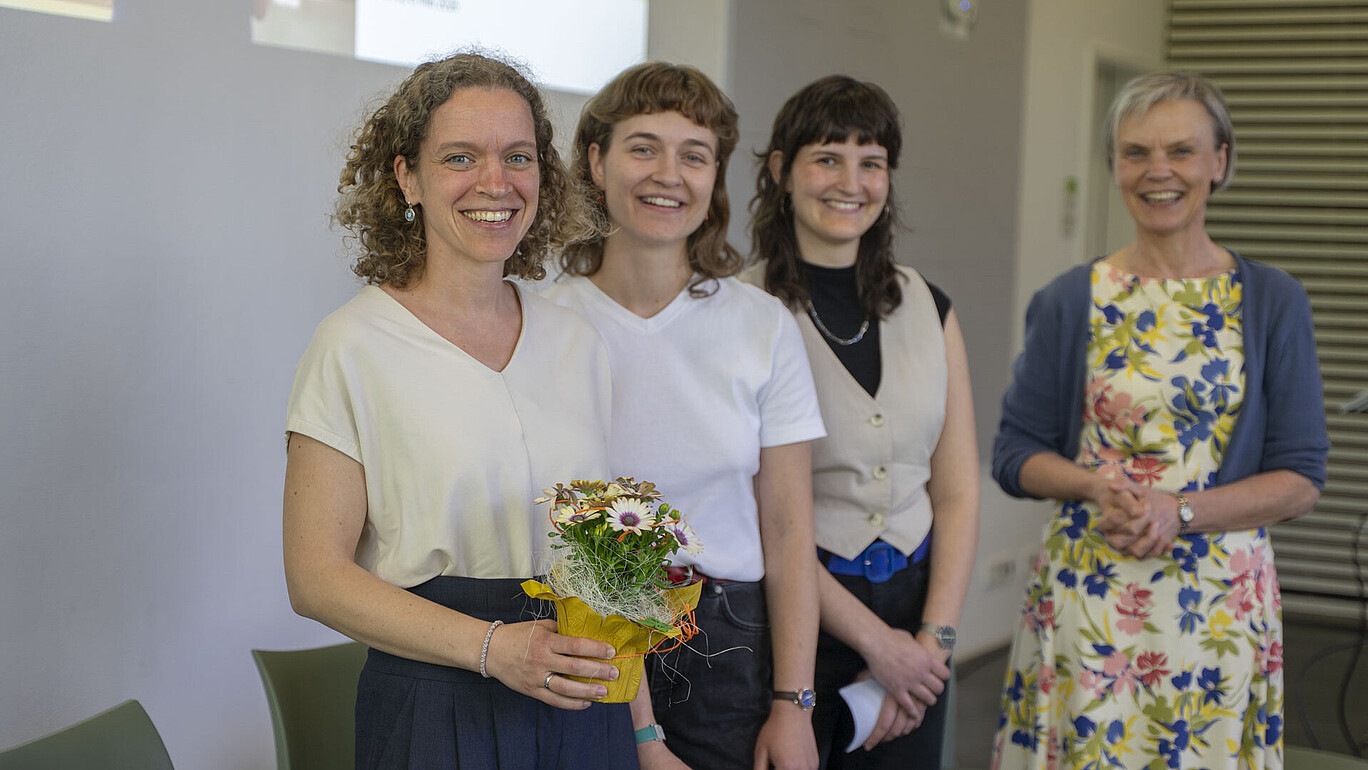
In the panel discussion “Between the Lecture Hall and the Future—How Do We Prepare Students to Be Fit, Resilient, and Ready for the Future?”, all keynote speakers, together with Prof. Dr. Maja Dshemuchadse and Sebastian Benad, discussed key areas of tension in future-oriented teaching.
One point became particularly clear: While practice- and project-oriented teaching formats, as well as more participatory teaching settings, are considered important levers for change, they can encounter structural and organizational limitations in everyday practice (e.g., institutional frameworks, resources, examination policies). At the same time, it was openly acknowledged that not all students are equally receptive to such forms of learning. The question of the feasibility of the (sometimes very broad) future competency requirements for graduates was also critically examined. It also became clear that future-oriented teaching does not simply mean “more hands-on experience,” but requires reliable framework conditions—as well as learning cultures that realistically enable both faculty and students to engage in participation and project work.
Outstanding Commitment: Recognition in the “AKTive Lehre” Program
At the end of the day, Prof. Dr. Steffi Heidig was honored in the “AKTive Lehre” program for her commitment to higher education pedagogy. In her tribute, Professor Małgorzata Maćkowiak, Vice President for Education and Sustainability, emphasized that a central aim of Teaching Day is to highlight and recognize commitment to good higher education teaching—in particular, the continuous development of one’s own teaching, reflection through dialogue, and the dissemination of these insights to the broader academic community.
International Guests from Mongolia
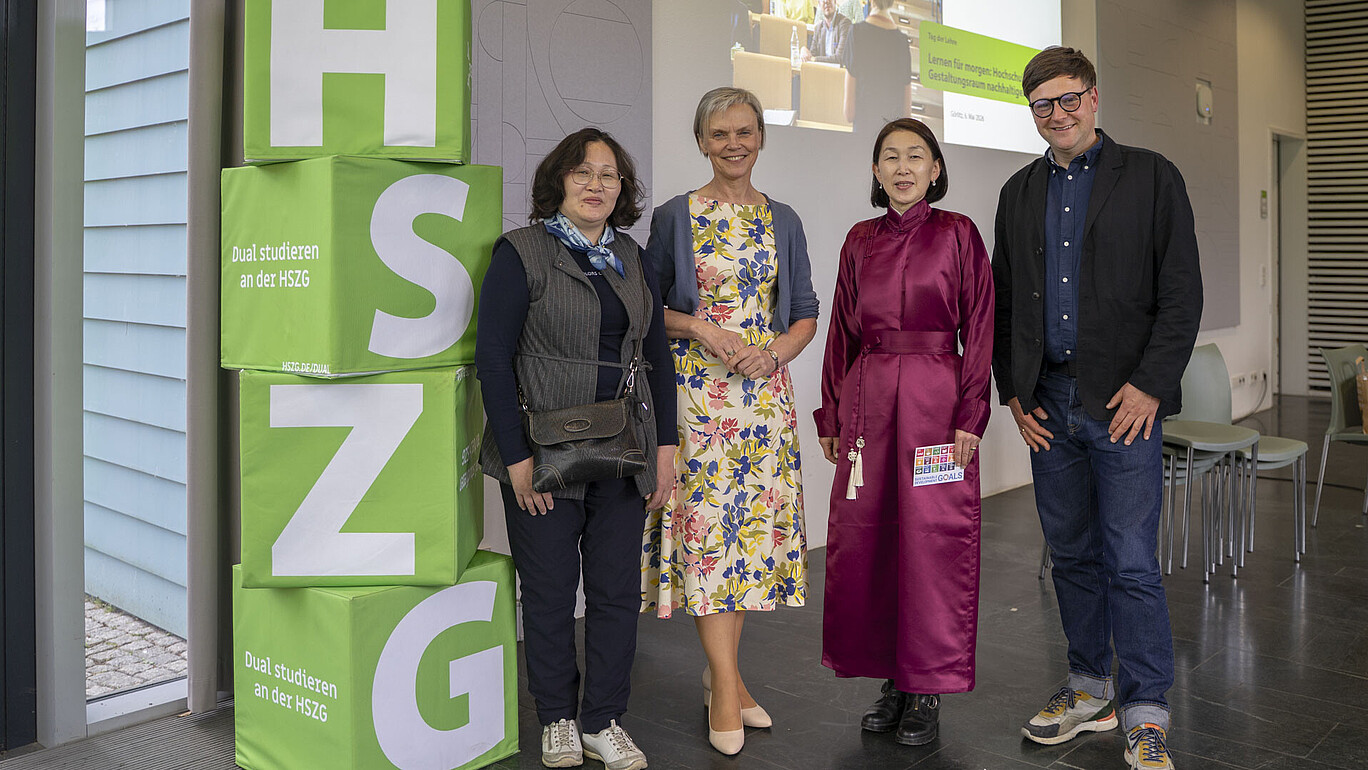
Teaching Day also provided an opportunity for international exchange: Bolormaa Baljir and Batsuren Bishbat, two German teachers from the German-Mongolian University of Raw Materials and Technology (DMHT) in Ulaanbaatar, participated in the event. Their visit took place as part of a cooperation initiative aimed at strengthening academic exchange between the HSZG, the DMHT, and the German Society for International Cooperation (GIZ).
The focus of their visit was on gaining insights into teaching and learning formats at German universities, particularly in the areas of German as a foreign language, technical language instruction, and university pedagogy. In addition to observing classes / courses and participating in exchange programs, the two guests also attended Teaching Day in Görlitz and took the opportunity to interact with faculty, staff, and students at the HSZG.
International exchanges like these show that universities are much more than just places for imparting knowledge. They create spaces for new perspectives, cultural learning, and personal encounters—and that is precisely what makes them an important part of a sustainable higher education system.
”
Thanks to all participants!
Many thanks to the speakers and participants of the panel discussion Dr. Annett Kaldich, Annika Thomas, Julia Jurczyk, Markus Will, Professor Sonja Schellhammer, Professor Maja Dshemuchadse and Sebastian Benad as well as the moderators Neele Hemmerling and Lea Uhlig.
Special thanks go to the organization team - Daniel Winkler, Miriam Meyer-Scheffel and Julia Rülicke - as well as Sven Müller for the photographic support.
We would also like to thank all participants for their interest, their contributions and their openness!
The Teaching Day 2027 will take place on 19.05.2027 as scheduled at the Zittau campus!
1st floor

4th upper floor
First floor


1st floor