
News
Quantum science as an opportunity for Saxony
Fraunhofer Institute for Electronic Nano Systems ENAS and HSZG exchange ideas at DLR_School_Lab on the future strengthening of the Free State of Saxony in innovation and technology.
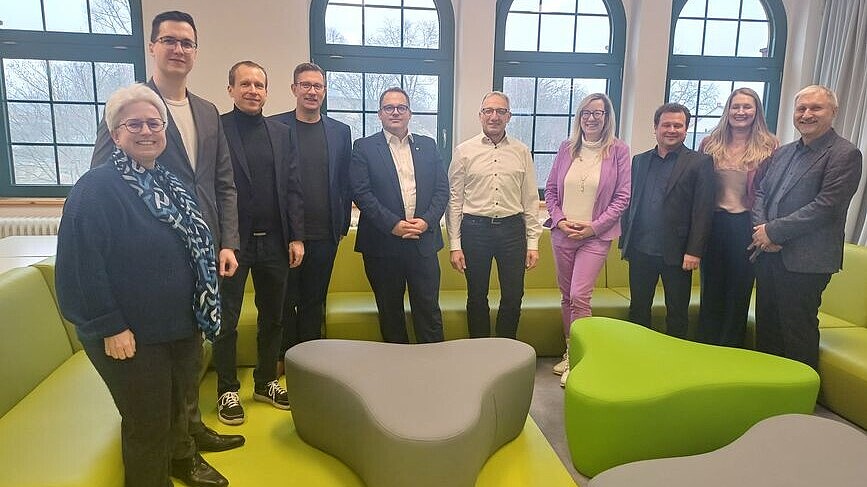
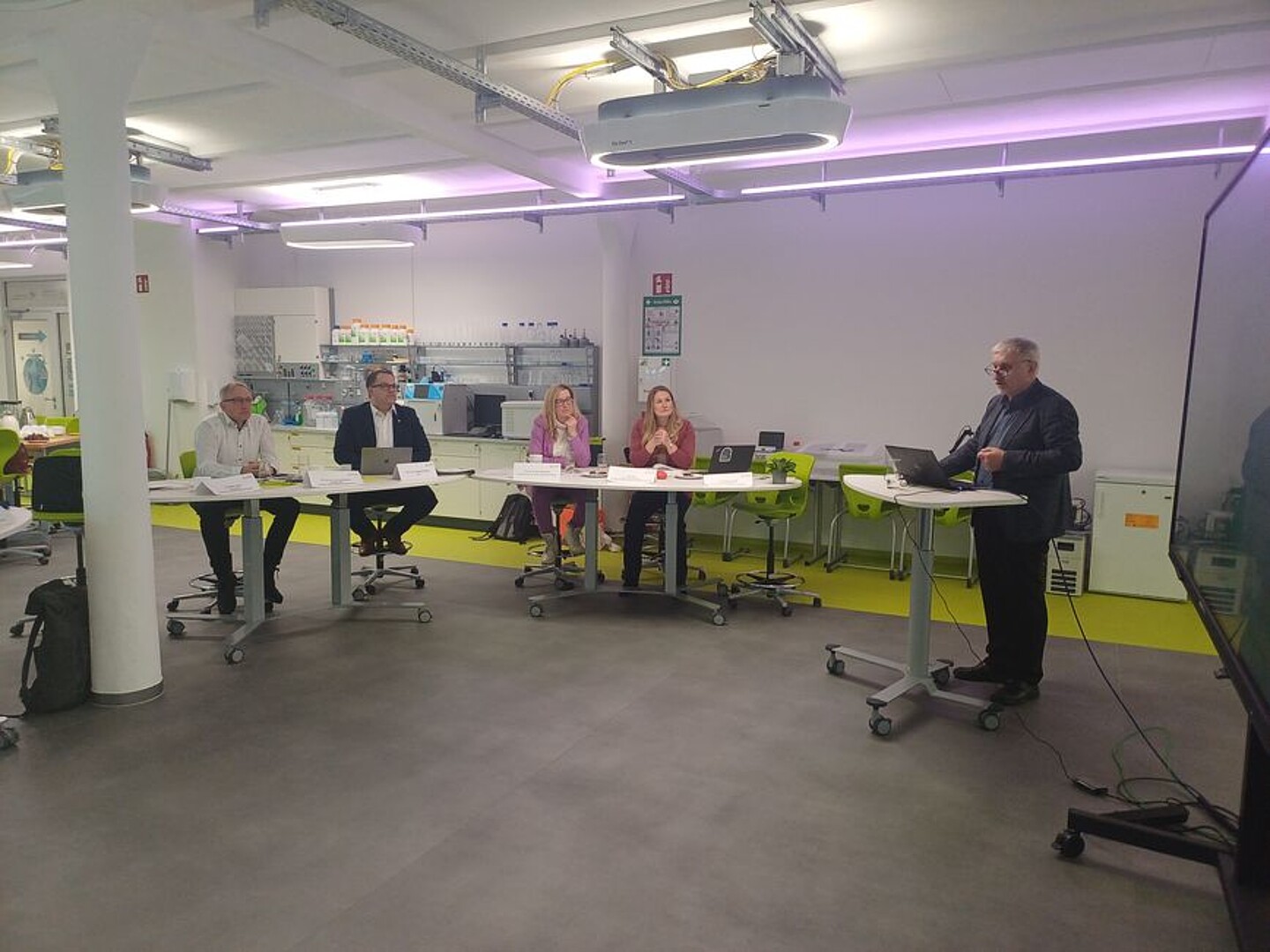
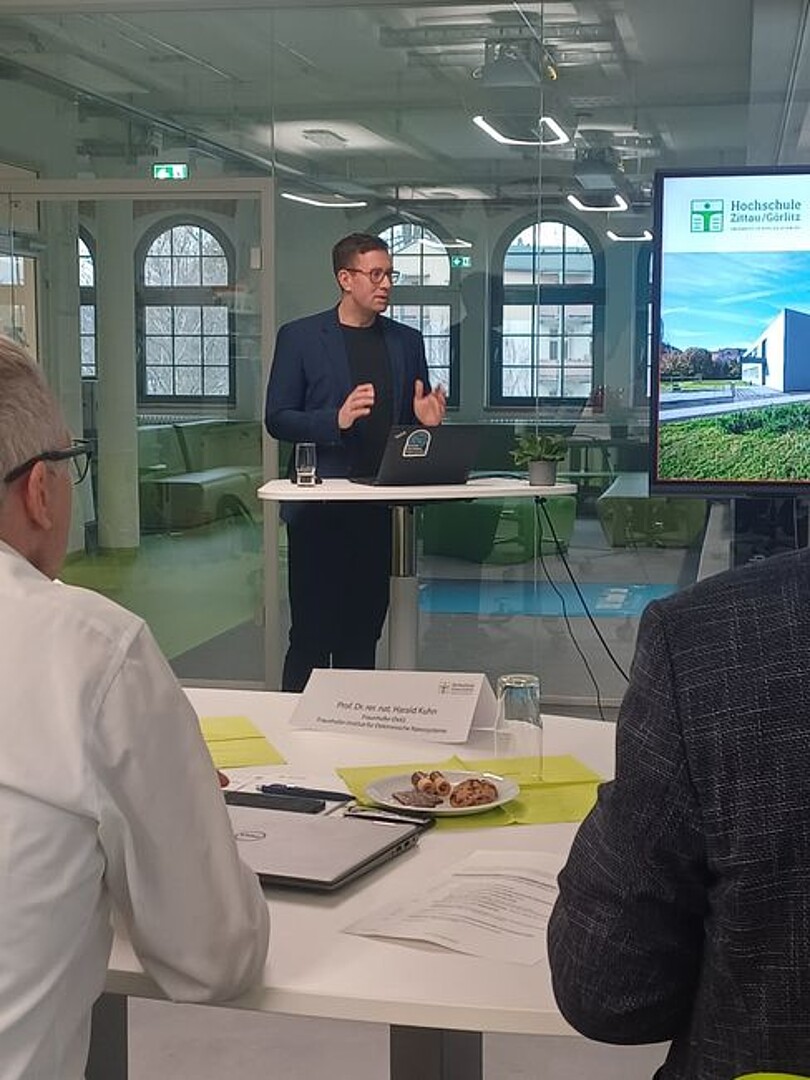
The Zittau/Görlitz University of Applied Sciences (HSZG) and the Fraunhofer Institute for Electronic Nano Systems ENAS met at the DLR_School_Lab in Zittau to discuss future cooperation in the field of innovative key technologies. The focus was particularly on the prospects for quantum science and strengthening Saxony as a location for innovation.
International impetus as the starting point for cooperation
A major impetus for the current exchange was provided during the HSZG delegation trip to Taiwan, Japan and Singapore in 2025, where the university was able to significantly expand its international contacts in the field of semiconductors and future technologies and hold initial talks with representatives of the Fraunhofer Institute ENAS, in particular with its director Prof. Dr. Harald Kuhn.
The contacts initiated there form an important basis for the now intensified cooperation in the field of quantum sciences and microelectronic future technologies.

The exchange with Fraunhofer ENAS shows very clearly how important international impulses are for the development of new research collaborations. The contacts from our delegation trip to Asia have made a decisive contribution to deepening scientific partnerships in the field of quantum technologies and specifically advancing the transfer of research into application.
”Quantum science as a key technology
Quantum science is one of the key future fields of technology development worldwide. They open up new possibilities in secure communication, high-performance computing systems, innovative materials and high-precision sensor technology.
Against this background, the HSZG and Fraunhofer ENAS discussed how scientific expertise in Saxony can be pooled and consistently transferred to industrial applications.
The HSZG stands for science that does not end in the laboratory, but has an impact on the economy and the region. The cooperation with Fraunhofer ENAS is an important building block for jointly advancing future technologies such as quantum technologies.
”And even if the field of quantum science is complex. "Quanta" determine research, development and innovation - and have always been future technologies since their discovery and also one of the current and future fields of cooperation between the HSCG and the Fraunhofer Institutes.
Whether quantum physics, quantum mechanics or quantum science. "Quantum physics is not just a step forward, it is a new way of understanding reality," director Christopher Nolan quotes Danish physicist and Nobel Prize winner Niels Bohr in his Oscar-winning film "Oppenheimer" (2023). What was true in the 1930s is still highly topical almost 100 years later - regionally, nationally and internationally, including for research at Zittau/Görlitz University of Applied Sciences.
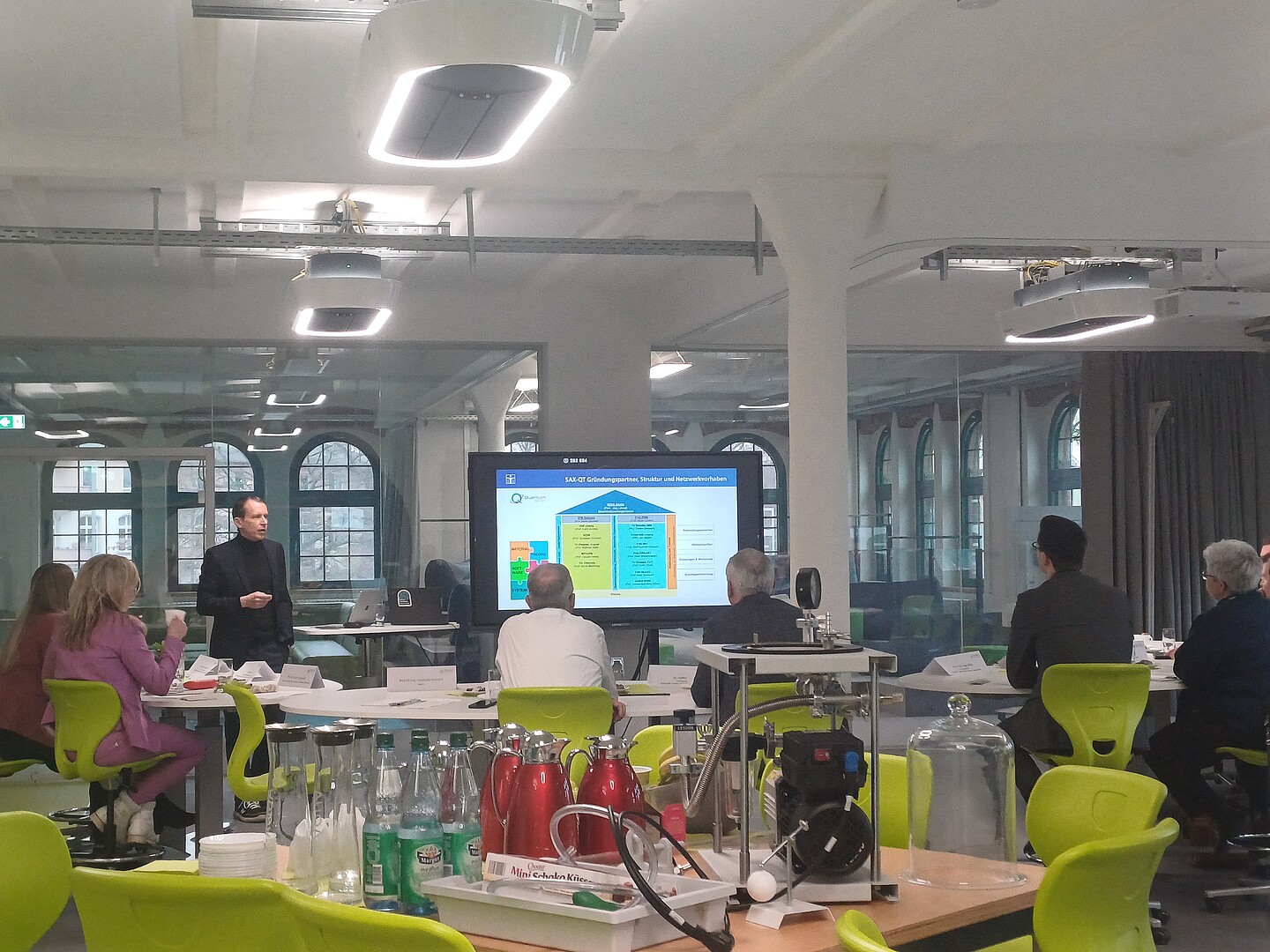
Quantum science and quantum applications are rapidly developing into key technologies for secure communication, powerful computers, new materials and high-precision sensor technology. The Saxon research network for quantum technologies SAX-QT "Quantum Saxony" was launched in December 2025 to specifically advance these future technologies and transfer them into industrial applications. The network is coordinated by Zittau/Görlitz University of Applied Sciences, the Fraunhofer Institutes for Photonic Microsystems IPMS and for Machine Tools and Forming Technology IWU as well as the Leibniz Institute for Solid State and Materials Research IFW Dresden. The Fraunhofer ENAS was also able to gain the HSZG as a strong partner in quantum technology for the network.

As a computer scientist, I find it particularly exciting to not only to teach students about research and development in the field of quantum technologies through topics and use cases in the context of quantum computing (QC) and quantum communication (QC), but also to shape this field together with a network of strong partners from research and industry, thereby increasing our national and international visibility. With the Fraunhofer Institute ENAS serving as the driving force behind one of three QC hardware platforms that Saxony is helping to develop, as well as a pilot partner for the first QK links, there are interesting opportunities for further collaboration.
”The particular strength of the Fraunhofer Institute for Electronic Nano Systems ENAS lies in the holistic development of "intelligent systems" for various applications. According to Fraunhofer ENAS, the institute's research activities range from the development of innovative wafer and packaging technologies to the manufacture of electronic components, micro and nano sensors and actuators, and the development of system concepts and system integration technologies, including communication interfaces. Using state-of-the-art and AI-supported test and reliability methods, Fraunhofer ENAS transfers the developed solutions into practical use. The institute accompanies customer projects from the idea to the design, technology development or implementation based on existing technologies to the tested prototype.
Quantum technologies at Fraunhofer ENAS
According to its own statements, Fraunhofer ENAS is establishing itself as a pioneering partner in applied quantum technology by closing the gap between theoretical quantum physics and industrially viable system solutions.
Together with other partners of the Research Fab Microelectronics Germany, Fraunhofer ENAS is developing chips for quantum computers, using the quantum properties of ions that are trapped by electric fields in a so-called ion trap, moved in a defined manner and whose quantum properties are linked to each other by logical operations.
According to the institute, it acts as a bridge builder between cutting-edge research and application in the field of quantum communication. Fraunhofer ENAS works very closely with world-leading scientists in the field of testing and verifying quantum-safe communication.
Quantum technologies as a field of cooperation
The aim of Quantum Saxony is to strategically bundle the competencies in the Free State of Saxony in the field of quantum technologies, to translate the technical language of the partners involved, to further expand the existing skills and to make them internationally visible. The Quantum Saxony network sees itself as an open platform that continuously integrates further partners and intensifies the exchange between research, industry and politics. Saxony's interdisciplinarity - from materials science to micro- and nanoelectronics to software development - is thus specifically promoted in the direction of commercial use.
"Quantum Saxony" was one of the selected projects that scientists from the HSZG presented to their research colleagues from Fraunhofer ENAS. Other current research projects and research centers of the HSZG were presented and discussed: The Science Center Oberlausitz (SCO-TTi) of the HSZG, the EKI-Saxony project (energy self-sufficient communication & information technologies from Saxony for industrial applications), topics from the Institute of Process Engineering, Process Automation and Metrology (IPM) such as RoSA-ReCycle (Robotic Sorting and Automation for Recycling or CircEcon (Center for Green Circular Economy) or the HSZG projects ZukLOS (Future Learning Location Upper Lusatia) or Green Zitty with the aim of a scientific state garden show in the region of Upper Lusatia in the coming years.
Cooperation and Competition: Coopetition
What applies to biology in Darwin's "Struggle of the Fittest" can also be applied to a certain extent to the political economy: success is achieved either by going it alone or, far more effectively, through strategic cooperation.
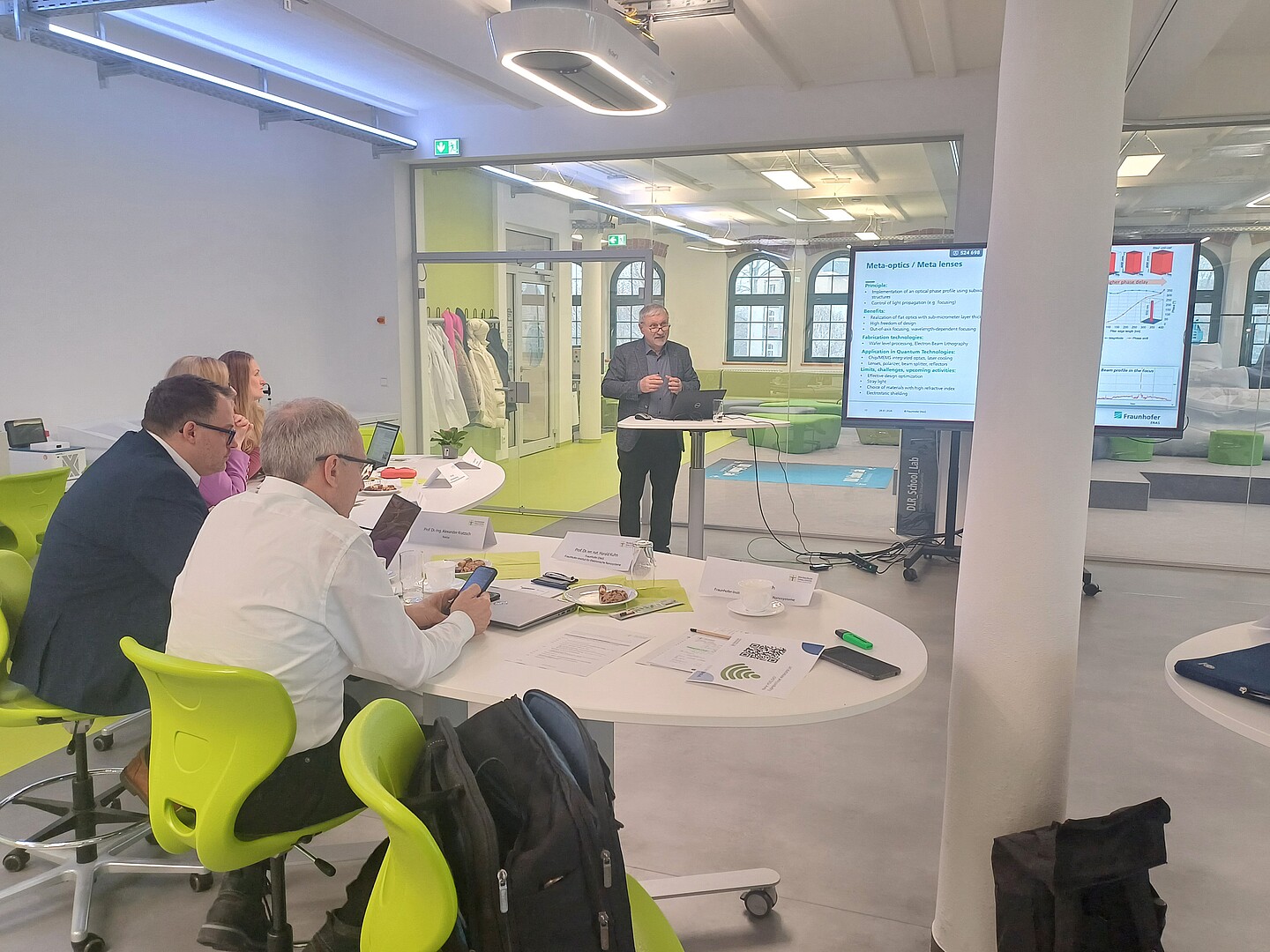
Prof. Harald Kuhn. Head of Fraunhofer ENAS, urges us to hurry: "Only together with strong partners will it be possible to establish Saxony as a strong player in a highly complex field such as quantum technology and attract attractive research and industrial contracts to the region. While we are still discussing, other national and international players are already securing the decisive projects. We must therefore act proactively, attract funding and contracts specifically for Saxony and make it clear to state and federal politicians what strategic importance research and innovation have for industrial competitiveness, economic value creation and the sustainable creation of jobs in Saxony".
For example, in the field of quantum communication or in the interface or interplay between cooperation and competition - a so-called "coopetition" (cooperation and competition). This refers to a strategy in which competitors consciously work together to achieve common goals such as innovation, cost reductions or market development, while at the same time competing in other areas. It promotes synergy effects, shares risks and is often found in industries with a high level of interdependence in order to expand the market. Are there therefore also several so-called "coopetitions" in the Free State of Saxony between different players from business, industry and science in order to specifically strengthen Saxony and eastern Germany as a business location?
Economic expert calls for more visions for new things
"What is missing in eastern Germany, and this is an important point from an economic point of view, also for the lower productivity, are large companies and company headquarters. These are the ones that do research and development and create economic power," says economist Nicola Fuchs-Schündeln, President of the Berlin Social Science Center, on the ZDF program "Markus Lanz" in February 2026. The overarching theme of the program: the economic and political development of eastern Germany: "We need an (overall) German economic policy that brings more vision, more power for new things and more momentum. This will benefit eastern Germany in particular," says Fuchs-Schündeln.
It is precisely this lack of dynamism that the HSZG and the Fraunhofer ENAS want to contribute to future collaborations - e.g. in the fields of quantum science or quantum communication. After the degree of the dialog meeting between the HSZG and Fraunhofer ENAS, the participants wanted to use the momentum in spring 2026 and outline the next necessary steps in a further project meeting. In concrete terms, this means: concretizing the cooperation plans, dovetailing the project plans, identifying the political Contact Persons and possible new innovative fields of research.
The meeting between the HSZG and Fraunhofer ENAS on specific topics such as quantum science is also a good fit both nationally and internationally. The United Nations proclaimed 2025 the International Year of Quantum Science and Quantum Technologies. Furthermore, quantum technologies are one of the six key technologies within the high-tech agenda of the Federal Ministry of Research, Technology and Space. And Zittau/Görlitz University of Applied Sciences is proactively involved here with its 2026 research projects. Recently, for example, in March 2026 in Berlin - in cooperation with the Saxon state government.
Text: Frank Leberecht
Photos: HSZG, Leberecht
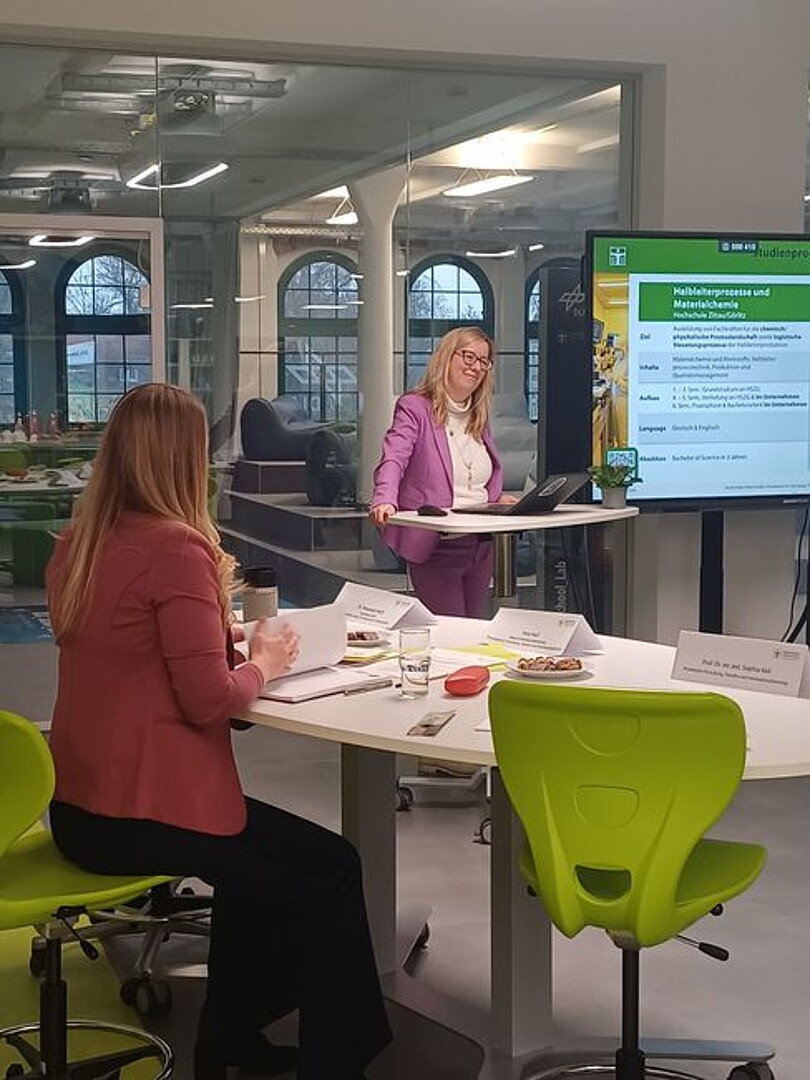
The application period for the upcoming winter semester is currently underway. New programs on offer include “Semiconductor Processes and Materials Chemistry” and “Mechatronics for Manufacturing,” which focus on modern manufacturing and microelectronics technologies.

1st floor

First floor