
Message details
A groundbreaking work and life
On the passing of the great philosopher and sociologist Jürgen Habermas (1929–2026)
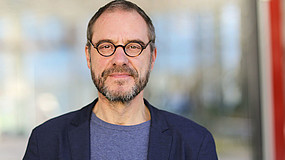
![[Translate to Englisch:] Bild von Jürgen Habermas](/fileadmin/NEU/Redaktion-TRAWOS/Meldungen/2026/Habermas10__14298469242_.jpg)
Anyone who studied philosophy or any other humanities or social science in Germany during the 1970s and 1980s could not have failed to encounter the work and influence of Jürgen Habermas. During this period and well into the late 1990s, he not only played a major role in shaping academic discourse in his fields of research, but was also a public figure, an intellectual who, like few others, was identified with the progressive scholarship and culture of the old Federal Republic. As was announced yesterday, he died on March 14, 2026, in Starnberg am See at the age of 96.
Jürgen Habermas, who was born in Düsseldorf in 1929, experienced the Nazi regime (including in his role as a local Jungvolk leader) and the World War intensely as a child and teenager, but managed to avoid conscription into the Wehrmacht in the spring of 1945. These early experiences had a decisive influence on his life—and his thinking.
After graduating from high school, Habermas studied philosophy, history, and psychology—as well as economics and literature—at various universities in early postwar Germany between 1949 and 1954, earning his doctorate in philosophy in 1954. From then on, he was also active as a writer, publishing regularly throughout his life in newspapers and popular journals (such as Die Zeit or Merkur). In 1956, he took up an assistant position at the University of Frankfurt am Main and began an intensive engagement with the approaches and studies of the famous Institute for Social Research under Theodor W. Adorno and Max Horkheimer. In 1961, he qualified as a professor with his study on “The Structural Transformation of the Public Sphere: Investigations into a Category of Bourgeois Society” and was appointed (initially as an associate) professor at the University of Heidelberg. In 1964, he succeeded Max Horkheimer as chair of philosophy and sociology at the University of Frankfurt am Main. A few years later, his influential work on epistemology and the philosophy of social science, “Knowledge and Human Interests” (1968), was published. At the latest since his appointment in Frankfurt and with this publication, Habermas was regarded as the most important representative of the second generation of Critical Theory of the so-called “Frankfurt School,” whose first generation included, alongside Max Horkheimer and Theodor W. Adorno, such influential thinkers as Herbert Marcuse, Erich Fromm, and Franz Neumann.
A new phase of his work and life began in 1971 with his appointment as co-director (together with Carl Friedrich von Weizsäcker) of the Max Planck Institute for the Study of Living Conditions in the Scientific-Technical World in Starnberg (near Munich). Here he produced further important works (such as “Legitimation Problems in Late Capitalism,” 1973, and “On the Reconstruction of Historical Materialism,” 1976). Above all, however, in 1981—the year the institute closed and he returned to the University of Frankfurt am Main—he presented his opus magnum: the “Theory of Communicative Action.”
In the following decade and a half leading up to his retirement (1994) and even beyond into the early 2000s, further influential works in social philosophy followed, of which only a few are mentioned here: “Moral Consciousness and Communicative Action” (1983), “The Philosophical Discourse of Modernity” (1985), “Facticity and Validity: Contributions to the Discourse Theory of Law and the Democratic Constitutional State” (1992), and “The Inclusion of the Other: Studies in Political Theory” (1996). In addition, he published numerous essays and commentaries on contemporary issues in his own small Suhrkamp series “Kleine politische Schriften” (Vol. I–XI, through 2008).
Without even beginning to address here the breadth and depth of his work and its far-reaching effects on many disciplines, topics, and lines of research—ranging from social philosophy, sociology, and political science to ethics, pedagogy, and psychology—let alone discuss and evaluate them, I shall nevertheless briefly outline in four points the central orientations and achievements, as well as the limitations, of Jürgen Habermas’s theoretical work. These notes are clearly subjective not only because Habermas was one of the first contemporary Western philosophers with whom I—while studying “Marxist-Leninist philosophy” at Humboldt University in (East) Berlin (1985–1990)— —but also because his theory continued to influence me significantly later on, and I had the opportunity to meet him in person as an audience member at events in the mid-1990s following reunification.
1. In a way that I consider almost exemplary, Jürgen Habermas embodied the dual orientation and practice of “Critical Theory” as (always also: self-reflexive) criticism of knowledge and society. He was, in the best sense, a committed intellectual who, as a left-liberal and social democrat, nevertheless never engaged in political missionary work or even allowed himself to be co-opted (as an activist) by a political party or to act as a political actor. This was already evident during the so-called “student revolt” of 1967–69, but also in many other socio-political debates (from the “Historians’ Dispute” to, most recently, the debate over Russia’s war of aggression against Ukraine).
2. Habermas was a fundamentally open-minded thinker who knew of no socio-political or ideological (camp-based) reservations regarding certain theoretical traditions or individual researchers, nor did he wish to. The criterion for his reading was always the content of knowledge and thus the possibility of a critical discourse that—if possible —should lead to mutual gain in understanding, which is why he engaged with Karl Marx just as much as with Max Weber, with Wilhelm Dilthey just as much as with Hans-Georg Gadamer, with George Herbert Mead and Hannah Arendt just as much as with Martin Heidegger, or with Niklas Luhmann just as much as with Jean-François Lyotard. Moreover, Habermas was not merely a voracious reader and “intensive processor” whose writings first introduced me to subdisciplines and currents previously largely unknown to me, such as symbolic interactionism or transcendental pragmatics, and indeed to the significance of linguistics for the social sciences. He was an explicitly synthetic thinker, or to put it another way: like few other theorists, he was able not only to assimilate the incredible breadth and substantive plurality of relevant theoretical and conceptual approaches, but also to integrate them productively and explanatorily into his own theoretical framework—one grounded essentially in (original) Critical Theory, and, above all, to deepen it with interpretive-interactionist and linguistic-philosophical insights.
3. His theory of society and development, as presented in “The Theory of Communicative Action” (1981), stands out far above the mass of contemporary attempts in terms of its complexity, substance, and, at the same time, its diagnostic quality regarding the times—one could even argue with good reason that its level in this regard has scarcely been matched to this day. Both the innovative formulation of (social) types of action (including the new “communicative action”) and their roles in social practice, the construction of the duality of “system and lifeworld(s)” with the contemporary diagnosis of “colonization” of the latter by the former, as well as the conceptualization of social evolution between lifeworld creativity, cultural storage in socially integrated groups, the emergence of new needs for legitimation, and the selective systematization of evolutionary steps in the wake of crises and upheavals, continue to represent substantial contributions to the social-philosophical explanation of the world and its development, namely that of Western modernity (history).
4. This simultaneously points to several—and here I again emphasize my particular perspective on Habermas’s work—problematic theses regarding the diagnosis of our times. Today, thirty to forty years after their formulation, these naturally appear in a different light, though this does not make their discussion any less relevant. I would like to highlight two: First, the hopes for a (largely) dissolution of previously dominant national, nation-state, and nationalist orientations and social bonds (such as social identities)—for which Habermas introduced such influential concepts as “constitutional patriotism” or the “postnational constellation” into the discussion—have clearly not been fulfilled. Even though Habermas certainly recognized risks and counter-movements at the time and addressed them, the question arises as to whether his fundamental expectation was not also conditioned by problematic theoretical constructs (e.g., regarding communicative action, the lifeworld significance of claims to validity that are open to argumentative criticism, or the unreflected universalization of Western developmental outcomes and claims). On the other hand, his engagement with the GDR and Eastern Central Europe from the late 1980s onward led to the thesis of a “rewinding revolution”—following the state-socialist experiment—and a catch-up modernization of the East. This did not go unchallenged, and not only because rewinding history is fundamentally impossible, but also because the assertion that the East had to catch up clearly tended to underestimate its own (Western) institutional and cultural developmental needs as well as the alternative offerings in the East as a resource for the West and the development of modernity as a whole.
These objections, of course, are by no means intended as fundamental criticism or a swan song. This is also because Habermas always responded to these and other objections and debates with openness, a willingness to learn, and productivity. Both topics certainly illustrate, however, that Habermas’s life and work were deeply anchored in the era of Western and, more specifically, West German postwar society—in its origins, problems, and risks as well as its expectations for the future.
This era began to fade in a first turning point around and after 1989/90 and likely ended no later than the (symbolic) year 2016, when protests against mass refugee migration from Afghanistan and the Middle East rapidly increased not only in the newly unified Germany but across almost all of (Western) Europe, and (as so often) no common and solidarity-based EU policy on the matter could be negotiated and implemented in the following years; indeed, for many observers, the “crisis of (liberal Western) democracy” took on an almost palpable character. It was also the year in which Donald Trump became U.S. president for the first time and set out to finally undermine Western postwar hegemony from within, even in its heartland—even though he flatly claimed to be doing the opposite.
Jürgen Habermas continued to engage with this, as well as the new wars in Europe, with his critical spirit right up until last year. Yet as much as he was a child of this now-past postwar era, this in no way implies that his foundational theoretical works will be irrelevant in the coming decades. This is already evident in the work and achievements of his numerous students (in the broader sense)—from Axel Honneth, Klaus Eder, and Claus Offe to Rahel Jaeggi and Hartmut Rosa.
- Felsch, Philipp (2024): The Philosopher. Habermas and Us. Berlin: Propyläen.
- Honneth, Axel/Joas, Hans (eds./2002): Communicative Action. Essays on Jürgen Habermas’s “Theory of Communicative Action” (3rd and expanded edition). Frankfurt/Main: Suhrkamp.
- Honneth, Axel/Mc Carthy, Thomas/Offe, Claus/Wellmer, Albrecht (eds./1989): Interim Reflections. In the Process of Enlightenment. Jürgen Habermas on His 60th Birthday. Frankfurt/Main: Suhrkamp.
- Iser, Mattias/Strecker, David (2010): An Introduction to Jürgen Habermas. Hamburg: Junius.
- Müller-Doohm, Stefan (2014): Jürgen Habermas. A Biography. Berlin: Suhrkamp.
- Münch, Richard (2005): Sociological Theory, Vol. 3 (Social Theory). Frankfurt/New York: Campus, pp. 261–308.
Your contact at TRAOWS
2nd floor right