
F-MK students experience tourism management along the Silk Road
Author:
Sebastian Benad
When the classroom smells of tea, spices, and silk
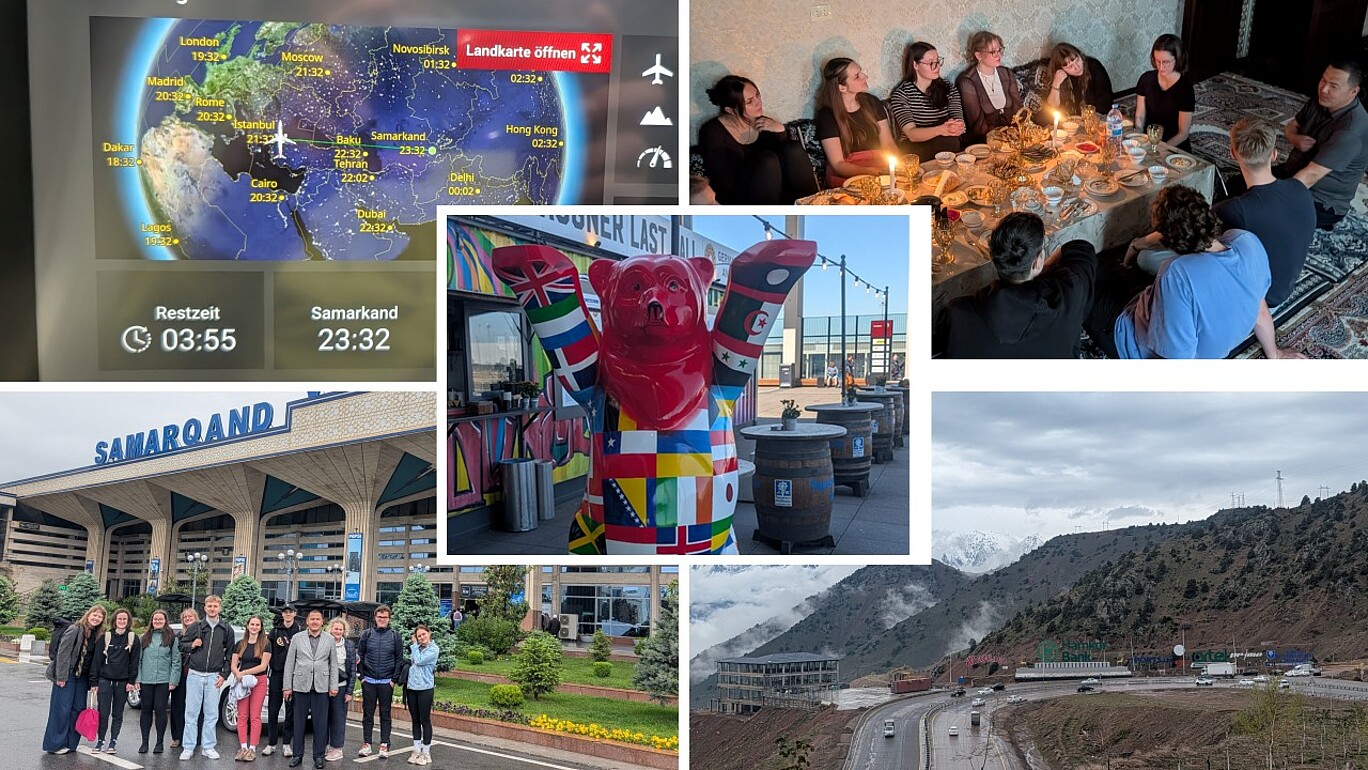
It is shortly after four in the morning when the group lands in Samarkand. The students from the Faculty of Managerial and Cultural Studies have just completed a train ride from Görlitz to BER, a layover in Istanbul, and a night flight to Uzbekistan. Ahead of them lies a country that, in the coming days, will not only be a travel destination but also a seminar room, a field of research, and a meeting place all at once.
Even before the actual field trip begins, it becomes clear what tourism in Uzbekistan can mean. At the airport, the owner of a long-established Uzbek travel agency is waiting for the delegation. Since there is still time before their onward journey, he spontaneously invites the group to his home. A short while later, the students find themselves not in a waiting area, but in a living room. There is tea, coffee, bread, and local specialties. What was meant to be a logistical layover turns into a first lesson in hospitality.
It is precisely moments like these that make the excursion special. Here, tourism does not appear as an abstract model from a textbook. It becomes something to be experienced: through conversations, smells, paths, sights, sounds, markets, metro stations, workshops, and historic sites. From April 22 to 30, 2026, a delegation from Zittau/Görlitz University of Applied Sciences, led by Solvig Langschwager, traveled to Uzbekistan. The route took them through Samarkand, Tashkent, and the Fergana Valley to Margilan, Kokand, and Shahrisabz.
For the Faculty of Managerial and Cultural Studies, such a trip is more than just an international program activity. It demonstrates how teaching becomes effective when management knowledge, cultural understanding, communication, and tourism are not viewed in isolation from one another. For the students, Uzbekistan became a place where they could observe how historical trade routes, modern mobility, digital services, local value creation, and international cooperation intertwine.
In this way, the field trip delves right into the very questions that shape the faculty’s development: How are organizations, markets, and destinations changing? How can cultural heritage be preserved while also making it accessible to tourists? How do learning environments emerge in which students not only absorb knowledge but also translate their own observations into professional judgments?
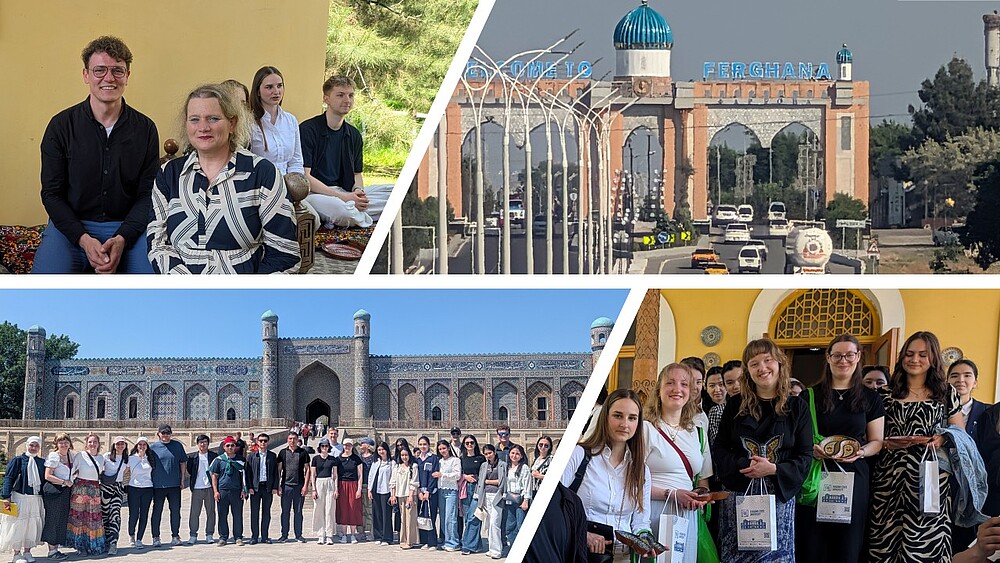
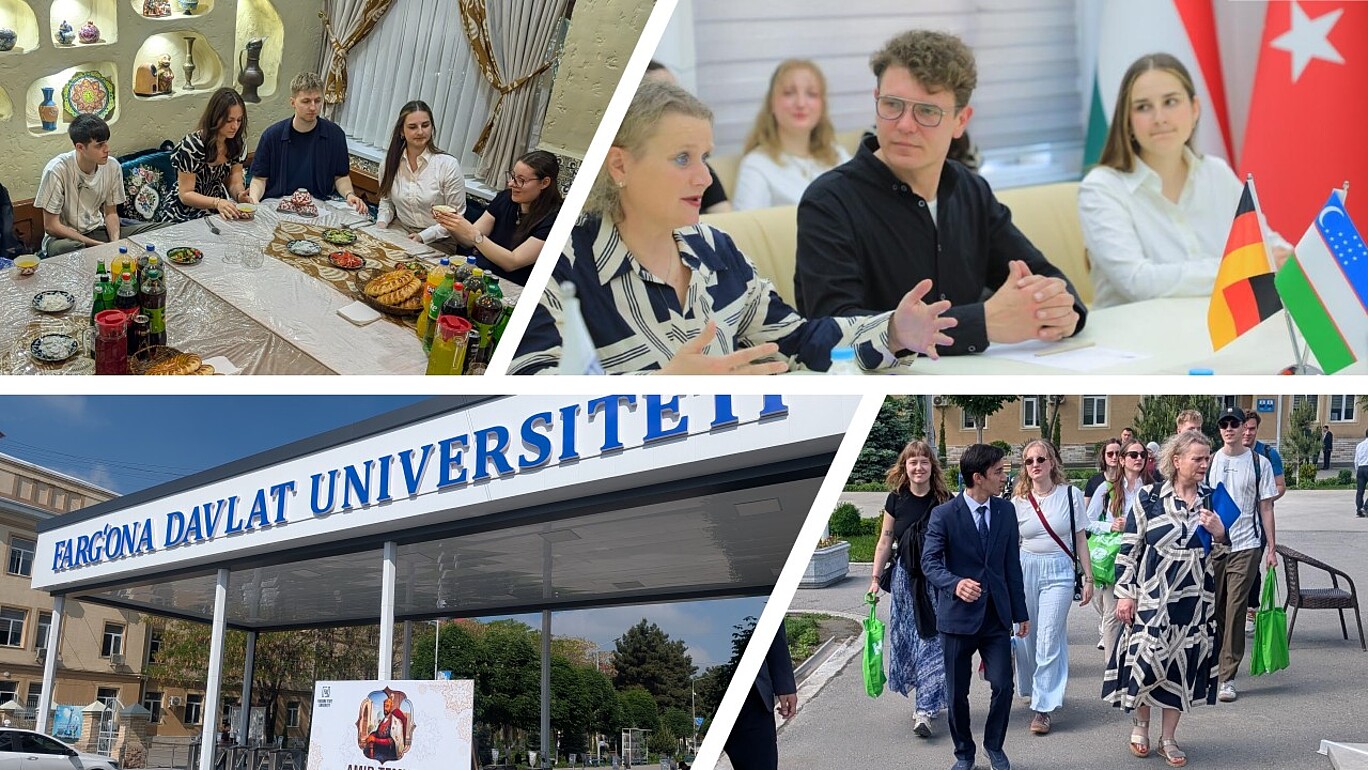
The official part of the trip begins at Fergana State University. The campus is green, spacious, and lively. The delegation receives a warm welcome, is given a tour of the grounds, and is greeted at the International Office. But the most important part of the visit does not take place in a traditional lecture hall.
The joint class / course with Uzbek students is moved to a “green classroom.” Amid trees, seating areas, and the campus atmosphere, German and Uzbek students discuss topics related to tourism. They compare travel experiences, talk about infrastructure, hospitality, cultural heritage, and the role of digital applications in everyday tourism.
Here, International Affairs are not just a buzzword, but a concrete working situation: Students contribute different perspectives, share their observations with one another, and jointly examine whether familiar models of tourism management are also viable in a different cultural and economic environment.
The visit also sends an important signal at the institutional level. In discussions with Aziza Shokirovna Bazarbayeva, Vice President for International Cooperation, prospects for further collaboration are explored: student and faculty mobility, joint teaching formats, guest lectures, online seminars, workshops, and, in the future, more structured academic partnerships.
For the F-MK, this exchange is strategically important. The faculty views International Affairs not merely as the movement of people across borders, but as the development of professional, cultural, and personal competencies. When people in the Fergana Valley talk about tourism, they are not just discussing travel packages. It is also about regional development, employment, cultural exchange, digital transformation, and the question of how universities can work together to make knowledge applicable to specific regions.
Chorsu Bazaar: A Market That Shows What Cultural Identity Tastes Like
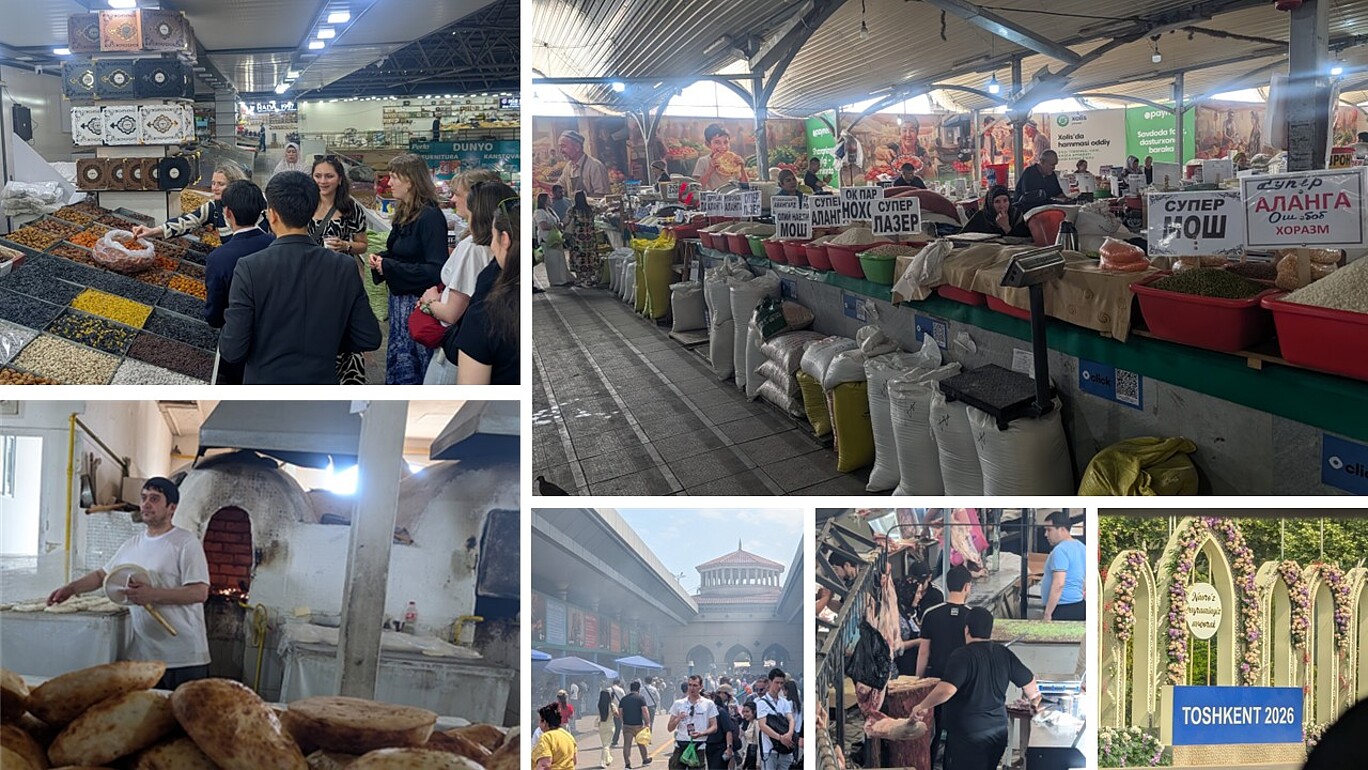
In Tashkent, the Chorsu Bazaar becomes one of the most memorable learning experiences of the trip. The moment you step inside, your perception shifts. Mountains of dried fruit, nuts, and sweets line the stalls. Vendors offer samples. Voices mingle. Colors, smells, and movement create an atmosphere that’s hard to squeeze into the traditional categories of destination marketing.
The students describe the bazaar as a place where traditional sweets, dried fruits, and regional specialties become part of everyday Uzbek culture. This culinary diversity makes cultural identity visible; the Silk Road’s historical trade structures remain recognizable in bazaar life; and hospitality is evident in the offering and tasting of local products.
The bazaar is not of interest to tourists because it was artificially created for visitors. Its strength lies precisely in the fact that it remains a space of everyday life. It is a marketplace, a social gathering place, a place of enjoyment, and a cultural stage all at once. For visitors, it creates an experience that appeals to multiple senses and is, at the same time, easily accessible.
For tourism management, this offers a concrete lesson: A destination is not defined solely by its sights. It can also be experienced through smells, tastes, sales pitches, product displays, and spontaneous encounters. The Chorsu Bazaar illustrates how tourism can learn from spaces that are not polished and curated, but rather take on their character through vibrant, everyday use.
This place is so valuable for teaching at the F-MK because it connects management issues with culture and communication. Students see how regional products become experiences, how everyday life becomes interpretable through a tourist lens, and how economic value is created through direct contact between vendors and visitors.
Beneath the City: The Tashkent Metro—A Moving Museum
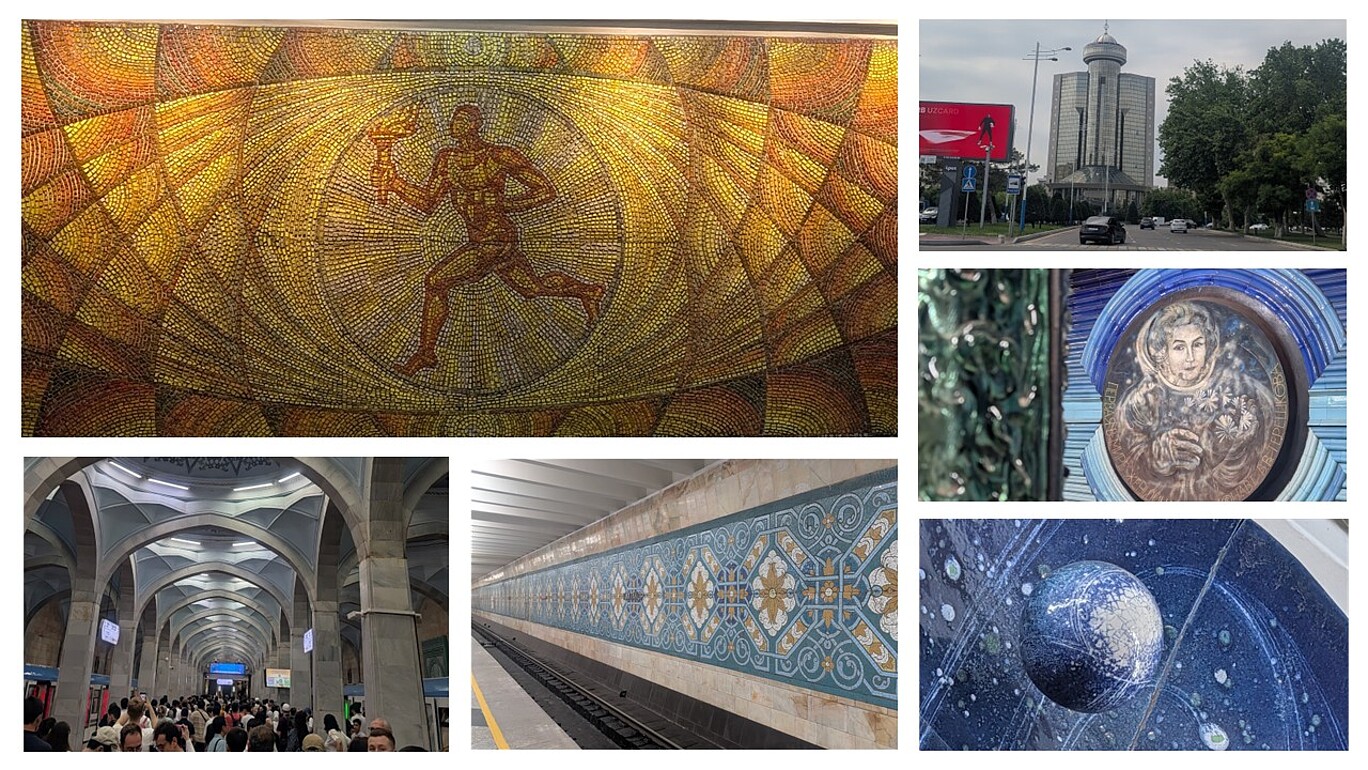
A few hours later, the view shifts from the city’s surface to underground. The Tashkent Metro is a mode of transportation, but at many stations it also feels like an underground museum. Chandeliers hang above the platforms. Mosaics line the walls. The ceilings are ornately decorated. Each station tells its own story.
Among others, the students explore the Kosmonavlar, Paxtakor, and Alisher Navoiy stations. Kosmonavlar evokes Soviet space exploration history. Paxtakor features floral and geometric patterns. Alisher Navoiy incorporates narrative motifs from the poet’s works. Anyone riding the subway here isn’t just traveling from A to B. They’re journeying through political history, art, literature, and urban identity.
This example is particularly relevant to the F-MK because it shows how STEM-related infrastructure, design, cultural codes, and tourist perception intertwine. Mobility is not only organized technically but is also imbued with aesthetic and narrative significance. Transportation planning becomes a space for experience. The journey to the destination becomes part of the destination experience.
For students, this leads to a clear insight: The customer journey does not begin at the monument, in the museum, or at the lookout point. It begins in the taxi, at the train station, in the metro station, and on the way through the city. Anyone who wants to design tourist experiences must also understand these transitions.
In this way, the metro becomes an example of transformation in urban space. Existing infrastructure is not merely utilized but culturally enhanced. For aspiring professionals in tourism, communication, and management, this is a concrete illustration of how even supposedly functional spaces can become part of strategic destination development.
Margilan: When a Single Thread Becomes Regional Value Creation
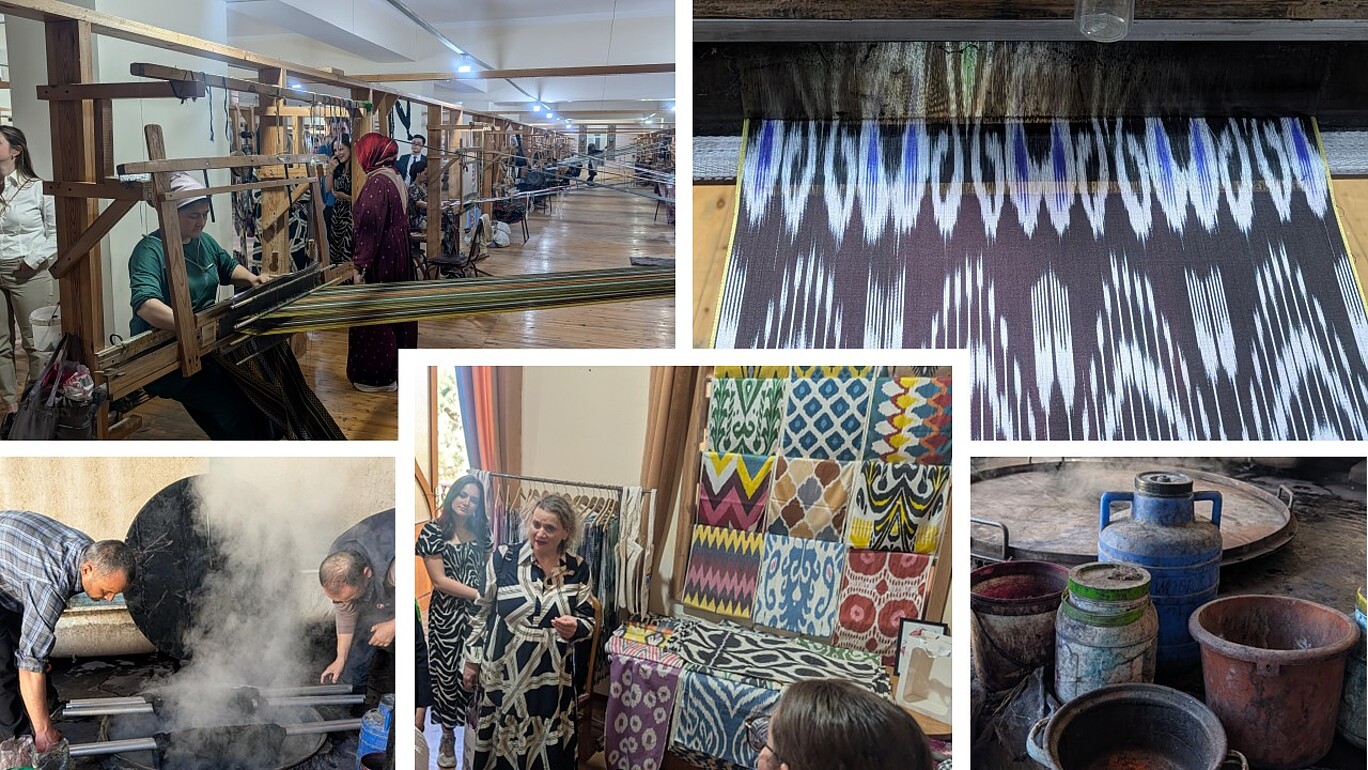
In Margilan, the journey takes us to the Yodgorlik Silk Factory. Here, the pace changes. Instead of large squares and open urban spaces, the focus shifts to workshops, looms, dye baths, and hands at work. The group follows the journey of the silk: from the silkworm cocoons through natural dyeing processes to the complex ikat weaving technique.
Dye baths steam in the workshops. Threads hang in bundles. Workers operate wooden looms with precision and speed. Pomegranate and walnut shells are turned into dyes. Patterns do not emerge by chance, but through tie-dyeing, dyeing, stretching, weaving, and years of experience.
Here, the students recognize a crucial difference: the value for tourism lies not only in the finished silk scarf. It lies in the process. Anyone who sees how silk is made views the product differently. A souvenir becomes a tangible example of cultural craftsmanship.
For tourism management, Margilan is therefore a powerful example of process-oriented product development. It’s not just the result that’s shown, but its creation. This fosters understanding, increases appreciation, and highlights local craftsmanship. At the same time, it becomes clear how tourism can strengthen traditional skills and support local employment.
This is where the faculty’s central themes intersect: culture, management, and transformation. The workshop demonstrates how centuries-old craft techniques can be adapted into today’s tourism offerings without completely losing their essence. It illustrates that innovation does not always mean inventing something new. Sometimes it means conveying existing knowledge in a way that makes it understandable, accessible, and economically viable for new target groups.
Registan: Wonder Alone Is Not Enough
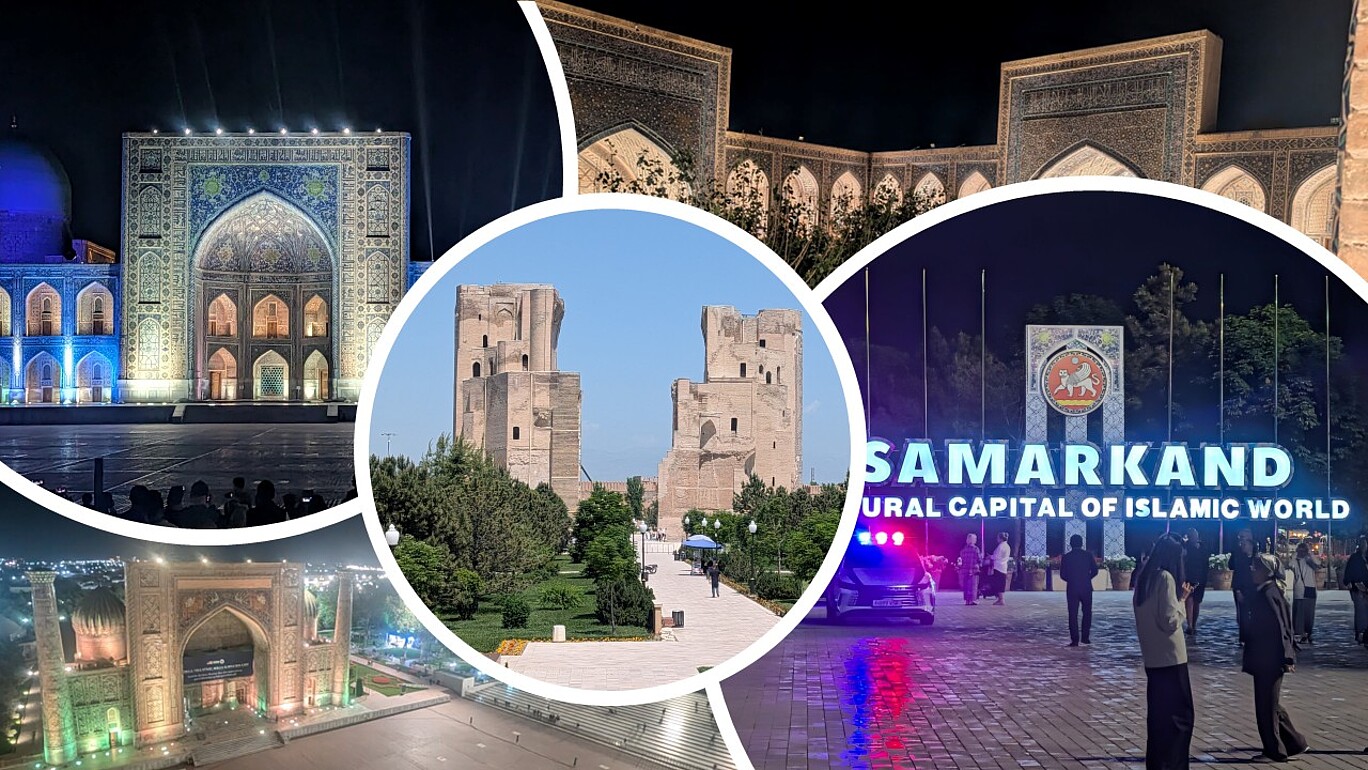
At the Registan in Samarkand, much of what makes the journey special comes together. The square is monumental. Three madrasas frame the space. Domes, portals, mosaics, and tilework draw the eye upward. By day, the Registan resembles an architectural textbook of the Silk Road. In the evening, light transforms it into a stage.
The students experience the square during a guided tour and while exploring on their own. They observe tour groups, local visitors, souvenir shops, photo spots, light shows, and small additional attractions. Particular attention is given to climbing a minaret as an informal tourist activity. For visitors, this can create an exclusive experience. At the same time, questions arise regarding safety, regulation, and responsibility.
It is precisely here that the Registan becomes a textbook example. Cultural heritage is not just beautiful; it is challenging. It must be preserved, communicated, protected, and at the same time made accessible. Tourism can create visibility and generate income, but it can also overwhelm or alter places.
Students come to realize that heritage tourism is always a balancing act: between authenticity and presentation, between local economic development and historic preservation, between the visitor experience and visitor management. As a result, the Registan remains in their minds not only as an impressive image but as a complex tourist destination.
This is precisely where the academic value lies. The field trip cultivates not only enthusiasm but also critical thinking. It challenges students to look beyond the beautiful image: Who benefits from tourism? Who manages the flow of visitors? What rules protect cultural heritage? And how can a place be presented in a way that prevents it from being reduced to mere scenery?
What Remains: Travel Experiences Become Skills
The field trip to Uzbekistan does not end with the return journey. At HSZG, the students’ observations are further analyzed and incorporated into the curriculum. Chorsu Bazaar, the Tashkent Metro, the Margilan Silk Factory, and Registan in Samarkand become educational anchors. They serve as concrete examples for explaining key concepts in tourism management: customer journey, experience economy, heritage tourism, service design, visitor management, destination development, and international cooperation.
This is precisely where the special value of the trip lies. The students did not merely experience tourism offerings. They observed, compared, asked questions, and reflected. They saw how hospitality transforms a visitor’s arrival, how a market conveys cultural identity, how a metro station can tell a story, how a craft process becomes an experience, and how a World Heritage Site balances fascination with responsibility.
This aligns with the faculty’s philosophy: theory and practice are not treated sequentially but are intertwined. Expert knowledge is not merely imparted but applied in concrete situations. Interdisciplinarity does not remain abstract but manifests itself where tourism products, cultural meanings, digital applications, mobility spaces, and management decisions converge.
For students, this creates a learning process that goes beyond a traditional seminar. They experience how academic knowledge holds up under real-world conditions. They learn to structure their observations, analyze tourism systems, and draw their own conclusions. It is precisely this skill that is central to a region and a professional world in which transformation must not only be managed but also actively shaped.
A Trip Turns into a Partnership
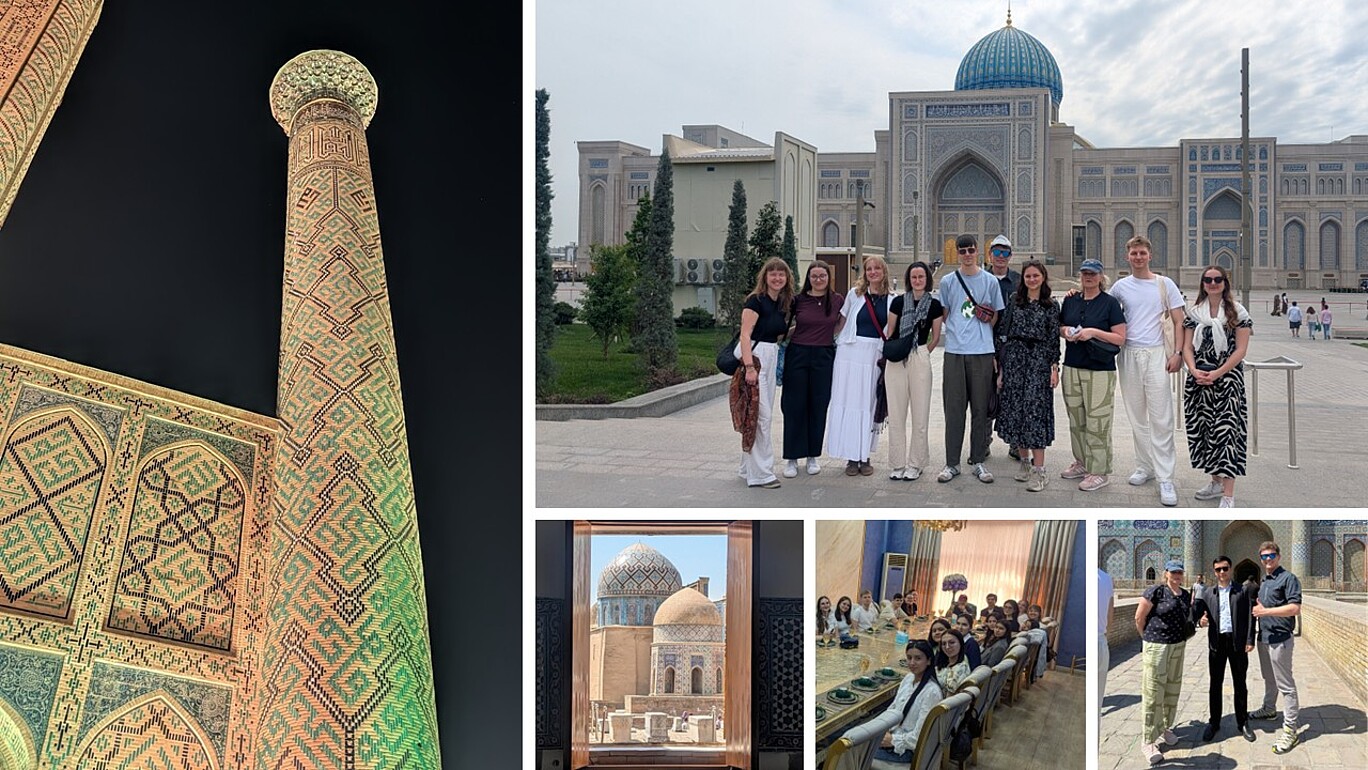
The collaboration with Fergana State University is set to continue and expand even after the field trip. Both sides have reaffirmed their interest in exploring new formats. These include student and faculty mobility, joint classes / courses, guest lectures, online seminars, workshops, conferences, and potential research and publication activities.
Planning on the part of HSZG for the year 2026 is already largely complete. Therefore, repeating the summer session format appears to be only partially feasible in the short term. At the same time, a follow-up format in 2027 is seen as a realistic prospect. In addition, funding opportunities under Erasmus+ KA171 are being explored. Should funding be approved, a smaller-scale academic format in Germany could be conceivable as early as 2026, for example in the form of an Autumn School.
Thus, the excursion is not merely remembered as an intensive travel experience; it represents another step in a growing higher education partnership. For the Faculty of Managerial and Cultural Studies, it demonstrates what international teaching can look like in practice: students work on real-world observations, partner institutions develop shared perspectives, and a journey along the Silk Road becomes a building block for academic collaboration between Upper Lusatia and Central Asia.