
Seven students in the Master’s program in Pharmaceutical Biotechnology and members of the GreenPharming research project gained insights into the industrial production of insulin at Sanofi in Frankfurt-Höchst. The field trip combined current academic and research topics with biotechnology practices on an industrial scale.
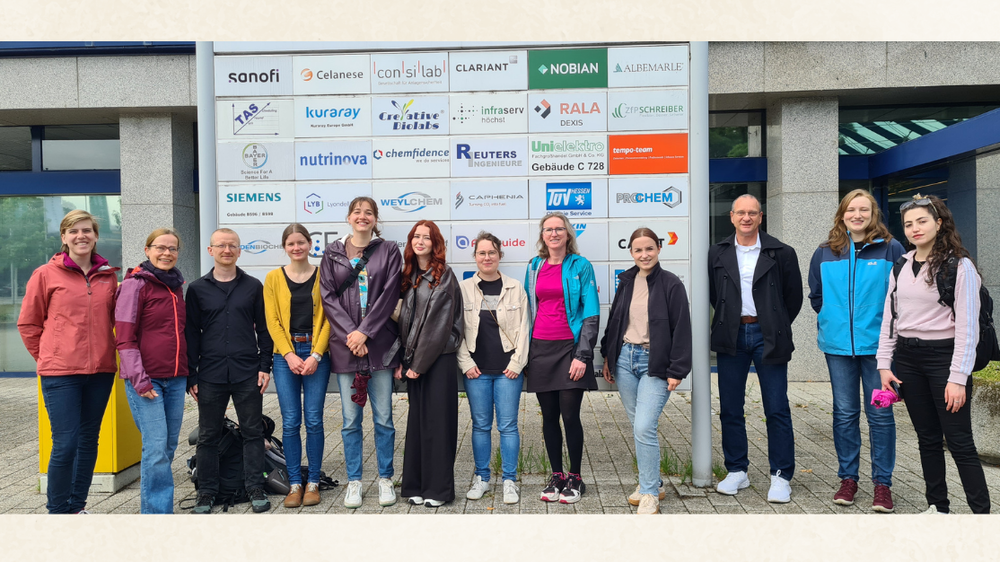
In early June, the group from Zittau/Görlitz University of Applied Sciences visited the Sanofi site in the Höchst Industrial Park. The site is home to one of the world’s largest insulin production facilities. In addition to conventional human insulin, the company manufactures fast- and long-acting insulin analogs, which are used in particular in intensive insulin therapy.
Sanofi produces insulin using bacteria engineered with genetic technology. From these microorganisms, the hormone—which is normally produced in the human body by the pancreas—can be extracted in large quantities and with a high degree of purity.
The production facility we toured spans several floors. It produces human insulin and a long-acting basal insulin. The manufacturing process involves numerous coordinated steps.
The process begins with the fermentation of the bacterial production strain in large bioreactors. The insulin is then isolated, folded, and enzymatically cleaved, among other steps. Additional facilities are used to purify the active ingredient. Particularly impressive were the chromatography columns used for this purpose, each with a diameter of more than one meter.
The students were able to appreciate just how complex the transfer of biotechnological processes from the laboratory to industrial production is. At the same time, it became clear how important precise process control, quality assurance, and reproducible production conditions are for pharmaceutical manufacturing.
Another highlight of the tour was the plant’s high level of automation. Many production steps take place without the constant presence of personnel in the production areas. The processes are continuously monitored and controlled.
In addition, the group visited a modern production facility for rapid-acting insulin analogs. Comparing the facilities demonstrated how technical standards, process control, and production conditions are evolving in pharmaceutical biotechnology.
For the students, the field trip offered a firsthand look at potential career paths. Concepts from their coursework became tangible in an industrial setting and could be linked to specific production processes. The excursion also provided points of connection for the GreenPharming research project regarding the biotechnological production and processing of active pharmaceutical ingredients.
In addition to the technical program, there was time to explore Frankfurt-Höchst. During a tour of the historic old town, the group sampled regional specialties such as apple wine and Handkäse.
Special thanks go to Dr. Ingo Voss of Sanofi Germany. He guided the guests through the production facilities for several hours, explained the individual process steps, and answered numerous questions. The university also thanks Manfred Hörter of msg industry advisors, who established contact with Sanofi and thus made the excursion possible.