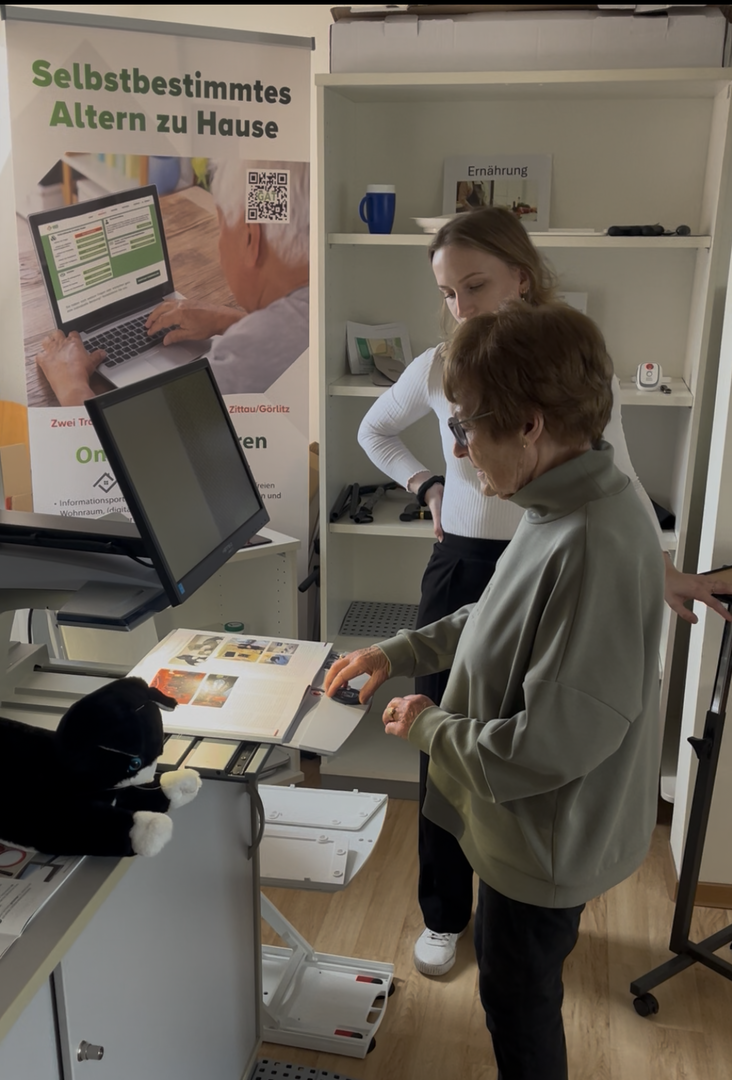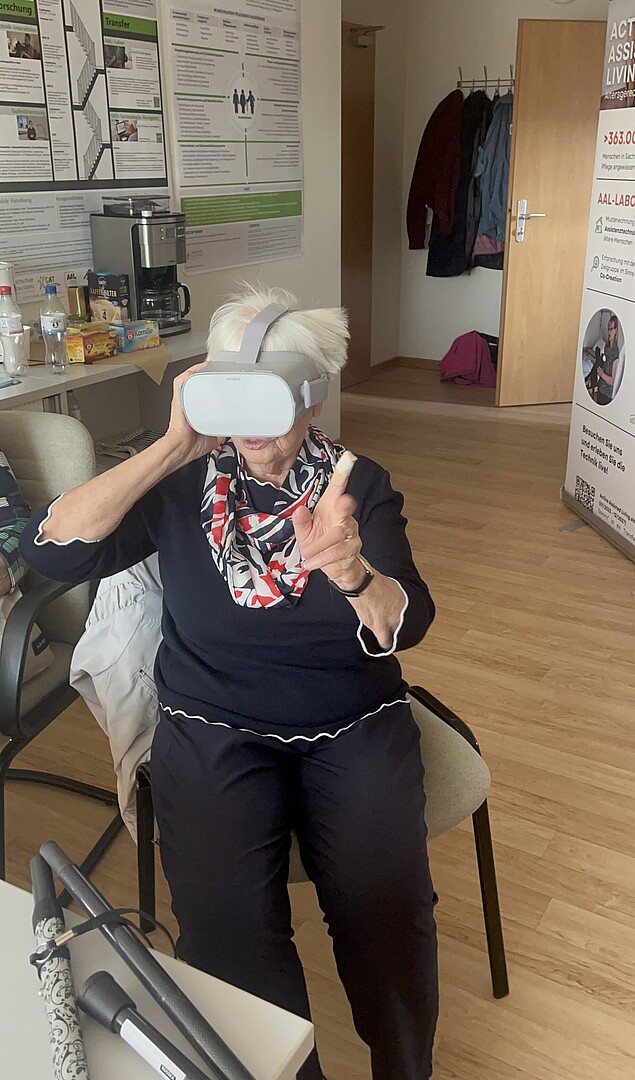
On May 6, 2025, the AAL Lab in Görlitz opened its doors to the association "Frauen auf dem Weg nach Europa e. V."
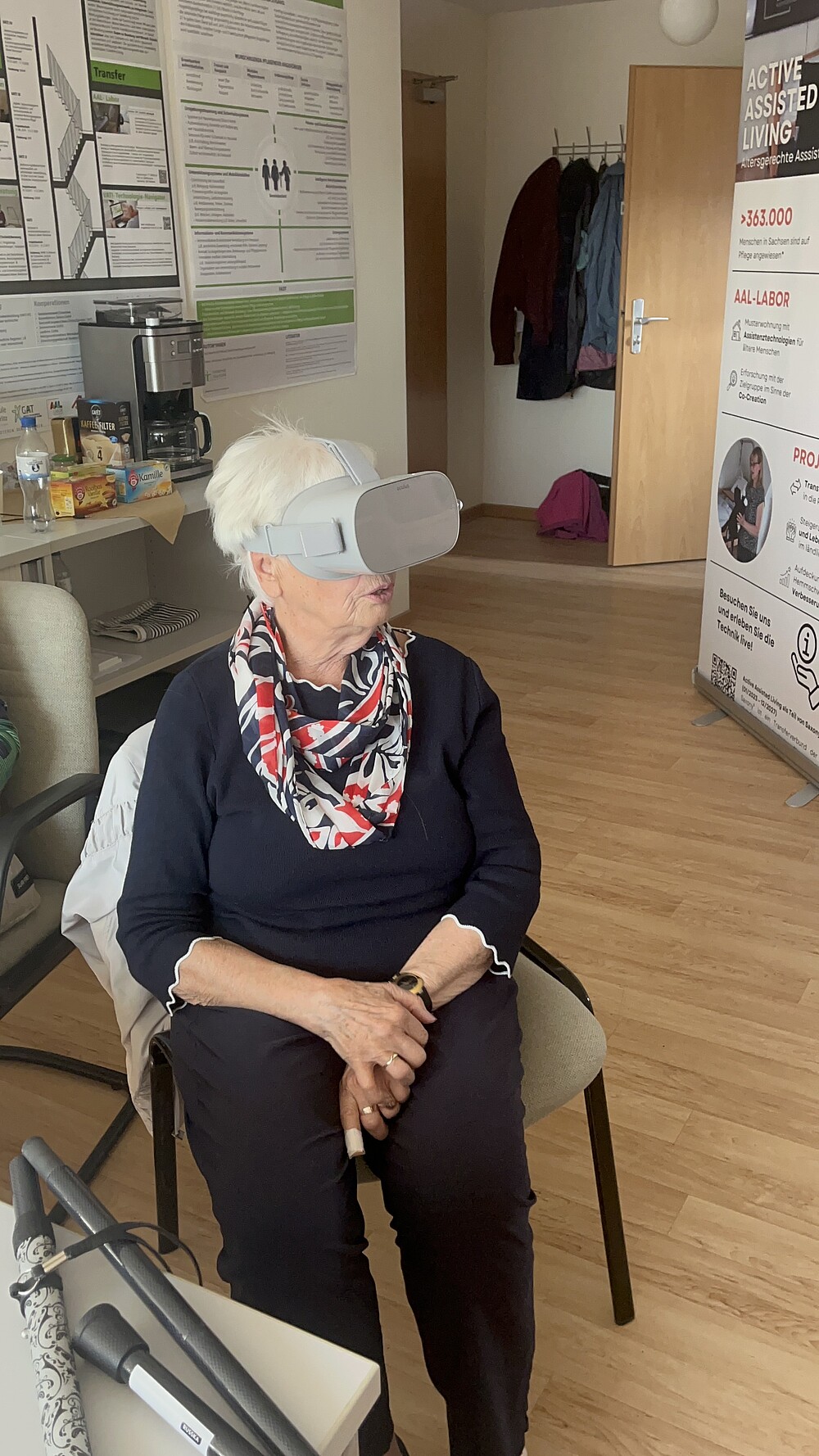
The visitors took the opportunity to find out more about technical aids for a self-determined life in old age and to talk to experts. The focus was on how digital technologies can help older people in their everyday lives - and what hurdles need to be overcome.
The women were welcomed by Maria Fabisch, head of the AAL laboratory, who gave them a tour of the model apartment and presented numerous digital assistance systems. Whether fall detection, voice control or digital communication with relatives: The solutions presented showed impressively how technology can make everyday life easier. And it wasn't just a demonstration - the applications presented were critically discussed in the subsequent dialog.
During the discussion, it became clear that access to modern technology is still associated with obstacles for many older people. The participants spoke openly about typical barriers such as high costs, unattractive or non-age-appropriate design and a lack of knowledge about setting up and maintaining the devices. Maria Fabisch emphasized how important it is to make technology not only functional, but also low-threshold and user-friendly.
The visit to the AAL lab was not only informative, but also had a multiplying effect. Many of the women who took part are involved in social projects, associations or local authorities - and want to actively pass on the knowledge they have gained. This creates new impulses that will have an impact beyond the day and flow into regional work.
The association "Frauen auf dem Weg nach Europa e. V." stands for cross-border engagement. It is committed to education and information on political and social issues, promotes cultural exchange with a focus on the special features of our neighboring countries and carries out active disability and social work across national borders. Particularly close partnerships exist with organizations in Poland and the Czech Republic, with which joint projects are implemented.
The meeting impressively demonstrated the importance of the exchange between civil society initiatives and research institutions. Numerous common points of discussion arose - for example, on the question of how technology can be made more understandable, culturally communicated and socially embedded. Both sides expressed the desire to deepen the dialog. Initial ideas for future cooperation have already been outlined - for example in the form of joint workshops, educational formats or international meetings.