

About the degree programme
The dual bachelor’s program in Mechanical Engineering offers you an incredible amount of freedom—you’ll learn how to shape the technology of the future. Through the KIA (sandwich-style) degree course, you’ll complete both a college degree and vocational training at the same time. After just 4.5 years, you’ll hold two valuable degrees in your hands: your Bachelor of Engineering and an IHK degree certificate as an industrial mechanic, mechatronics technician, or in another metalworking profession.
What to Expect from the Program
This practice-oriented program provides you with in-depth knowledge and practical skills for a successful career in Mechanical Engineering:
- Fundamentals of machine design and component design
- Innovative materials and their processing
- Modern manufacturing processes and quality assurance
- Structural analysis and computer-aided simulation methods
- Plastics engineering and surface treatment
- Joining and Assembly Technology for Complex Assemblies
- Project management and business acumen
Mechanical Engineering is one of the high-tech fields with excellent future prospects. You’ll learn to develop creative solutions to technical challenges and design sustainable production processes. You’ll decide for yourself where to focus—whether on the design of innovative products, the optimization of manufacturing processes, or the development of energy-efficient systems. Your versatile expertise will be in high demand across numerous industries.
Study details
The most important facts at a glance:
| faculty: | Mechanical Engineering |
| Location: | Zittau |
| Degree: | Bachelor of Engineering |
| standard period of study: | 9 semesters |
| ECTS credits: | 210 |
| Language of instruction: | German |
| Enrolment for: | Winter semester |
| Application period: May 1 through September 30 | Start of studies: October |
| Admission restrictions: | No admission restrictions (no enrollment cap) Details |
| No prerequisite internship | Student Advisory Service |
| Accreditation status: | Accredited |
Course content
Your program follows a well-thought-out curriculum that seamlessly integrates theory and practice. After an initial full-time semester at the university, the dual division begins: Over the course of four part-time semesters, you’ll alternate regularly between the university and your training company. Following this pattern, you’ll directly apply theoretical knowledge to practical situations and prepare for the IHK exam, which you’ll take after about 2.5 years.
After successfully completing your vocational training, the second phase of your studies begins as a full-time study programme combined with part-time work at your company. A work placement semester gives you the opportunity to deepen your knowledge through hands-on industrial experience. You’ll benefit from modern laboratories and practical projects where you work independently and gain valuable experience. In the later semesters, you can choose your own areas of focus and specialize in fields such as plastics engineering, manufacturing metrology, or machine analysis. You’ll cap off your studies with your Bachelor thesis, which is often developed in collaboration with industrial companies.
The semesters marked in light green (2.1 / 2.2 / 3.1 / 3.2) are part-time semesters. Here, the 2nd and 3rd semesters of the Bachelor degree programme are each extended to two semesters. You complete these on a 4-week rotation at alternating learning locations (university/company). You conclude this phase of your studies with your first professional certification (IHK chamber examination). As a result, the program consists of a total of 9 semesters.
- Engineering Thermodynamics I - Energy Theory
- Fundamentals of Computer Science
- Business Administration
- Engineering Mathematics I
- Physics and Fundamentals of Electrical Engineering
- Engineering Mechanics I - Statics
- Materials Science and Chemistry
- Materials Science and Chemistry
- Manufacturing Technology I
- Engineering Mathematics II
- Introductory Laboratory Course in Physics, Electrical Engineering, and Materials Testing
- Engineering Mechanics II – Strength of Materials (TM II)
- Engineering Thermodynamics II – Heat Transfer
- Materials Engineering and Chemistry
- Engineering Mathematics II
- Introductory Lab in Physics, electrical engineering, and Materials Testing
- Engineering Mechanics II – Strength of Materials (TM II)
- Engineering Thermodynamics II – Heat Transfer
- Design Principles I
- Fluid Mechanics I
- Engineering Design I
- Fluid mechanics I
- Physical and manufacturing fundamentals of metrology
- Machine elements I
- Technical Mechanics III - Kinematics/Kinetics
- Technical Thermodynamics III - Process Thermodynamics
- Fundamentals of Measurement Technology: Physics and Manufacturing Technology
- Machine Elements I
- Engineering Mechanics III—Kinematic and Kinetic Analysis
- Engineering Thermodynamics III – Process Thermodynamics
- Final Examination for the Training Program
- Machine Tools
- FEM I and Applied Mathematics
- Work Planning
- Machine Elements II
- Design Theory II
- Quality management and Quality Assurance
- Computer Science II (Elective Module)
- work placement semester
- Control and Regulation Technology
- Drive Technology
- Machine Dynamics
- Fundamentals of Polymer Technologies
- Interdisciplinary Competencies ZfL (Compulsory Elective Modules
- Elective-Required Area I
- Project Work: Structural Analysis
- Project Seminar
- Process Engineering
- Surface Engineering
- Joining and Assembly Technology
- Final Module (Bachelor's Thesis and Defense)
- Elective-Required Area II
- Manufacturing Measurement Technology
- Design Theory III
- Machine Analysis
- Scientific Project
Career opportunities
Professional areas where you can get started
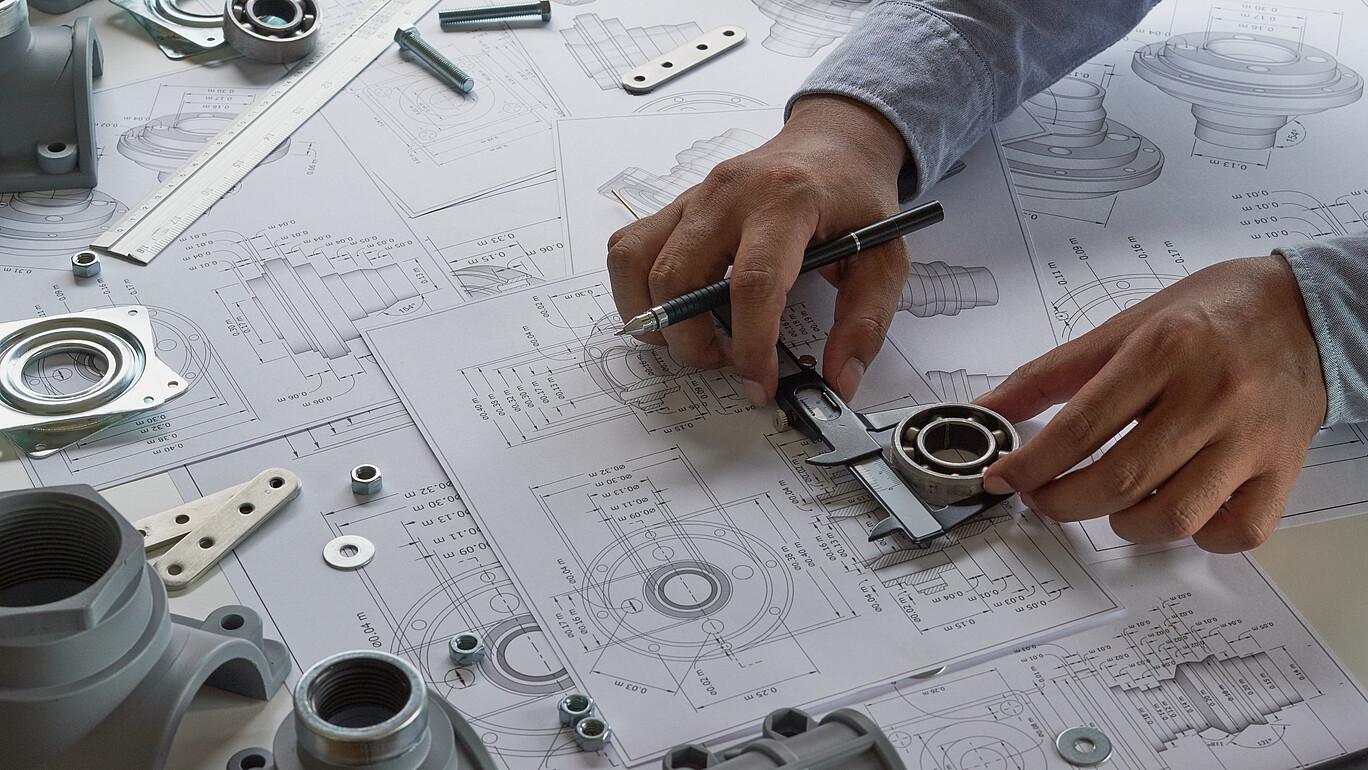
Product Development You design new technical products and guide them from the initial idea through to market readiness. You’ll analyze customer requirements, create design concepts, and turn them into functional prototypes. Drawing on your understanding of materials, manufacturing technology, and business considerations, you’ll develop innovative solutions that are both technically feasible and market-ready.
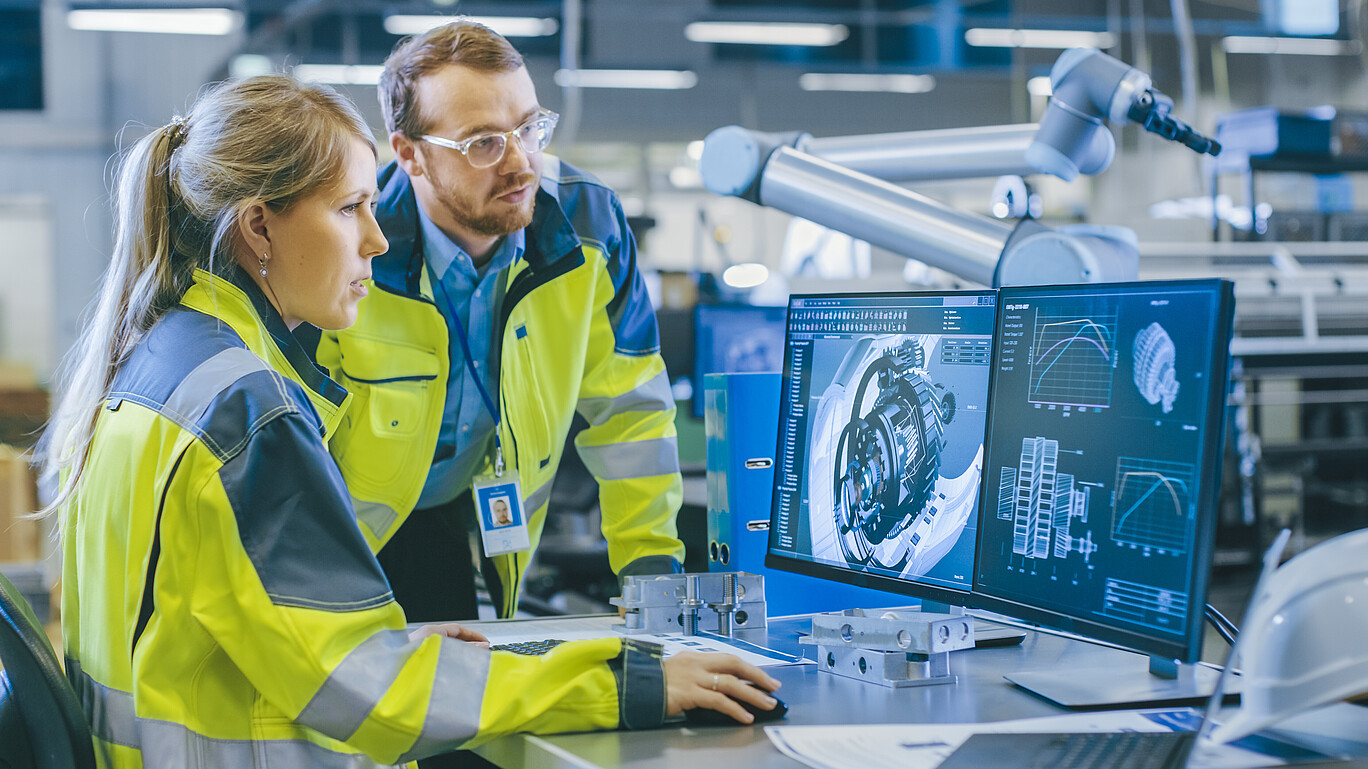
Production planning
You organize the optimal production process for new or existing products. You plan machine assignments, material flows and personnel resources to ensure efficient and economical production processes. With your eye for detail, you will identify optimization potential and implement modern production methods such as lean production or just-in-time concepts.
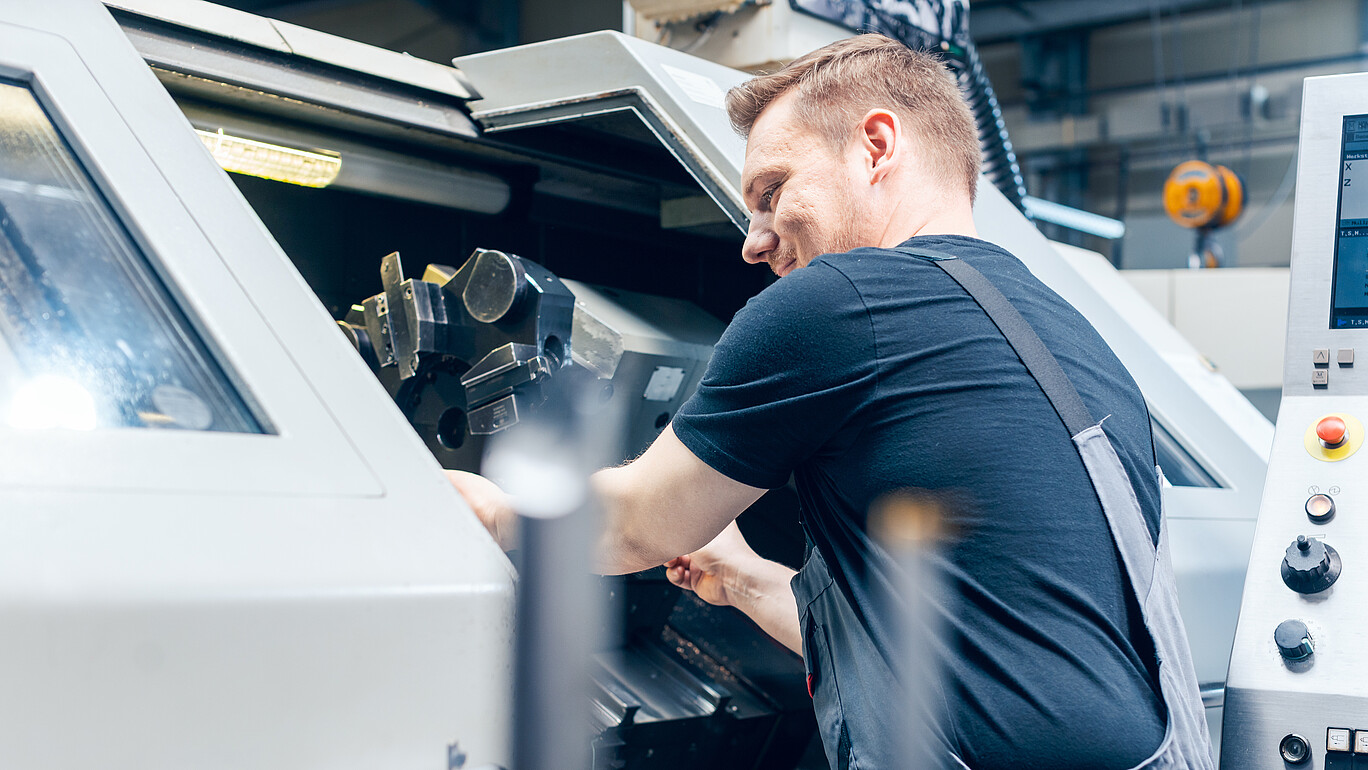
Toolmaking
You design and manufacture special tools and equipment for industrial production. You convert CAD designs into precise tools that are required for machining, forming or casting processes. Your combination of theoretical knowledge and practical skills will enable you to create complex tool systems that meet the highest quality requirements.
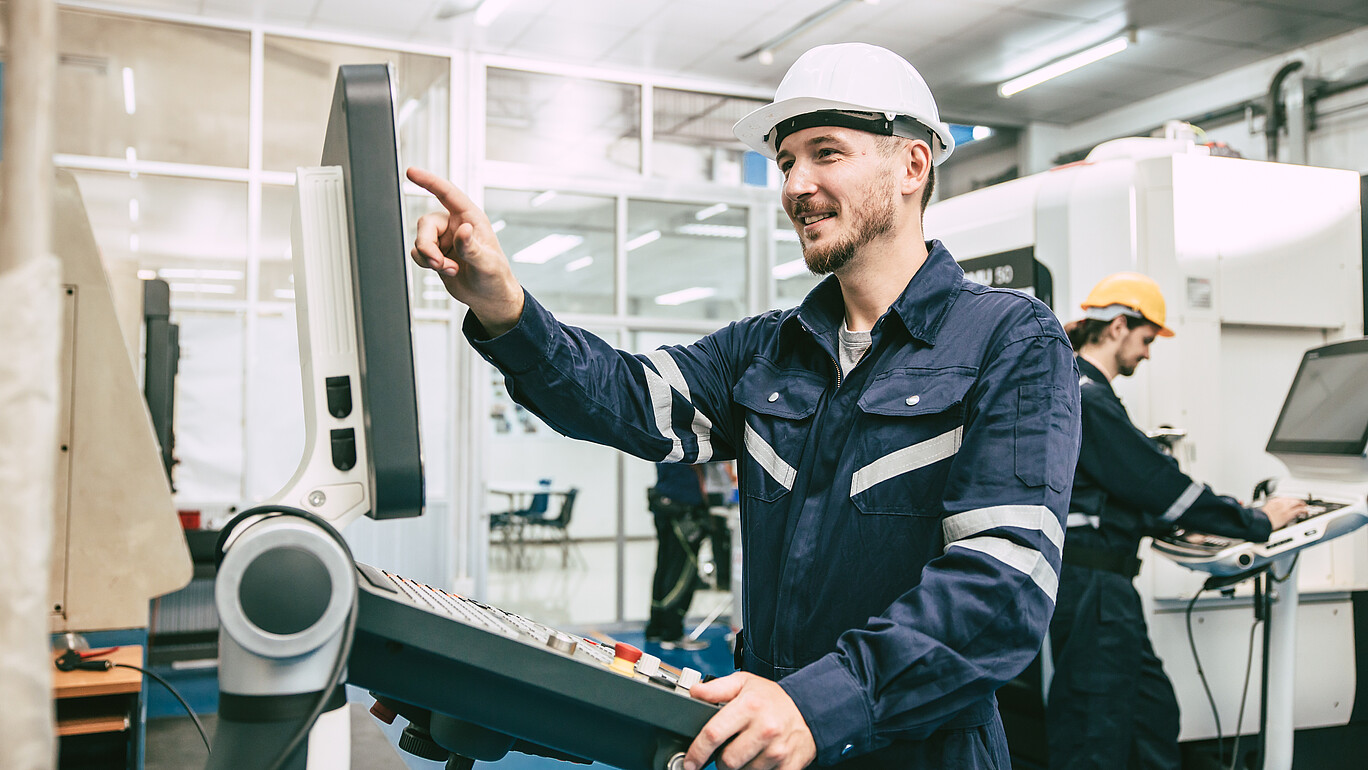
Plant Engineering
You will oversee technical systems throughout their entire life cycle. You assist with planning, oversee installation, and ensure the reliable operation of production facilities. In the event of malfunctions or performance issues, you systematically analyze the causes and develop customized solutions to optimize plant efficiency and availability.

Testing You conduct systematic tests and experiments to research new products and materials. You design test setups, collect measurement data, and analyze it using statistical methods. Your precise approach to work and analytical thinking help you achieve meaningful results and derive well-founded recommendations for development and production.

Technical sales
You act as an intermediary between customers and your company for technically sophisticated products. You identify customer needs, advise on the selection of suitable solutions and provide support with technical implementation. Your combination of technical expertise and communication skills makes you a valuable link that develops customer-oriented solutions for complex requirements.
FAQ
How does the dual study program work?
KIA is a dual degree program leading to a Bachelor’s degree— with integrated vocational training (including an IHK/HWK degree). It closely integrates theory and practice and fosters an early connection to the future employer.
Our future KIA students submit applications to a company that partners with the university companythat partners with the university, hold a university entrance qualification, have an interest in scientific problem-solving, and possess the necessary mobility.
The companies enter into a cooperation agreement with the university and sign contracts with the applicants for practical vocational training (vocational training contract or internship agreement).
After signing a training agreement with the company, you must still register at the university with your university entrance qualification—this is possible starting in mid-May.
The program typically begins on September 1 with a 4-week basic practical training period at the company. Afterward, depending on your degree programme, you will complete one to three semesters of study at the university.
The breaks between semesters are reserved for practical training at the company. On-the-job training at the company takes place during the foundational phase of the program according to the semester schedule (e.g., alternating between the company and the university every 4 weeks) and concludes with an exam administered by the relevant chamber (IHK or HWK). No separate vocational school instruction is provided. The theoretical knowledge required for vocational training is imparted through scheduled lectures and additional “job-specific” teaching units at the university. During the practical training period, you are entitled to vacation time in accordance with the collective bargaining agreement and receive a monthly stipend from the company based on the standard compensation for trainees.
After completing the vocational training, the remaining semesters are completed as a full-time study programme while working (often with a financial aid agreement from your company) and culminate in the desired Bachelor of Engineering degree.
What apprenticeship programs are offered?
- Industrial Mechanic
- Construction Mechanic
- Mechatronics Technician
- Metal Fabricator
- Process Technician for Plastics and Rubber Technology
- Machining Technician
About the advantages of the dual study program | KIA
Your Degree Programme in 60 Seconds
Here's what our students have to say about our university
- Module Handbook (Course Content and Structure)
- Faculty Website
- Application Information
- Program Flyer
- KIA (sandwich-style) degree course Flyer

1st floor

1st floor

First floor
Starting now, we're also offering our Student Advisory Service via WhatsApp. Just send us a message at: +49 173 2086748
Our promise to you
Studying in the wild east?
Studying with us is different. Above all, better. Why? We have a family atmosphere. There are small study groups and the lecturers are always there for you. There is a close connection to practice in all degree courses. And finding affordable accommodation is no problem here.
There are many other reasons, such as university sports or the student representatives, clubs and societies. Campus life in Zittau and Görlitz, the wild east, is unique.