More dynamism in the research process
How CELSIUZ supports research projects in the Interaction Room - the example of CARBOUS
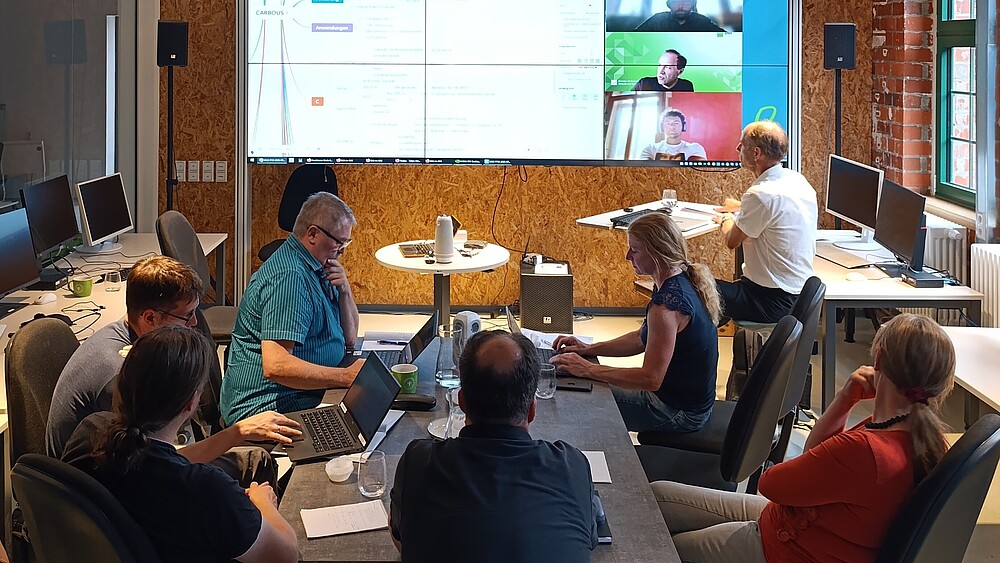
How does a promising idea develop into a viable research project—or even a startup? The CELSIUZ Co-Creation Lab at Zittau/Görlitz University of Applied Sciences focuses precisely on these questions. The Interaction Room serves as a collaboration space that actively supports researchers in developing, structuring, and advancing their projects—digitally, in a hybrid format, and with professional facilitation.
A current example is the CARBOUS project consortium, which is led by the Institute for Process Engineering, Process Automation, and Measurement Technology (IPM) under the leadership of Prof. Dr.-Ing. habil. Tobias Zschunke. Together with partners such as the DLR, the DBI Group, ULT AG, and several SMEs, CARBOUS aims to develop innovative processes for the climate-friendly production of energy, industrial gases, and basic chemical materials.
Collaborative Support with New Momentum
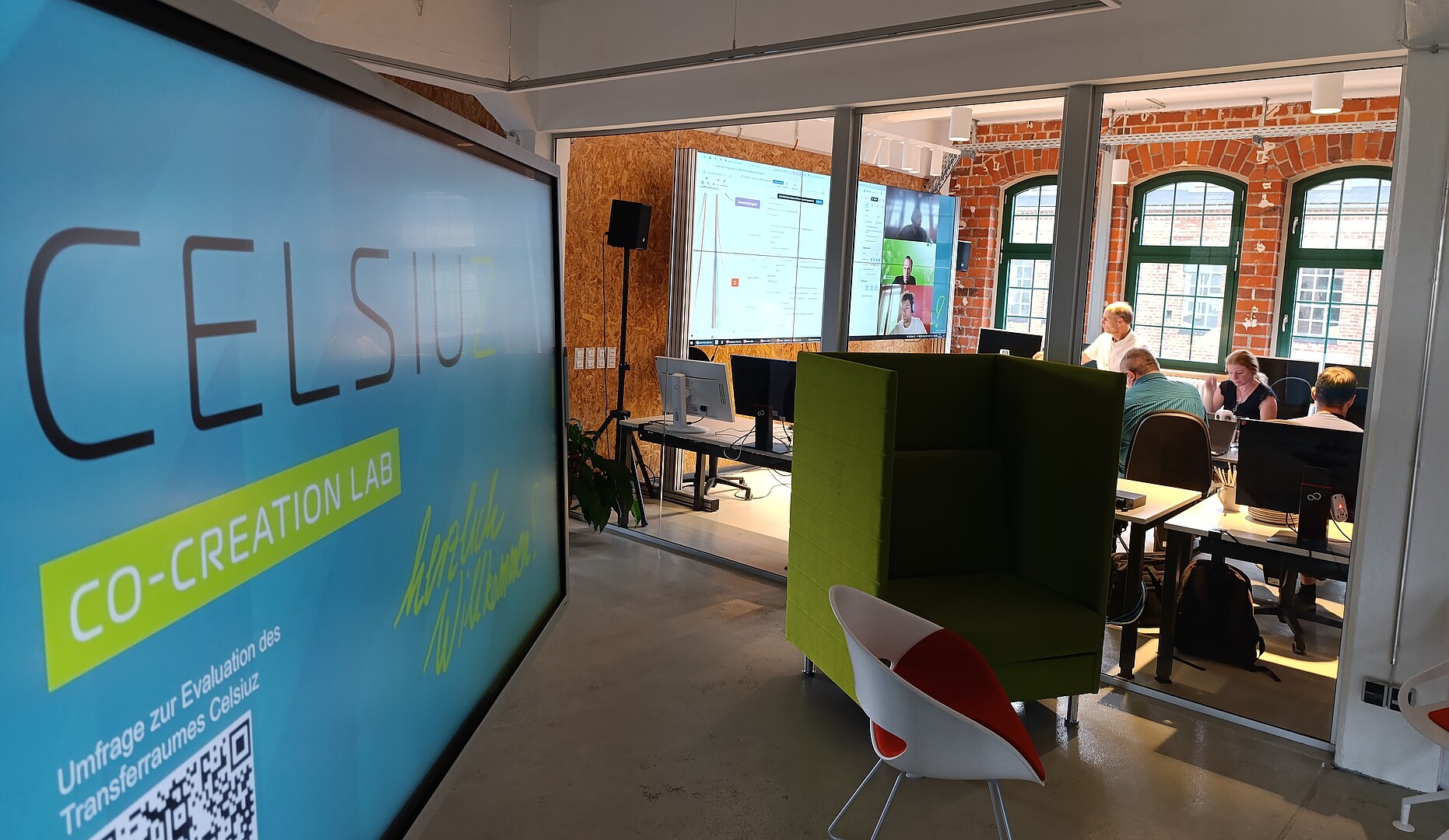
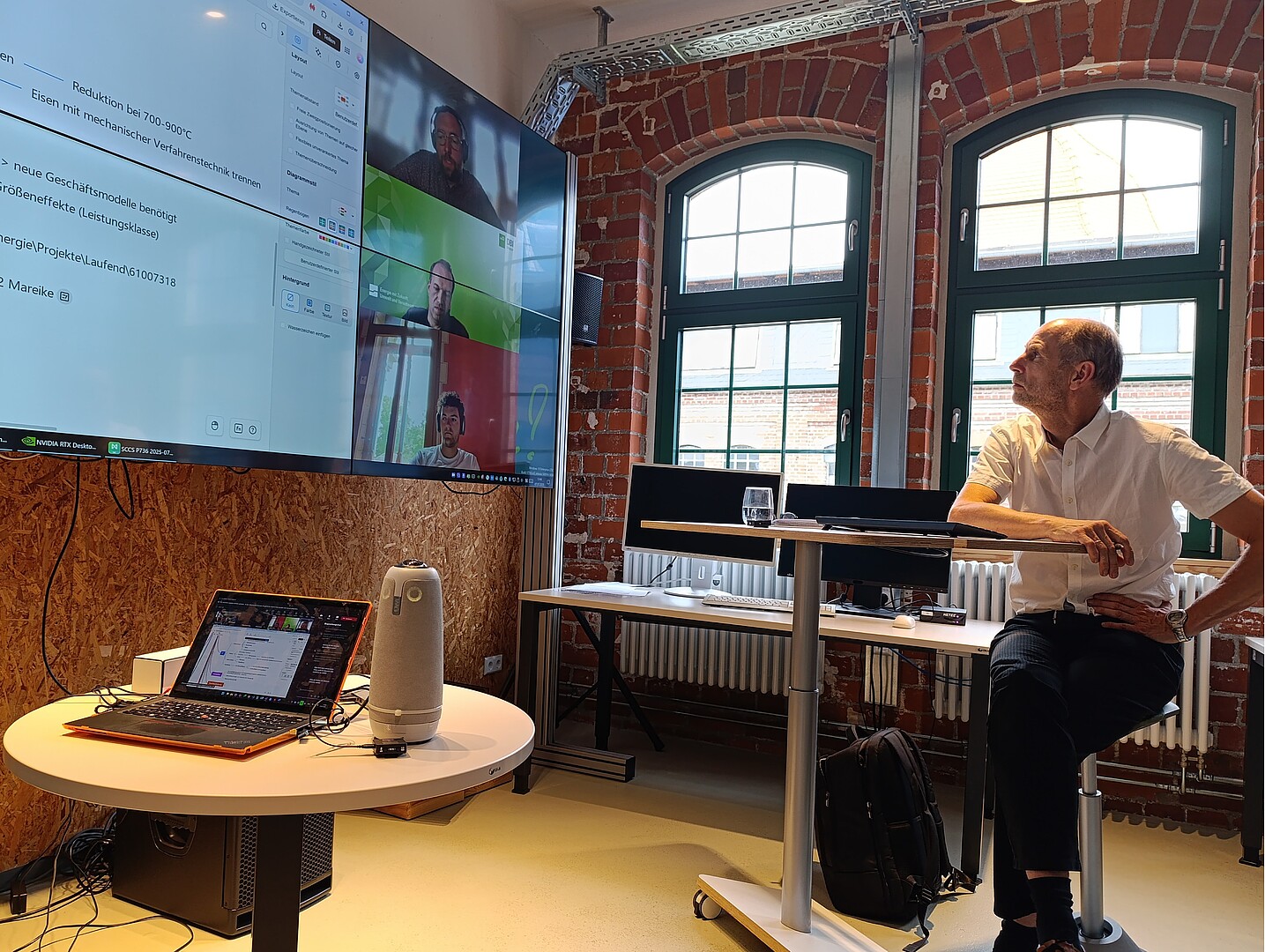
At the first project meeting, the CELSIUZ team facilitated the session and relied on interactive methods to actively engage all participants from the very beginning. Martin Herling, a knowledge transfer specialist at CELSIUZ, guided the participants through the use of the room’s technology while simultaneously structuring the collaborative work process using a mind-mapping format that visualized technical ideas, roles, interfaces, and open questions in real time. The goal was to visually structure not only the technical ideas but also the roles involved, interfaces, and open questions. It was particularly important to actively engage all participants—whether on-site or online. Thanks to modern technology in the Interaction Room, contributions from the plenary, chat messages, and digital whiteboard notes could be seamlessly integrated. Short surveys, votes, and the direct addition of content to the mind map by all participants created a dynamic atmosphere and fostered a shared understanding of the next steps.
The Interaction Room as a Flexible Space for Knowledge Transfer
This was the first time the setting was tested in a hybrid format: Thanks to improved camera, sound, and transmission technology, as well as integrated collaboration platforms, the discussion between in-person and online participants proceeded seamlessly.
In addition to digital whiteboards, tools such as Kialo (for structured arguments) or card index functions can also be used. The jointly developed mind map not only served as a basis for discussion but was also continuously expanded and documented—and can be used in the future as a foundation for further proposal texts.
Lessons Learned and Further Development
The feedback from participants was clear: The combination of expert facilitation, visual structuring, and technically flexible room design helps to concretize ideas and develop them collaboratively. However, potential areas for improvement were also identified, which the Celsiuz team will address.
One thing is clear for the further development of the Transfer Space: formats such as the Practitioner Circle or tools such as the Interaction Room must be dynamically adapted to the needs of research teams and continually reimagined to enable collaborative work on an equal footing—from the initial idea through to the grant proposal or spin-off.
Conclusion
With CELSIUZ’s Interaction Room, Zittau/Görlitz University of Applied Sciences has created a space that not only facilitates technology transfer but also promotes new forms of scientific collaboration. Support services such as facilitation, methodological guidance, or follow-up consulting are available to project groups— whether for grant proposals, workshops, or startup initiatives. The staff of the Saxony⁵ technology transfer project have developed a range of services for this purpose, which can also be booked online.
CELSIUZ demonstrates that technology transfer occurs where exchange is actively fostered.

1st floor

2nd upper floor