
One-Stop Digital Service
The new Digital Service Center makes it easier to access digital support at HSZG by bringing together expertise in IT, digital services, and project and process management.
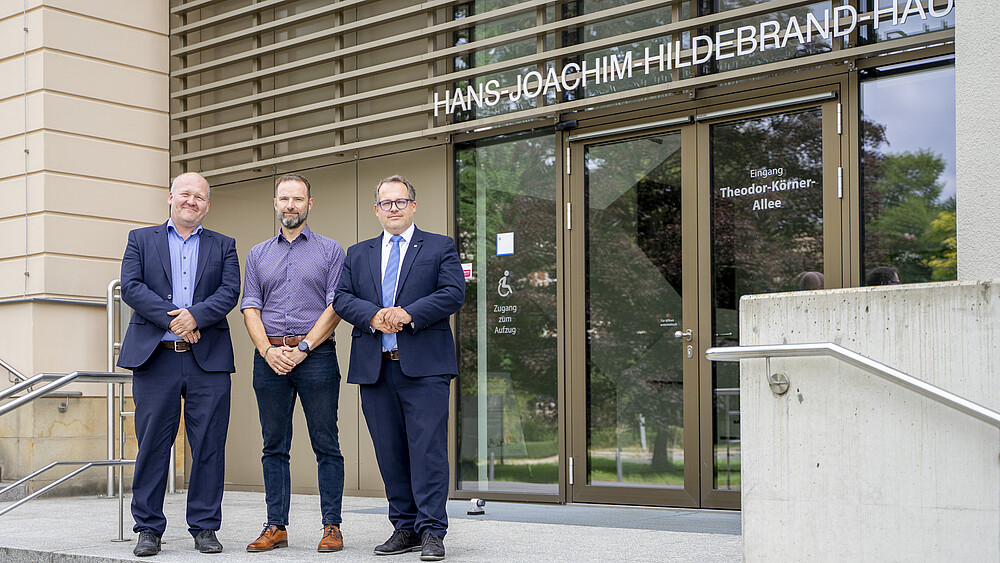
Whether you need to solve a technical problem, find support for a digital tool, or digitize an entire work process, there has been a new central point of contact at HSZG for such matters since September 1. The Digital Service Center (DSZ) has begun operations.
The DSZ was established as part of the 2030+ university development process. Its mission extends beyond traditional IT support: The center operates and further develops digital services and IT infrastructure, implements digitization projects, and supports the digital advancement of processes in teaching, research, and administration.
What the Digital Service Center Offers
For university members, this is intended to make one thing easier above all else: finding the right support for a digital issue. This could be a technical problem, but it could just as easily involve the digitization of a work process. Students, too, can contact the DSZ, for example, if they need technical support or a test environment for a student project, or if they have questions about digital surveys and data protection.

We want to create a clear point of contact for anyone with a concern related to digitalization. At the same time, we can better manage existing resources and bring together the right expertise in a targeted manner.
”Existing IT support will remain in place. However, the DSZ’s goal goes beyond that: In the future, digitization projects and processes are to be supported more closely from the initial idea through to implementation, and the necessary expertise within the university is to be better integrated.
Personal contact remains
University members were surveyed during the center’s development phase to find out what they hoped to gain from the new center. The most frequently cited needs were technical IT support and infrastructure (117 mentions), advice on digital applications and tools (110 mentions), and training and professional development opportunities (98 mentions).
At the same time, the survey shows what form this support should take: 94 responses cited personal points of contact, 89 cited clear communication of goals and benefits, and 86 cited understandable instructions. The open-ended responses also clearly expressed a desire to maintain established personal contacts and effective support services.
This is set to remain the case with the DSZ as well. “Personal communication will continue. Our back-office colleagues will continue to work directly with university members. At the same time, there will always be someone available in the front office who can take in requests and quickly forward them to the right place,” explains Rönisch.
The planned self-service portal is set to become a key component of the new service offering. In the future, students and employees will be able to submit digital requests there and track their processing status. At the same time, the portal is intended to provide information and guidance that will allow as many questions as possible to be answered directly. It will be launched as soon as possible and then further developed in collaboration with users. Until then, the existing communication channels will remain in place.
The launch is also the development phase
As of September 1, the establishment of the DSZ is not yet complete. The center is intentionally launching with an initial structure that relies primarily on existing expertise and personnel resources. To this end, tasks from the former University Data Centre, the Centre for eLearning, and other departments are being consolidated. The structure will now be further developed as operations continue.
In addition to setting up the self-service portal, one of the first tasks is to continue implementing the HSZG’s digitization strategy. To this end, the DSZ intends to engage in dialogue with the various departments of the university to gain a clearer understanding of where they stand in terms of digitization and what support they need.
Lars Rönisch therefore does not want to judge whether the new structure is working solely on the basis of whether it has been organizationally established. In one year, students and staff should be more satisfied with the digital services, avoidable service requests should have decreased, and there should be a good picture of how far digitization has progressed in the university’s various departments.
He also has a broader goal in mind for the new center: “I hope that we can drive digitalization forward together—with the students and staff of our university—and thus jointly develop the HSZG into a pioneering digital university.”
Digital Service CenterWebsite