
Rethinking Heat Supply
Prof. Dr.-Ing. Clemens Schneider is returning to HSZG to conduct research on harnessing previously unused heat and excess electricity for a sustainable heat supply.
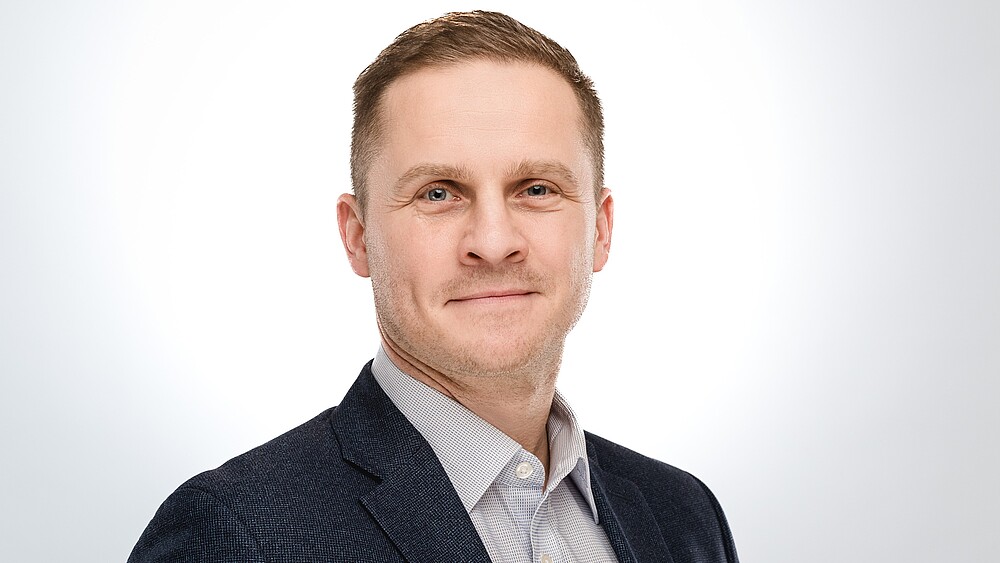
Clemens Schneider’s career path took him from studying energy and environmental engineering at HSZG, through reactor safety research, to heading a center of excellence for the process integration of energy systems. Since May 2026, he has been a professor of sustainable heat supply in the Faculty of Mechanical Engineering. He was jointly appointed by the HSZG and Fraunhofer IEG.
In this interview, Clemens Schneider talks about his connection to Upper Lusatia, the transformation of heat supply, and the link between research and teaching.
A Way Back to the HSZG
Would you mind introducing yourself briefly to start?
I’d be happy to. My name is Prof. Dr.-Ing. Clemens Schneider. Since May 1, 2026, I have been a professor of sustainable heat supply in the Faculty of Mechanical Engineering at Zittau/Görlitz University of Applied Sciences. I was born in Zittau in 1983. Zittau/Görlitz University of Applied Sciences is not a new place for me: I was already engaged in research here from December 2009 through November 2020.
What has your career path been like so far? What milestones have shaped your career?
My professional path began in a very practical way. After graduating from secondary school in 2000, I completed an apprenticeship as an automotive mechanic, which I finished in 2004. I then earned my university of applied sciences entrance qualification in 2005.
During my time at the technical high school, we studied topics including nuclear energy. I was particularly fascinated by how enormous amounts of energy can be generated from a comparatively small amount of matter. This enthusiasm ultimately led me to the Zittau/Görlitz University of Applied Sciences, where I studied energy and environmental engineering until 2009, focusing in particular on nuclear energy and radiation technology.
Afterward, I worked as a research assistant at the Zittau/Görlitz University of Applied Sciences (HSZG) and the Institute for Process Engineering, Process Automation, and Measurement Technology (IPM) until 2020. At the same time, I completed my Ph.D. in reactor safety research at the Technical University of Dresden in 2015.
In 2020, I took over as site director and head of the Competence Center for Process Integration of Energy Systems. In May 2026, I was jointly appointed by Zittau/Görlitz University of Applied Sciences and Fraunhofer IEG.
What inspired you to pursue a career in science?
Even as a child, I always wanted to be an inventor. I was fascinated not only by using things, but also by truly understanding how they work and developing new solutions myself. Science offers me exactly this opportunity: to examine technical relationships in detail, develop new methods and concepts, and then test them experimentally.
In industry, there’s often only limited capacity for this. In research, on the other hand, I can delve deeply into questions and pursue solutions whose practical implementation may not be possible for several years.
What brought you to Upper Lusatia, or more specifically, to the HSZG?
Actually, I’ve never really felt the urge to leave Upper Lusatia. The region is my home. I grew up here, have deep roots here, and want my work to contribute to the development of this wonderful region. I also have very strong ties to the HSZG. It laid the foundation for my scientific career, both during my undergraduate studies and as part of my doctoral research.
My doctoral project focused on the modeling, simulation, and experimental investigation of boiling processes in pressurized water reactors. The research papers were conducted at the HSZG and supervised in cooperation with TU Dresden. It means a great deal to me to now return to my former University as a professor and pass on my knowledge to the next generation.
Harnessing Unused Energy for Heating
What exactly do you do? What are your main areas of focus at HSZG?
In my research at Fraunhofer IEG, I focus on integrating different energy systems across sector boundaries. Put simply, the goal is to use existing energy as intelligently and efficiently as possible.
On the one hand, there is significant thermal potential that has remained untapped so far. On the other hand, photovoltaic and wind power plants, for example, occasionally generate excess electricity. Our goal is to combine these potentials to make heat supply more sustainable and resource-efficient.
In specific research projects, for example, we are investigating how excess electricity can be used to produce hydrogen and how the resulting waste heat and oxygen can be meaningfully integrated into district heating systems and wastewater treatment.
Other key areas of focus include supplying heat to entire neighborhoods using water-based thermal energy and industrial waste heat, as well as the recovery and utilization of residual heat in industrial settings. In the long term, we aim to significantly reduce the use of fossil fuels through these efforts. At HSZG, I would like to directly incorporate my experience in energy research into my teaching. This is particularly evident in the module “Sustainable Heat Supply Technology.”
This region is my home. I grew up here, have deep roots here, and want my work to contribute to the development of this wonderful region.
”Which research areas are particularly important to you, and why?
The transformation of our heat supply is particularly close to my heart. In Germany, we have already made great strides in electricity generation, particularly through the expansion of solar and wind energy. In heat supply, however, a large portion of the energy still comes from fossil fuels. Yet we have numerous previously untapped heat sources at our disposal. These can be utilized, for example, by harnessing temporary electricity surpluses and then applying them to heat supply.
The major challenge lies in developing solutions that are not only sustainable and resource-efficient, but also efficient, economical, and resilient. This transformation is one of the key tasks for today’s and future generations of engineers. That is why it is particularly important to me to further develop appropriate solutions through research and to convey them through teaching.
Bringing Research into the Classroom
How do you structure your teaching to inspire students' enthusiasm for your subject?
It’s important to me that students not only learn the theoretical fundamentals but, above all, understand how they can apply this knowledge in practice later on. In my classes / courses, we therefore explore various approaches to environmentally friendly heat supply. We examine different scales, site conditions, and available energy potentials—ranging from large industrial plants and municipal heat supply provided by public utilities to smart solutions for one’s own home.
The goal is for students not only to learn how sustainable heat supply works on a large scale but also to become familiar with the tools and methods they can use later to implement smart heat supply solutions, for example, in their own buildings or apartments.
The major challenge is to develop solutions that are not only sustainable and resource-efficient, but also efficient, cost-effective, and resilient.
”What advice would you give to students who are pursuing an academic career in your field?
Let yourself be guided by what truly inspires and motivates you. And above all: Don’t give up if things take longer than expected or if challenges seem insurmountable at first. Science is complex and requires a great deal of patience and perseverance. Gaining new insights and developing innovative solutions is often significantly more time-consuming than applying existing knowledge and established technologies.
Those who maintain their enthusiasm and persevere even in the face of setbacks have good prospects for a successful scientific career.
How do you balance your career with your free time and family life?
This works primarily through good organization and clear structures. A well-maintained schedule, as well as coordinating and delegating tasks, are essential both at work and within the family.
The flexibility of the modern workplace helps a great deal. For example, I can sometimes finish tasks late in the evening that I didn’t get to during the day, without cutting into the time I spend with my family. I also try to plan business trips as efficiently as possible. Whenever possible, I take the train instead of driving myself.
Do you have any hobbies or interests that perhaps not everyone knows about?
Actually, I play drums in a rock band. For me, that’s a nice balance to my day-to-day work as a scientist. I also have a small workshop where I like to tinker with technical ideas and innovations for our own Building. And then there’s my classic car, which I maintain and care for myself. So my passion for technology isn’t just a part of my professional life—it’s also a big part of my free time.
Those who maintain their enthusiasm and persevere even in the face of setbacks have good prospects for a successful academic career.
”Is there a life motto or guiding principle that guides you?
For me, perseverance and consistency in our actions and decisions are the foundation for turning our visions into reality. At the same time, I am convinced that nothing succeeds without God’s blessing. A quote from the German physicist and Nobel laureate Max Planck was particularly good for me during my doctoral studies: “Science and faith are not opposites; rather, they complement and depend on one another.”This idea describes my personal outlook very well.
Thank you very much for the interesting conversation, Prof. Dr.-Ing. Schneider. We wish you continued success at HSZG.

Upper floor