
High-tech you can touch
Infineon is donating a new cleanroom experiment to the HSZG's DLR_School_Lab. This will enable the university to provide hands-on insights into microchip production.
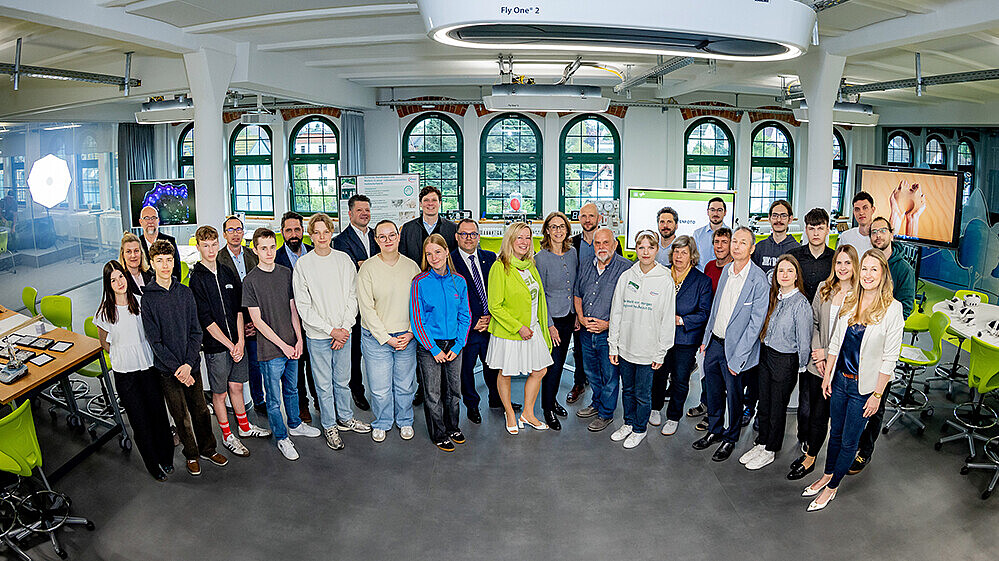

New Cleanroom Experiment for the DLR_School_Lab at Zittau/Görlitz University of Applied Sciences
On May 11, 2026, a new cleanroom experiment from Infineon Technologies AG was officially unveiled at the DLR_School_Lab at Zittau/Görlitz University of Applied Sciences (HSZG). Representatives from politics, science, education, and industry thus sent a united message: Young people should be inspired early on to pursue high-tech careers and be drawn to the key technologies of tomorrow.
The HSZG’s DLR_School_Lab is part of the strategic educational initiative “Zukunftslernort Oberlausitz” (ZukLOS). As an extracurricular learning center, it enables students not only to understand scientific and technical concepts theoretically, but also to explore them on their own and actively shape the learning experience.
“The university sees itself as a bridge between schools, science, and industry,” emphasized Rector Prof. Dr.-Ing. Alexander Kratzsch. “Through hands-on activities and first-hand experimentation, technical topics become tangible. Our mission is to inspire young people with the technologies of tomorrow.”
Working Together to Support the Next Generation of Skilled Workers
Minister of State Conrad Clemens emphasized Saxony’s focus on STEM education.
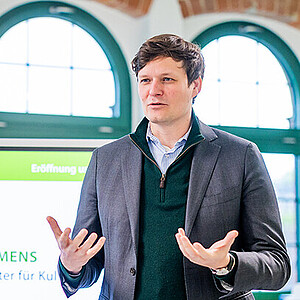
Saxony places a special emphasis on STEM education—more so than almost any other federal state—both in the classroom and at extracurricular learning centers such as the DLR_School_Lab at the Zittau/Görlitz University of Applied Sciences. I am delighted that students and apprentices today have the opportunity to conduct cleanroom experiments with semiconductors and microtechnology themselves. In this way, we are attracting the skilled workers of tomorrow to the high-tech hub of Dresden and Upper Lusatia.
”Dr. jur. Silke Gottschlich, Head of Human Resources at Infineon Technologies AG in Dresden, also emphasized the strategic importance of the partnership: “STEM careers are crucial to Germany’s innovative strength, employment, and international competitiveness. That is why it is important to us to reach young people as early as possible and inspire them to pursue STEM fields. The partnership between Infineon and the Zittau/Görlitz University of Applied Sciences is strategically valuable in this regard, as both sides share a common goal: to attract young people to technical careers and degree programs.”


Insights into chip production
The practical part of the event began with the symbolic unveiling of the experiment. After an introduction to microchip production and the film "A chip is made - from sand to microchip", the pupils slipped into cleanroom clothing and carried out key production steps themselves.
Andrea Bannert from Infineon supervised the experiment and described it to the interested guests at the event.
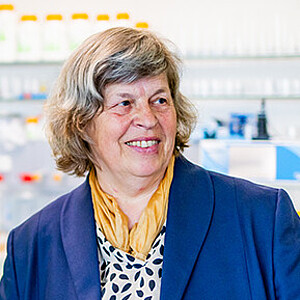
The aim is for the pupils to experience the extreme precision of semiconductor production for themselves. They feel how sensitive modern chip technology is and why every move counts. Genuine understanding and enthusiasm are generated above all by trying things out for themselves.
”Learning Through Direct Interaction
The event demonstrated how beneficial collaboration between various education and industry partners can be. Teachers experience how lesson content comes to life.
Michael Wagner, head of the science department at Geschwister-Scholl-Gymnasium in Löbau, explained: “Extracurricular learning venues like the DLR_School_Lab are very important for schools because they serve as motivators for students. Hands-on, application-oriented learning creates ‘aha’ moments that leave a lasting impression and foster students’ interest in STEM careers.”
The students were also enthusiastic. “I found the experiment very interesting. What I especially like about the natural sciences is that you can see the theory in practice,” said Frieda Schliebitz, a student at the Geschwister-Scholl-Gymnasium. Student Charlotte Selbis was particularly pleased with the hands-on aspect: “I really enjoyed the experiment, especially because I gained insights into new fields that you usually only see on TV. It was exciting to experience this modern technology firsthand, and I could imagine working with such technologies professionally in the future.”
Bjarne Stäbler, an apprentice at Infineon, added: “The semiconductor industry is unique because it operates on a scale that is sometimes so tiny it’s hard to imagine the technological possibilities that can arise from it. Here, the unimaginable actually becomes possible.”


A Boost for the Region
Prof. Dr. rer. pol. Sophia Keil of the HSZG, Vice President for Research, Knowledge Transfer, and International Affairs, emphasized the long-term perspective.
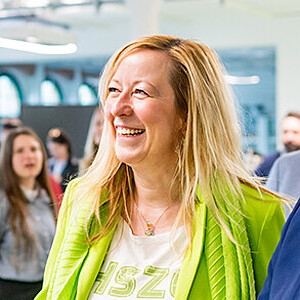
Our goal is to develop the DLR_School_Lab at the Zittau/Görlitz University of Applied Sciences into a long-term hub for innovation in STEM education in Upper Lusatia. The cleanroom experiment with Infineon is an excellent start toward that goal.
”Conclusion
The new cleanroom experiment impressively demonstrates how modern efforts to foster the next generation of talent can succeed: through hands-on experience, a strong practical focus, and robust partnerships between universities, industry, schools, and policymakers. This not only fosters enthusiasm for future technologies but also makes a concrete contribution to securing the next generation of skilled workers in the region.
The application period for the upcoming winter semester is currently underway. New programs include“Semiconductor Processes and Materials Chemistry”and“Mechatronics for Manufacturing,”which focus on modern manufacturing and microelectronics technologies.
Zittau/Görlitz University of Applied Sciences would like to express its sincere thanks to Infineon Technologies AG for providing the cleanroom experiment and for its close cooperation. Special thanks go to Dr. Silke Gottschlich, Prof. Dr. Germar Schneider, Andrea Bannert, and the participating trainees.
We would also like to thank Minister of State Conrad Clemens, District Administrator Dr. Stephan Meyer, Mayor Thomas Zenker, and Roland Lindecke, Chair of the Saxony State Parents’ Council, for their participation. We would also like to thank the Geschwister-Scholl-Gymnasium in Löbau, represented by Michael Wagner, as well as all the students who participated.
Text: Christian Tiller
Photos: Carla Schmidt
Video production and editing: Philipp Herfort



1st floor
2nd upper floor