
News
DLR Award: Students Develop Models of High-Temperature Heat Pumps
The 2026 DLR Prize recognizes creative contributions that present current energy research in an accessible way and inspire young people to take an interest in future technologies.
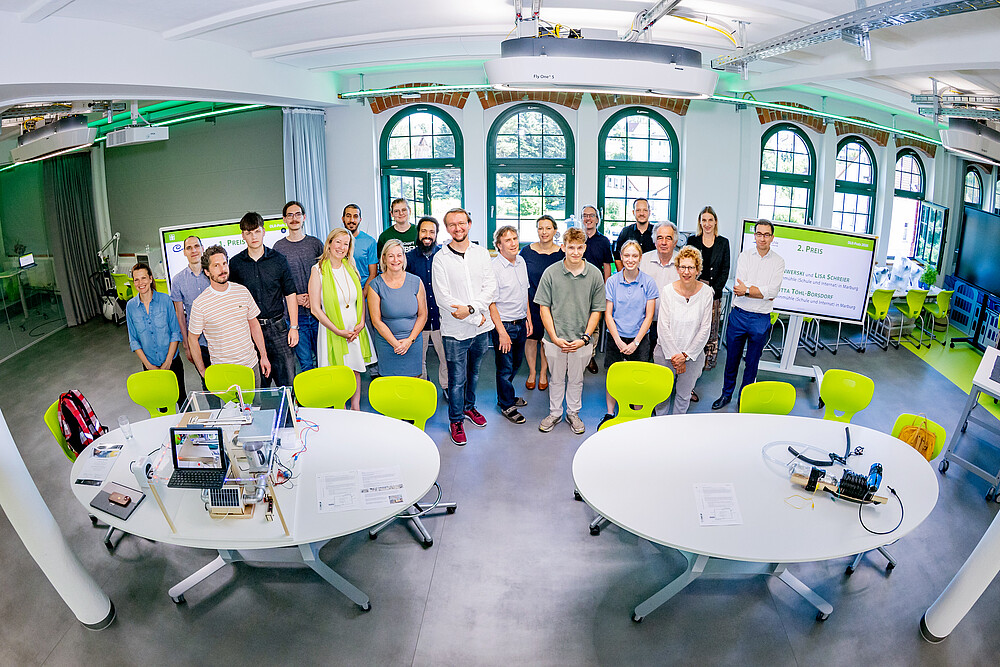


On June 24, 2026, the DLR_School_Lab at Zittau/Görlitz University of Applied Sciences honored the winners of the 2026 DLR Prize. The competition focused on the question of how industrial process heat can be generated in a climate-friendly manner in the future. To address this, students developed models of high-temperature heat pumps and explored a key technology for decarbonizing energy-intensive industrial processes.
The Society of Friends of the German Aerospace Center (GvF) announced the competition with a total prize fund of 2,500 euros. For the first time, the DLR_School_Lab at the Zittau/Görlitz University of Applied Sciences organized the nationwide competition and developed the challenge in collaboration with the DLR Institute for Low-Carbon Industrial Processes in Zittau. The goal of the competition is to inspire students to engage with current research questions and to foster their interest in the natural sciences and engineering.
Making Research Accessible
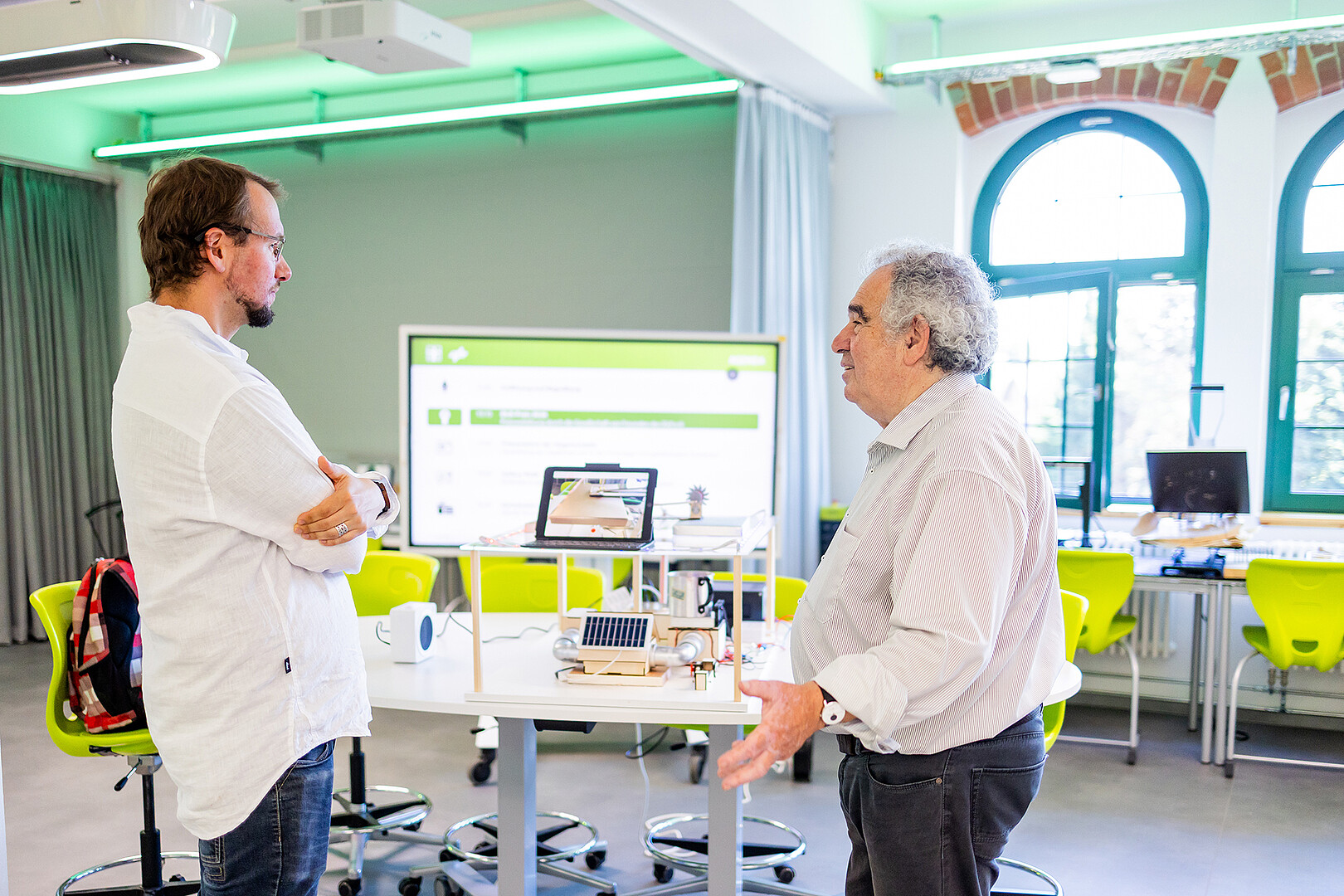
The competition focused on the development of a student-designed model of a high-temperature heat pump based on the Brayton cycle. Unlike conventional heat pumps for residential buildings, these systems generate process heat of up to 300 °C, thereby opening up new possibilities for a climate-friendly industry. In addition, the teams developed specific application scenarios for industrial processes and demonstrated how previously unused waste heat can be efficiently utilized.
The competition’s challenge was directly linked to the research papers published by Zittau/Görlitz University of Applied Sciences and the DLR Institute for Low-Carbon Industrial Processes. Both institutions are developing innovative technologies to make industrial processes more energy-efficient and climate-friendly. The competition bridged the gap between current research and classroom practice, bringing scientific questions to life in a hands-on way.
The complete set of instructions for the 2026 DLR Prize, including all technical requirements and information about participation, is available for download as a PDF.
Download the competition challenge “Reducing CO₂ with Heat Pumps!”

First Prize for the Johannisberg School in Witzenhausen
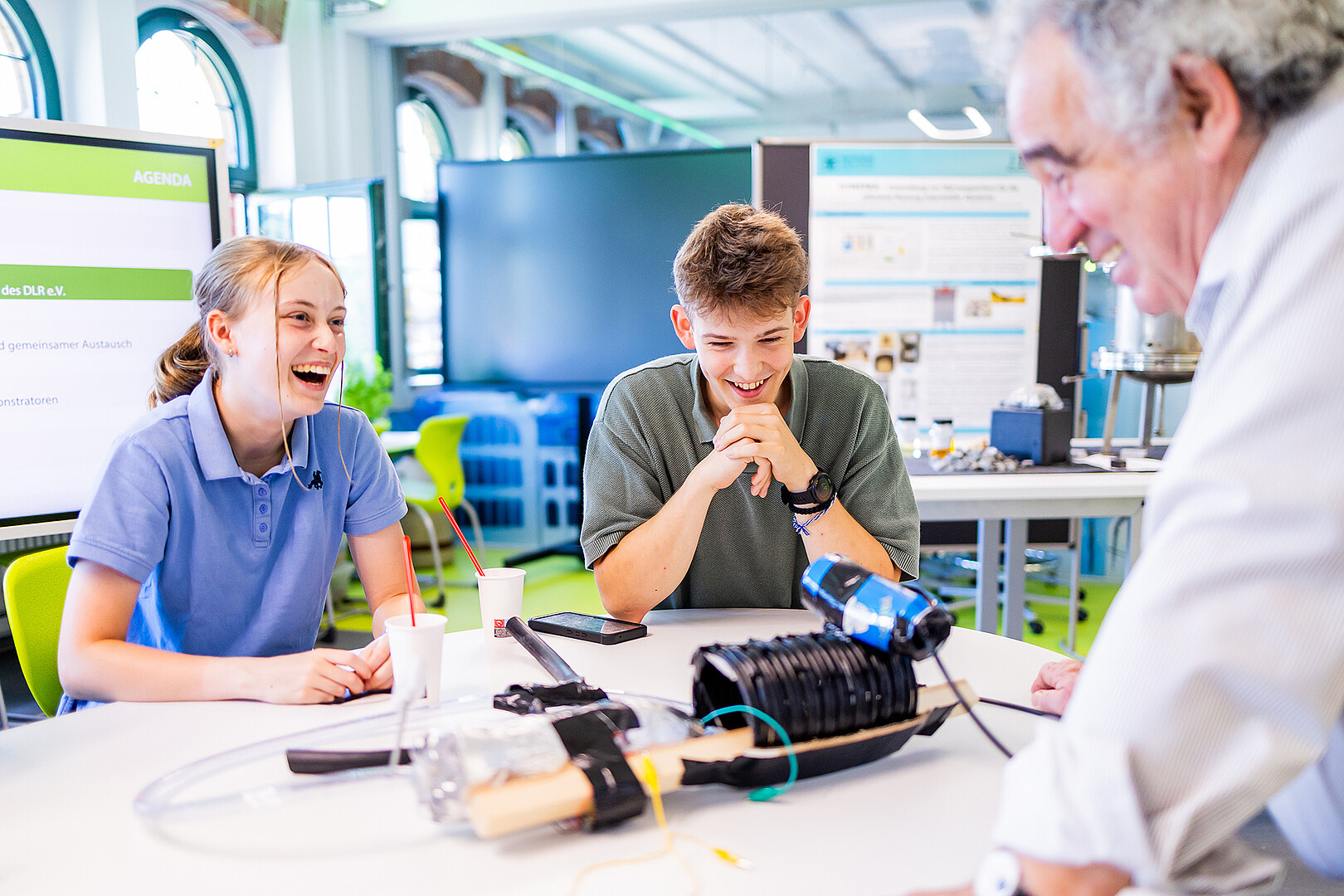
First prize went to the team from the Johannisberg School in Witzenhausen, consisting of Julian Loll, Dennis Butt, Carl Lubitz, and Robert Killig. Together with their teacher, Kamil Daniek, they developed a model that explained the Brayton cycle in a scientifically sound yet clear and accessible way.
The jury particularly commended the high technical quality, the realistic implementation, and the clear explanation of complex physical concepts.
The DLR_School_Lab competition was perfect for us because each of my students was able to contribute their individual strengths. At Johannisberg School, we’ve been working on various sustainability projects for several years. After projects on photovoltaics and wind energy, the high-temperature heat pump was an exciting new topic for us. We really enjoyed the work, and our findings will be further developed in future projects.
”


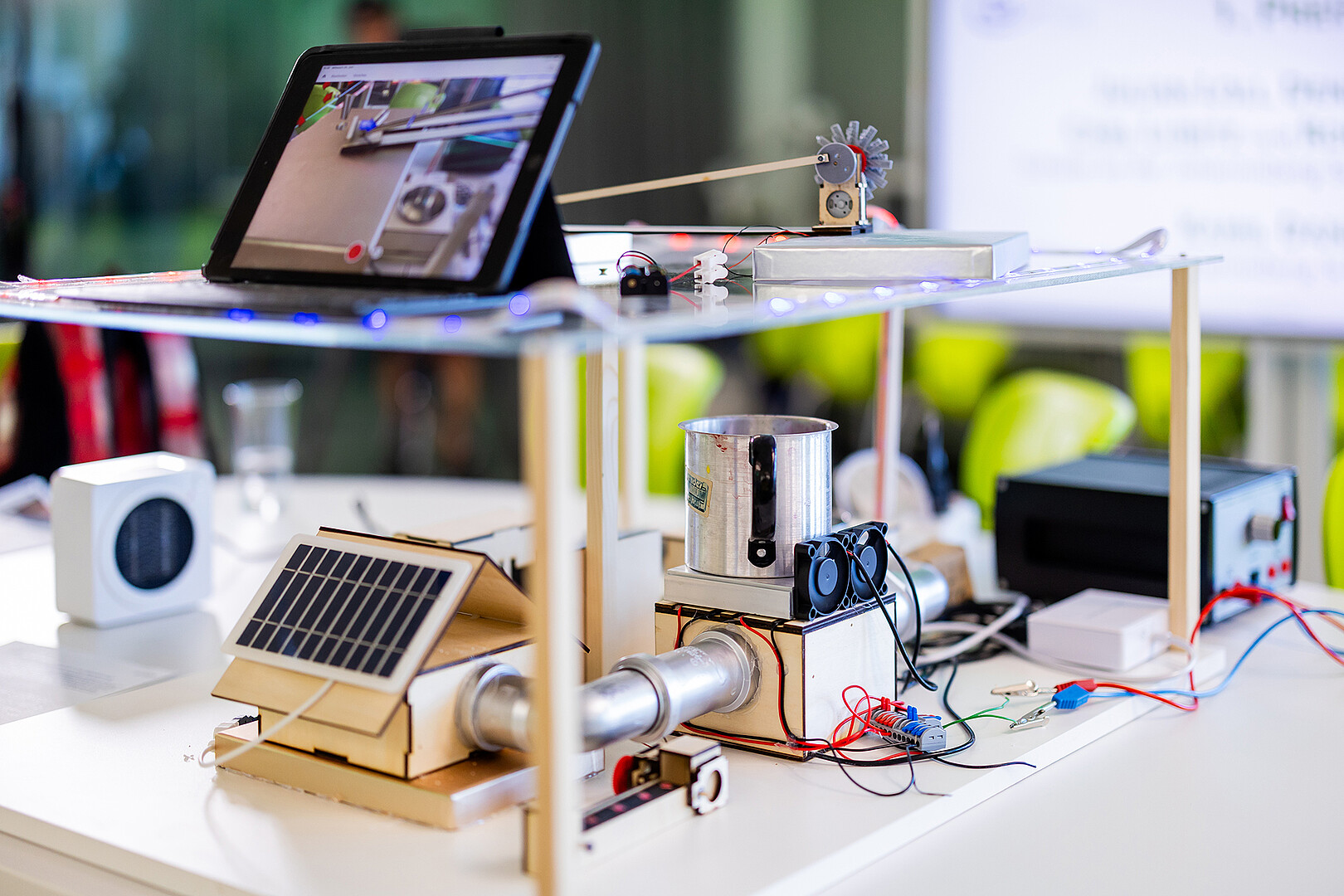
Second Prize for the Steinmühle in Marburg
Second prize went to the team from Steinmühle School and Boarding School in Marburg. Jan Konwerski and Lisa Schreier, together with their teacher Jutta Töhl-Borsdorf, developed a compelling competition model that explained how a high-temperature heat pump works in a clear and practical way.
We wanted to work on a topic that is technically challenging and, at the same time, offers real social value. High-temperature heat pumps can help make industry more climate-friendly and conserve resources.
”We learned a lot while building our heat pump. It was our first time working with new materials, and we built a circuit that we had previously only known in theory. Step by step, we got the hang of the project.
”Partnership Between University and DLR Strengthens the Next Generation of STEM Talent
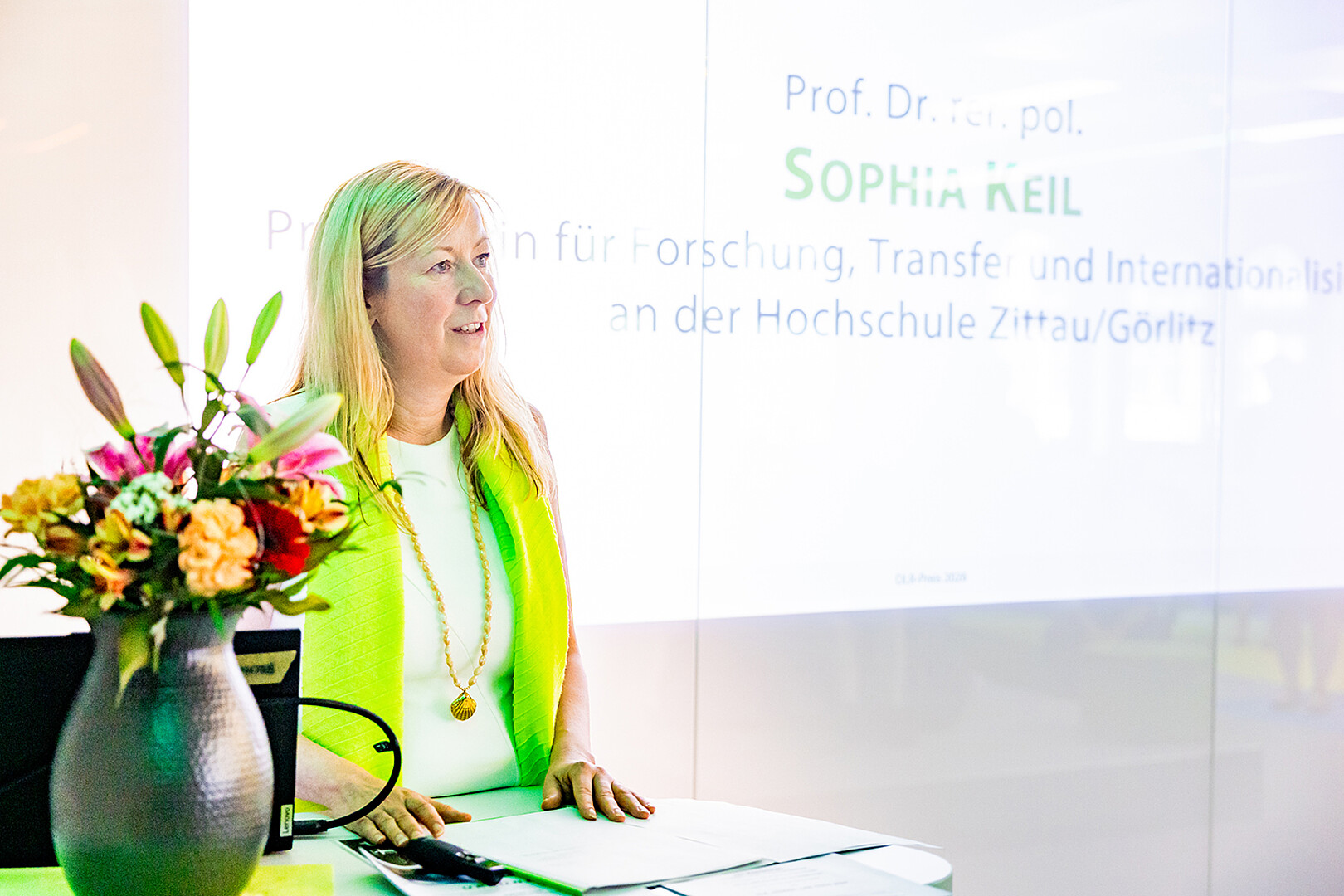
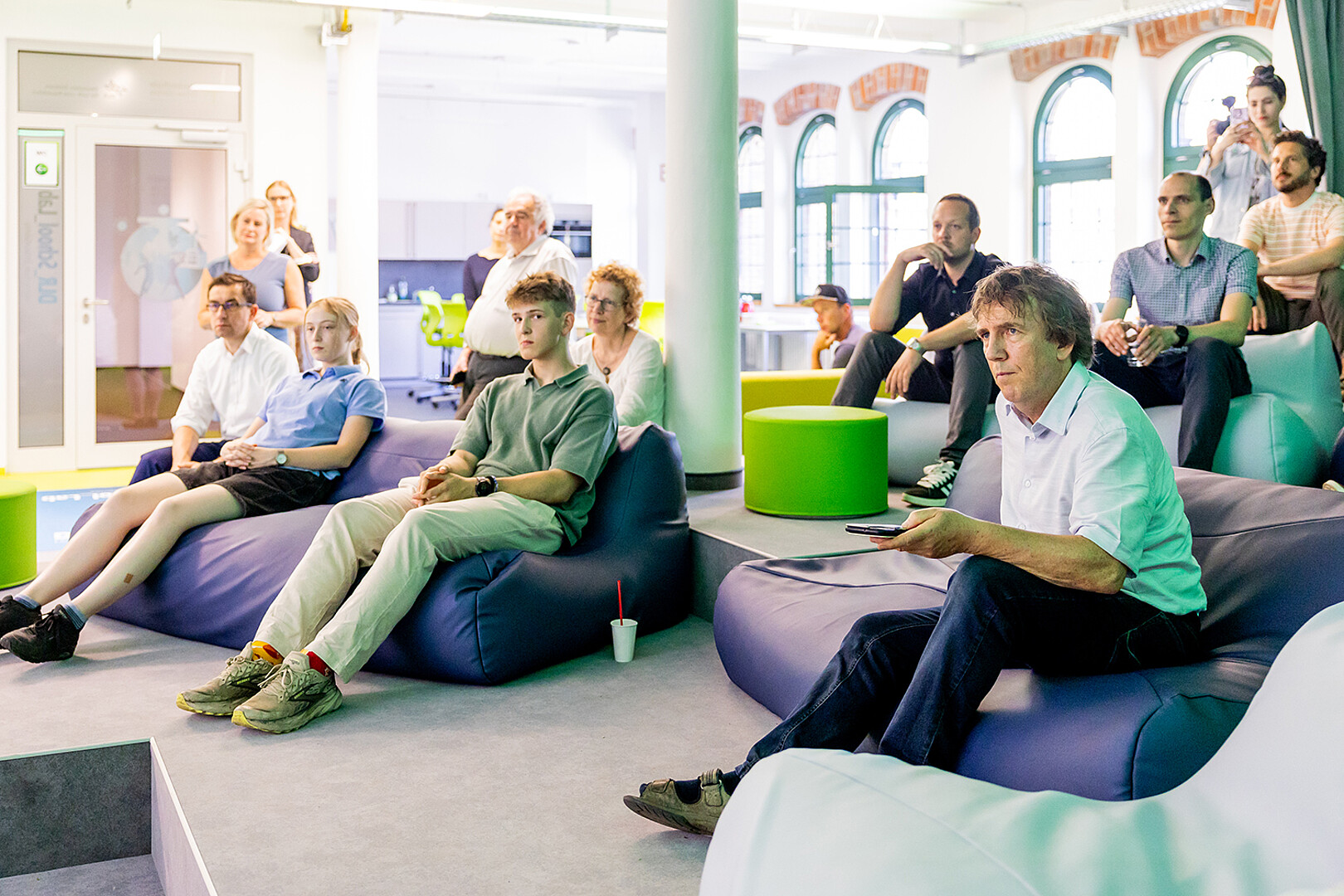
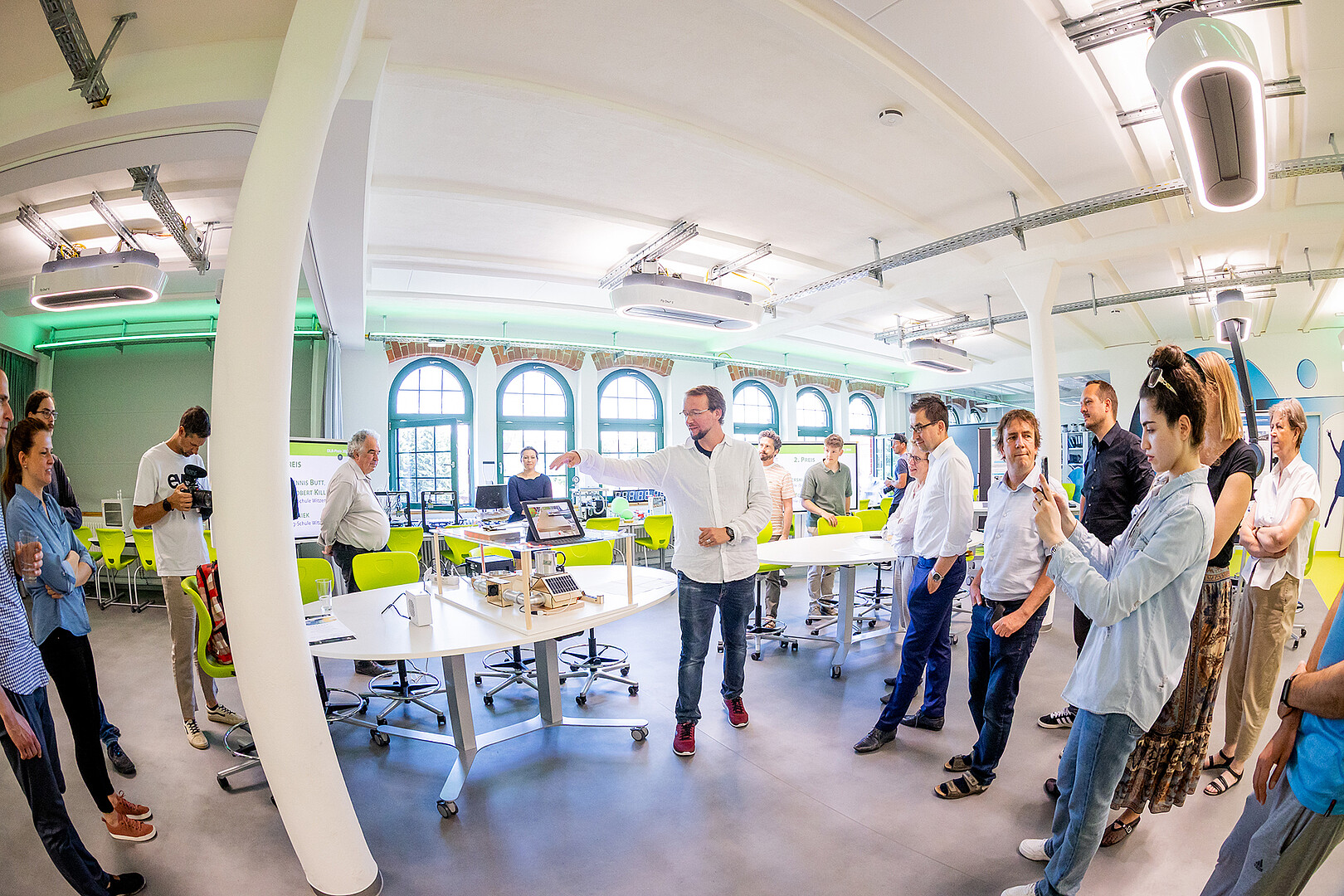
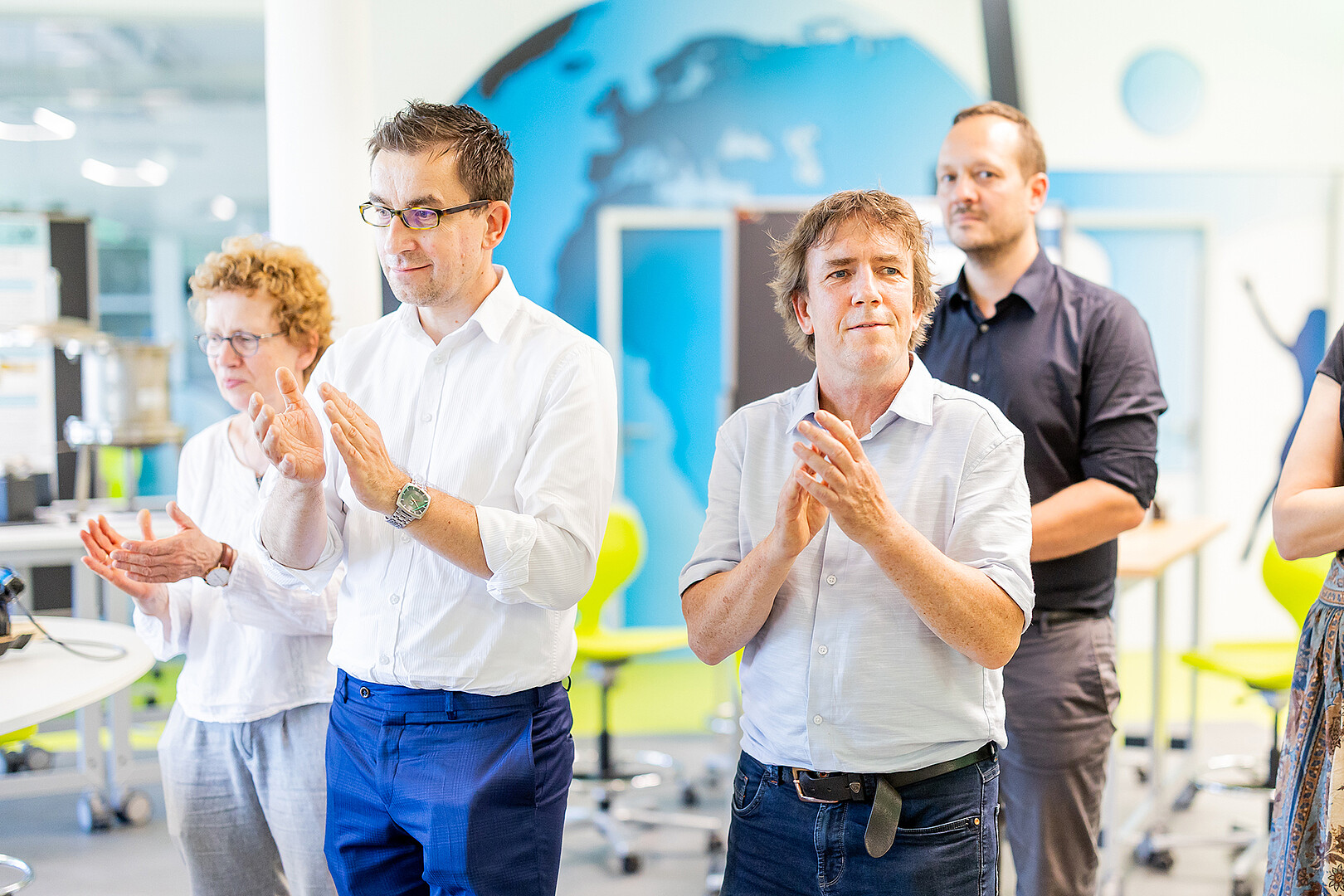
The awards ceremony demonstrated just how successful the collaboration between the university, DLR, and schools from all over Germany has been. At the DLR_School_Lab, current research topics are translated into hands-on learning experiences and brought to life for students.

We want to show young people just how exciting science and research can be. Competitions like the DLR Prize create opportunities to try new things, ask questions, and develop their own ideas. The goal is not only to recognize outstanding achievements, but above all to foster curiosity and build self-confidence. As a university, we see it as our mission to support talented students, open up new perspectives, and build bridges between school, science, and the real world.
”The submitted projects impressively combine scientific principles with practical applications. It is precisely this enthusiasm for research that we aim to inspire and foster at the DLR_School_Lab.
”The topic of heat pumps is an excellent way to make current energy research tangible for students. They apply the fundamental scientific principles they’ve learned in class directly and see how these principles lead to solutions for industry. High-temperature heat pumps are among the key technologies for making industrial processes more climate-friendly and significantly reducing the use of fossil primary energy.”
”Supporting the Next Generation as a Shared Goal
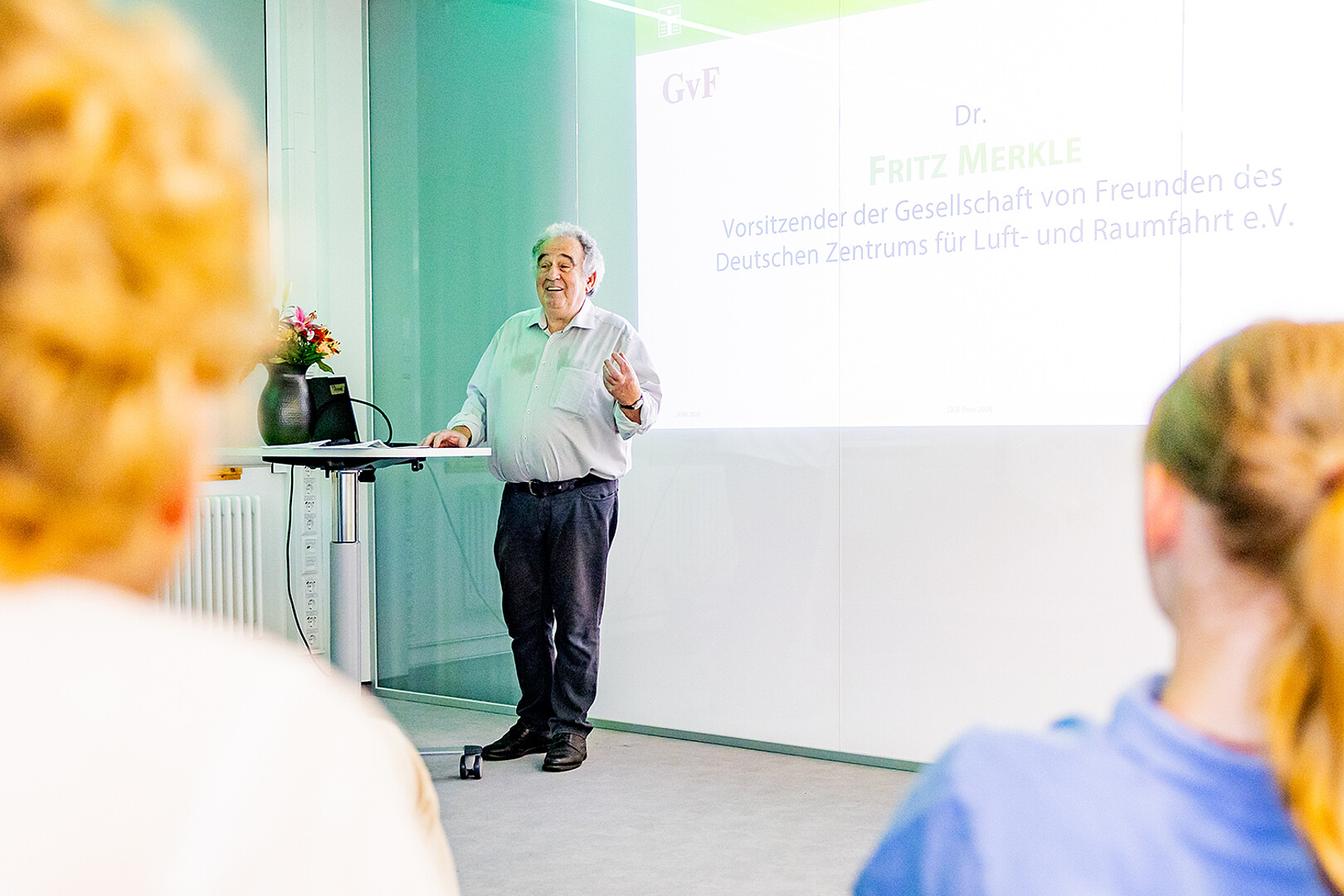
For the Friends of the German Aerospace Center association as well, supporting young scientists has been at the heart of its efforts for many years.
Even the founders of the Society of Friends of the DLR recognized just how crucial aerospace and its key technologies are to our country’s future. Supporting the next generation of scientists has therefore always been a central focus of the Society. Through initiatives such as the School_Lab Award, we aim to inspire young people to pursue research, innovation, and future technologies.
”Sparking Enthusiasm for Future Technologies
The 2026 DLR Prize impressively demonstrated the creativity and technical understanding with which students tackle current research topics. At the same time, the competition underscores the importance of extracurricular learning environments—such as the DLR_School_Lab at Zittau/Görlitz University of Applied Sciences—which teach science in a hands-on way and spark interest in mathematics, computer science, natural sciences, and technology.
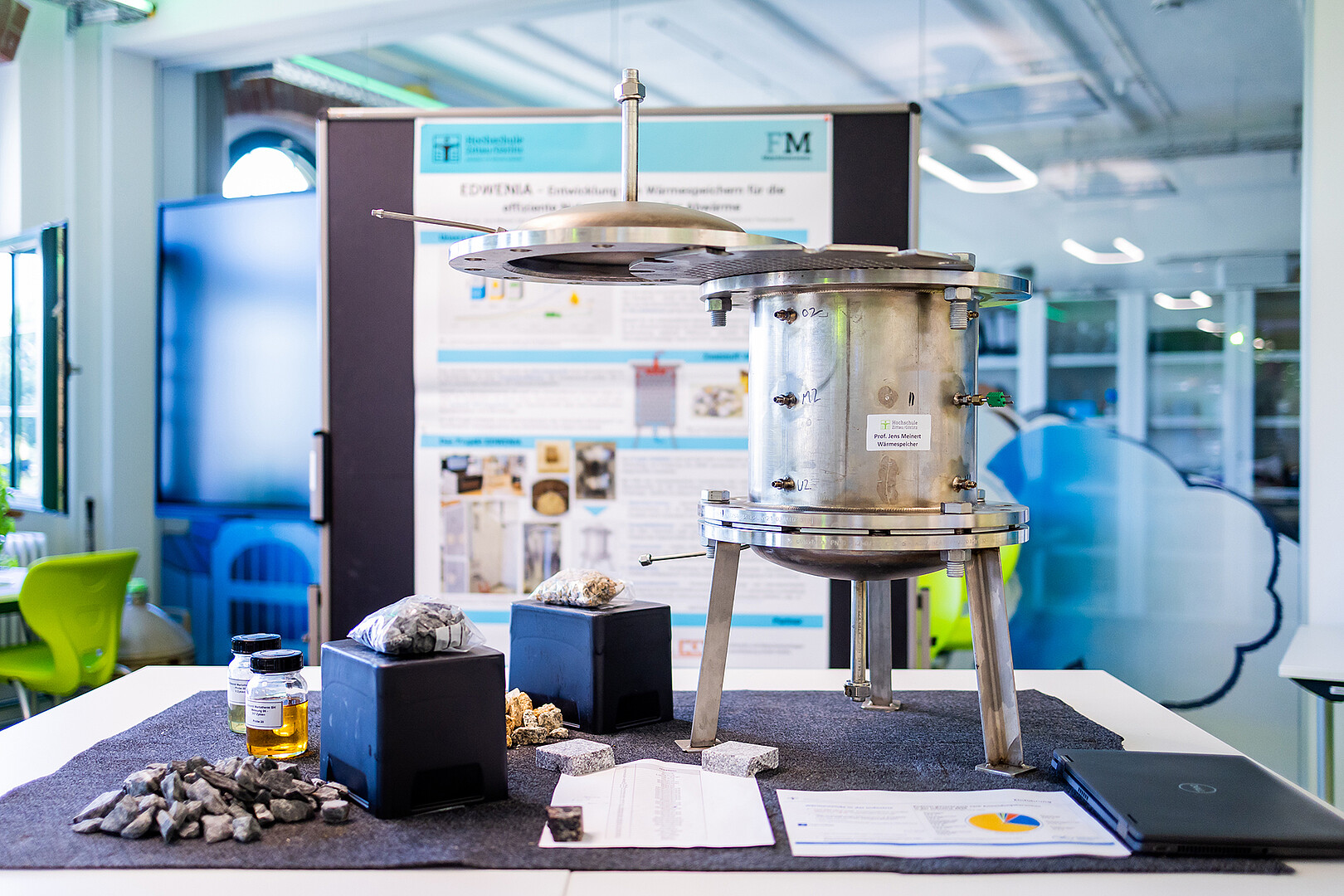


The DLR Prize is announced annually by the Society of Friends of the German Aerospace Center (GvF). Each year, a DLR_School_Lab takes on the organization of the nationwide competition. Next year, the DLR_School_Lab in Oberpfaffenhofen will host the competition.
The DLR_School_Lab at Zittau/Görlitz University of Applied Sciences is an extracurricular learning center operating as part of the Upper Lusatia Future Learning Center (ZukLOS). Here, students conduct experiments on modern test benches related to energy, environmental science, and engineering. In close cooperation with the DLR, the DLR_School_Lab presents current research in a hands-on way and fosters a lasting interest in mathematics, computer science, natural sciences, and technology.
Zittau/Görlitz University of Applied Sciences would like to thank the Society of Friends of the German Aerospace Center (DLR) for donating the prize money, as well as the DLR Institute for Low-Carbon Industrial Processes, all participating schools, teachers, jury members, and supporters for their dedication to organizing the 2026 DLR Prize.
Text: Christian Tiller
Photos: Carla Schmidt





1st floor
2nd upper floor
2nd upper floor