
Message details
Zittau expertise at the Hannover Messe 2019
Cooperation between IPM and KSO-Textil GmbH Olbersdorf presents itself to an international audience at the Hannover Messe.
Under the theme “Industrial Intelligence—Connecting People and Machines in the Age of AI,” the Hannover Messe took place from April 1 to 5. With more than 500 examples of Industry 4.0 and machine learning applications, as well as 6,500 exhibitors from 75 countries, it became clear that the topics of Industry 4.0 and artificial intelligence are of great concern to manufacturers worldwide. Furthermore, terms such as sector coupling, collaborative robots (COBOTS), lightweight construction, the platform economy, and 5G are among the most discussed trends among experts.
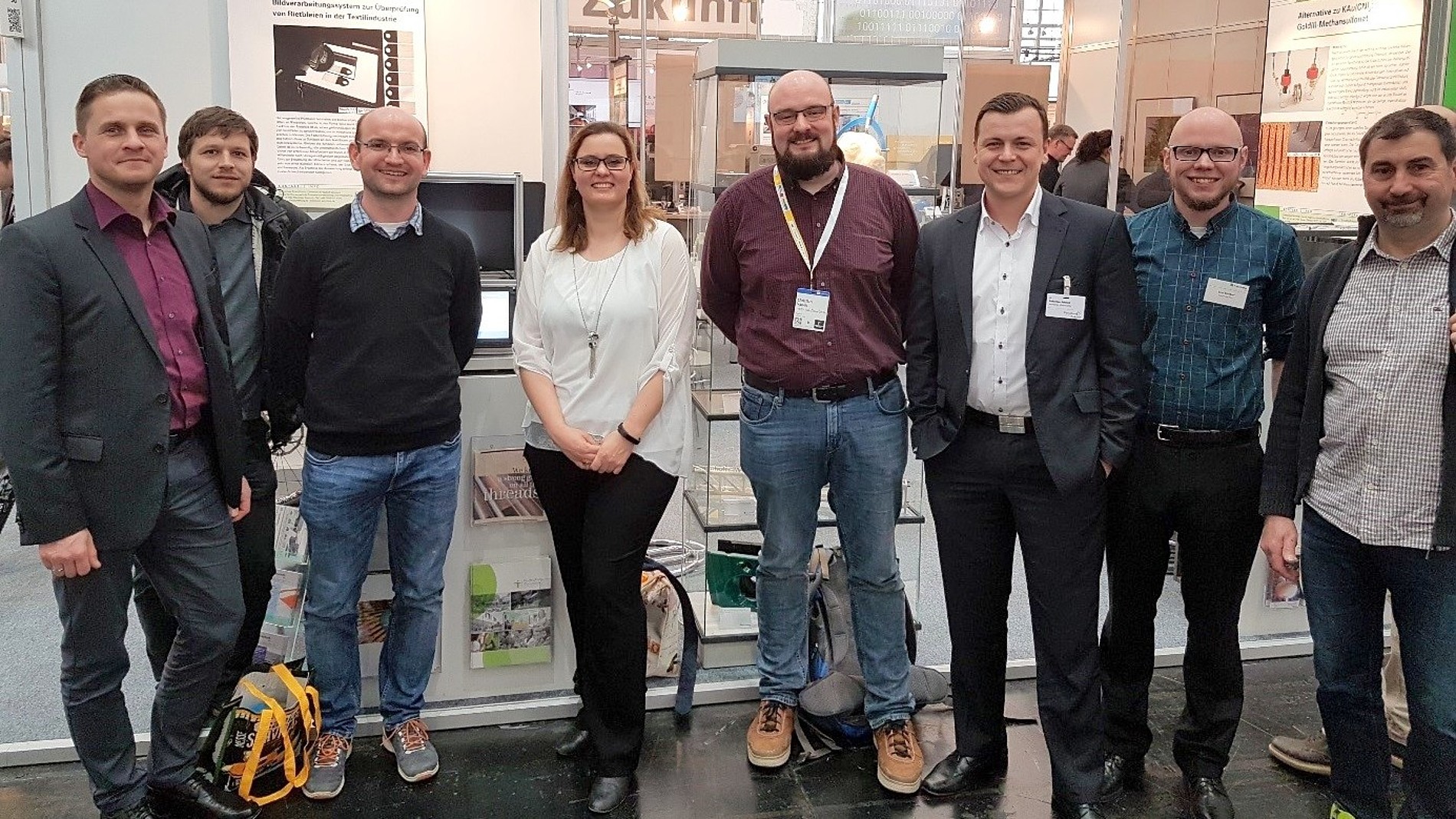
The HSZG, together with the Fraunhofer Institute for Machine Tools and Forming Technology (IWU) in Zittau, was at the joint booth Research for the Future . There, current research projects from universities and research institutions in Saxony, Saxony-Anhalt, and Thuringia were presented to a broad audience.
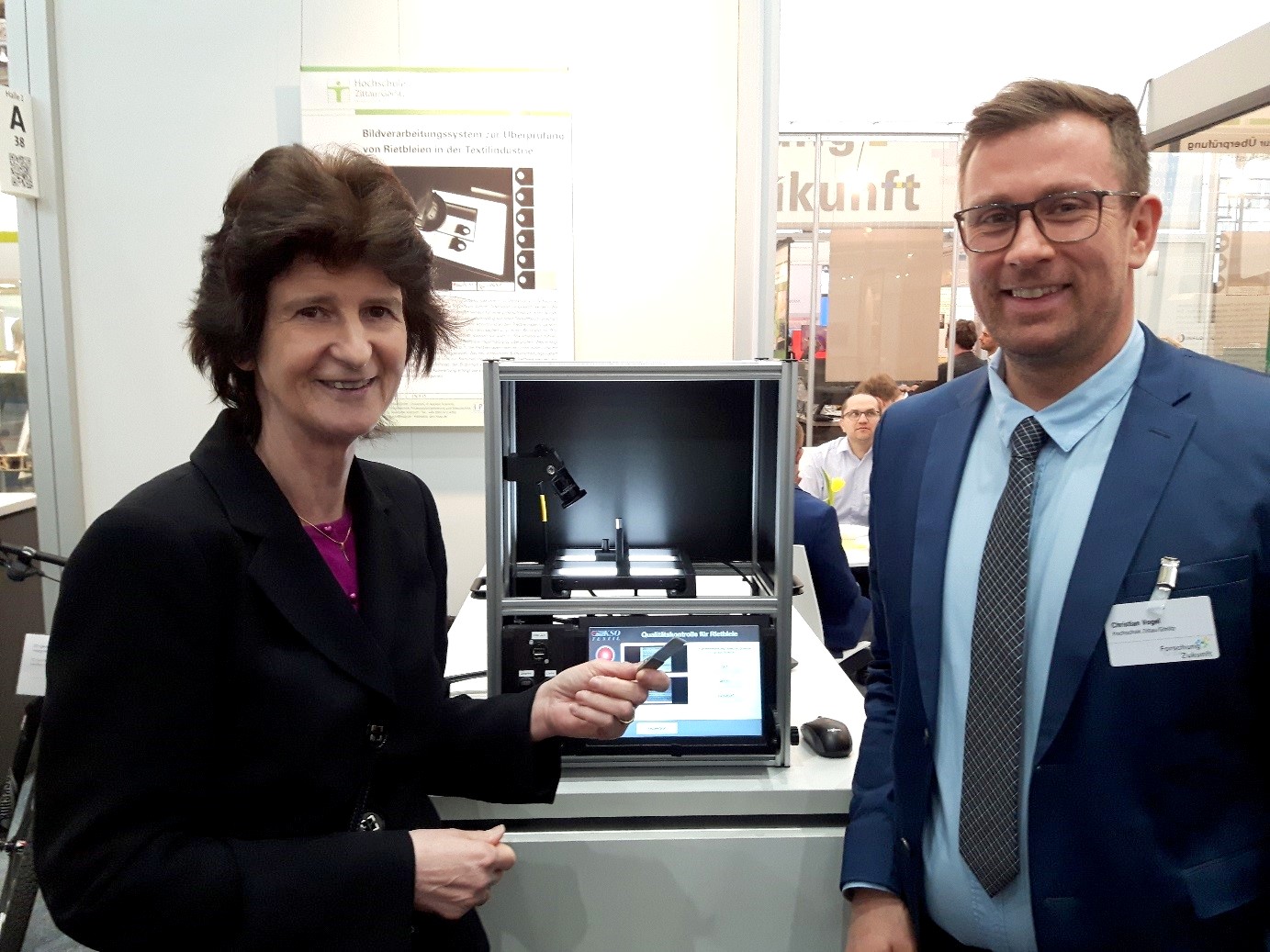
Among other things, the HSZG presented the project developed at the IPM for inspecting reed plates in the textile industry (REBID). This test bench is capable of automatically detecting damage to reed plates. These are used by the company KSO-Textil GmbH Olbersdorf.
How does the application work?
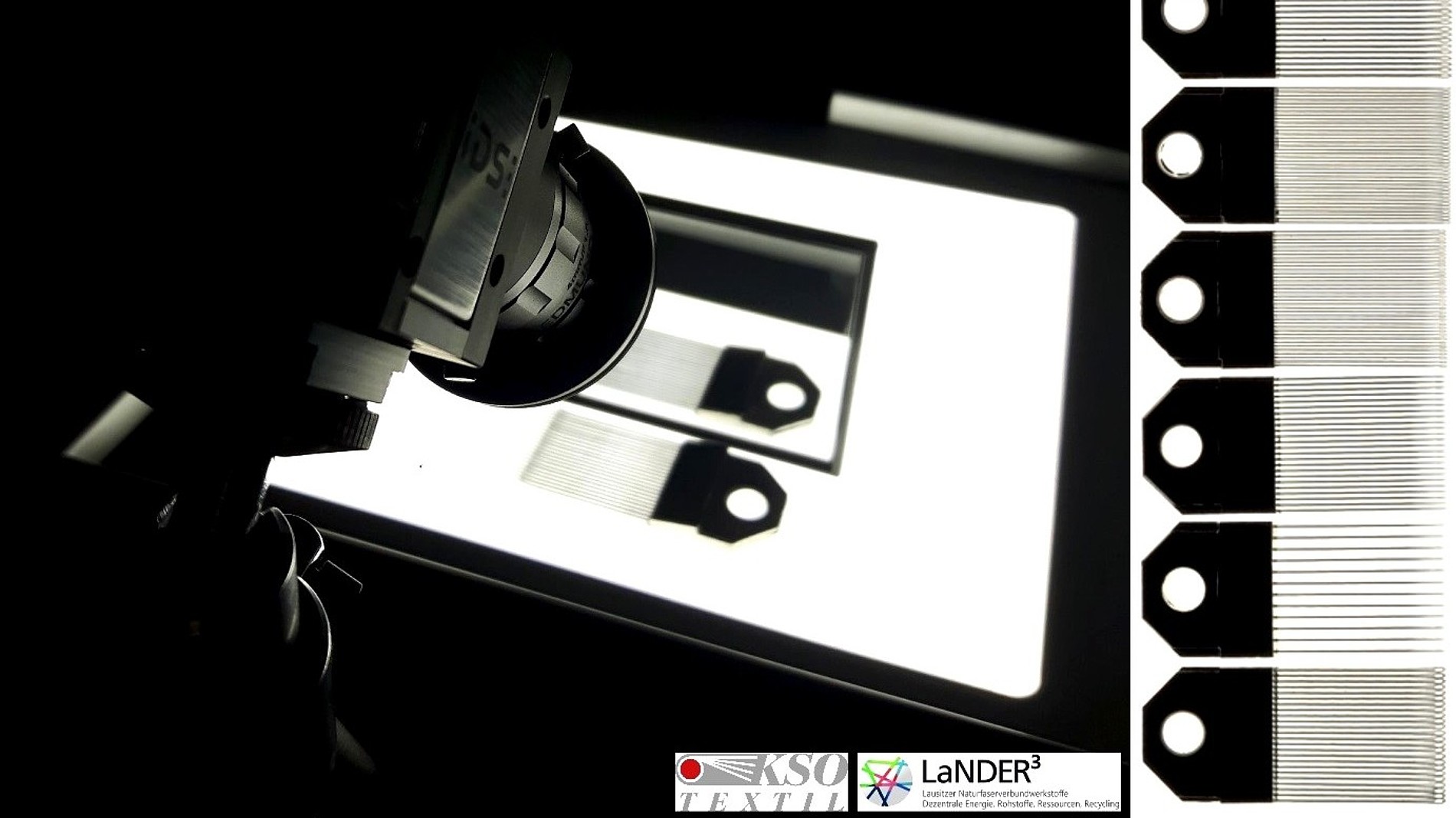
The function of reed guides is to ensure that textile threads run evenly so that they can subsequently be accurately warped onto a warp beam. Over time, the thread guidance causes wear on the reed guide needles.
In the long term, this wear and tear leads to damage to the textile threads and can cause production downtime. If the damage goes unnoticed, it can also lead to customer complaints. Therefore, it is necessary to regularly inspect the various reed guides. Until now, this has been done manually by experienced employees, who examine the reed needles under a magnifying glass using tools to check for irregularities. The newly developed image processing system reduces the workload on employees and shortens inspection times.
The reed plates are captured individually by a digital camera, and the image content is interpreted and evaluated by an inspection algorithm. As a result of the evaluation, the reed plate is classified into one of three categories describing its condition. The introduction of the testing station enables a preliminary stage of Industry 4.0 to be implemented at a regional company. At the Hannover Messe , all parties benefited from the event’s impact on international markets.
Authors: Dr. A. Seeliger, Ms. V. Müller-Seelig, Ms. K. Sprechert, Mr. C. Vogel

Upper floor

Upper floor