Message details
THERESA pilot plant picks up speed for DAQUA
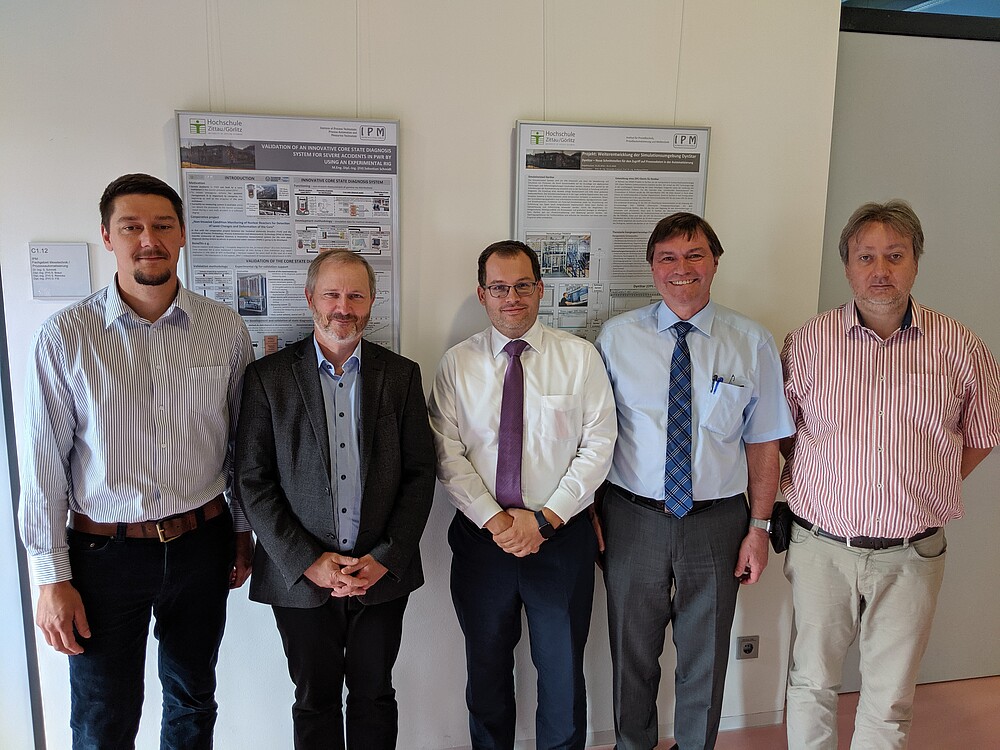
On September 11, all partners of the new DAQUA project - development of a measurement method for determining wet steam quality in energy technology systems - met for the kick-off in Zittau.
Water vapor plays a central role in energy technology as a heat transfer medium. In turbines, superheated steam is expanded by reducing its pressure and temperature, allowing it to perform work on a shaft. In thermal storage systems, energy is stored in hot water during the transition (phase change) from a gaseous to a liquid state. This latent heat of the water is utilized as storage capacity.
When energy is removed from the superheated steam, its temperature initially drops to the saturation point, at which point so-called saturated steam is reached. If the energy content continues to decrease, saturated steam turns into wet steam, in which the first water droplets begin to form. The greater the liquid content in the steam—that is, the more droplets there are—the more likely it is that wear on the turbine blades or damage to the piping will occur.
To this day, steam quality remains a thermodynamic parameter that is difficult to measure. This is because the liquid occurs both finely dispersed in the steam flow and in the form of liquid films on the wall, making its proportion difficult for measuring instruments to detect. Methods already exist that can sound an alarm in the event of an increase, but they cannot provide any information about the exact volume of the droplets.
This gap is now being closed by the three partners of the DAQUA project (Project No.: 13FH163PX8). The Institute for Process Engineering, Process Automation, and Measurement Technology (IPM) at Zittau/Görlitz University of Applied Sciences, HZDR Innovation GmbH (INNO), and the Institute for Fluid Dynamics at the Helmholtz-Zentrum Dresden-Rossendorf (HZDR) are jointly developing a hybrid measurement method that combines the strengths of thermodynamic and electrical measurement methods.
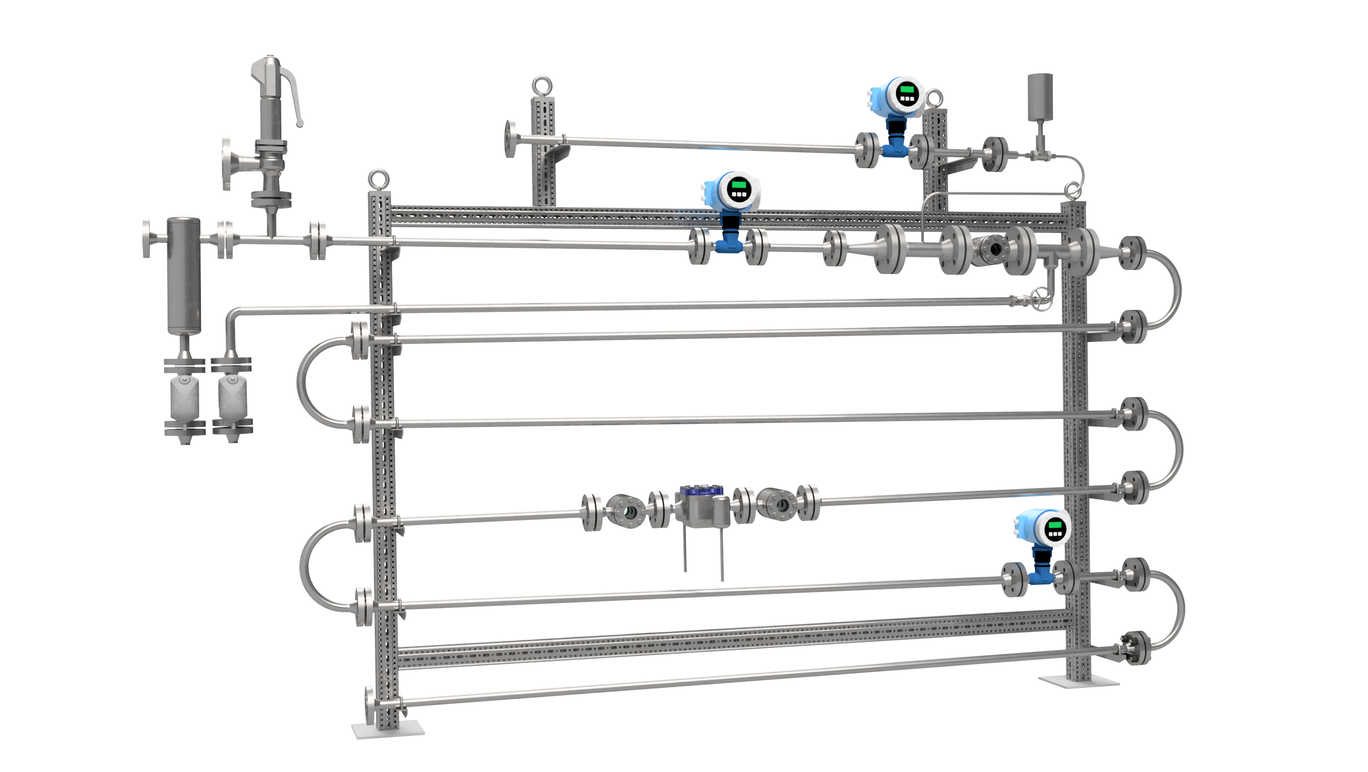
The results are being tested at the Zittau Power Plant Laboratory, at the THERESA pilot plant, which—with its thermal energy storage capabilities—offers good conditions and is frequently used for research and industrial applications. At DAQUA, funding is provided by the Federal Ministry of Education and Research (BMBF) under the guidelines for supporting research at universities of applied sciences in collaboration with companies, while HZDR Innovation GmbH supports the project with third-party funding.
Project team member Sebastian Braun is using this promising research topic to make the findings on the measurement method available to the public as part of his doctoral dissertation. In addition, a new technical staff member will begin work at THERESA in November. The project is being supervised by Professor Uwe Hampel from the Helmholtz Zentrum Dresden-Rossendorf, as well as Professors Hans-Joachim Kretzschmar and Alexander Kratzsch, who also serves as the project leader. All project partners have until June 2022 to successfully complete their research.