
Message details
07. June 2018
Proactively into the future
The University Council gives the green light to the 2025 Development Plan for Zittau/Görlitz University.
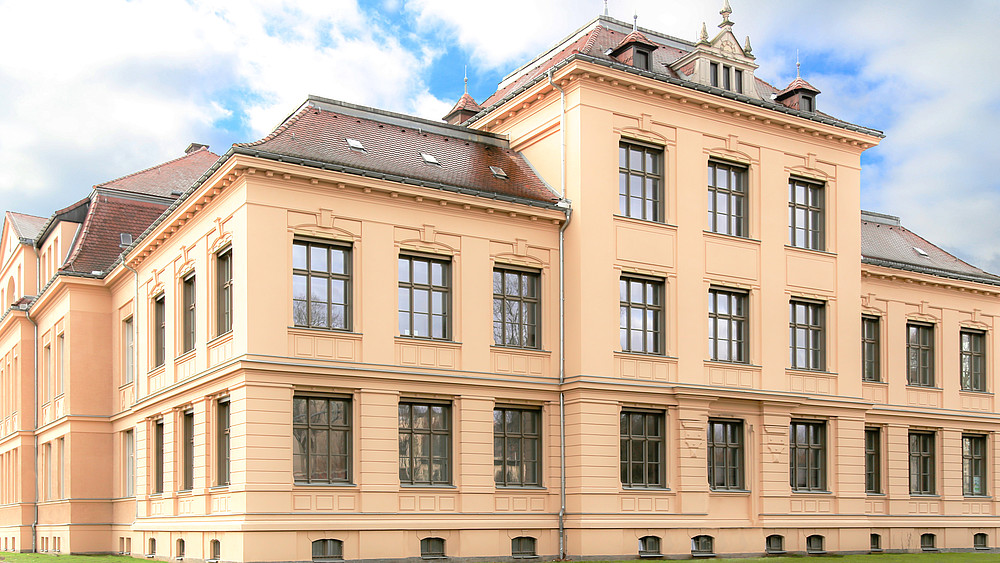
The Zittau/Görlitz University of Applied Sciences (HSZG) has finalized its plans through 2025. After the Senate approved the University Executive Board’s draft at its March meeting, it was also approved by the University Council at its May meeting.
Rector Prof. Friedrich Albrecht was particularly pleased that both bodies passed their resolutions unanimously:
“It was well worth embedding the development of the strategic plan within an intensive and broad-based internal discussion process, which ranged from the establishment of a Senate Commission on University Development to joint deliberations between the Senate and the University Council. This ensured that the direction and the measures resulting from it would meet with a high level of acceptance among the members of our university.”
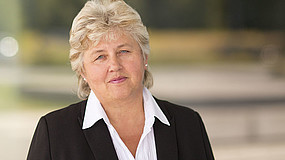
The Chair of the University Council, Prof. Dr.-Ing. Sylvia Rohr, refers in this context in particular to the dynamics that lie outside the universities:
“Regional and industrial structural change, the increasing digitization of the workplace, competition in an increasingly heterogeneous education market, demographic shifts, and the need for new digital forms of learning and teaching present universities with major challenges. The HSZG must therefore become more proactive at its core: even more open to change, while remaining proactive and innovative.”
The HSZG has identified its role in the structural transformation of Lausitz as its most important strategic task for the coming years. The planned phase-out of lignite-fired power generation poses enormous challenges. The region is facing an economic and structural upheaval whose scale rivals that of the 1990s. The HSZG aims to contribute to the establishment of an effective innovation ecosystem in Lausitz that encompasses both technological and social innovations. This involves both the research and development of efficient, competitive manufacturing technologies, products, and systems, as well as innovative work and social models for creating attractive and sustainable living environments that take regional characteristics and potential into account.
To fulfill this role, the HSZG continues to rely on its broad range of academic disciplines, comprising over 40 degree programs. New degree programmes are being established in Applied Nursing Science, Applied Natural Sciences, and Pharmaceutical Biotechnology , along with the new specialization in Cyber-Physical Systems, which focuses on technological developments related to Industry 4.0, as well as on assistive solutions for autonomous living (AAL) for, for example, older adults.
The university’s core profile will remain unchanged: The areas of expertise “Energy and Environment” and “Transformation Processes in Business and Society” will continue to be central, as will the international focus on Central and Eastern Europe.
Greater emphasis—and thus also increased funding—will be placed on the areas of research, technology transfer, and innovation. The HSZG sees the greatest opportunities for shaping its future and development prospects in these areas, based on its past competitive successes. For example, funding was secured through two BMBF programs of excellence for universities of applied sciences—“FH-Impuls” and “Innovative Hochschule”—which will secure third-party-funded research and development work for years to come. In addition, there are long-standing or emerging collaborations with strategic partners such as the Fraunhofer Society (Upper Lusatian Plastics Center in Zittau, Cybersecurity Laboratory for Critical Infrastructure in Görlitz) or research and development facilities unique in Germany, such as the Zittau Power Plant Laboratory (ZKWL), established and operated by the IPM University Institute, which is dedicated to researching measures to increase energy efficiency, energy storage, and the use of renewable energy.
The HSZG anticipates that this trend will continue, with research and development topics becoming increasingly interdisciplinary—that is, no longer limited to purely technological or social issues. These will increasingly need to be addressed in a cross-disciplinary manner. To this end, management will focus on strengthening collaboration across disciplinary boundaries, organizational units, and locations, thereby expanding the university’s unique potential at the intersections of engineering, natural sciences, social sciences, and economics, and integrating it into research, teaching, and technology transfer.
To better coordinate and support the processes required for this, the HSZG is establishing a staff unit reporting to the University Executive Board. At the same time, to intensify research and knowledge and technology transfer in the faculties and institutes, a decentralized core staff of mid-level academic faculty is being established.
In the area of academic programs and teaching, structures and processes will be established—or existing ones strengthened—that serve to enhance quality and improve student success: Improving student advising and support, introducing institutional accreditation, and expanding continuing education in higher education pedagogy are the key priorities here.
A significant increase in the number of students is not planned. The Saxon Higher Education Development Plan stipulates that the number of students at the HSZG should rise from the current 3,000 to 3,200 by 2025. This aligns with the demographic baseline and what the university’s range of academic programs can offer. A realistic quantitative outlook also helps ensure that the focus remains on qualitative goals.
Another key focus of development planning is human resources development. Not only in the business sector but also in academia, the issue of ensuring a sufficient supply of skilled workers is becoming increasingly important. In this regard, the HSZG will respond by mid-2019 with a comprehensive staff development plan that comprehensively addresses the key issues of staffing, recruitment, leadership, and career development.
The structural measures are commensurate with the goals of the development plan. For example, the central facilities will be expanded through the establishment of the Center for Cross-Faculty / Trans-Faculty Teaching. This center will consolidate the extremely diverse range of teaching units—which are no longer limited to a single faculty—into a single unit.
University Executive Board
02763 Zittau
Theodor-Körner-Allee 16
Building Z I,
Room 1.54
1st floor
1st floor
+49 3583 612-3030