
Message details
Heating with the Saale
Sustainably generated energy of tomorrow? With the "Saale to Heat" project, the HSZG is researching this as part of the Co-Creation Lab Supply Infrastructure.
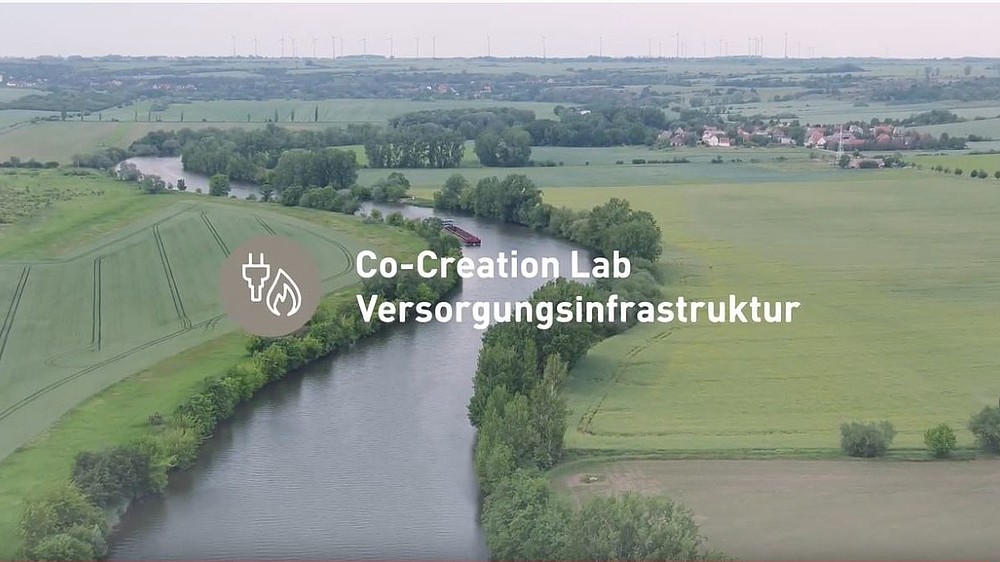
How can tomorrow’s energy be generated sustainably? Can electricity from wind and solar energy be the driving force behind this? As part of the Co-Creation Lab for Supply Infrastructure , Zittau/Görlitz University of Applied Sciences is exploring precisely these questions and is collaborating with EVH GmbH in Halle on the “Saale to Heat” project .
“The goal is for an innovative combined heat and power plant to provide sustainable, eco-friendly district heating,” explains Jens Maiwald, a project staff member at HSZG.
A promotional video has now been produced about the project—which is funded by the Saxony5 consortium—in which the project participants explain the concept behind “Saale to Heat.”
The English version can be found here.
“Heating with the heat from the Saale River”—How can that work?
Jens Maiwald, who holds a Diplom in Industrial Engineering (FH), explains the project in detail:
At the Co-Creation Lab for Utility Infrastructure “CELSIUZ” at Zittau/Görlitz University of Applied Sciences, there is an active focus on transferring scientific knowledge into practical applications. This is also the case with the “Saale to Heat” project. The university’s Institute for Process Engineering, Process Automation, and Measurement Technology (IPM for short) investigated how tomorrow’s energy can be supplied sustainably. Together with EVH GmbH at the Halle Trotha site, a feasibility study was conducted to find a solution for providing sustainable, environmentally friendly district heating using an innovative combined heat and power (CHP) plant.
The term “combined heat and power” refers to the simultaneous generation of mechanical energy—which is usually converted directly into electricity—and process heat, which can be fed into a district heating network, for example.
Environmental Heat as an Alternative Energy Source
As part of the feasibility study, the implementation of a combined heat and power system consisting of a large-scale heat pump and a combined heat and power plant was examined. What makes this system unique is its use of environmental heat from the Saale River as an alternative energy source. The goal is to cover the summer base load of 25–30MWth required by the district heating network through heat supplied by the heat pump and the combined heat and power plant.
District heating accounts for approximately 60% of the total heat demand in the city of Halle (Saale), thus offering significant potential for CO₂ reduction in the heating sector. The large-scale heat pump to be implemented can be powered exclusively by electricity from wind and solar energy and uses river water from the Saale to generate heating water for district heating at a temperature of 90 °C. In the process, the water from the Saale cools by approximately 5 °C, which has a positive effect on the environment, especially in the summer.
In addition to feeding electrical energy into the public grid, the combined heat and power (CHP) plant ensures the heat pump’s power supply during so-called “dark lulls”—that is, hours with little wind or sunlight. Furthermore, the waste heat from the CHP plant is fed into the district heating network.
The feasibility study demonstrated the technical feasibility and eligibility for funding under the KWKAusV (Combined Heat and Power Tendering Ordinance) for an innovative combined heat and power system. Based on the load profile analysis of the district heating network, the analysis of the Saale River water temperature, and the determination of the summer base load, fundamental load cases were defined.
Technically Feasible and Efficient
The investigations into the planned concept revealed that the configuration is technically feasible and that the efficiency of the overall district heating system is increased while CO₂ emissions are reduced.
Furthermore, the technical availability and maturity of the individual components were examined. The findings from the analyses and simulations conducted, the market availability of the individual components, and applicable funding guidelines were used to develop a funding-eligible overall concept in the field of innovative combined heat and power generation. The implementation plan for the preferred plant design has already been submitted to the funding agency and is currently in the planning phase. The developed concept will contribute to reducing CO2 emissions in the district heating system of the city of Halle in the future.
Upper floor

First floor
1st floor