
Message details
13. July 2018
Interview with habilitated professor
With the completion of her habilitation, Andrea G. Eckhardt has obtained the qualification to teach in the field of empirical educational research.
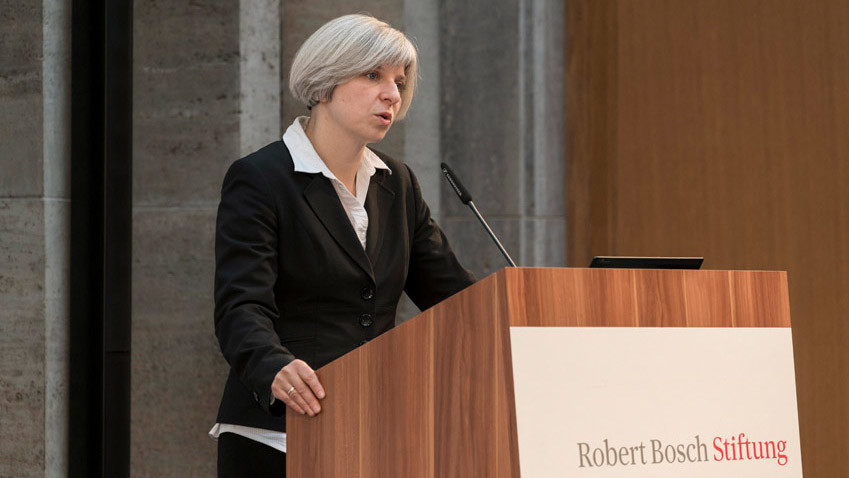
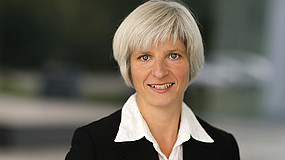
Prof. Dr. phil. Andrea G. Eckhardt completed her habilitation at the Faculty of Human Sciences at Otto Friedrich University of Bamberg under the supervision of Prof. Dr. phil. Hans-Günter Roßbach, former chair of Elementary and Family Education, with the cumulative habilitation thesis “Quality Assurance and Development of Early Childhood Education, Care, and Upbringing (FBBE)” and received certification to teach the subject “Empirical Educational Research.” In her recent publications, she examines the quality of child day care for children under three years of age in day care centers and family day care settings. Further information about her and her research focus can be found on the following website. The Public Relations Office conducted an interview with the newly habilitated professor.
Dear Professor Eckhardt, we congratulate you on your habilitation. Can you briefly outline your topic?
In eastern Germany, approximately 50% of all children under the age of 3 attend a daycare center or are in family day care; for children over the age of 3, the figure is as high as 96%. Children’s development is particularly good when the quality of the educational processes in their care is high. In my habilitation thesis, I therefore examine the quality of educational processes in daycare centers and family daycare.
What inspired or fascinated you about this topic? What were the particular challenges?
Early childhood education has increasingly come into the spotlight in recent years. Initially, the focus was on expanding childcare options. However, it has also become increasingly clear that, in addition to the number of spots, good quality of care must be ensured. Research has already shed a great deal of light on some of the factors that influence the quality of care, while others have yet to be thoroughly investigated. In particular, the quality of care for children under 3 years of age is a field of research that has received little attention to date. I am especially interested in the question of under what conditions children in daycare centers and family day care can grow up and develop in a good manner.
A particular challenge for me was finding the time to conduct intensive research alongside my teaching duties. For my articles, I was able to draw primarily on data from earlier research projects.
You have been working as a professor in the Faculty of Social Sciences since 2011. How has your habilitation influenced your teaching at Zittau/Görlitz University of Applied Sciences?
To strengthen the quality of the early childhood education, care, and upbringing system, degree programmes have been established throughout Germany, including the Childhood Education programme at Zittau/Görlitz University of Applied Sciences. My research feeds directly into my teaching: on the one hand, by incorporating the theories and concepts that form the basis of my research into my teaching; on the other hand, by discussing research findings in my classes / courses.
With your habilitation, you will receive the qualification to teach the subject “Empirical Educational Research.” Can you briefly explain what this entails?
Empirical educational research lies at the intersection of the disciplines of pedagogy, sociology, and psychology. It examines how educational processes unfold. This can involve educational processes for children in daycare centers and schools as well as those for adults in initial, continuing, and professional development education. A central question is also what effects educational interventions have on the acquisition of competencies.
Will this field now become part of your curriculum?
Here, too, there is already a close integration between research and teaching. Theoretical concepts from education and sociology are part of my teaching, as are methods of empirical social research, which students acquire in the Childhood Education degree programme. In addition, students have the opportunity to participate in research projects.
How did you find a balance during stressful periods at work?
That’s certainly always a challenge. It’s important to me to consciously schedule time with my family, such as family outings.
Faculty of Social Sciences
02826 Görlitz
Furtstrasse 2
Building G I,
Room 2.03
2nd upper floor
2nd upper floor
+49 3581 374-4233
Faculty of Social Sciences
Deanery
02826 Görlitz
Furtstrasse 2
Building G I,
Room 1.12
1st floor
1st floor
+49 3581 374-3750