
Message details
Researchers from Zittau - speed data at the Science Match.
Research speed dating in Dresden: 100 top researchers each presented their latest results in three minutes.
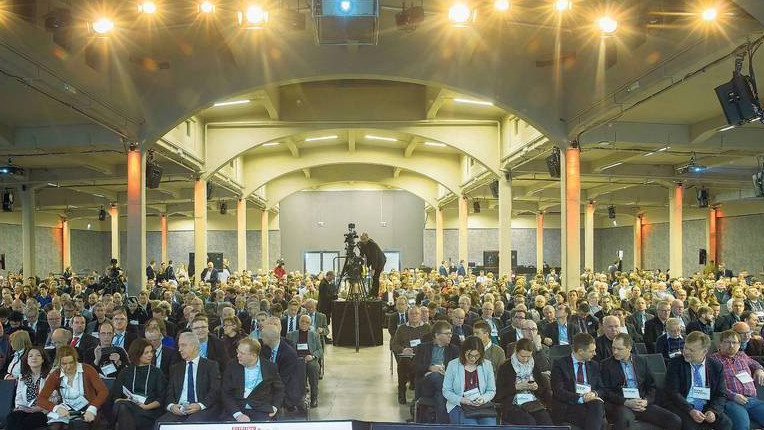
Science Match is something like speed dating, but for researchers. For the first time, the Tagesspiegel Berlin invited participants to this event in Saxony. 100 leading researchers presented their ideas to an audience of 1,000. What makes it special is the three-minute speaking time. In such a short time, you get a broad overview of research in Saxony—and in some cases, even cutting-edge national research. When a renowned media partner and the Free State of Saxony host a professional event—and significant public attention is expected—you have to abide by the three-minute rule. Two professors from the Zittau/Görlitz University of Applied Sciences were among those in attendance in Dresden.
A witty remark to start with:
What do German trade show visitors say? “How much does that cost?”
The Saxon asks: “How does that work?” That’s the Saxon way.
It’s not without reason that the Free State of Saxony is devoting the utmost attention to this event. Saxony’s universities and colleges—including its research institutions—are the state’s trump cards for the future.
“This is a showcase for Saxony; it’s a showcase from Saxony,”
says Minister President Stanislaw Tillich (CDU), himself a graduate engineer in mechanical design and transmission technology.
“If we want to keep up in global competition, we must succeed in keeping the entire process in Saxony: from the idea to mass production.”
The attending Minister President speaks of Saxony’s success and offers encouragement for the coming years. Sebastian Turner, host and editor of the “Tagesspiegel” from Berlin, must admit in his welcoming remarks
“He is probably the only social scientist present here.”
Yes, in Saxony, cutting-edge research takes place primarily in the engineering and natural sciences, including medicine. The model state of German industrialization remains at the forefront even in the computer age with its technical universities and research institutions. But the smaller universities from the periphery are also represented. Incidentally, the term “science hubs” is not used on the podium.
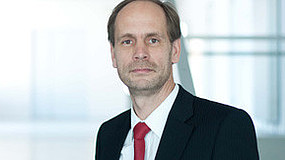
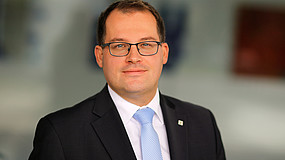
Among those in the coveted first panel of speakers are Professor Tobias Zschunke and Professor Alexander Kratzsch. Both confidently present their research topics to the interested audience. Even the researchers from Zittau and Görlitz easily keep their presentations under three minutes. The audience asks questions during the “Meet the Speakers” session. People know each other—at least for some of the participants. Thanks to the Science Match, however, there are also many newcomers in attendance: interested students, doctoral candidates, journalists, politicians, and entrepreneurs—as well as competitors.
What remains of Zittau/Görlitz at the Science Match? Not just a hand-drawn sketch in Professor Tobias Zschunke’s PowerPoint presentation ¹. Because that’s the eye-catcher. The small A4 hand-drawn sketch featuring wind turbines, collectors, residential buildings, pipes, pumps, and storage tanks becomes the internet’s favorite by the end of the event.
Prof. Kratzsch presented the IPM’s research findings to date regarding the intelligent integration of thermal energy storage systems into thermal power plants of various rated capacities. The VA THERESA at the Zittau Power Plant Laboratory plays a key role in this. In the ensuing discussions, it became clear that various stakeholders from the Free State of Saxony had a strong interest in the research findings in the field of thermal energy storage.
At the end of the day, the state capital bid farewell with a picturesque sunset. What will the next morning bring? No one can predict whether the future will bring success or failure for the 100 researchers. What is certain, however, is that two projects from the Zittau/Görlitz University of Applied Sciences are competing in the top league of Saxony’s cutting-edge research. One speaker posed a not insignificant question on the sidelines: “Everyone can do PowerPoint; the question is: What comes next?”
Text: Frank Schneider
¹ Prof. Dr.-Ing. habil. Tobias Zschunke spoke on “The Vision of a Decentralized Storage Power Plant Without Fuel.”
² THERESA stands for Thermal Energy Storage Plant. Prof. Dr.-Ing. Alexander Kratzsch discussed ways to increase its flexibility.
1st floor
Upper floor
1st floor
Upper floor