
Message details
"That's why Görlitz has got off lightly so far"
Press review: Prof. Raj Kollmorgen in an interview on the low corona case numbers in the district of Görlitz (Sächsische Zeitung, 15.05.2020).
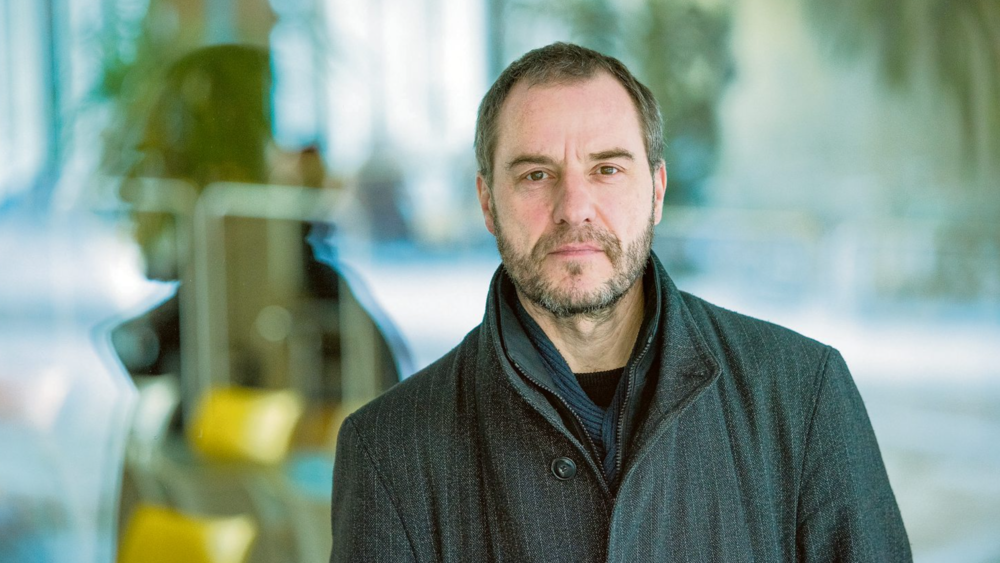
The Görlitz district often ranks last. This time, however, it’s in a positive sense. In terms of COVID-19 case numbers, the district ranks very low in a nationwide comparison. Currently, 25 people are infected with COVID-19; 268 have been infected since the start of the pandemic. Raj Kollmorgen, a sociologist at the Zittau/Görlitz University of Applied Sciences, explains why Görlitz has gotten off so lightly so far during the crisis.
Mr. Kollmorgen, are we in the district particularly good at following safety measures, or what reasons do you see for the comparatively low case numbers at the moment?
It’s rather unlikely that the people of Upper Lusatia in particular are especially disciplined. It seems to me that both our geographic location and our demographic structure are more important factors. People in our district are generally less mobile than those in Leipzig, for example, and they don’t travel en masse to Italian ski resorts.
Why not?
Our region today—not least because of the out-migration over the past three decades—has fewer mobile and more highly educated people than the urban centers. We also know that the Görlitz district is not only among those with the lowest gross income in all of Germany but also has one of the highest average ages. However, income and age—along with education—are two key factors in mobility patterns. To put it bluntly: The typical Upper Lusatian is not inclined—or cannot afford—to go on vacation to Ischgl or Colmar, France, in February or March. Rather, people in our region often live in rural areas, own buildings and gardens, and spend their free time locally. Although people run into each other more often in these small communities, they don’t otherwise drive around the area constantly. As a result, the number of contacts outside their immediate work and social circles is lower.
However, the people here are among those who commute the most—on both sides of the Neisse River. Just how many there are became clear when the border with Poland was closed.
On the one hand, I see our peripheral border location as a factor—one that should not be underestimated—in the low case numbers. Even after the Schengen Area reopened, there wasn’t much interest in traveling to Poland. Poland is also a country with the lowest infection rates in Europe, from which we are largely cut off due to the rapid border closure. As for the commuters traveling from Poland to Germany, it’s important to note that most of them do not work in the district itself, but further west. In this respect, our region is more of an important transit area. On the other hand: Yes, we do have a significant number—about 4,000 people—with Polish citizenship living in Görlitz, as well as others who work in the region. However, there is a difference compared to the border area with France: Not only is the exchange of people more intensive there, but above all, that’s where the hotspots of the outbreak were. As is well known, we did not have that here, on the Polish or Czech sides.
How sensible was it, then, for Poland to close the border?
On the one hand, it was the result of uncertainty; on the other, it was symbolic politics. This is not my personal opinion, but has been discussed repeatedly by epidemiologists: The question is whether there is a significant disparity in infection risk on either side of the border. If there is a pandemic hotspot on one side but not on the other, then closing the border is an effective means of breaking chains of transmission. But if—as is the case here—that is not the situation, then the resulting economic and social damage must be considered greater than the risk of cross-border transmission.
Let’s look in another direction: Bautzen. The sociodemographic conditions there are unlikely to differ greatly from ours. Nevertheless, the number of infections in the Bautzen district is currently significantly higher. Do you have an explanation?
I see two possible explanations. First, isolated outbreak clusters can influence the overall statistics. We saw this in our own district as well when two nursing homes in the northern part of the district were affected. That’s why one must be cautious when assessing transmission dynamics in individual districts, examine possible outliers, and monitor the situation over the long term.
Second point: The Bautzen district does, in fact, differ from the Görlitz district in terms of sociodemographics. The population is slightly younger, and the economic structure is different. Above all, however, there are more commuters to Dresden, where case numbers are significantly higher. The risk of infection and transmission increases the closer one gets to the state capital.
So, given our circumstances, could we begin easing restrictions sooner than Zwickau, Saxony’s hotspot?
That’s a difficult question. On the one hand, yes. I’m in favor of differentiating the measures—at least at the state and regional levels. But it depends on how this is monitored to prevent the export or import of an outbreak. This is already nearly impossible at the county level, and certainly at the municipal level. I would therefore not be in favor of delegating decisions on specific pandemic rules to individual cities or municipalities, or basing them on county boundaries. We’ve already seen examples of outbreaks occurring right near municipal boundaries. It’s obviously nonsensical to shut everything down in one town while keeping everything open in the neighboring town. Such a policy could even accelerate the spread of the virus, because many people would then go shopping or sit in a café in the neighboring municipality.
Over the weekend, there were protests against the COVID-19 measures at three locations in Görlitz. Some seem concerned about arbitrary measures and fear-mongering, while others sound more like COVID-19 deniers. To what extent do the low case numbers influence these protests?
I fully understand why small business owners, freelancers, and owners of medium-sized businesses—who are particularly hard-hit right now—are voicing their concerns. I think that’s right and fundamentally democratic. The very purpose of our democracy is for ideas and interests to be expressed and incorporated into the political process. It becomes problematic, however, when these legitimate positions are linked to a general rejection of the system and conspiracy theories. It’s also clear that people in Bergamo or elsewhere, where the virus raged, were more willing to go into isolation. Given the comparatively few cases in our region, it’s understandable that people might be unwilling to accept drastic restrictions on their freedoms and extensive state power over an extended period. However, that was not—and is not—the reality in Germany, unlike in Spain, for example. Our democratic state has functioned and fulfilled its duty of care. It has also acted with a great deal of discretion throughout the crisis. Especially when I look at other countries, I am very glad to live in the Federal Republic of Germany.
Isn’t it nevertheless striking—despite all understanding—that, of all people, AfD members are once again at the forefront?
I find that very understandable. After all, since 2015, the AfD has vociferously articulated criticism of the elites, distrust of institutions, and even conspiracy theories. By no means are all—and probably not even the majority—of the protesters AfD members or even supporters. But the fact that the party is now joining the protests or even helping to organize them is consistent with its stance and fundamental orientation, and is highly plausible. I’ve actually wondered why it took so long and why this strategy is only now being pursued more intensively. However, given the scale of the protests so far—with participant numbers in the double to triple digits—we should be careful not to overhype them. When we put these numbers in perspective relative to the total population, it becomes clear that by no means is the majority out there. It is a group that makes its voice heard, and one that we must engage with democratically. But in our region, there aren’t 5,000 or even 50,000 people taking to the streets to protest the Free State of Saxony’s or the federal government’s pandemic policies.
The interview appeared on May 15, 2020, in the Sächsische Zeitung, Görlitz and Niesky local edition. You can download the original as a PDF here.
COVID-19 Conspiracy Theories: Are Saxons Particularly Prone to Them? Prof. Raj Kollmorgen of Zittau/Görlitz University of Applied Sciences on allegations of arbitrariness, mistrust, and fears of loss. (Leipziger Volkszeitung, April 22, 2020)
What does the coronavirus have to do with the GDR? It is claimed that East Germans are coping better with the crisis because of their past experiences. Our author sees it differently (op-ed by Prof. Raj Kollmorgen in the Thüringer Allgemeine, April 8, 2020)

1st floor
1st floor