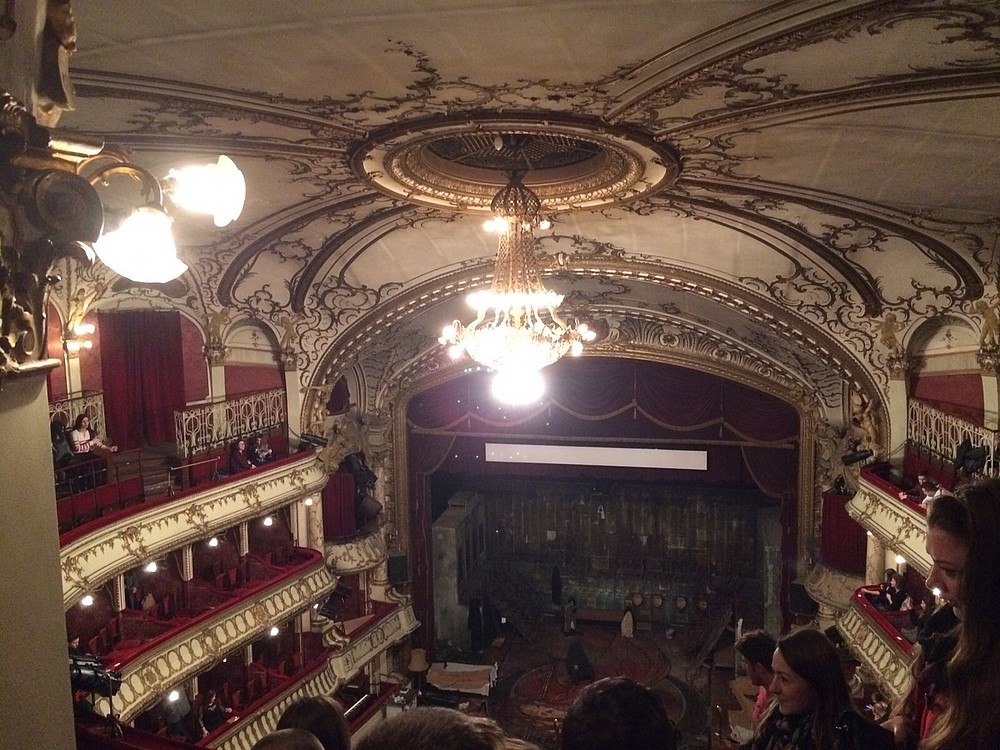
With a good 320,000 inhabitants, Cluj is the second most populous city in Romania after Bucharest and has a lot to offer, especially for young people and students. In addition to the Babeș-Bolyai University of Cluj, there are several other universities with a total of around 50,000 students, making Cluj an absolute student city. The range of pubs and bars in the city center around Piata Unirii Square is correspondingly large. Cluj also has a distinctive music and cultural offering. Numerous music festivals as well as opera and several theater stages offer entertainment for everyone.[caption id="attachment_506" align="alignright" width="300"] At the vernissage of the exhibition BerlininClujinBerlin[/caption]The best events for me were an art exhibition in a round, empty station building. Works by artists from Cluj and Berlin were on display. I was also impressed by a production of "Iulius Ceasar" (William Shakespeare) at the Hungarian Theater in Cluj. It was directed by Silviu Purcărete - a well-known, if not the most well-known Romanian director.[caption id="attachment_507" align="aligncenter" width="899"] Iulius Ceasar production, picture: István Biró[/caption]In general, the plays are very young, fresh and expressive. You can tell from the productions that it's mainly young people who go to the theater, and I also liked the small concerts in the bar L'Atelier, the Hungarian pub Insomnia and the ZIGG - a venue for performances, theater, films and concerts.[caption id="attachment_508" align="alignleft" width="300"] The National Theatre in Cluj[/caption]All in all, Cluj is a multicultural and open-hearted city where you can never get bored.If you want to spend a semester abroad in Europe in a city that is steeped in history, young and culturally diverse, Cluj and Babeș-Bolyai University are definitely the right place for you. Supported by: