
As part of the "Future Workshop" module of the "International Tourism Management" Master's degree course, students at the university work on the conceptualization of future tourism developments for a specific destination every year.
After Georgia and Montenegro, this year a graduate and native Estonian turned the attention of the student group to the Baltic state of Estonia. The former tourism student from the Zittau/Görlitz University of Applied Sciences is still at the very beginning with her travel company based in Tallinn and asked the current students to carry out an analysis of the potential of Estonia as a destination for sustainable tourism offers.
However, before the students set off for Estonia, they approached the country, which is rather undeveloped in terms of tourism, on a theoretical level in the course of several workshops. After researching Estonian history, traditions, politics, geography and tourism in various groups, the actual trip planning began.
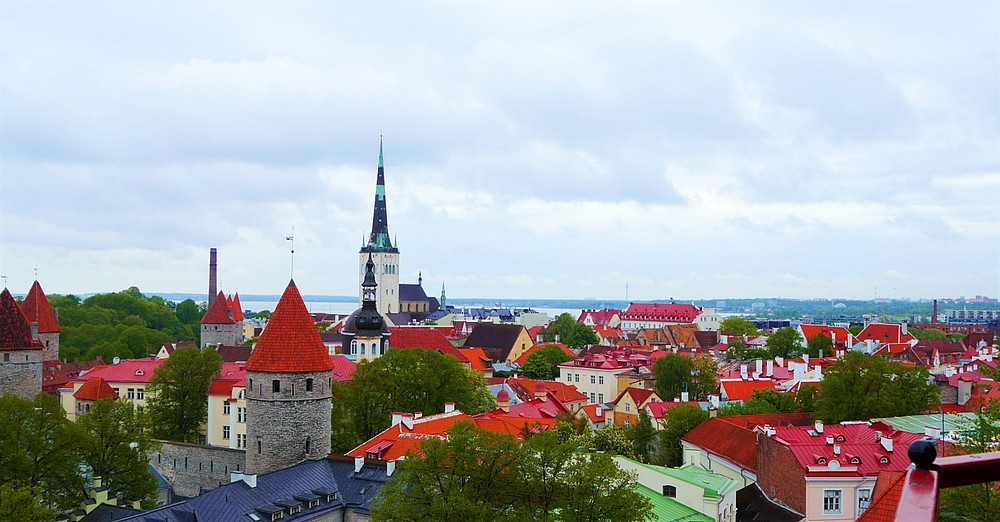
After two months of preparation, the WTm15 then set off on an eight-day excursion to Estonia in mid-May. They flew from Dresden via Frankfurt to the Estonian capital. The city of Tallinn, which is considered one of the most attractive cities in Estonia, surprised above all with an exciting mix of old and new. The medieval center of the city is considered unique in the Baltic States and was explored by the students as part of a guided city tour. In order to learn more about incoming tourism in Estonia, the group arranged an appointment in advance with an employee of Estonia's largest travel agency "Estravel", who patiently answered the students' numerous questions about the country's tourism structure.
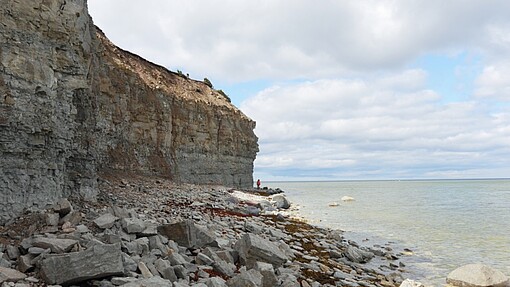 Panga cliffs
After a day and a half in the capital, the tour group left Tallinn by coach for the island of Saaremaa. After a short stopover in the former spa town and bishop's seat of Haapsalu, with its impressive bishop's castle and numerous traditional Estonian wooden houses, the ferry crossed over to the island. The southern town of Kuressaare is known as the tourist center of the island and was another stop on the itinerary. The largest town in Saaremaa, with a population of around 14,000, has a long tradition as a spa town. Unsurprisingly, there are a large number of spa hotels here, some of which were visited during the excursion.
On the fourth day of the excursion, the aim was to discover other facets of Estonia's largest island. These included, for example, Estonia's rarest natural monument, the Kaali meteorite crater. A meteorite struck here around 7500 years ago, leaving behind a crater with a diameter of 110 meters. The tour guide explained to the student group that walking around the crater makes wishes come true. Some of the students then set off and walked around the lake. The group also visited the highest cliff on the island and the Angla Mill Hill. This is home to five wooden windmills typical of the island's history and is considered a landmark of Saaremaa. The group then traveled on to Pärnu, the so-called "summer capital of Estonia". With its long sandy beaches, many cafés and restaurants, the harbour town is the country's most important vacation destination during the warmer months.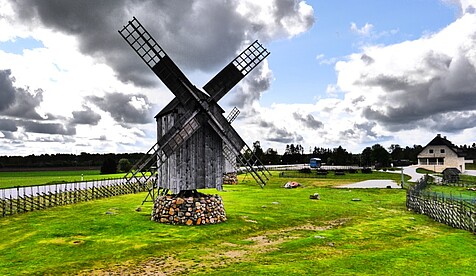 Windmill in Angla
The fifth day of the excursion took the tour group to the island of Kihnu, located on the western edge of Pärnu Bay. Although it is only the seventh-largest island in the country, it is the only one to have the title of UNESCO World Heritage Site. Most of the approximately 600 inhabitants of the island still live according to centuries-old island traditions with special traditional costumes. The students explored the four island villages, which are mainly characterized by fishing and agriculture, by bike. The visit to the island museum, which presents the unique culture of Kihnu in a modern way, was particularly worthwhile. Late at lunchtime, we stopped off at a small estate typical of the island. A friendly Estonian hostess served the students a typical Estonian fish dish.
As Estonia is particularly appreciated by both locals and tourists for its unspoiled nature, the group spent the sixth day of the trip in Soomaa National Park. The area comprises four large bogs and is considered to be the wettest region in Estonia.
We canoed through the diverse nature, which is home to over 500 plant species and 46 mammal species, such as moose, bears and wolves. Afterwards, a boardwalk led through the deserted moorland landscape. With its magic of untouched and endless nature, Soomaa National Park made a lasting impression on the group and was one of the highlights of the entire excursion. The very dedicated tour guide recommended a dip in one of the small lakes surrounded by the moor. According to legend, a dip in these is a rejuvenating cure. Despite the cold water, some jumped in and refreshed themselves in the cold water.
In the afternoon, the journey continued towards Tartu, the second largest city in Estonia. Situated in the south-east of the country, it is known as the intellectual center of Estonia due to its university, the oldest in Northern Europe. One of the most popular photo motifs in the city is the fountain on the town hall square with a sculpture of the "kissing students", which is considered a modern landmark of Tartu.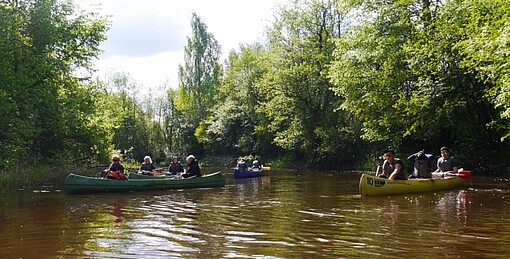 Canoe trip
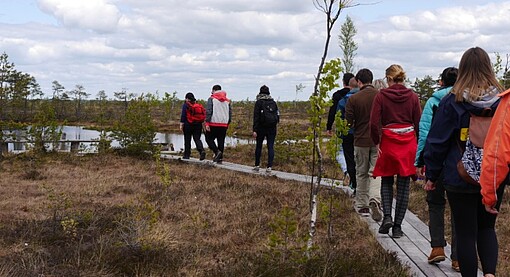 Hike in the moor
The seventh day took the group to another Estonian national park. Lahemaa National Park, located in the far north, stretches along the coast and is the largest in the country. The excursion began for the group with a visit to Vihula Manor, which today houses a first-class restaurant and a luxurious spa hotel. We then continued by coach to Estonia's most famous manor, Palmse, which is now both a hotel and a museum. After a short detour to one of the national park's moorland areas, we returned to Tallinn, 70 kilometers away, in the evening.
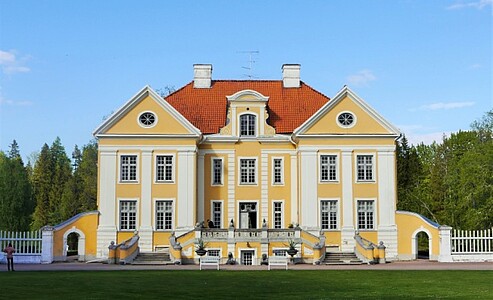 Palmse Manor
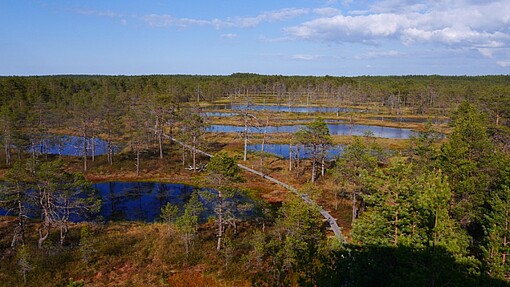 Lahemaa National Park
The tour group used the last day in the capital for a conversation with the ambassador of the German embassy in Tallinn. The fascinating conversation shed light on the history of Estonians and their relationship with Germany. He spoke about the current political situation in the country and trends in tourism. After the discussion, everyone headed to the airport for the return journey to Germany.
Eight eventful days in Estonia with its multifaceted natural and cultural landscape now lie behind the Master's students. They traveled over 900 kilometers to five Estonian cities, two national parks and six different accommodations. A country that is slightly smaller than the German state of Lower Saxony in terms of area,
impressed with its eventful history and a successful lifestyle combining tradition and modernity. Back in Germany, the students' work has only just begun. The task now is to evaluate the findings of the excursion, assess the potential of Estonia as a destination in terms of tourism offers and develop appropriate trips to Estonia for the German market.
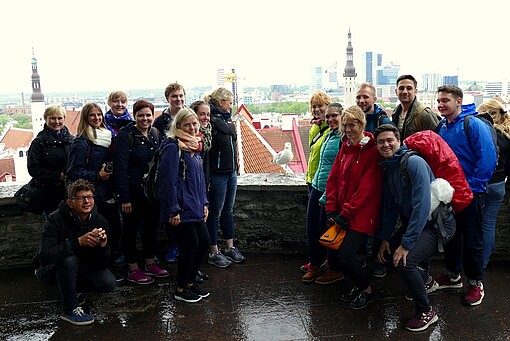
Group picture WTm15
Text: Anthea Fiedler, Frank Glunk
Photos: Anthea Fiedler, Willi Weickert