
E-book by Dr. Cordula Endter, deputy professor at the HSZG

The dissertation of Dr. Cordula Endter, deputy professor at the Faculty of Social Sciences, has been awarded the prestigious "Cäcilia Schwarz Prize for Innovation in Elderly Care". This is the seventh time the prize has been awarded by the German Association for Public and Private Welfare.
Dr. Cordula Endter's work not only deals with the use and development of technical assistance systems for older people, but also sheds light on the participation of older people in the development of digital technologies and services.
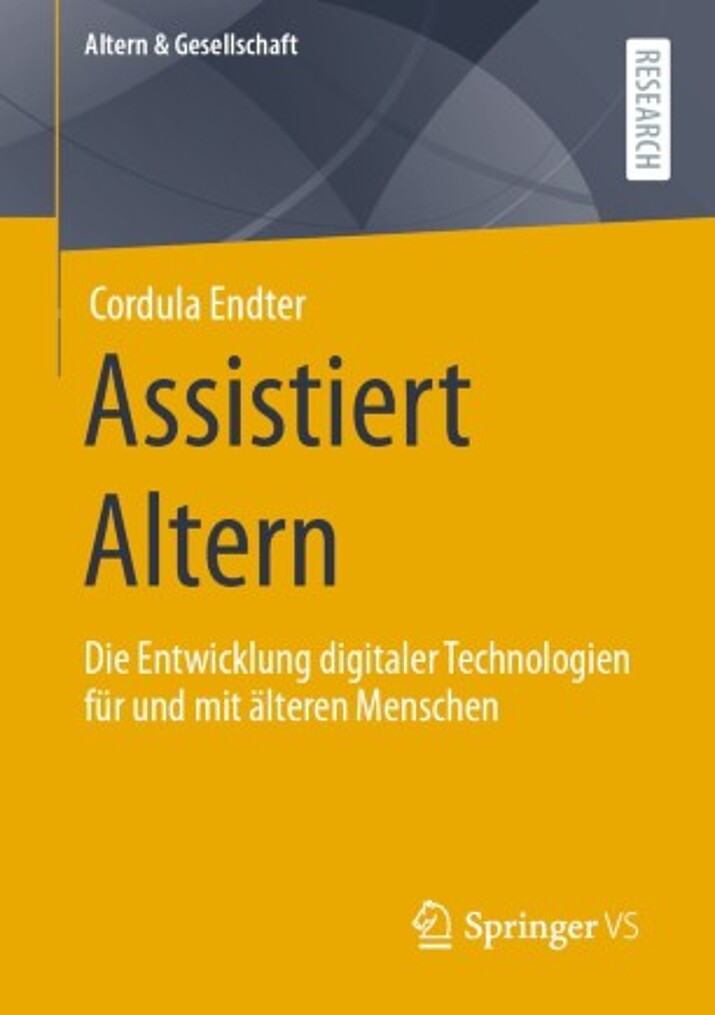
Digital assistance technologies are designed to help older people live independently for as long as possible, even if they have age-related limitations. But how are these technologies developed? What ideas of age(ing) play a role in this? How are older people involved in technology development? And what goals are policymakers, technology developers and society pursuing with the development of digital assistance technologies?
Based on several years of field research, Dr. Endter shows how images of age and ideas of age(ing) in funding policy, technology development and among older users themselves affect the development and use of digital technologies and what conditions must be created in research and development to ensure that digital technologies meet the needs of older people. Based on her own research experience, Dr. Endter also explores the role of ethnographic research in the areas of technology development and innovation and reflects on its integration into technology-oriented innovation contexts.
The book will soon also be available to all users of the University Library as a softcover for borrowing.
The Cäcilia Schwarz Award recognizes important scientific work whose findings contribute to enabling older people to live independently for a long time. The German Association for Public and Private Welfare (Deutscher Verein für öffentliche und private Fürsorge e.V.) awarded the Cäcilia Schwarz Prize for Innovation in Elderly Care for the first time in 2005.
The prize was made possible by a donation from the estate of the person who gave the prize its name, whose aim was to help improve the lives of older people. The German Association is funded by the Federal Ministry for Family Affairs, Senior Citizens, Women and Youth.