
Appreciation of peer-to-peer strategy consulting
Certificate Presentation Ceremony by the Federal Minister of Education in Berlin
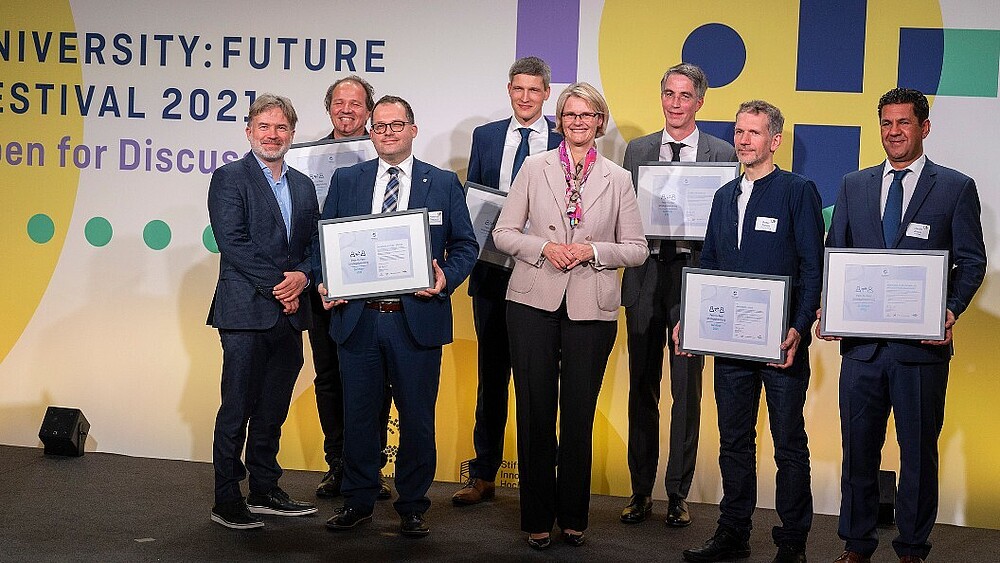
One year ago, the Zittau/Görlitz University of Applied Sciences (HSZG), under the leadership of the Vice President for Education and International Affairs, Professor Keil, qualified—along with four other universities—for a peer-to-peer strategic consultation on digitization in academic studies and teaching. During this time, experts from the Higher Education Forum on Digitalization supported the HSZG in its strategic exploration of digital teaching and learning.
This peer-to-peer format focused on the key areas of the digital workplace, as well as educational equity, access, and openness. Together with the HSZG, the experts developed recommendations for the further advancement of digitalization, with a specific focus on academic studies and teaching, thereby making an important contribution to the future development of the University of Zittau/Görlitz. The peer-to-peer consultation thus represents another step in the University-for-Future process, and the results will be used in HSZG’s strategic planning.
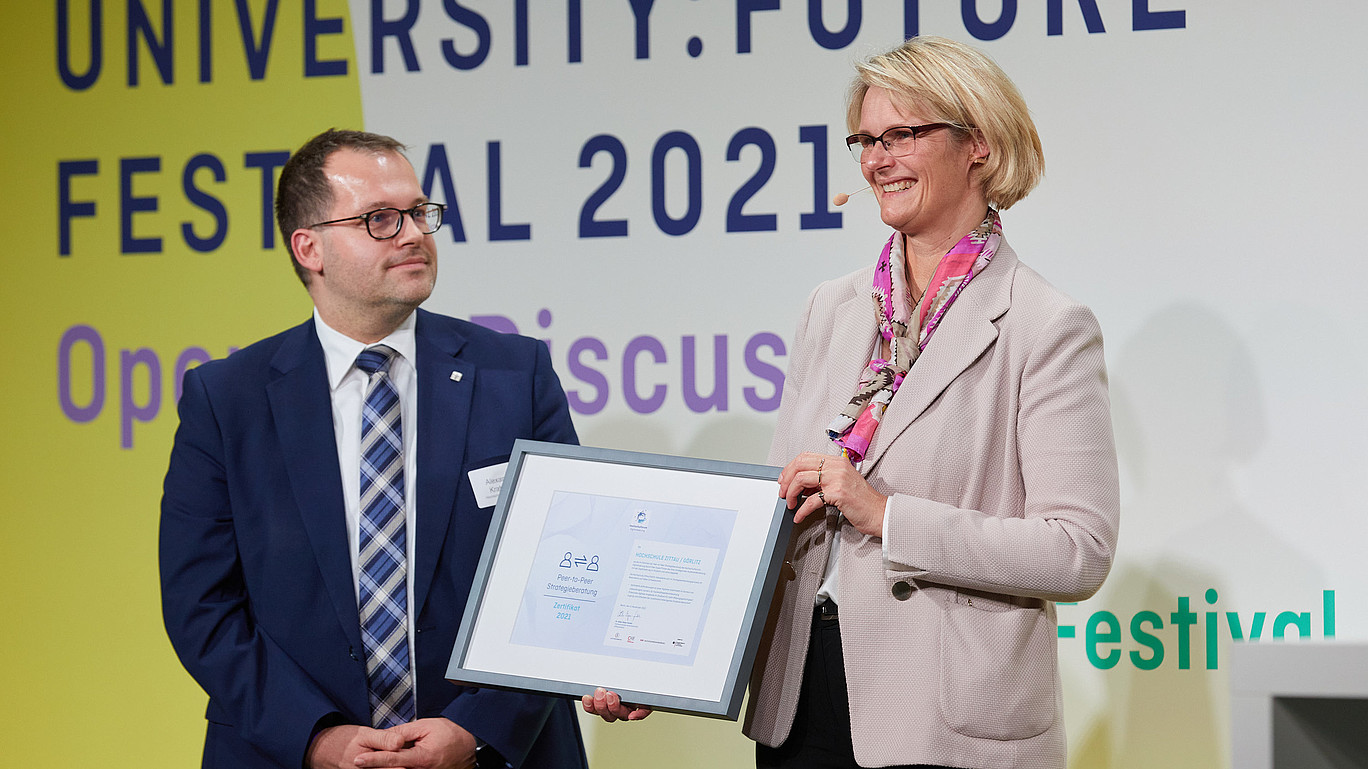
To recognize the HSZG’s commitment, a ceremonial certificate presentation by Federal Minister of Education Anja Karliczek took place on November 3, 2021, during the University:Future Festival on the EUREF Campus in Berlin-Schöneberg. The HSZG was represented at the event by the Rector, who highlighted the special role our students play in the ongoing strategic process and praised the collaboration with their peers.
“As Rector, I am particularly proud that so many of our students have been involved in their university’s strategic processes from the very beginning. This makes it all the more important to involve external consultants to ensure the best possible outcome,” emphasized Rector Alexander Kratzsch.
”
The university management would like to take this opportunity to thank all those at the HSZG who have accompanied and supported the process.
The Higher Education Forum on Digitalization (HFD) facilitates discourse on higher education in the digital age. As a key driver of innovation, it informs, advises, and connects stakeholders from universities, politics, business, and society. The HFD was founded in 2014. It is a joint initiative of the Stifterverband für die Deutsche Wissenschaft, the CHE Center for Higher Education Development, and the German Rectors' Conference (HRK). It is funded by the Federal Ministry of Education and Research.
1st floor