
"Diversity as strength" enters the second round
The second project phase will run until December 2020. The new project team and their tasks are presented here.
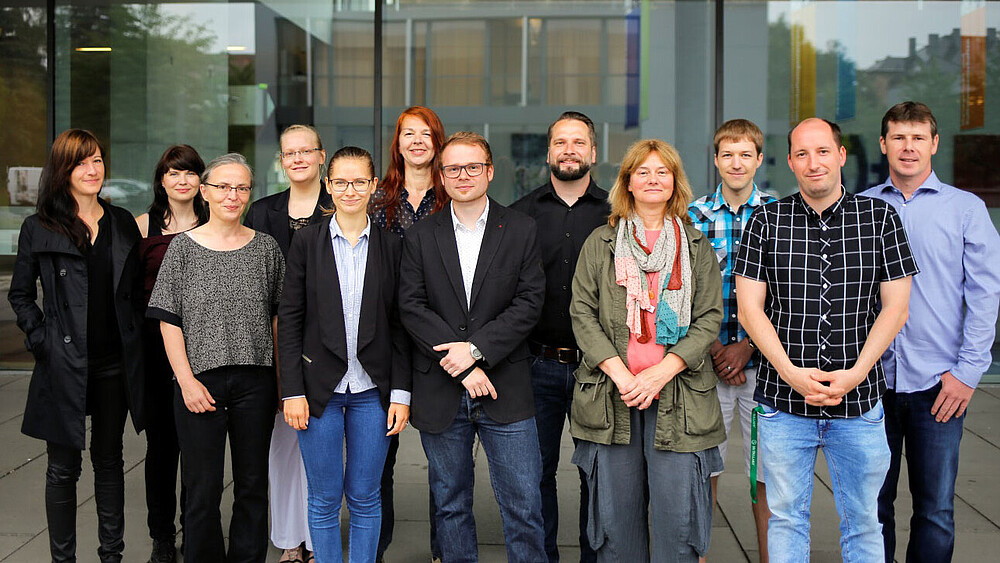
The central goal of the BMBF-funded project—to improve academic success for all students, regardless of their background, educational history, and social environment—remains unchanged. Now, in the second phase of the project, which will run through December 2020, successful measures from the first phase will be continued, and programs with room for improvement will be enhanced and expanded. To this end, there have also been some changes to the project structure.
Prof. Dr. rer. nat. Christa Maria Heidger will take over as project director in the second phase in her capacity as Vice President for Education and International Affairs. Stefan Nowack, who holds a Diplom in business administration, is responsible for the management and associated coordination of the project’s initiatives during this phase.
The Structural Areas and Fields of Action of “Diversity as a Strength”
- The foundation and performance evaluation for the development of measures promoting academic success is the monitoring system embedded in the project, which is carried out by Sebastian Riedel. In addition to the central evaluation of classes and modules, surveys are conducted on student satisfaction and the reasons for early disenrolment (from university), among other topics. Thanks to the implementation and analysis of these evaluations, problems can be identified, and measures and recommendations for action can be derived for all other project areas.
- The STEM Center, led by Christiane Matthieu, coordinates and organizes all programs designed to increase high school students’ interest in technology and the natural sciences, facilitate the transition to college, and support successful academic performance. Specifically, the STEM Center focuses on the needs-based expansion of the tutoring program, planning the “Come In” weeks, expanding the STEM Trail, and expanding the virtual internship park.
- The International Affairs division has two major areas of focus: Katrin Schubert is responsible for advising and supporting international students from the beginning of their studies through to their transition into professional life. Michaela Heidig offers academic English courses for faculty members, thereby assisting them in developing English-language teaching modules. This approach aims to promote the university’s international orientation and facilitate student exchanges by providing good preparation for study abroad experiences for our students, while also providing incoming international students (INCOMERs) with appropriate course offerings in English.
- Since the start of the second project phase, “Diversity as a Strength” has been represented by study scouts within the faculties. The scouts act as a link between the project’s objectives, their respective faculties, and the students. In addition to their advisory role, they are tasked with establishing and further developing successfully launched initiatives—such as tutorials and “Students Advising Students” (SbS)—within the faculties, as well as organizing new tutorials as needed. In addition, the scouts serve as points of contact for specific programs at high schools aimed at recruiting new students to the HSZG.
The Study Scouts
faculty | Study Scout | Contact |
Natural and Environmental Sciences | Karen Kobelt | |
Electrical Engineering and Computer Science | FB-E: Kersten Kühne Department of Computer Science: Daniel Müssig | |
Managerial and Cultural Studies | Jörg Bienert | |
Mechanical Engineering | Matthias Herrmann | |
Social Sciences | Sandro Hänseroth | |
Business Administration and Engineering Management | Alina Bulcsu |
You can find more information here.

First floor
First floor