
New impetus for future-oriented study programs
Representatives from universities and industry are discussing the future skills needed for the semiconductor industry.
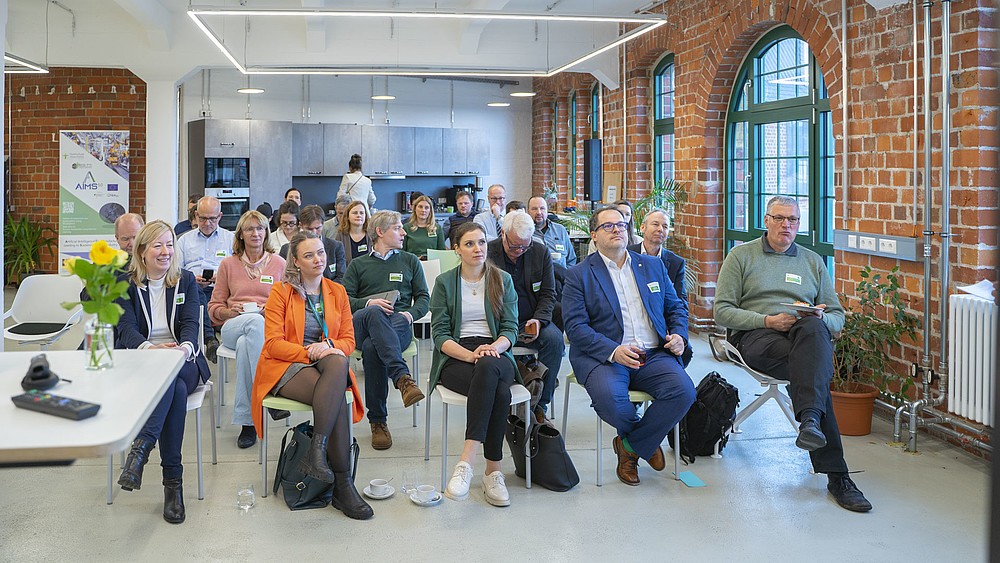
On November 26, 2024, Zittau/Görlitz University of Applied Sciences, under the leadership of the Vice President for Education and International Affairs, Professor Sophia Keil, and with the support of the industry network Silicon Saxony e.V., invited Saxony’s high-tech industry to a workshop titled “Future Skills for the Semiconductor Industry: Designing the Competency Profile for Tomorrow’s Graduates" at the Celsiuz Co-Creation Lab in Zittau.
Approximately 30 representatives from leading Saxon semiconductor companies—including Applied Materials GmbH, the Fraunhofer Microelectronics Group/Research Factory for Microelectronics Germany (FMD), Infineon Technologies Dresden GmbH & Co. KG, Robert Bosch Semiconductor Manufacturing Dresden GmbH, and Silicon Saxony e.V., as well as representatives from the HSZG, contributed their expertise and discussed which technical, interdisciplinary, and practical competencies the next generation of professionals should possess for their industry.
The goal of the event was to analyze the expectations and requirements of the semiconductor industry and to develop practice-oriented competency profiles for graduates. The results will help shape new academic programs that promote both the recruitment and long-term retention of skilled workers—a crucial step toward the sustainable strengthening of this key industry and the development of the Upper Lusatia region.
As Zittau/Görlitz University of Applied Sciences, we want to actively support the dynamic growth of the semiconductor industry in the Free State of Saxony by developing customized degree programs for this key sector. Our goal is to optimally prepare graduates for careers in the high-tech industry. With this workshop, we have taken a significant step toward collaborating with representatives of the semiconductor industry to develop competency profiles. A competency profile serves to define the specific disciplinary, interdisciplinary, and practical skills required for a career in the semiconductor industry. It provides the systematic foundation for designing educational programs. I am very pleased that semiconductor companies and the industry association were represented across a broad spectrum.
”Developing Skills for the Future
Following the opening of the workshop by the Rector of Zittau/Görlitz University of Applied Sciences, Professor Alexander Kratzsch, and a presentation on the university’s educational and research profile by the Vice President for Education and International Affairs, Professor Sophia Keil, a keynote presentation was given by Dr. Germar Schneider, Senior Manager at Infineon Technologies Dresden GmbH & Co. KG, on the current and future challenges in the semiconductor industry.
Dr. Schneider emphasized the importance of future skills and the role of practice-oriented education in securing a skilled workforce—particularly in light of the developments in Industry 4.0 and 5.0.
Afterward, the participants worked in three working groups on specific issues:
Chair: Ronny Freudenreich, M.A., D2C2 project team member
The theme table focused on future skills in general, i.e. skills that go beyond traditional professional qualifications and enable people to deal with the demands of a rapidly changing, digital and globally networked working world. With the help of the persona method, essential key skills were identified and categorized into must-have, should-have and nice-to-have skills. The resulting recommendations for action will play a key role in the development of future curricula for the semiconductor industry.
"The discussions at the table helped us to describe tailor-made, practice-oriented courses of study that will help the Saxony region to meet the strong demand for specialists in the semiconductor industry in the coming years and provide graduates with extensive specialist knowledge to start their careers."
Dr. Germar Schneider, Senior Manager at Infineon Technologies Dresden GmbH & Co.
Chairs: Prof. Dr. Gerd Fischer, Prof. Dr. Jan Mollitor, Prof. Dr. Jens Weber
The goal of this roundtable discussion was to systematically align the curriculum concept for a newly designed bachelor’s degree program in “Semiconductor Processes and Materials Chemistry” with the requirements and experiences of the industry. The participants confirmed the content already included in the curriculum and identified topics that should be given higher priority or greater focus. Proposals for new modules and adjustments to existing course content were developed to make the curriculum more practice-oriented and even better aligned with the needs of the semiconductor industry.
“The discussions on curriculum development for a bachelor’s degree programme in ‘Semiconductor Processes and Materials Chemistry’ have shown us how important it is to align degree programmes closely with the needs of the semiconductor industry. At the same time, we were impressed by how much demand there was—in addition to the subject-specific competencies, which are absolutely paramount—for ‘future skills,’ such as the ability to present.”
Prof. Dr. Jens Weber & Prof. Dr. Gerd Fischer, Faculty of Natural and Environmental Sciences
Moderator: Daniel Winkler, M.A., Specialist in Higher Education Pedagogy
The third roundtable focused on the competency profile for digital transformation managers. During the discussion, it became clear that, in addition to technical knowledge, these professionals also need in-depth expertise in areas such as data analysis, AI, process management, and intercultural communication in order to successfully facilitate digital transformation. The participants developed a comprehensive competency profile that encompasses both subject-specific competencies and soft skills.
"Participating in the workshop was a valuable experience for me, as it allowed us to discuss the shared requirements of the future in the semiconductor industry in dialogue with industry colleagues and, through the methodologically good breakout sessions, to identify specific points for a future curriculum. Such collaborations between academia and industry are incredibly enriching for both sides and benefit the shared target group of ‘young talents’ the most.”
Juliane Thieme, HR Manager Germany & Austria, Tokyo Electron Europe Ltd.


The results of the working groups were then presented and reflected upon in an open discussion. It became clear that the workshop not only facilitated a valuable exchange between science and industry, but also made a concrete contribution to the development of needs-based, practice-oriented degree courses at the HSCG.
Given the expected growth of Saxony’s high-tech industry in the coming years, it is crucial to train a large number of qualified professionals. In this context, we appreciate the efforts of Zittau/Görlitz University of Applied Sciences to develop new degree programs that meet the future needs of the industry. The event provided an excellent platform for exchanging ideas with representatives from various companies in the Silicon Saxony network to jointly identify the specific requirements and needs of the semiconductor industry regarding the skill profiles of future graduates.
”Next Steps
The competency profiles and curriculum adjustments developed form the basis for future degree programs at the university, which are specifically tailored to the needs of the semiconductor industry and are scheduled to launch by 2026 at the latest. In this way, HSZG is making a decisive contribution to attracting and retaining tomorrow’s skilled workers in the region over the long term. The Zittau/Görlitz University of Applied Sciences sees itself as a key player in the dialogue between academia and industry and will intensify this fruitful exchange through additional formats in the future.
The Vice President, Professor Sophia Keil, would like to thank the faculty advisors from the Faculty of Natural and Environmental Sciences —Professor Gerd Fischer, Professor Jan Mollitor, and Professor Jens Weber—as well as Daniel Winkler, the advisor for university pedagogy, Ronny Freudenreich, a staff member of the D2C2 project, and Leonie Liemich for serving as the overall moderator. Special thanks go to Dr. Germar Schneider, Senior Manager at Infineon Technologies Dresden GmbH & Co. KG, for his keynote address, and to Ms. Katrin Meusinger, Head of the HR & Education Department at the industry network Silicon Saxony e.V., for her support, as well as, in particular, to all participants who made this groundbreaking event possible.

1st floor
1st floor