
Interlinking committee work and medical law
Prof. Dr. Erik Hahn was appointed Honorary Chairman of the State Arbitration Board for Contract Dental Care in Saxony for a four-year term of office.
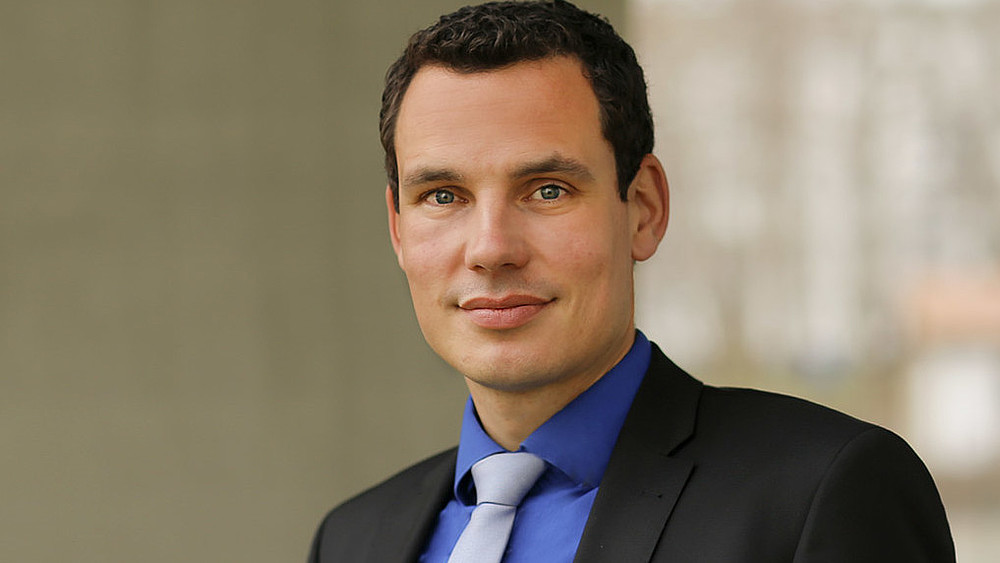
Prof. Dr. Erik Hahn of the Faculty of Business Administration and Engineering Management was appointed on January 1,2021 for a four-year term as honorary chair of the State Arbitration Board for Contract Dental Care in Saxony pursuant to Section 89(1) of Book V of the Social Code (SGB V).
The decision was made jointly by the Association of Statutory Health Insurance Dentists, the State Association of Health Insurance Funds, and the alternative health insurance funds.
The Task
If an agreement on contracted dental care fails to materialize in whole or in part, the Arbitration Board is tasked with determining the terms of the agreement by a majority vote of its members within three months.
For the same term of office, Prof. Dr. Hahn was also appointed Vice Chair of the State Committee of Dentists and Health Insurance Funds for the Free State of Saxony pursuant to Section 90(1) of the German Social Code, Book V (SGB V). The State Committee is responsible for making determinations regarding the planning of dental care needs under the statutory health insurance system, such as whether there is over- or under-provision of care in a planning area.
In a brief interview, Prof. Hahn explains the legal background in the field of medical law and how his students can benefit from these activities.
How do you see a connection between your volunteer work on committees and your teaching?
In my view, the mission—and thus the very raison d’être—of universities of applied sciences lies in the unique integration of academic teaching and research with professional practice. This must by no means be limited to the selection of candidates during the hiring process, but must also be continuously put into practice thereafter. My practical insights from my committee work naturally also inform my classes / courses—such as those on pharmaceutical law or the law governing innovations in the healthcare sector. Of course, I am not permitted to discuss specific cases from these committees with my students; however, it is much easier to discuss issues of pharmaceutical law in the context of the current pandemic, for example, when one is personally involved in the substance of the ongoing approval processes. The same applies to my newly added responsibilities on arbitration boards and committees related to contracted (dental) healthcare.
What role does dentistry play in medical law, and how does this subject area fit into your teaching?
From a medical law perspective, dentistry falls under the scope of the so-called healing professions—that is, the group of professionals permitted direct access to patients without an external referral. I cover the professional regulations governing these healing professions in my introductory course “Law in the Healthcare System.” However, the new committee role you mentioned does not pertain to dental professional law, but rather to what is known as “contract physician law.” As part of SGB V, this law regulates the framework conditions for outpatient health care provided to patients covered by statutory health insurance by members of the associations of statutory health insurance (dental) physicians. The law governing statutory health insurance is also covered in the aforementioned course in the bachelor’s program “health care management” and is explored in greater depth later in the corresponding master’s program.
You are sought after as an expert in many subject areas. Do you also advise your students to develop a well-rounded skill set and to think outside the box?
Thinking outside the box is highly recommended—not just during one’s studies. However, understanding other disciplines—and thus engaging in interdisciplinary work—absolutely requires that one has first “done one’s homework” in one’s own field of specialization. Otherwise, there’s a risk that you’ll eventually be able to do everything, but nothing properly. I would therefore recommend devoting yourself fully to your own field during your studies while also venturing into other areas from time to time. The further you progress, the bolder your forays into related fields should become. Here, for example, the Bachelor-Master system offers the opportunity to deepen the interests discovered during one’s Bachelor program in a Master program. Regardless of one’s current level of education, however, there should always be a willingness to engage with the existence of other perspectives. Not only interdisciplinary or transdisciplinary work helps here, but also international experience.
Prof. Dr. iur. Erik Hahn is in demand as an expert in medical law. Here you will find articles in which he comments on current issues in medical law.
"Human Rights Court rules on compulsory vaccination"
"Corona: Is the vaccinator liable to prosecution?"
Further information on Prof. Hahn's expertise can be foundon his website https://www.erikhahn.de/
2nd upper floor