
Danger or remedy? - 12th Saxon Radon Day Bad Schlema
Stakeholders from industry, science, administration and the construction industry met at the 12th Saxon Radon Day.
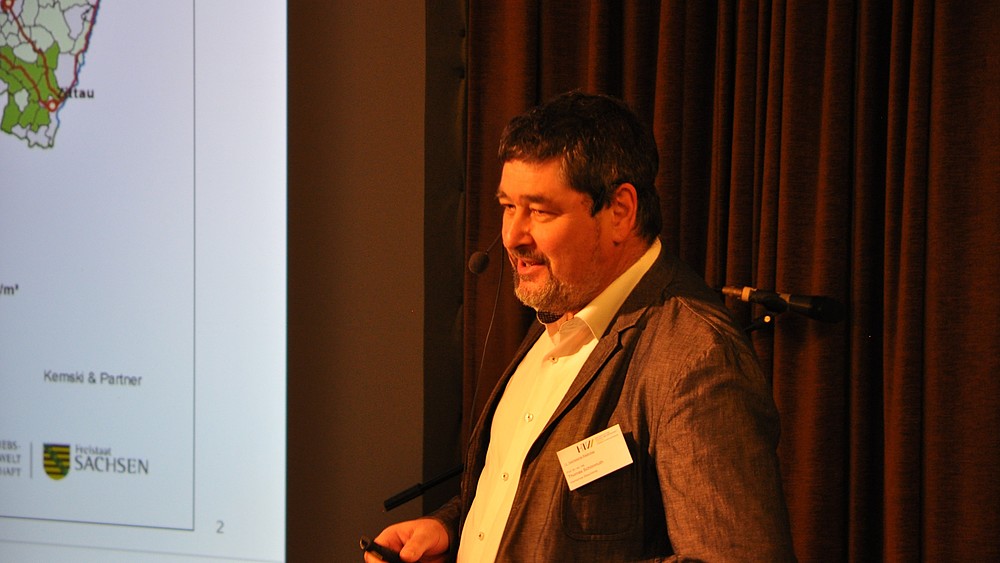
As part of the 12th Saxon Radon Day, more than 150 stakeholders from business, academia, government, and the construction industry gathered to discuss radon-safe construction. Radon Day was organized by HTW Dresden in collaboration with Bad Schlema, with support from the Saxon State Ministry for the Environment and Agriculture. In addition to presentations on the legal framework, the geology of radon deposits, and the assessment of radon risks using epidemiological data, the event focused primarily on practical experiences with implementing measurement programs and remediation efforts.
It is not only the Erzgebirge region that will face new challenges in the coming years due to the new legal regulations on radon protection. The new Radiation Protection Act (StrlSchG), which went into effect last year, includes binding regulations on radon protection for the first time. For new buildings, radon protection measures must be incorporated as early as December 31, 2018. Once affected areas have been designated by 2021 at the latest, employers will be required to conduct appropriate measurements at workplaces in basements and on the ground floor and to take measures as necessary.
In Upper Lusatia as well, significant indoor radon concentrations are theoretically possible due to geological conditions. At our Zittau/Görlitz University of Applied Sciences, Prof. Schönmuth and U. Heidrich (Radiation Technology Laboratory at the Faculty of Mechanical Engineering) therefore began developing a corresponding measurement program even before the new Radiation Protection Act came into effect. From the outset, the focus was on actively involving the students. Since then, approximately 250 measurements have been carried out. The primary focus was—and remains—on measurements in university buildings; approximately one-third of the measurements were—and continue to be, with an upward trend—carried out outside as well.
At the Radon Day event in Bad Schlema, Prof. Schönmuth presented the measurement results obtained, in addition to providing a brief overview of the student training program. In more than 90% of all buildings examined, the radon concentration in indoor air is reliably below the StrlSchG reference value of 300 Bq/m³; simple ventilation measures are often sufficient to effectively reduce the activity concentration.
Further information is available, for example, from the Radiation Technology Laboratory at the Faculty of Mechanical Engineering.

1st floor

EC