

01. August 2016
Research at Smaller Universities
Joint scientific workshop on the research situation with an outlook for the future.
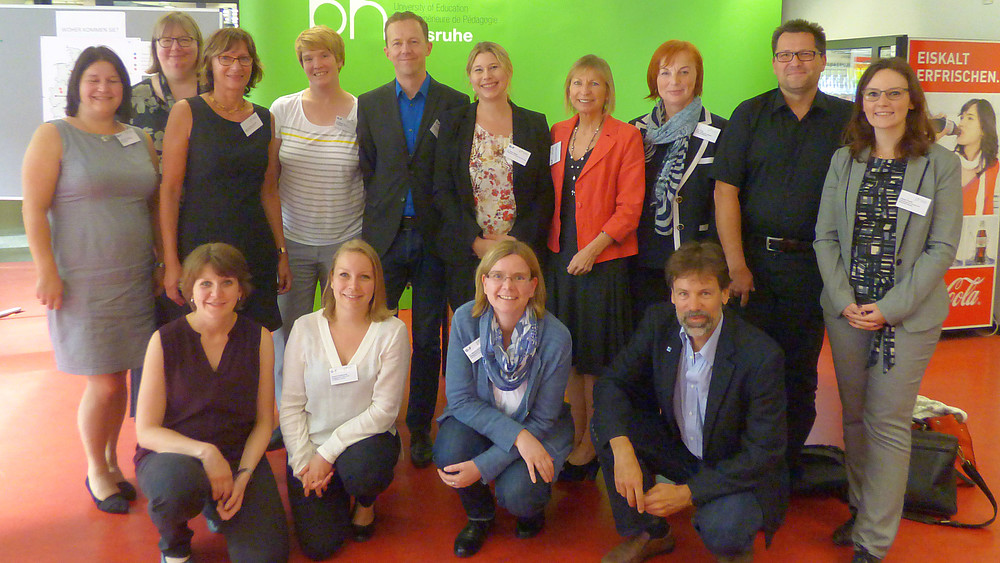
Optimizing research conditions, developing support services tailored to specific needs, and ensuring quality standards in research performance were the topics of the workshop, which was jointly organized and conducted by the universities of education in Baden-Württemberg and the universities of applied sciences in Saxony (HAW) .
How do stakeholders navigate the tension between central restrictions and requirements, internal institutional frameworks, and their own research aspirations?
This topic is of great interest to anyone who works in the field of organizational development from a scholarly perspective, who must grapple with needs and shortcomings on a daily basis, and who recognizes the need for optimization. It is also of interest to anyone working in the administration of a higher education institution that is expected to meet all current requirements in teaching and research. Accordingly, the range of participants was broad—Chancellors, presidents, research officers, as well as representatives from research institutes across the entire German-speaking world were in attendance.
First, the results of the two projects“Quality Management in Research at Saxony’s Universities of Applied Sciences” (QM-F) and “Workshop: Quality in Research—Optimizing Support and Service Processes” (QuiF) were presented to the plenary session and discussed. Key challenges were already apparent at this stage—and these formed the basis for the lively professional exchange and the very constructive discussion that took place in the afternoon.
The universities face the same problem: On the one hand, the demand for research and knowledge transfer is growing ever stronger, and the targets for these activities are becoming increasingly specific. Statistical surveys are becoming more extensive and evaluations more demanding. Competition for funding is intensifying, and the administrative burden is rising dramatically.
On the other hand, there is a lack of resources in the research sector to support these activities and relieve researchers of related administrative tasks. Project funding and short-term grants are, as is well known, merely a drop in the bucket.
In the afternoon, these issues were discussed in greater depth.
In workshop discussions and a World Café, the following questions were addressed:
- What does the range of research support services look like at the institutions in question? How are the relevant stakeholders integrated into the organization’s structures and processes?
- How can different research areas and approaches (external-funding research, theory-driven research, empirical research, etc.) be made visible and further developed at small universities? What does this mean for the field of research funding and the definition of roles for staff in academic and research management?
- How are processes shaped by those stakeholders involved in research administration and quality assurance in research? To what extent does this contribute to the establishment of research culture(s)?
In summary, it should be noted that universities face the same challenges in maintaining the stability of their research activities, expanding them, and accelerating the transfer of research findings to industry. Networking and collaboration among institutions serve to lend greater weight to calls for stable and sustainable funding. But when it comes to developing tools and measures for research funding, we can also benefit greatly from the experiences of others.
If the HSZG commits to establishing, stabilizing, and sustainably embedding its own research management within the university structure, we can continue to be among the pioneers when it comes to research strategy at universities of applied sciences.
Rectorate / Research Unit
02763 Zittau
Theodor-Körner-Allee 16
Building Z I,
Room 1.64
1st floor
1st floor
+49 3583 612-4575