
Double partnership with Taiwan
Two events in a single day mark a major new step forward for the region’s and the university’s cooperation with Taiwan. This time, the semiconductor industry is also taking center stage for students of languages and business.
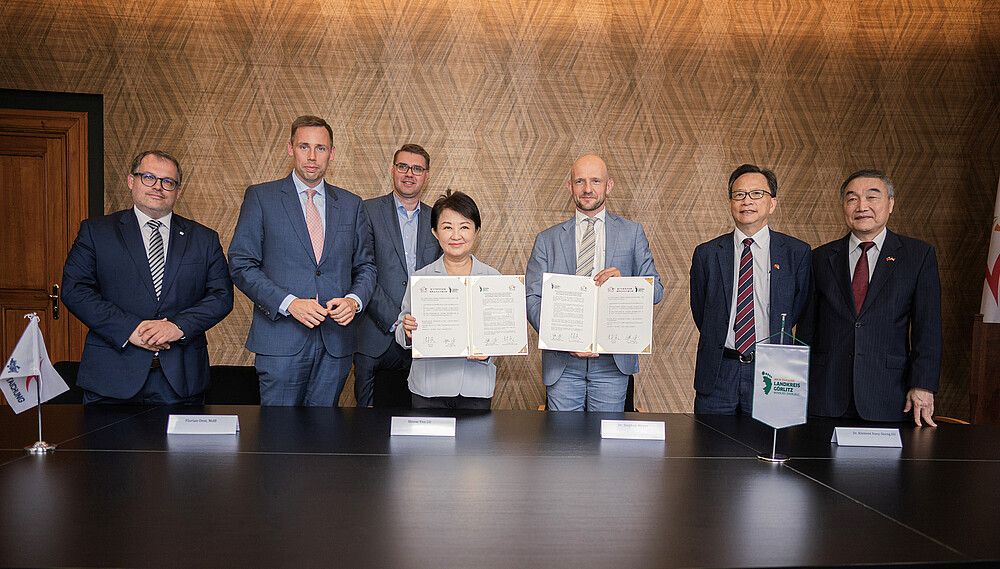
June 9, 2026, was significant in two ways for the international networking efforts of the Zittau/Görlitz University of Applied Sciences (HSZG) and its region. In Berlin, the district of Görlitz and the Taiwanese city of Taichung signed a Memorandum of Understanding (MoU) to strengthen their cooperation. On the same day, the HSZG met with a delegation from Wenzao Ursuline University of Languages in Kaohsiung for a working meeting to explore opportunities for collaboration in academic programs, teaching, and research. Both meetings demonstrate how closely the region is now intertwined with the high-tech hub of Taiwan.
Berlin: Görlitz District and Taichung Seal Partnership
The signing of the MoU took place at the Representative Office of the Free State of Saxony to the Federal Government in Berlin. District Administrator Dr. Stephan Meyer signed on behalf of the Görlitz District, while Mayor Shiow-Yen Lu signed on behalf of the City of Taichung. The agreement covers a broad range of shared topics: sustainable urban development, the energy transition, cross-border economic cooperation, culture and the arts, digital technologies, disaster preparedness, talent development, and personnel exchanges. In addition, both sides aim to strengthen networks among businesses, research institutions, and cultural organizations, and to launch joint projects in innovation, sustainable development, and business and trade.
The cooperation was also made possible through the initiative and mediation of Florian Oest (CDU), a member of the German Bundestag, who has long been committed to strengthening relations between Saxony and Taiwan and has facilitated contact between the Görlitz district and the city of Taichung. Guests included, among others, Prof. Dr.-Ing. Alexander Kratzsch, Rector of the HSZG, and Sebastian Herzog, chairman of the board of the General Entrepreneurs’ Association of Zittau and Surrounding Areas e. V.
Oest highlighted the partner’s economic dynamism:
Taichung is one of the most important high-tech and semiconductor locations in the world. The strong innovative power of this region has contributed significantly to the fact that Taiwan's economy grew by over seven percent last year alone. It is therefore important to expand the exchange with Taichung and Taiwan in a targeted manner and to initiate cooperation in business, applied research, the development of skilled workers, but also in culture and society. We in the district of Görlitz will be able to benefit from this in a very concrete way.
”“A Win-Win Situation in the Semiconductor Industry”
For HSZG, the agreement is another building block in its internationalization strategy. Rector Prof. Dr.-Ing. Alexander Kratzsch views the MoU as a milestone:
This Memorandum of Understanding demonstrates that our region is becoming increasingly attractive beyond national borders. For us as a university, this is a win-win situation in the semiconductor sector: We are combining the expertise of a global tech hub with the potential of our German-Polish-Czech economic region. This helps us train young talent from three countries and integrate our region more closely into Saxony’s high-tech network, “Silicon Saxony,” over the long term.
”District Administrator Meyer emphasized the importance of the MoU for the district’s international networking and expressly thanked Florian Oest for his dedication in establishing these contacts. Mayor Lu highlighted that both the Görlitz District and Taichung are equally committed to innovation, sustainable development, and the courage to embrace transformation; she noted that the memorandum of understanding lays the foundation for long-term cooperation, particularly in the fields of smart manufacturing, sustainable urban development, and economic innovation.
Exchange with Wenzao University
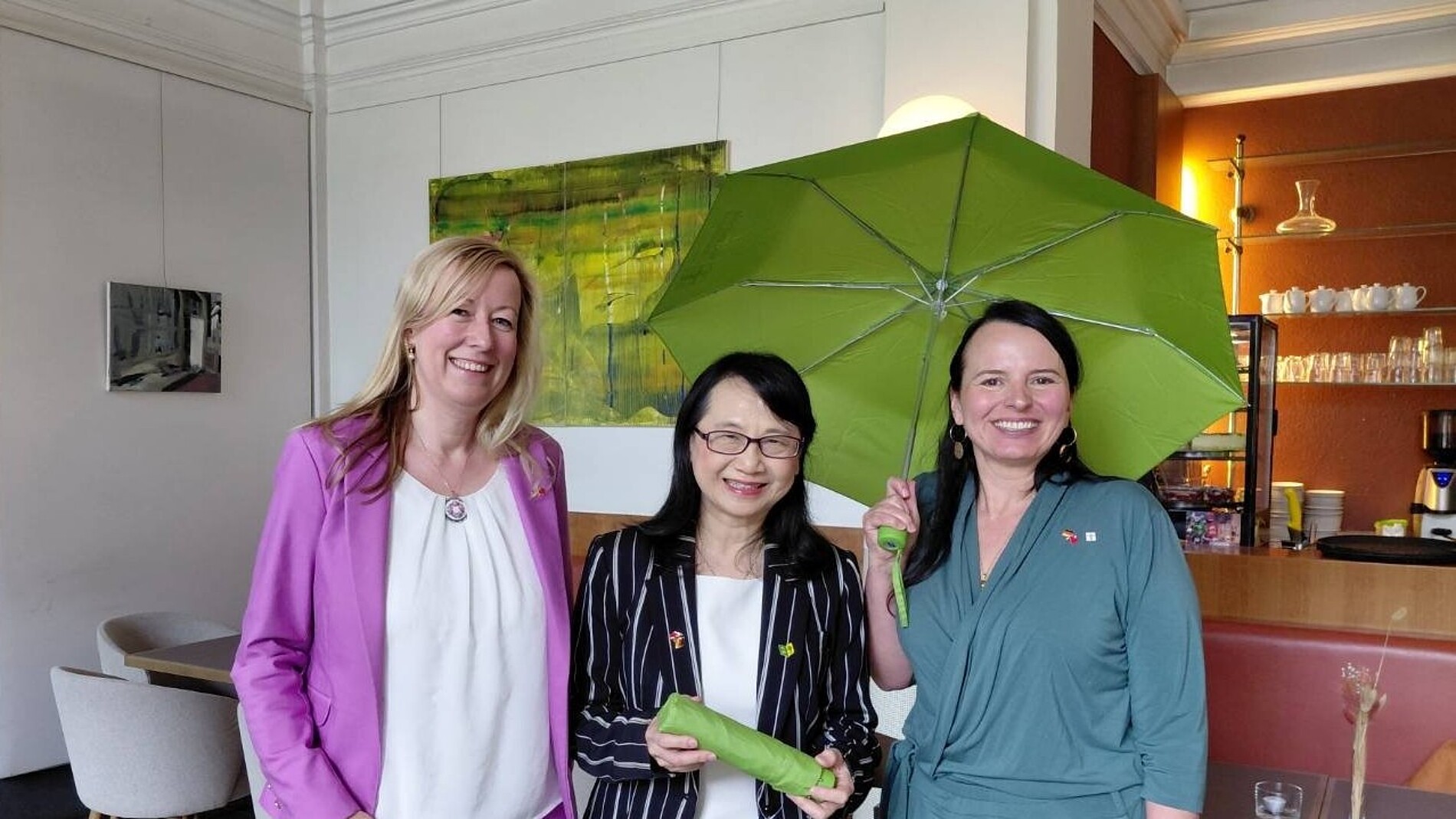
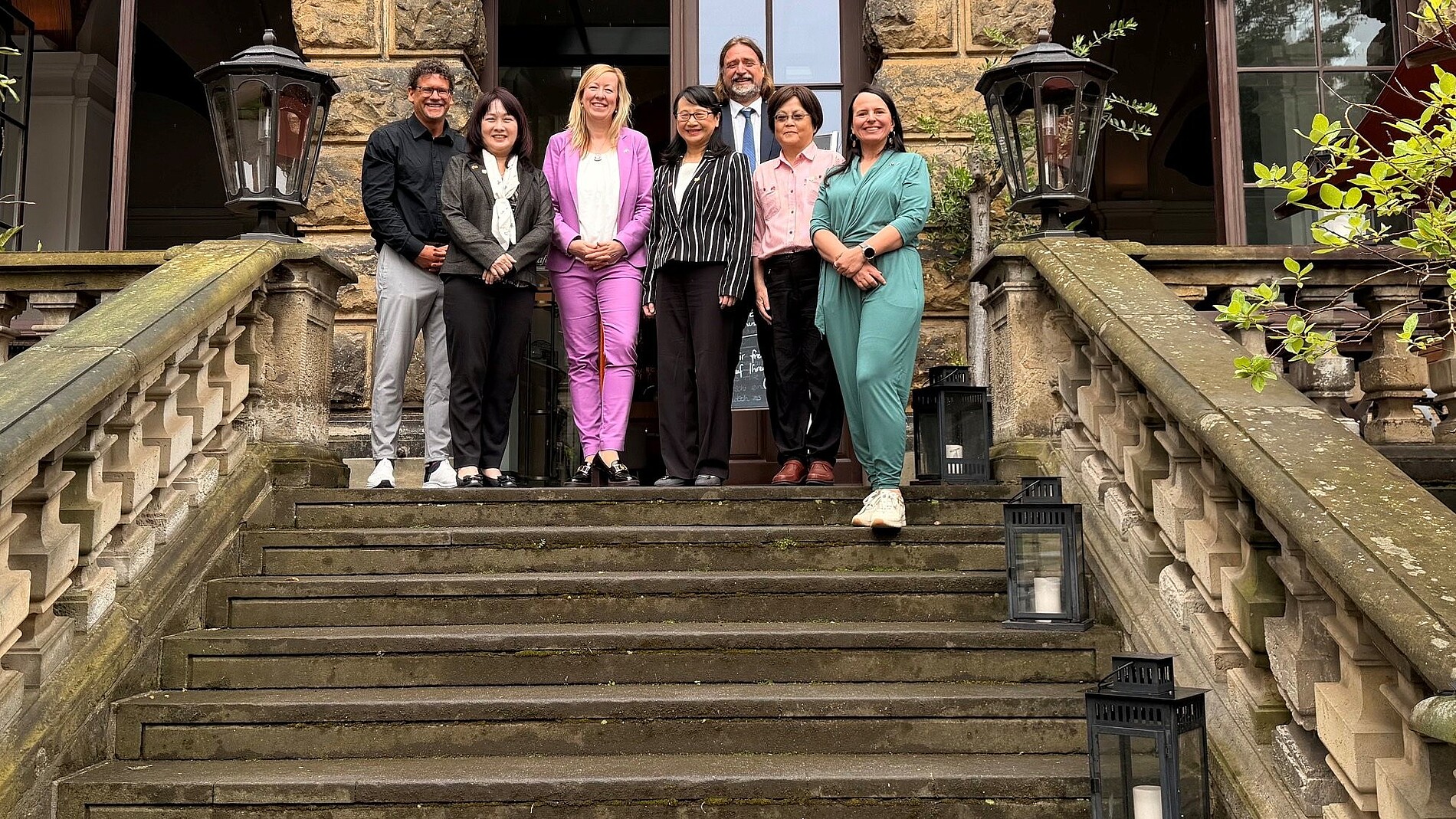
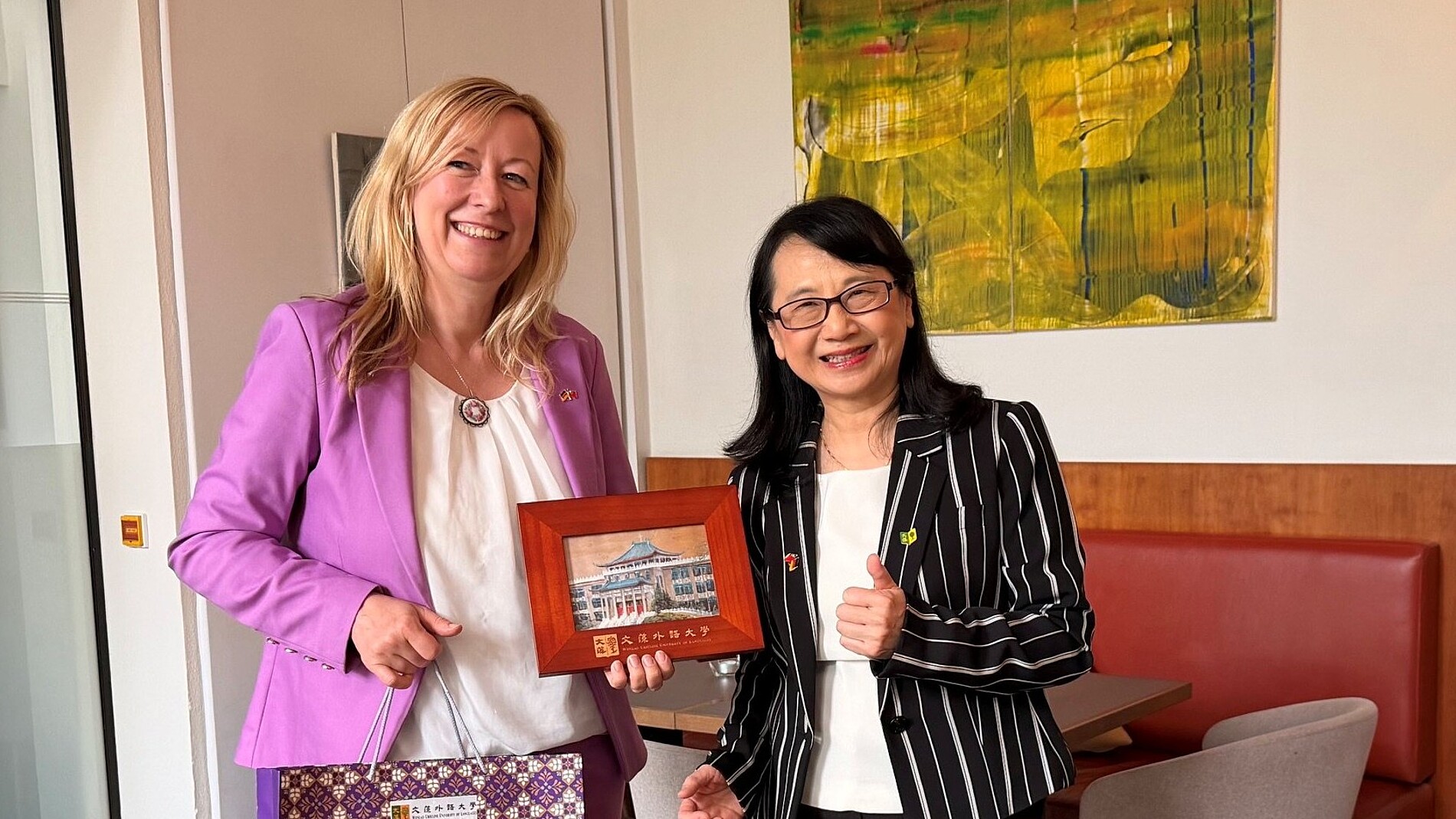
While the agreement was being signed in Berlin, the HSZG deepened its ties with Taiwan on the same day during a working meeting with a delegation from Wenzao Ursuline University of Languages in Kaohsiung. The goal was to explore opportunities for cooperation in academic programs, teaching, and international exchange.
Representing Taiwan were President Prof. Dr. Hwei Lin Chuang, Prof. Dr. Shoou Huey Chang (Director of the University Library and President of the German Scholars and Teachers Association of Taiwan), and Dr. Janet I Jane Weng, Dean of International Cooperation and Director of the Office of International and Cross-Strait Cooperation. The group was accompanied by Josef Goldberger, Head of the Saxon Science Liaison Office Taiwan.
On behalf of the HSZG, the discussions were led by the Vice President for Research, Technology Transfer, and International Affairs, Prof. Dr. Sophia Keil; Prof. Dr. Sebastian Zips, Dean of the Faculty of Business Administration and Engineering Management; and Susanne Fentzel from the Rector’s Office for University Development and Communication.
Student Mobility, Joint Degrees, and Semiconductor Expertise
The exchange focused on opportunities for student mobility, joint international educational programs, and new forms of collaboration related to the semiconductor industry. The delegation showed particular interest in HSZG’s activities in Taiwan and in the field of semiconductor technologies.
Specifically, discussions centered on an educational program developed by Wenzao University that provides language and business students with insights into the semiconductor industry. HSZG is now exploring potential opportunities for its own students. Additionally, discussions centered on various formats of student exchange, joint teaching units, and, in the future, dual-degree programs.
Wenzao University brings extensive experience to the table: It maintains numerous higher education partnerships worldwide and sends several hundred students abroad each year. Its large German studies program, in which approximately 450 students learn German, also offers opportunities for collaboration.
In conclusion, both universities agreed to continue the discussions and further explore concrete opportunities for cooperation. A draft Memorandum of Understanding is already available and is to be further refined in the coming months.
Vice President Sophia Keil expressed her confidence:
This is a really good fit: Zittau/Görlitz University of Applied Sciences has a strong focus on the semiconductor industry and on Taiwan, and the Free State of Saxony as a whole is also increasingly turning its attention to that country. It would be a great honor for us to become one of Wenzao University’s European partner universities. We see many exciting opportunities for future collaboration and look forward to continued exchanges with our partners in Taiwan.
”Outlook
With both meetings on a single day, the region is sending a clear signal: cooperation with Taiwan is becoming increasingly institutionalized, at the municipal level through the MoU between the district of Görlitz and Taichung and at the scientific level through the emerging higher education partnership with Wenzao University. This creates new opportunities for the HSZG to train young talent, network research and further strengthen Saxony as a high-tech location.
1st floor