
German cultural heritage in Silesia
Cross the bridge from the university to Zgorzelec and a few kilometers to the east - and you're in the middle of Silesia.
Cross the bridge from the university to Zgorzelec and travel a few kilometers east—and you’ll find yourself right in the heart of Silesia. A corner of Central Europe that encompasses parts of present-day Germany, Poland, and the Czech Republic.
We—a group of 13 students majoring in culture and management (WKb16)—are setting out today to explore the cultural heritage of this region.
Through snow-covered rolling hills, white forests, and quaint-looking villages, we drive to our first stop: the Gerhart Hauptmann House in Jelenia Góra, which was called Hirschberg before the German and Polish borders were redrawn. The vast garden of the magnificent house is covered in snow, still untouched. At the front door, we are greeted by a marble statue of an ecstatic naked girl that had been lost for decades—the armless torso of “Hannele,” who ascends into the Silesian sky in one of Hauptmann’s plays. It was created around 1943 by Josef Thorak.
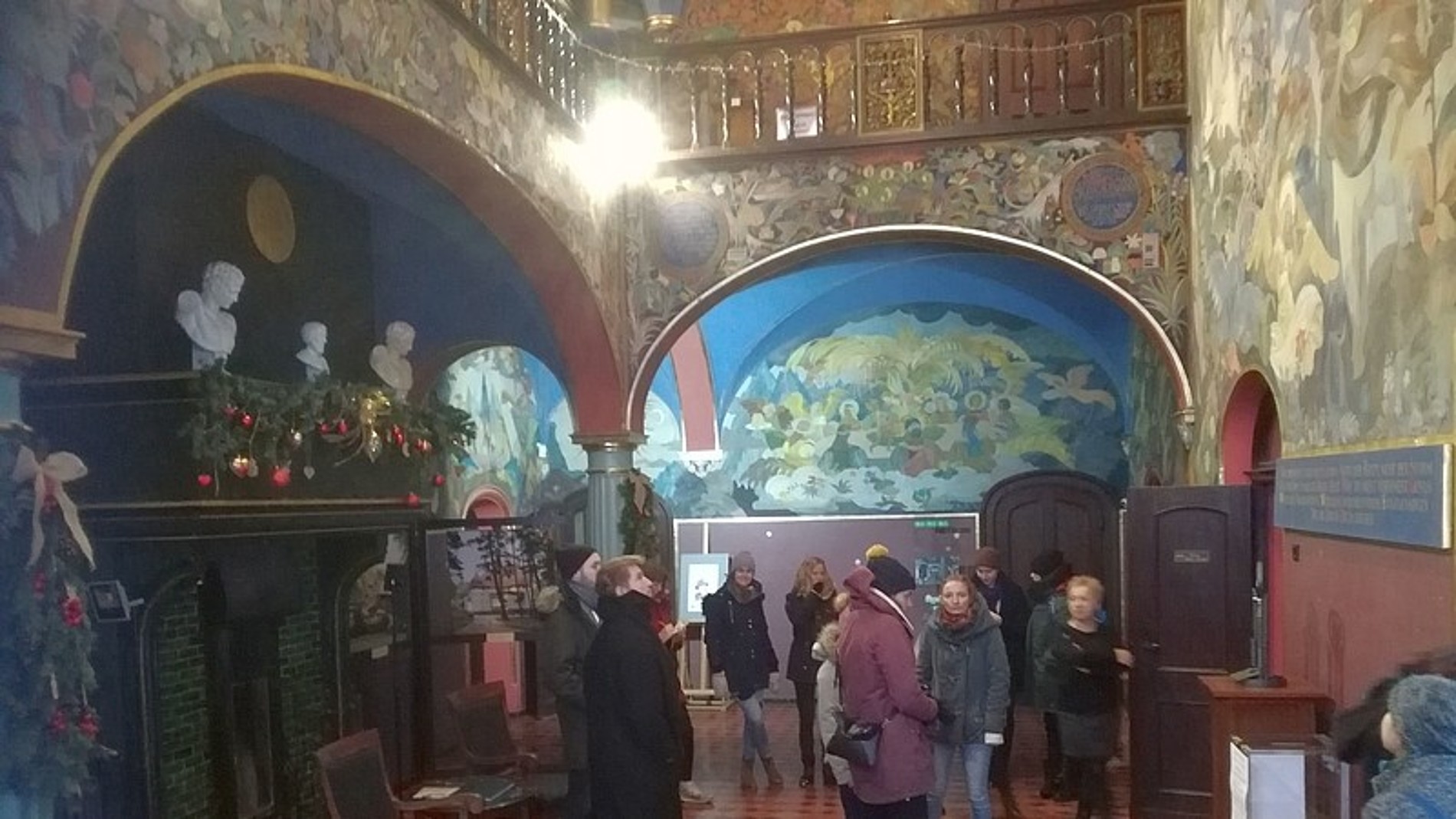
In the house of the 1912 Nobel Prize in Literature laureate, we are welcomed in the entrance hall—also known as the “Paradise Hall”—where our attention is immediately drawn to the magnificent mural. In 1922, a friend of Hauptmann’s, the Expressionist painter Johannes Maximilian Avenarius (who, incidentally, is buried in the St. Nicholas Churchyard in Görlitz), spent eight months creating a mural here featuring a wide variety of motifs and symbols from the Bible, including the Fall of Man. Above the entrance to the former music room—now a space for a temporary exhibition on Maria Konopnicka (who translated many of Hauptmann’s works from German into Polish)—an angel playing the violin is depicted: a tribute to Margarete, Hauptmann’s second wife.
On the upper floor, an exhibition uses photographs to highlight key moments in Hauptmann’s life. Stories about people who were close to him give us insight into the world of the 19th and 20th centuries.
Then our time is already up, and after the obligatory group photo, we get back on the bus—we’re heading on to Książ Castle (formerly Fürstenstein Castle), which was owned for centuries by the Silesian noble family von Hochberg. Used as a base by the Nazi regime during World War II, much inside the castle today is different from what it was in its heyday.
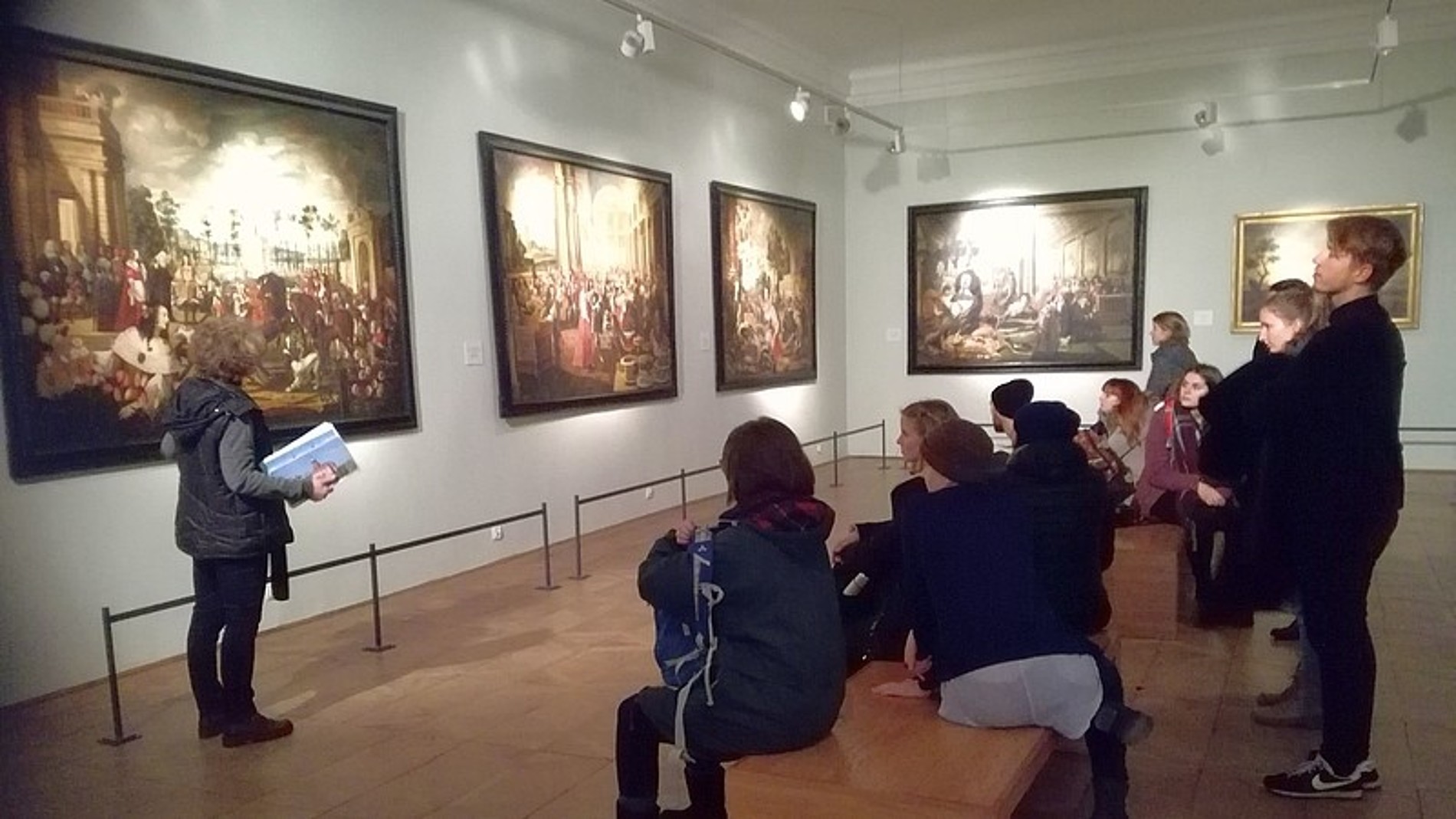
Where Gothic and Baroque architecture once complemented each other, the magnificent furnishings were removed and replaced with low ceilings and reinforced concrete. Only the grand Baroque hall in the Baroque wing still shines in its former glory. From three orchestra balconies, one can look down upon the symmetrically arranged mirrors and fireplaces. Next to them are additional reception and reception rooms with gold-woven tapestries, most of which feature reconstructed ceiling decorations and paintings from earlier times. In contrast, the next room reveals a bare reinforced concrete structure.
We also venture into the underground passages, which were converted into bunkers over half a century ago. Yet the Gothic structures—such as pointed arches—that had to give way to the conversion are still recognizable.
After touring the exhibition on the upper floors of the castle, which showcases the noble residents and their daily lives, we continue on to the final stop of the excursion: the Peace Church in Schweidnitz (today Świdnica).
The winding half-timbered building, now a World Heritage Site and one of the most significant landmarks in Silesia, is built in the Baroque style.
The largest half-timbered church in Europe—a basilica in design—was built for the Silesian Protestants in 1656–1657, following the Peace of Westphalia, using wood, clay, and straw.
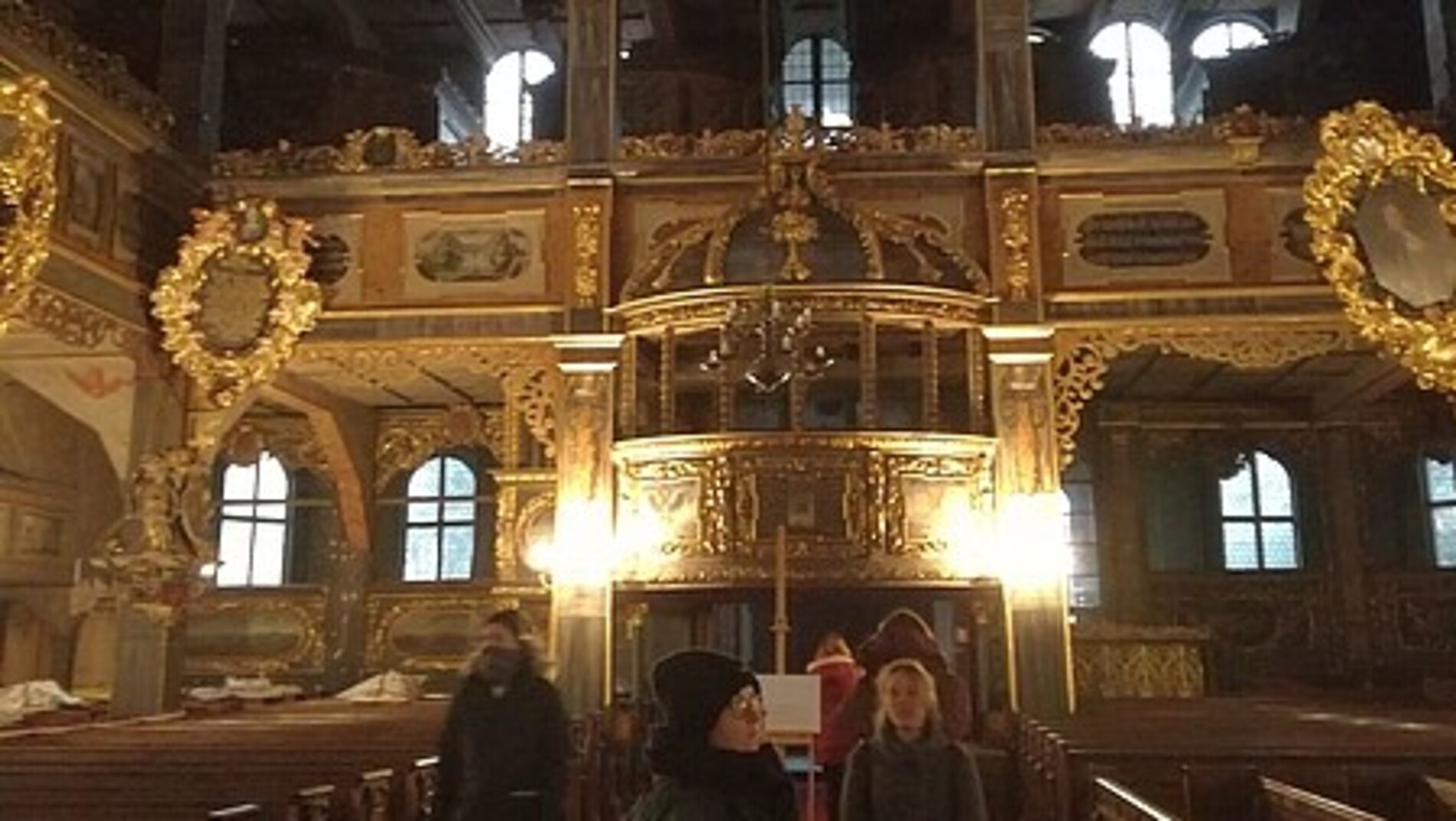
The freestanding altar, made almost entirely of wood, is located in a magnificent interior featuring outstanding galleries. In the past, these were reserved for the upper class; the church could accommodate several thousand people. Seats in the galleries could only be obtained through inheritance or donation within the upper class—today they are freely accessible to the general public, including for concerts. This is what the audio guide explains, as it also highlights other unique features of the Friedenskirche.
To the west of the church is a cemetery that served as a burial site for deceased parishioners for over 250 years, well into the 19th century. Today, however, it lies in ruins.
We can quickly grab a coffee at the small café before heading back to Görlitz—after a long but eventful day full of new impressions and with the feeling of having taken a piece of history home with us.
The day trip was organized in cooperation with Ms. Agnieszka Bormann, the cultural advisor for Silesia at the Silesian Museum.
Authors: Antonia Bartl and Carolin Renner (WKb16)
2nd upper floor