
The German Education System Meets Genghis Khan
Görlitz university lecturer teaches and researches in Ulaan Baatar at the National University of Mongolia in May.
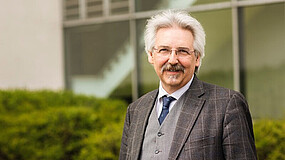
At the invitation of the National University of Mongolia and with support from the German Research Foundation (DFG), Matthias Theodor Vogt, a professor from Görlitz, will be teaching and conducting research in Ulaanbaatar from May 13 to 31, 2017.
The public lectures will cover European and German history, issues of cultural policy and cultural theory, and the German education system.
The trip is motivated by research on intangible cultural heritage —while Germany has just two entries on UNESCO’s Intangible Cultural Heritage List, Mongolia ranks among the world’s leaders with seven entries, both in absolute terms and relative to its population. One notable example is khoomei, or overtone singing, in which a single singer produces multiple voices simultaneously, or urtiin duu, the epic songs passed down primarily by ethnic minorities.
In collaboration with the Goethe-Institut and the Mongolian Academy of Sciences, a series of expert meetings on the issue of evaluation criteria for intangible cultural heritage is planned, as well as field research at Tsonjin boldog, the monument to Genghis Khan, at Elsen Tasarhai on the edge of the Gobi Desert, and in Central Aimag.
Mongolian students have already successfully completed the “culture and management” degree programme in Görlitz on several occasions. Prof. Togooch Dorjdagva from the National University of Mongolia was a guest of Prof. Vogt and is expected to return to Görlitz in the coming academic year. Naturalists at the Senckenberg Museum in Görlitz, one of the world’s largest research institutes for soil zoology, have also had long-standing ties with Mongolia.
Here youcan view the announcement of Prof. Vogt’s guest lectures at the National University of Mongolia in Ulaanbaatar in the Mongolian language, which is currently written in the Cyrillic alphabet.
2nd upper floor