
News
Space heroes inspire our university community
ESA astronaut Dr. Alexander Gerst and mission leader Volker Schmid give lectures at the HSZG

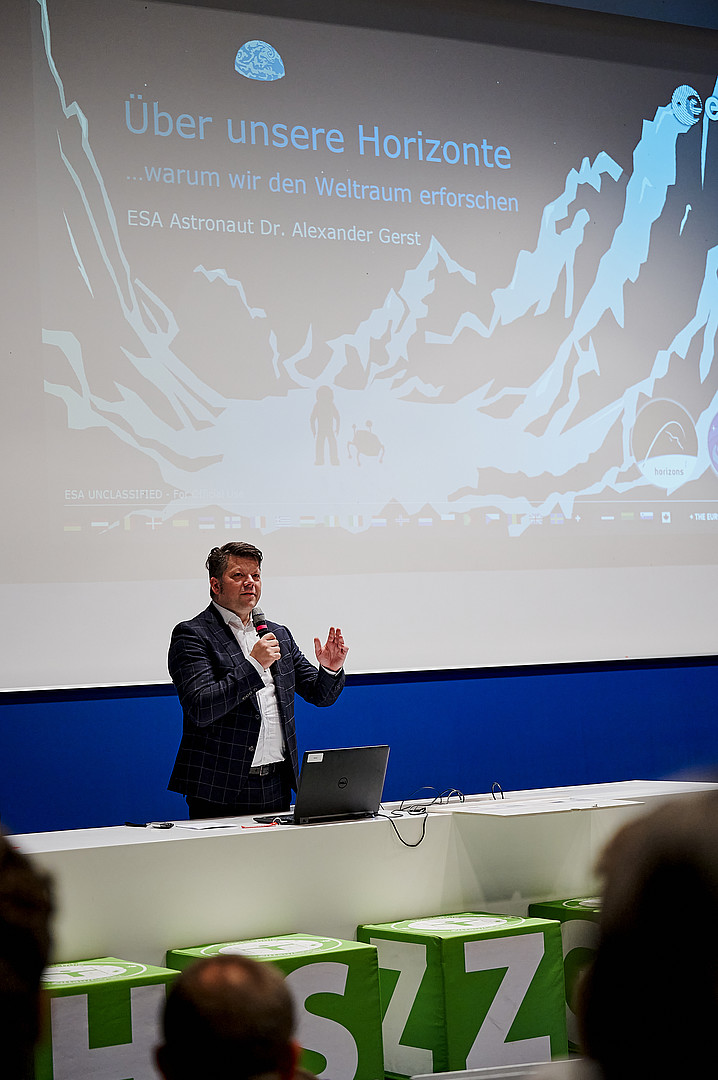
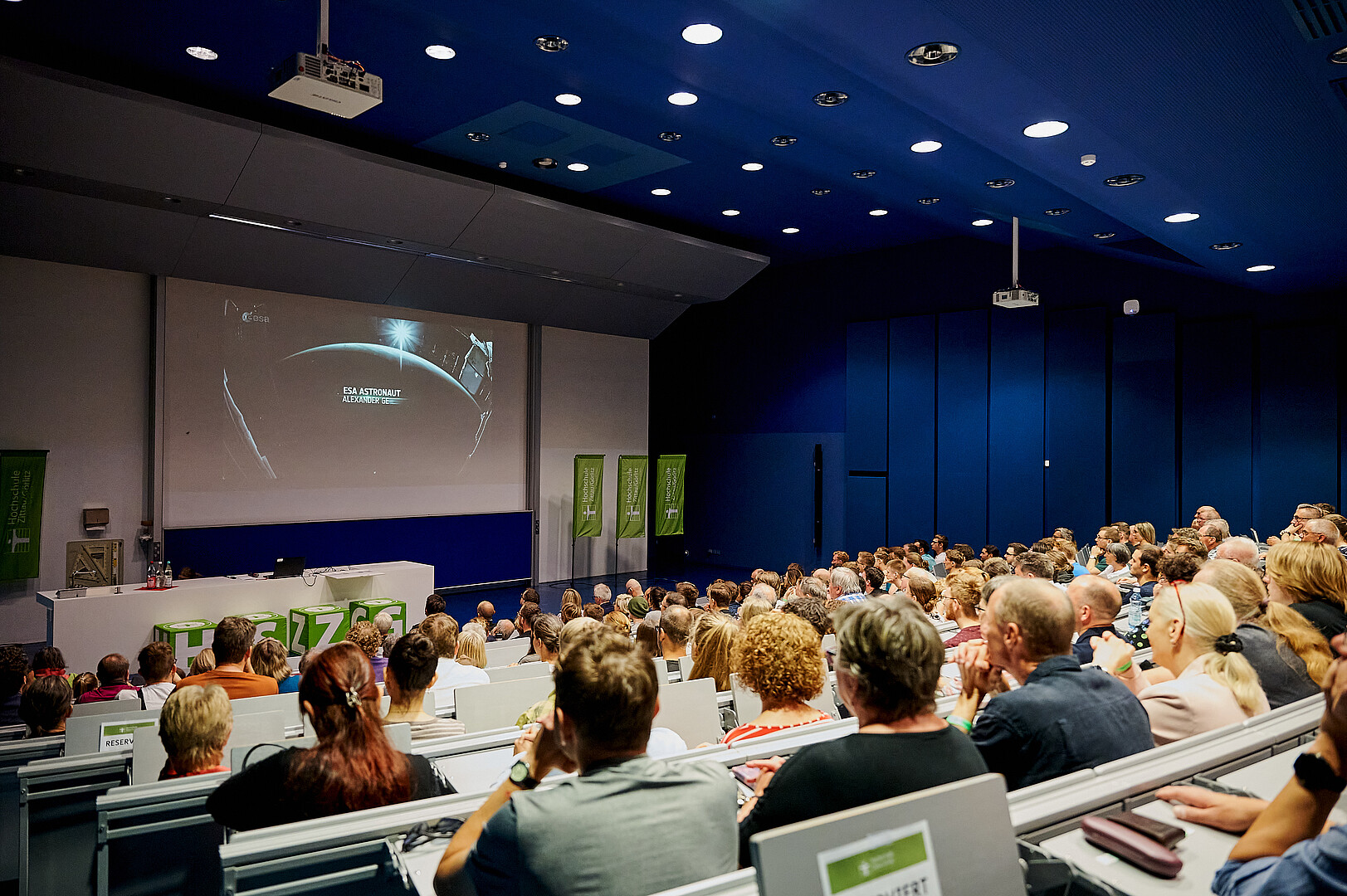
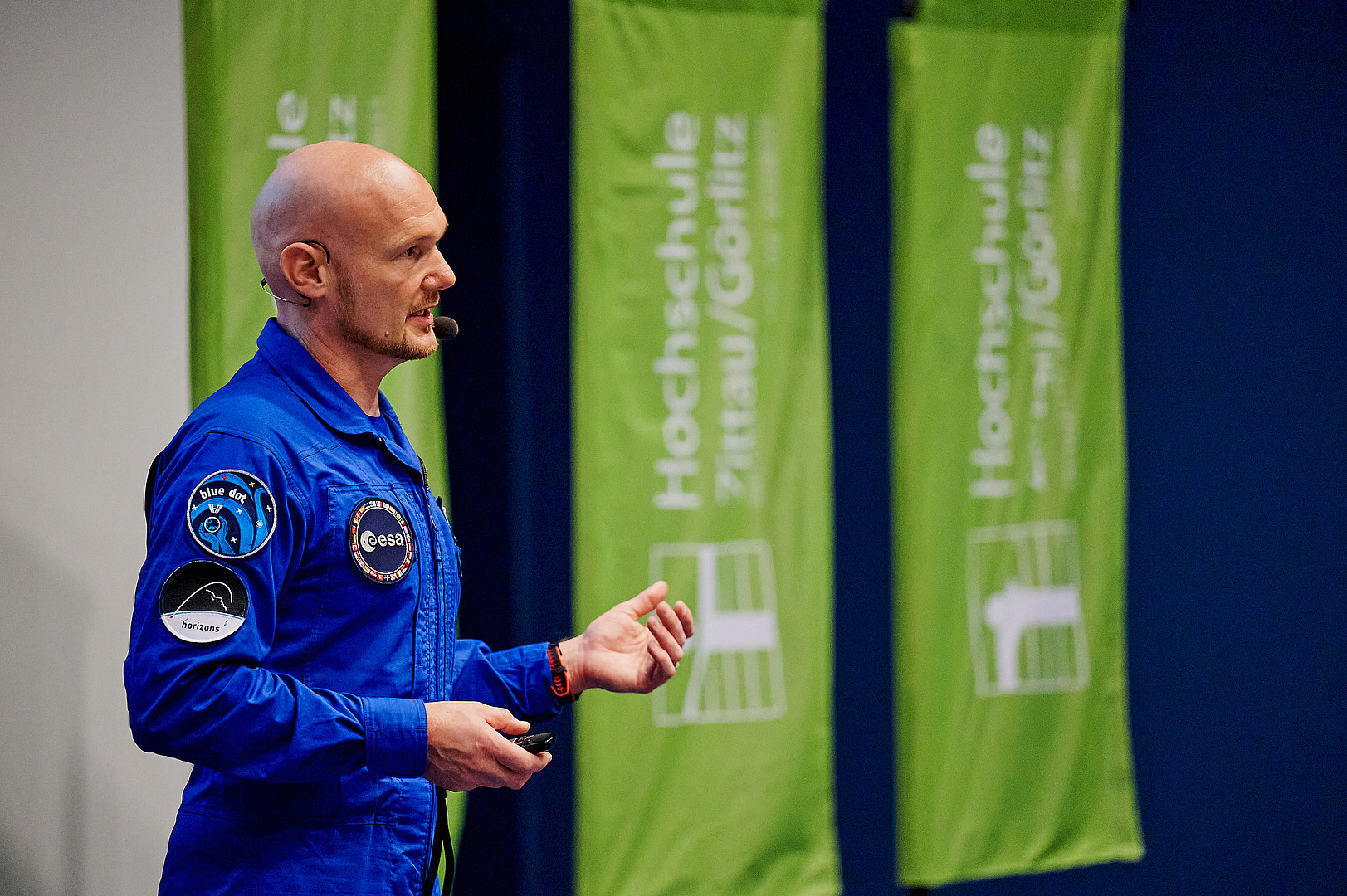
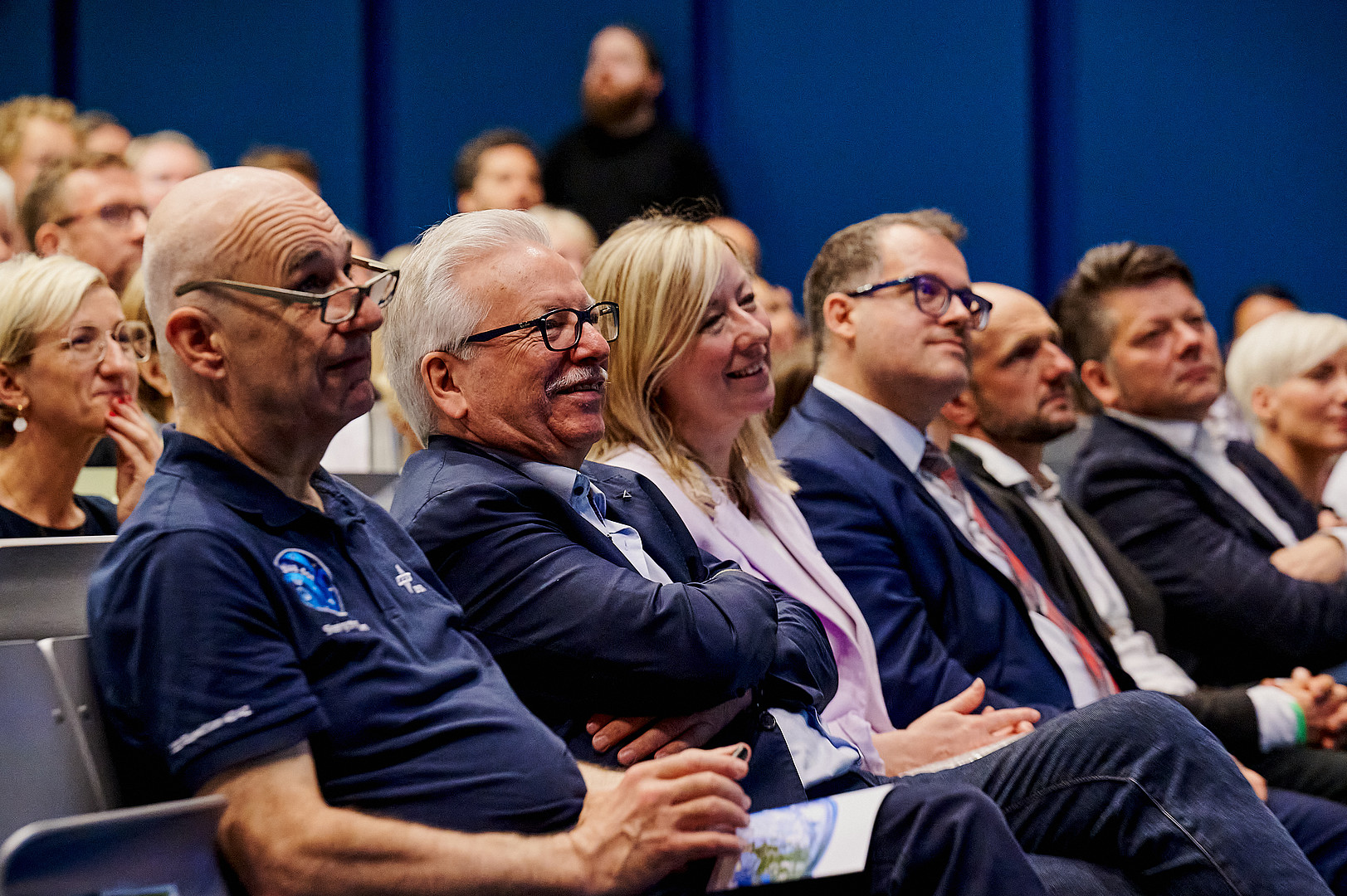
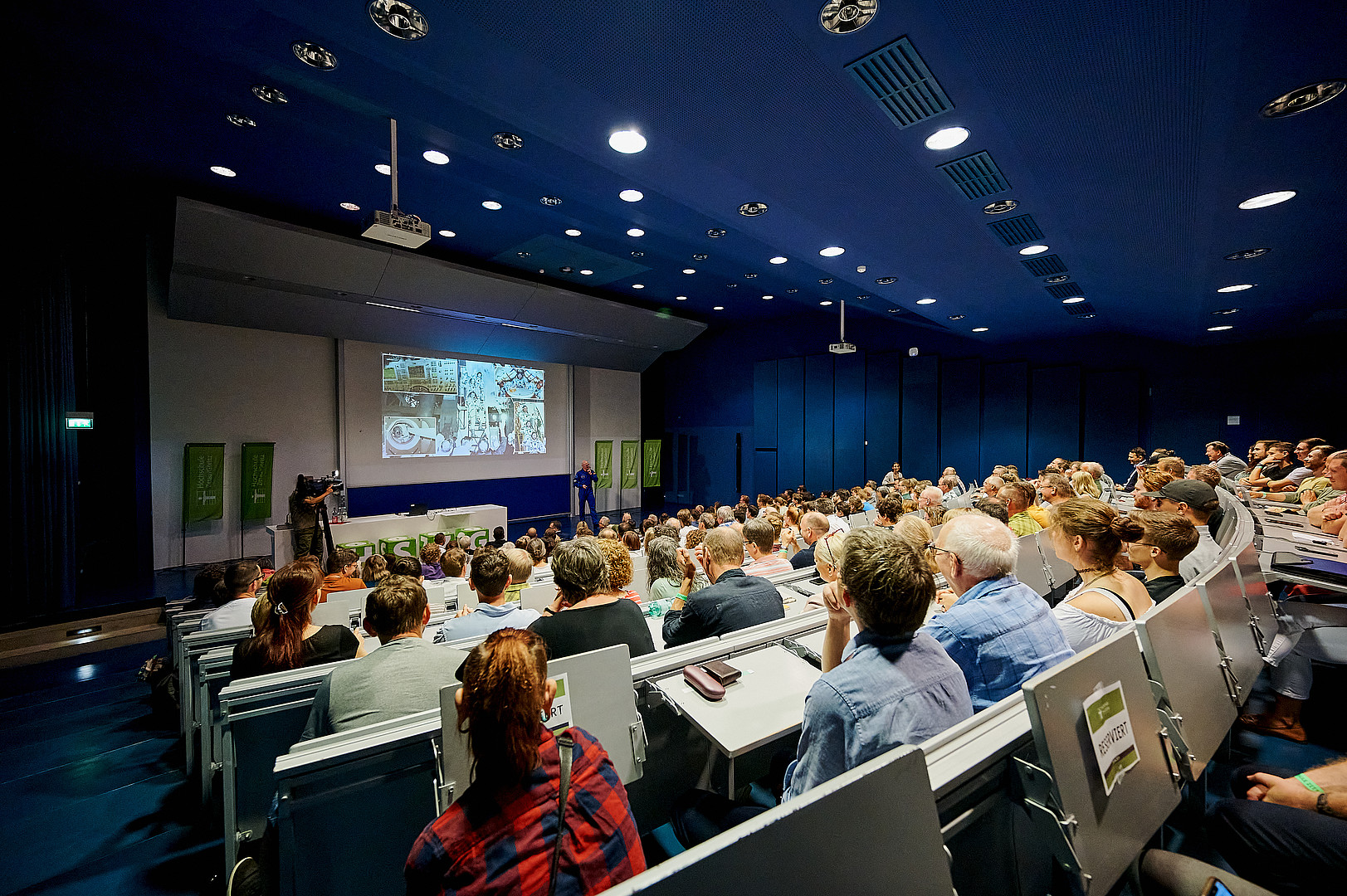
On June 28, 2024, ESA astronaut and geophysicist Dr. Alexander Gerst gave a public lecture at the Zittau/Görlitz University of Applied Sciences (HSZG). In a lecture titled “Beyond Our Horizons—Why We Explore Space,” he shared his impressive experiences and insights from space with a very interested audience.
In his lecture, Dr. Gerst took the audience on a journey through his exciting experiences as an astronaut. He vividly described what it feels like to see Earth as a tiny blue marble in the infinite expanse of space, and the emotions that overwhelmed him as he gazed upon Europe and other parts of the world from space.
A particularly moving moment in the talk came when Dr. Gerst spoke about the view of Earth and described the devastating effects of wars, environmental destruction, and natural disasters that he could observe from space without being able to intervene directly. “If we didn’t waste our resources senselessly but instead worked together to create something positive, that would be good for everyone. We should look to the future in this spirit. That, I believe, is my most important message, ” Dr. Gerst stated.
In addition to his personal experiences, Dr. Gerst also provided an outlook on humanity’s future plans in space. Among other things, he explained the planned exploration of the Moon and emphasized the importance of scientific research and international cooperation. Alexander Gerst has been to the International Space Station (ISS)—humanity’s largest outpost in space—twice, where he conducted experiments for medical research on Alzheimer’s and cancer, among other things. His vivid photos and videos from the ISS clearly demonstrated how these missions can yield new insights and inspire a new perspective on planet Earth.
It was a great honor to welcome Dr. Gerst to our university. His important messages, experiences, and insights for humanity touched me deeply, moved me emotionally, and inspired me. Whenever I face a so-called “problem” on our beautiful Earth in the future, I will think of him—a true hero of our time—who stands up for us with courage, wisdom, and strength.
”Following his presentation, ESA astronaut Gerst answered many questions that people have always had about life in space: How do you sleep in weightlessness? What is it like to live in space for a year? He also talked about the challenges he had to overcome during his missions on the International Space Station (ISS). Dr. Gerst gave the following answer to a high school graduate who asked him what he would have to do to become an astronaut:
No matter what your dream is, you owe it to your future 100-year-old self to give it a try. The chances are not so bad that it will work out after all.
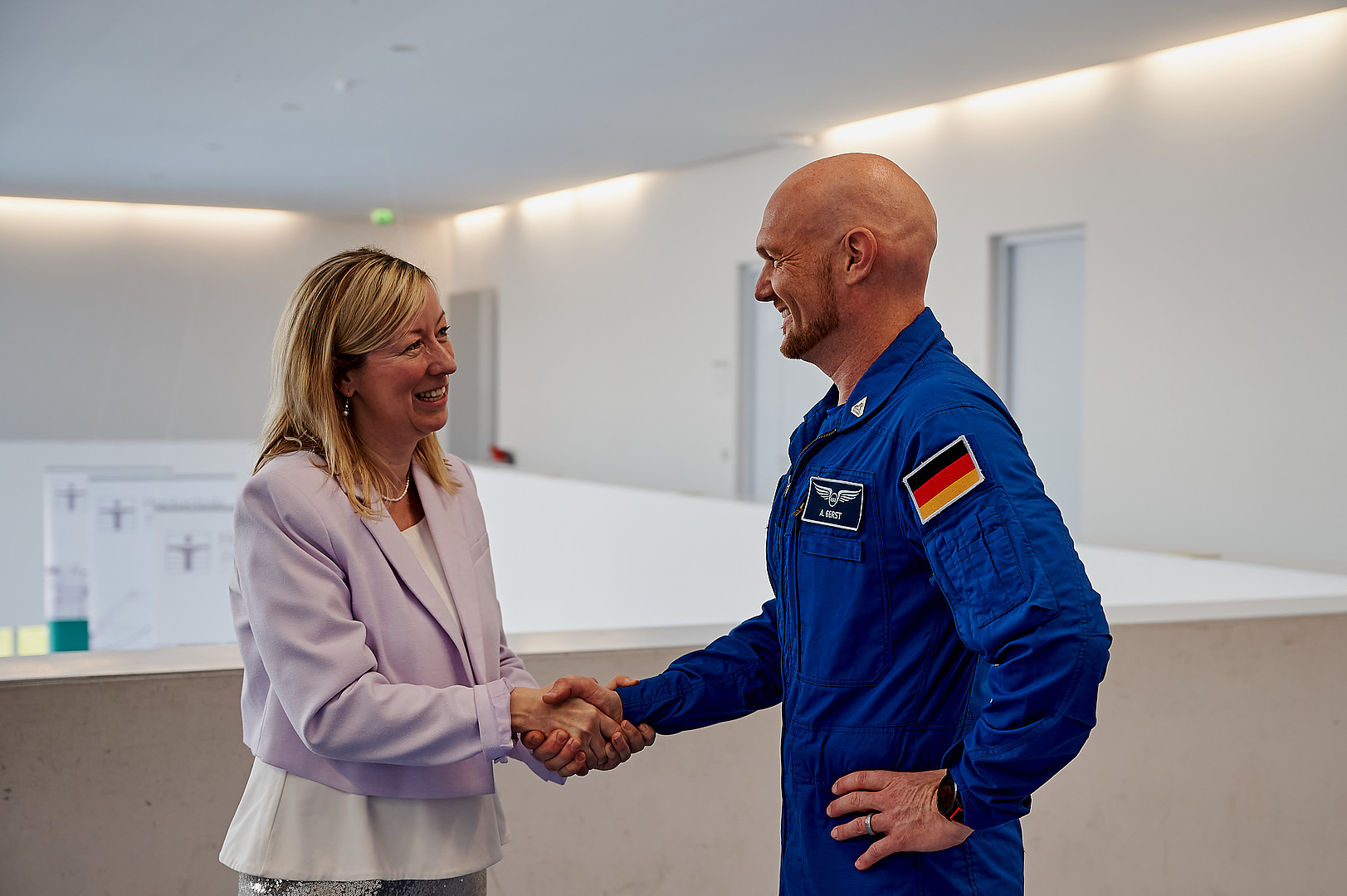
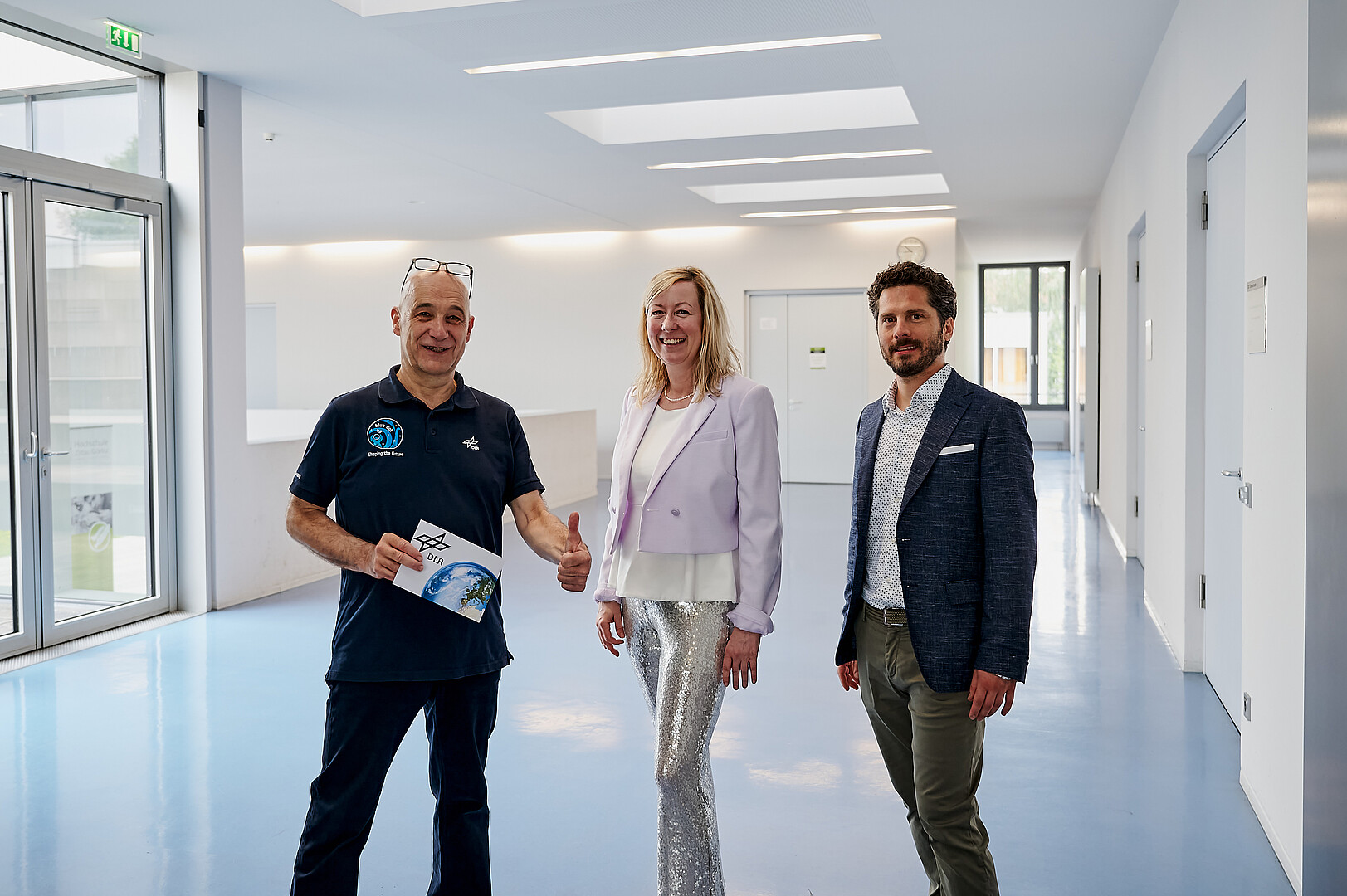
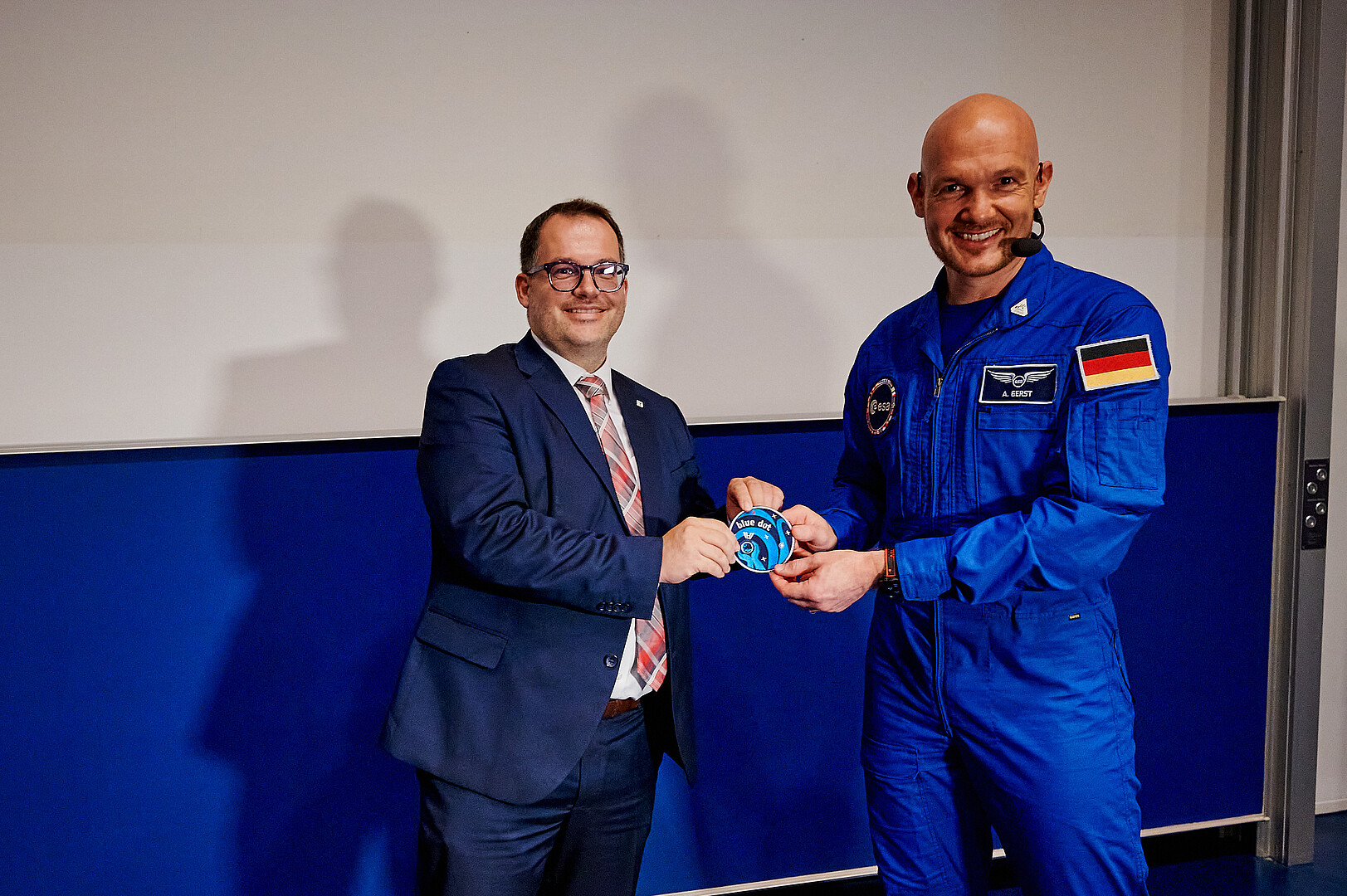
”As a token of gratitude and to commemorate his lecture at the HSZG, Alexander Gerst presented the Rector, Prof. Dr.-Ing. Alexander Kratzsch, with the ESA patch he had worn during the Blue Dot mission in 2014. The Blue Dot mission began on May 28, 2014, when the German ESA astronaut launched aboard a Soyuz rocket to the International Space Station (ISS). During his six-month mission as part of ISS Expedition 40/41, Gerst conducted experiments with plasma, robots, and metals and worked on a school project (ESA 2014).
As the Rector of this university—and also on a personal level—it is a great honor and pleasure for me to receive the Mission Blue Dot 2014 emblem from Alexander Gerst. With this spacesuit patch, a piece of space finds its way into our university. It will be given a place of honor and will always remind us that humanity is capable of great achievements.
”
Children's lecture with mission leader Volker Schmid
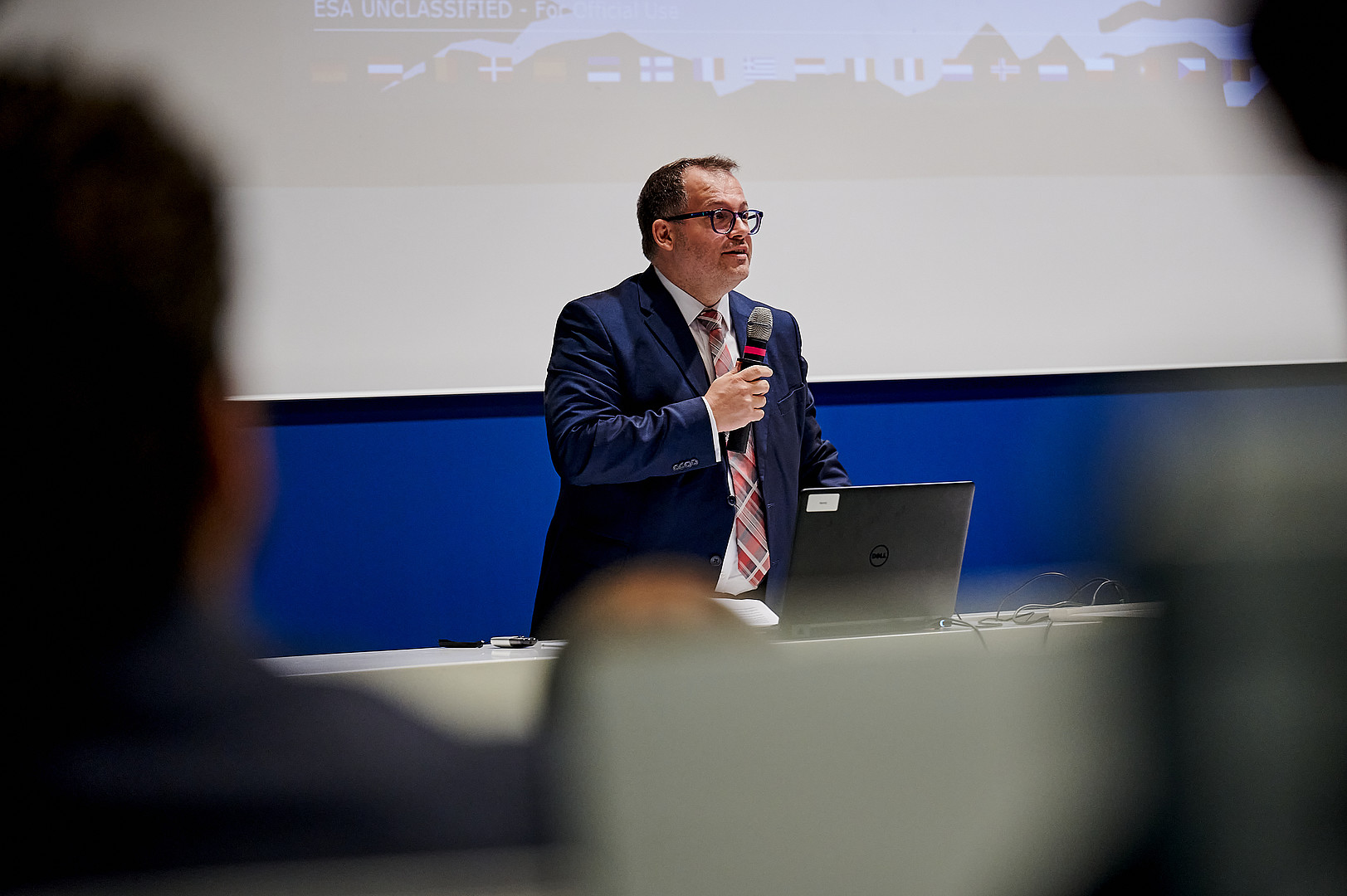
Dr. Gerst's lecture was followed by a lecture for children. Under the title "Adventure Space: Exciting Insights with Mission Leader Volker Schmid", an exciting journey into space was offered for young explorers. This session was aimed at schoolchildren aged between 6 and 10.
Volker Schmid, the mission leader of the last three major ESA missions of German astronauts, including the BlueDot and Horizons missions of Dr. Gerst and the Cosmic Kiss mission of Matthias Maurer, shared fascinating insights and experiences.
Schmid told the young audience exciting stories about life and work on a space station. He described the everyday life of astronauts and the various experiments they carry out in space. His story about the hovering robot CIMON, which serves as a high-tech assistant on the ISS, was particularly fascinating. The children also learned why people fly into space and what the aims of these missions are. Schmid also gave an outlook on future space plans, including the next major missions to the moon.
The pupils were very interested and asked many questions, which showed the children's enthusiasm and curiosity for space travel. Thanks are also due to the schools in the region, which prepared their pupils for this lecture with a special space week.
Today, we not only had the opportunity to listen to the fascinating presentations by Alexander Gerst and Volker Schmid, but also to celebrate the groundbreaking ceremony for the new building of the DLR Institute for Low-Carbon Industrial Processes and the DLR Science Day at Zittau’s market square. Zittau/Görlitz University of Applied Sciences would like to thank both speakers and all DLR guests for their inspiring presentations and looks forward to future events of this kind.
”Here the mdr reports on the visit of ESA astronaut and geophysicist Dr. Alexander Gerst to the HSZG.
About Alexander Gerst: Dr. Alexander Gerst, born on 3 May 1976 in Künzelsau, Germany, studied geophysics in Karlsruhe, earth science in New Zealand and volcanology in Hamburg, where he received his doctorate in 2010. He has been part of the ESA astronaut corps since 2009 and completed his first space flight in 2014 (Blue Dot mission) and his second in 2018 (Horizons mission). In 2018, he became the first German commander of the ISS. Since 2023, he has headed the Astronaut Operations department at the European Astronaut Center in Cologne.
In his free time, Gerst enjoys paragliding, mountain biking, hiking, climbing and diving. He has received several awards for his services, including the Grand Cross of Merit, the Golden Humboldt Medal, the Senckenberg Award and the Peace of Westphalia Award.
About Volker Schmid: Volker Schmid heads the DLR mission team for Alexander Gerst's Horizons mission. He studied aerospace engineering at Aachen University of Applied Sciences and completed a Master of Space Systems Engineering at Delft University of Technology. At DLR, he supervised the ISS sub-programs of the European space transporter ATV and the rescue vehicle CRV. In 2011, he initiated the CIMON project. Volker Schmid is responsible for the ISS experiment MagVector/MFX and MFX-2 as well as the Horizons mission.

1st floor
2nd upper floor


Source:
ESA [= European Space Agency] (2014): "Blue Dot" - seeing the Earth through Alexander Gerst's eyes. Available online: https://www.esa.int/Space_in_Member_States/Germany/Blue_Dot_die_Erde_mit_Alexander_Gersts_Augen_sehen (accessed on: 10.07.2024).