
Message details
Minister experiences how electricity is generated from wood at the HSZG
On the evening of August 5, the Saxon State Minister for Agriculture and Environmental Protection learned about biomass use and heat storage.
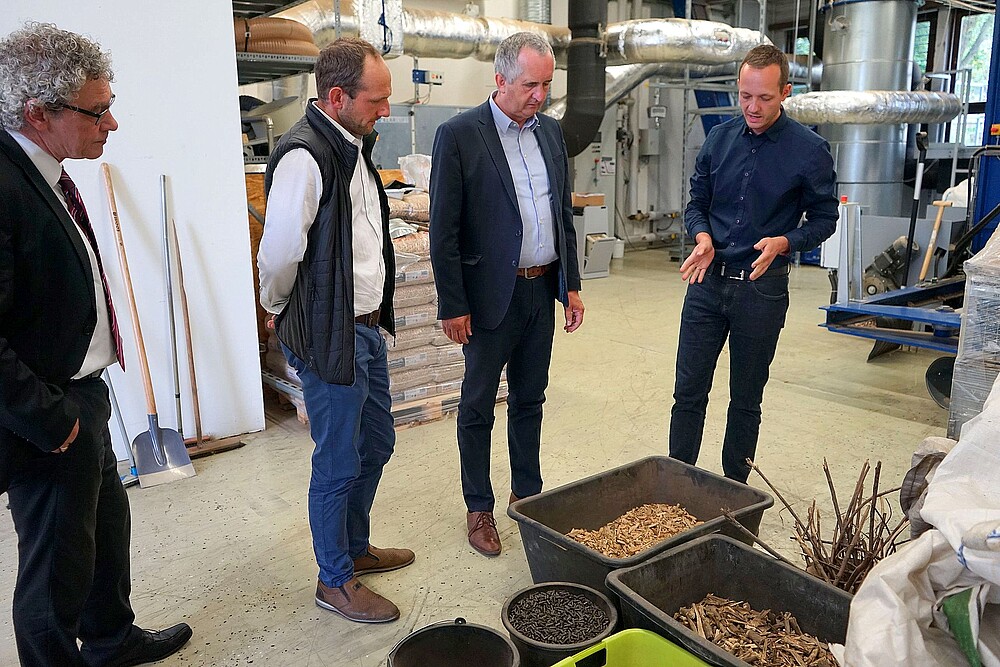
Everyone knows that wood can be burned directly to generate heat for heating. However, it is much more interesting to first use the wood to generate electricity and then use the waste heat that is inevitably produced in the process for heating. The carbon dioxide released into the atmosphere during this process was absorbed from the atmosphere in the same amount while the wood was growing, allowing for the climate-neutral generation of electricity and heat.
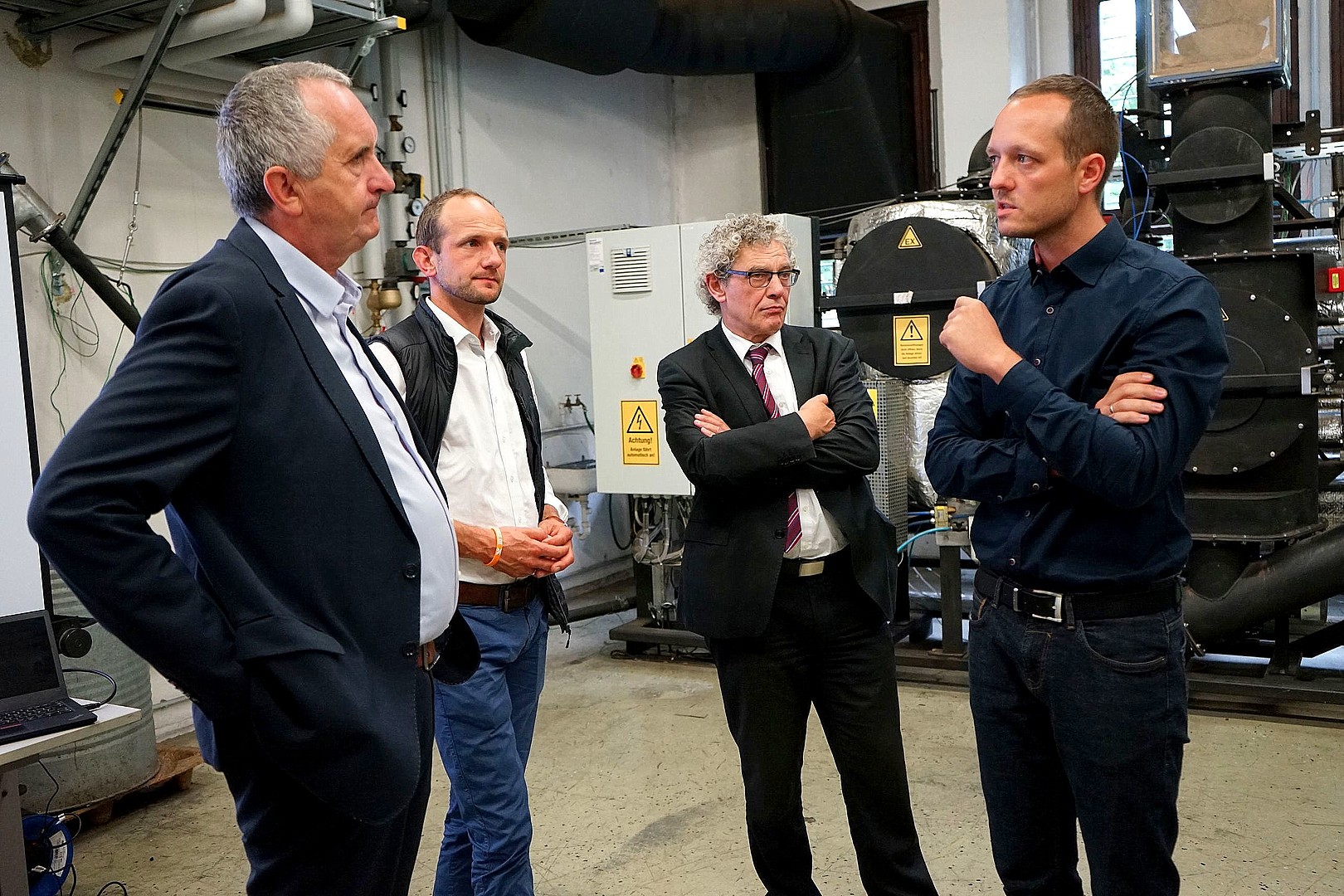
For several years now, the Zittau/Görlitz University of Applied Sciences has been working—with ERDF funding from the Free State of Saxony—to optimize the operational performance of a so-called wood gas combined heat and power plant. The highly complex plant installed in Zittau uses waste wood—specifically wood chips—as fuel. At high temperatures and in the absence of oxygen, the dried wood chips produce a combustible gas in the gasifier, which, once processed, is converted into electricity by a combination of a gas engine and a generator. Both the engine exhaust and its cooling system provide the additional heat required for heating.
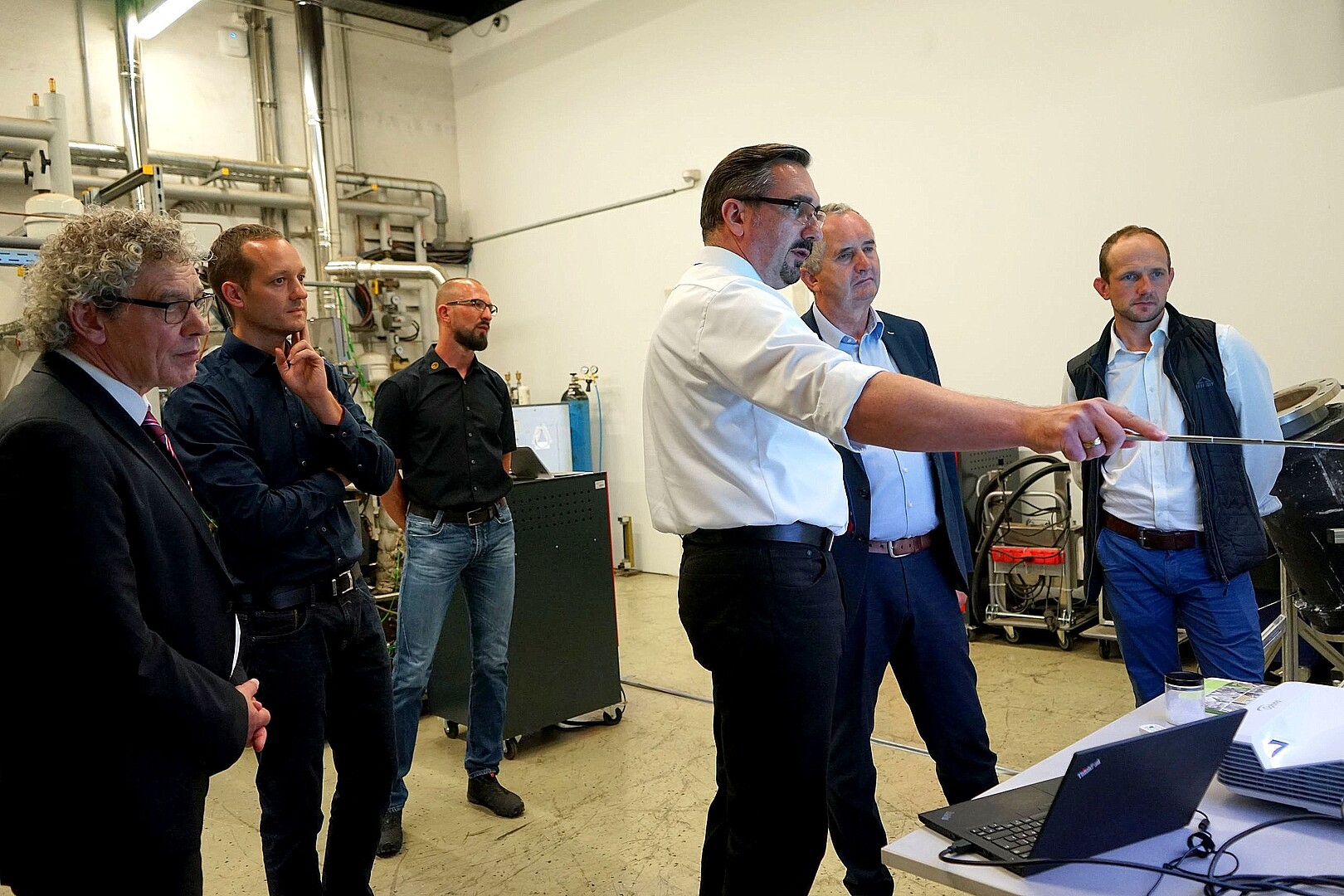
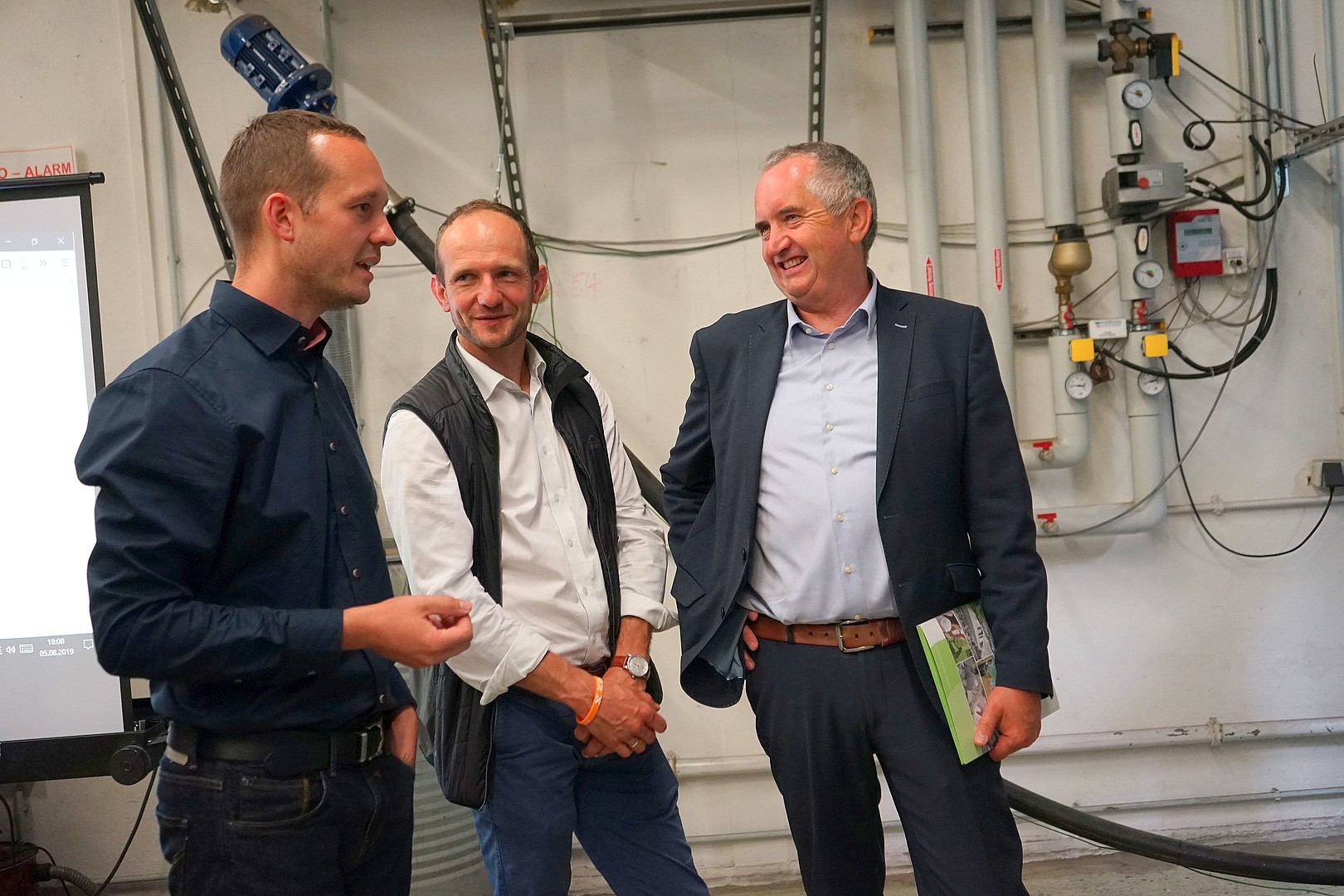
After a welcome address by Rector Professor Albrecht, Minister Thomas Schmidt and his entourage listened with interest to the presentation by Mr. Dipl.-Ing. (FH) Salomo, one of the “founding members” of this working group. Salomo explained how the system works, its measurement equipment, and the long-standing operational experience—which has been largely positive. Numerous questions were discussed, such as the scalability of this principle for systems with significantly higher electrical and thermal achievements.
In addition, Professor Meinert provided a brief overview of the research activities in the field of latent heat storage that are thematically linked to this plant. Latent heat storage systems represent an innovative heat storage technology in which the use of a melting/solidifying storage medium offers numerous advantages over conventional heat storage systems.
After the guests had the opportunity to witness a live warm start of the wood gas combined heat and power plant, they left our University, hopefully with many positive impressions of the impressive research potential in the field of sustainable energy technologies here in the region.

1st floor