

About the degree programme
The dual Bachelor’s degree programme in electrical engineering paves the way for an exciting future in technology. From smart devices to renewable energy systems to connected factories—with a solid foundation in electrical engineering, you’ll play an active role in shaping the digital revolution. The KIA model (Cooperative Study with Integrated Training) combines academic knowledge with practical professional experience and offers you a dual advantage: Upon successful completion, you’ll receive both a Bachelor of Engineering degree and a recognized IHK vocational degree of recognition.
Innovative Technologies for Tomorrow’s World
Our practice-oriented degree programme equips you with fundamental and advanced skills in these forward-looking fields:
- Fundamentals of Electrical Engineering and Networks
- Digital Technology and Microelectronics
- Measurement, Control, and Regulation Technology
- Programming and Software Development
- Power Electronics and Drive Systems
- Power Supply and Transmission
- Communication Networks and Data Technology
With this broad foundation and a specialization in one of the following areas—mechatronics, automation technology/Industry 4.0, or smart grids and installations—you’ll be ideally prepared for the job market. You’ll learn to develop creative solutions to technical challenges and help advance sustainable and smart technologies. Be part of a generation that not only uses technology but also actively shapes it and helps build the digital future.
Study details
The most important facts at a glance:
| faculty: | Electrical Engineering and Computer Science |
| Location: | Zittau |
| Degree: | Bachelor of Engineering |
| standard period of study: | 8 semesters |
| ECTS credits: | 180 |
| Language of instruction: | German |
| Enrolment for: | Winter semester |
| Application period: May 1 to September 30 | Start of studies: October |
| Admission restrictions: | No admission restrictions (no NC) Details |
| No prerequisite internship | Student Advisory Service |
| Accreditation status: | in preparation |
Course content
Your degree program follows a well-thought-out concept that seamlessly integrates academic education with vocational training. The dual structure allows you to apply theoretical knowledge directly in a practical setting and gain valuable professional experience. After an initial full-time semester at the university, the dual phase begins: Alternating regularly between the university and your training company, you’ll acquire foundational knowledge in science and technology as well as practical skills.
The first semesters are devoted to the fundamentals of mathematics and physics, as well as basic electrical engineering skills. You’ll learn the principles of electronics, digital technology, and computer science, and deepen your knowledge through hands-on lab exercises. After about two and a half years, you’ll take your IHK exam and earn your first vocational degree. In the subsequent phase of your studies, you’ll choose one of three areas of specialization and focus on the field that best aligns with your interests. Through an engineering internship, you’ll gain further valuable practical experience before completing your studies with your Bachelor thesis—often in close collaboration with industrial companies and with a direct connection to real-world applications.
The semesters marked in light green (2.1 / 2.2 / 3.1 / 3.2) are part-time semesters. Here, the 2nd and 3rd semesters from the Bachelor degree programme are each extended to two semesters. You will complete these in 4-week cycles at alternating locations (university/company). You will conclude this phase of your studies with your first professional certification (IHK chamber examination). This results in a total of 8 semesters.
- Physical principles of mechanics & thermodynamics
- Technical mechanics
- Materials engineering
- Fundamentals of computer science
- Fundamentals of electrical engineering - stationary processes
- Engineering Mathematics I
- Business Administration
- Fundamentals of Electronics
- Fundamentals of Electrical Engineering—Electrical Networks
- Engineering Mathematics II
- Engineering Mathematics II
- Fundamentals of Electrical Engineering - Signals and Systems
- Power Electronics
- Measurement Techniques for Engineers
- Digital technology/microcomputing technology
- Communication networks
- Object-oriented programming
- Physics of Matter & Electromagnetic Waves
- Digital Technology/Microprocessor Technology
- Numerical Methods/Simulation
- Final Examination for the Training Program
- Control Engineering I
Specialization in “mechatronics”
- Control Engineering I / Programmable Logic Controllers
- Sensors and Actuators
- FEM in Mechanics and Electrical Engineering
Specialization in “Automation Technology/Industry 4.0”
- Control Engineering I/Programmable Logic Controllers
- Sensors and Actuators
- Safe and Fault-Tolerant Systems
- Cyber-Physical Systems
Specialization in “Intelligent Networks and Systems”
- Electric Machines and Drives
- High-Voltage Technology
- Fundamentals of Electrical Transmission Systems
- Electromagnetic Compatibility
as well as required-elective modules (see module catalog)
- Interdisciplinary Competencies (Compulsory Elective Modules)
“Mechatronics” Specialization
- Project Planning
- Design Principles
- Modeling and Simulation
Specialization in “Automation Technology/Industry 4.0”
- Project Planning
- Fundamentals of Soft Computing
- Methods and Applications of Industry 4.0
- Control Systems/Industrial Data Communication
Specialization in “Intelligent Networks and Systems”
- Protection Technology
- Design of Electrical Power Systems
- Switchgear and High-Current Technology
- Calculation of Electrical Networks
as well as required-elective modules (see module catalog)
- Engineering Internship (B.Eng.)
- Final Module: Bachelor thesis and Defense
Career opportunities
Professional areas where you can get started
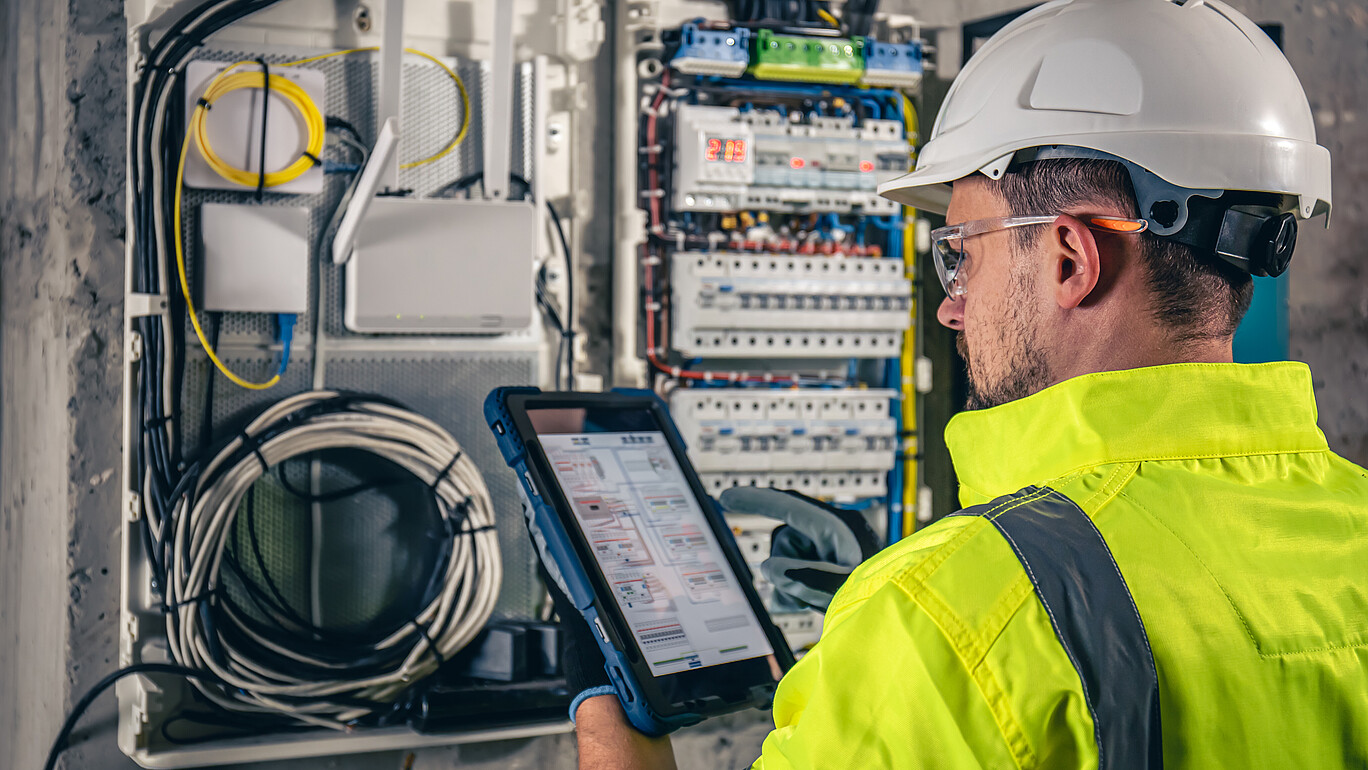
Energy technology
You plan and implement modern energy supply systems for a sustainable future. You will design renewable energy systems, optimize power grids and develop intelligent solutions for energy storage. With your specialist knowledge, you will make a decisive contribution to the energy transition and ensure a reliable and environmentally friendly power supply in a wide range of applications.
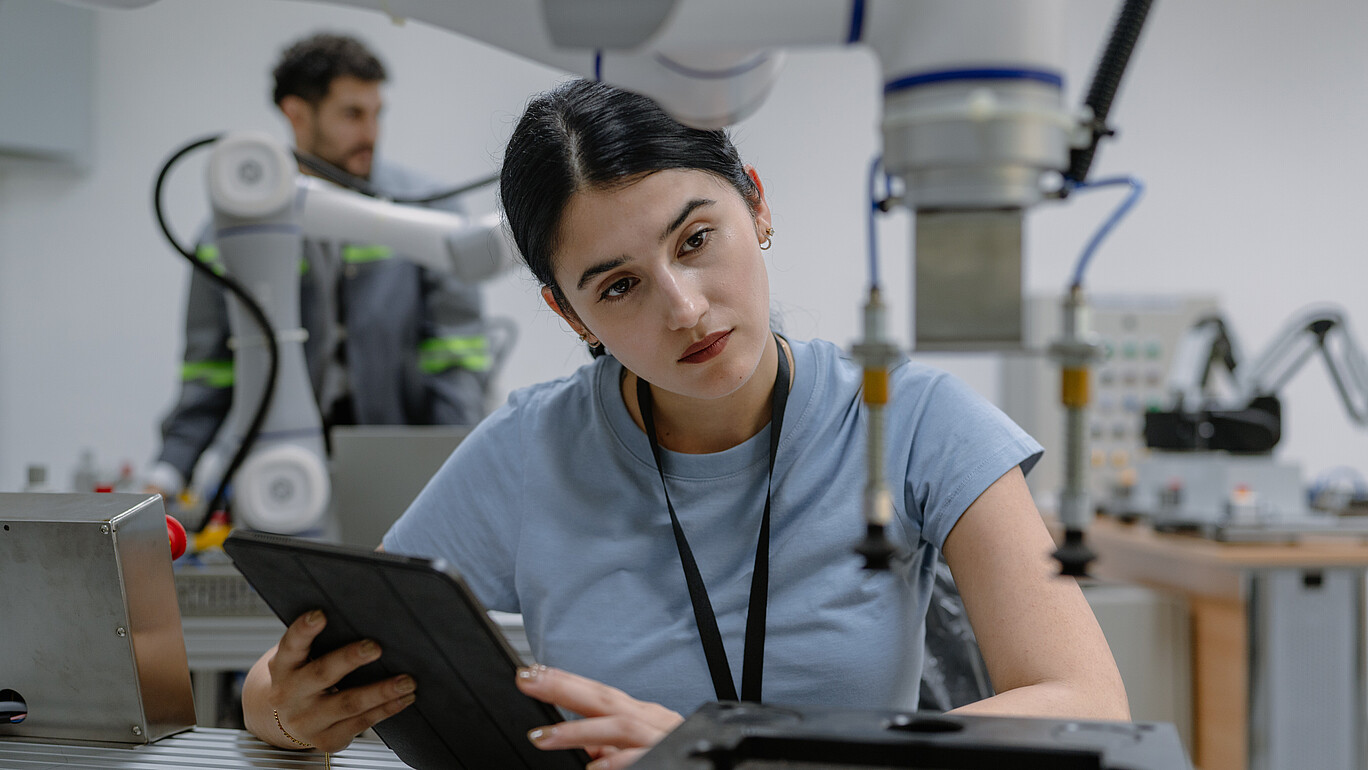
Automation technology
You develop systems that control, monitor and optimize industrial processes. You program control systems, integrate sensors and actuators and network production components to create intelligent overall systems. Your solutions increase efficiency in production plants, reduce error rates and enable flexible production concepts in line with Industry 4.0.
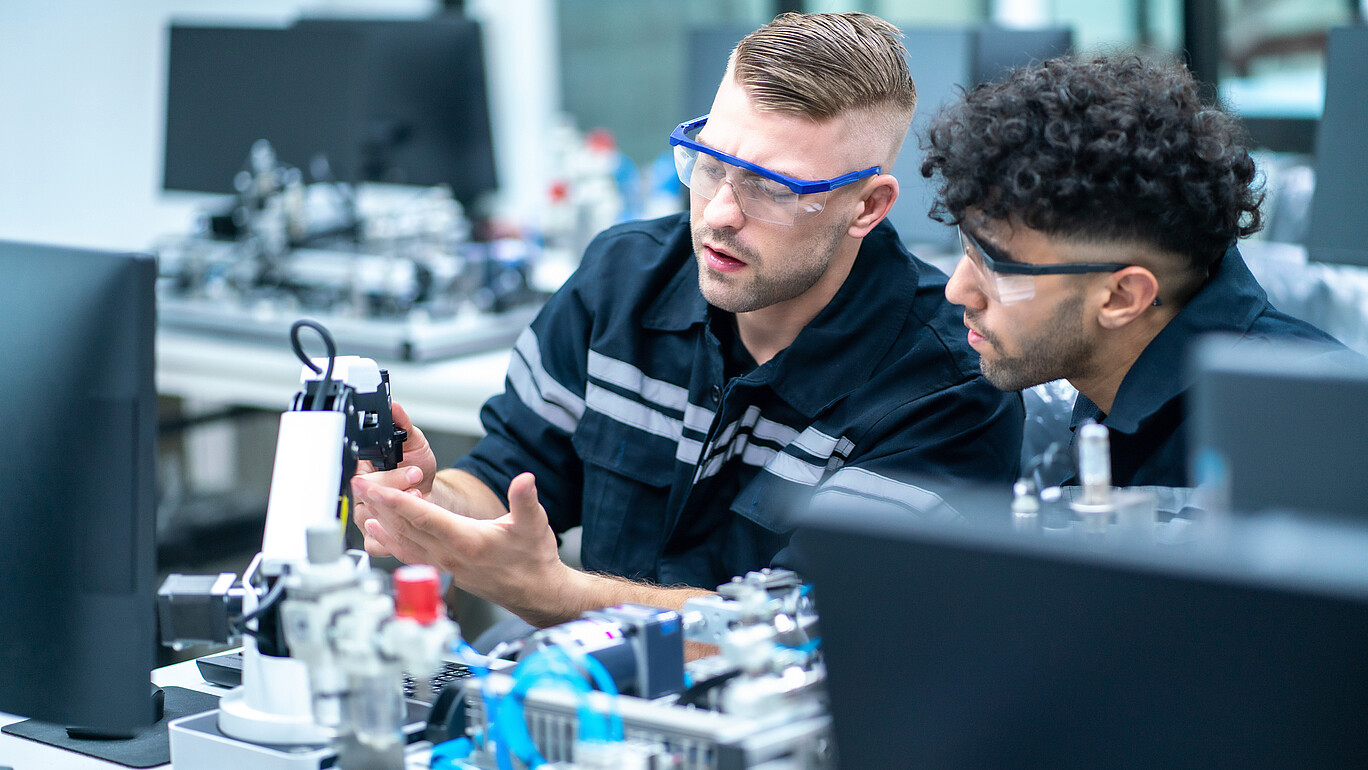
Device Development: You design and develop electronic devices and systems from the initial concept through to production readiness. You’ll create circuit diagrams, test prototypes, and optimize components for maximum achievement and reliability. Your creativity and technical expertise will go into innovative products that support people in their daily lives or in specialized fields of application.

Network technology
You design and maintain communication networks for data transmission in companies and organizations. You design network architectures, install components and ensure secure and efficient data exchange. With your specialist knowledge, you enable reliable connections in an increasingly networked world and contribute to digital transformation.

Building Systems Engineering
You plan and implement electrical engineering systems in modern buildings and infrastructure. You design lighting systems, security systems, and smart home technology to ensure optimal comfort and energy efficiency. Your work results in smart buildings that automatically adapt to user needs and operate in a resource-efficient manner.
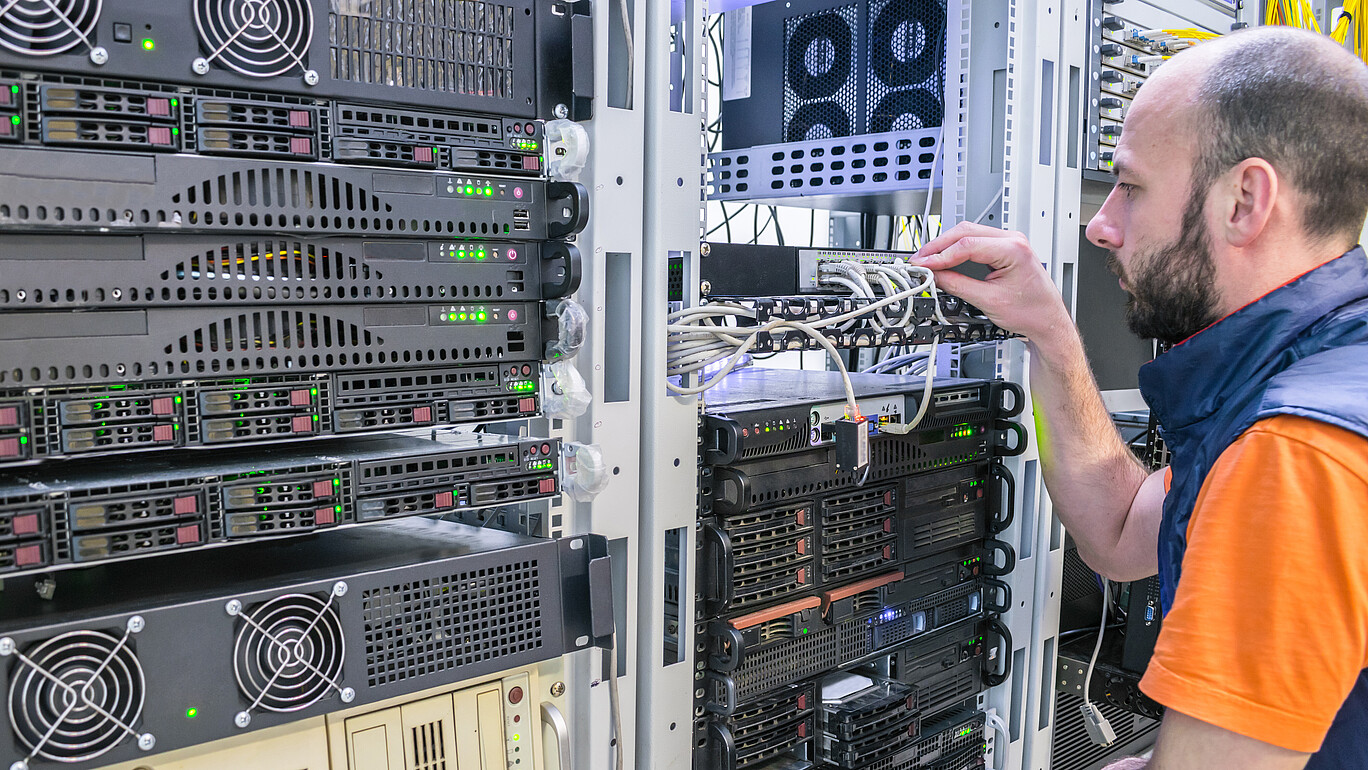
Service technology
You look after electrotechnical systems over their entire life cycle. You carry out maintenance, analyze faults and modernize existing systems according to current standards. Your systematic approach and problem-solving skills ensure maximum availability of technical equipment and minimize costly downtime for your customers.
FAQ
How does the dual study program work?
KIA is a dual degree program leading to a Bachelor’s degree— with integrated vocational training (including an IHK/HWK degree). It closely integrates theory and practice and fosters an early connection to the future employer.
Our future KIA students submit applications to a company that partners with the university companythat partners with the university, hold a university entrance qualification, have an interest in scientific problem-solving, and possess the necessary mobility.
The companies enter into a cooperation agreement with the university and sign contracts with the applicants for practical vocational training (vocational training contract or internship agreement).
After signing a training agreement with the company, you must still register at the university with your university entrance qualification—this is possible starting in mid-May.
The program typically begins on September 1 with a 4-week basic practical training period at the company. Afterward, depending on your degree programme, you will complete one to three semesters of study at the university.
The breaks between semesters are reserved for practical training at the company. On-the-job training at the company takes place during the foundational phase of the program according to the semester schedule (e.g., alternating between the company and the university every 4 weeks) and concludes with an exam administered by the relevant chamber (IHK or HWK). No separate vocational school instruction is provided. The theoretical knowledge required for vocational training is imparted through scheduled lectures and additional “job-specific” teaching units at the university. During the practical training period, you are entitled to vacation time in accordance with the collective bargaining agreement and receive a monthly stipend from the company based on the standard compensation for trainees.
After completing the vocational training, the remaining semesters are completed as a full-time study programme while working (often with a financial aid agreement from your company) and culminate in the desired Bachelor of Engineering degree.
What apprenticeship programs are offered?
- Electronics Technician for Industrial Systems
- Electronics Technician for Devices and Systems
Here's what our students have to say about our university
- Module Handbook (Course Content and Program Structure)
- Program Flyer
- KIA (sandwich-style) degree course Flyer
- Application Information
- Website of the Faculty of Electrical Engineering and Computer Science


First floor
Starting now, we're also offering our Student Advisory Service via WhatsApp. Just send us a message at: +49 173 2086748
Our promise to you
Studying in the wild east?
Studying with us is different. Above all, better. Why? We have a family atmosphere. There are small study groups and the lecturers are always there for you. There is a close connection to practice in all degree courses. And finding affordable accommodation is no problem here.
There are many other reasons, such as university sports or the student representatives, clubs and societies. Campus life in Zittau and Görlitz, the wild east, is unique.