
News Details
Exchange, Classification, and Joint Further Development
Numerous representatives from KIA partner companies, the university, and other partners gathered for the 2026 KIA Training Network Meeting.
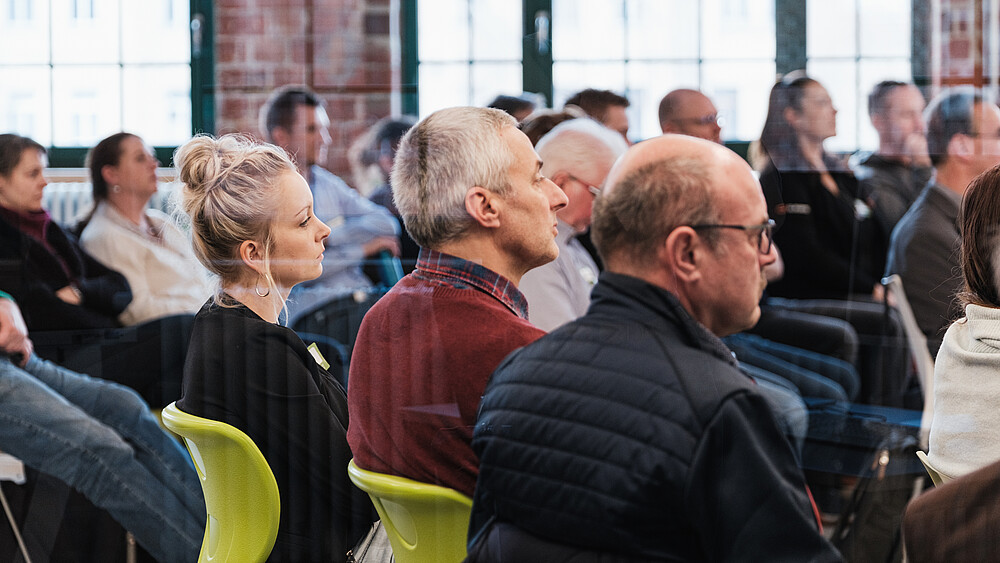
On January 8, 2026, the 16th training consortium meeting of the KIA (sandwich-style) degree course at the Zittau/Görlitz University of Applied Sciences took place at Celsiuz. Numerous representatives from the KIA partner companies, the university, and other partners took the opportunity to exchange ideas in person.
The event focused on the structural realignment of Zittau/Görlitz University of Applied Sciences, which Rector Prof. Dr.-Ing. Alexander Kratzsch outlined in a keynote address. It became clear that the KIA training-integrated study model will remain a central component of the university’s development in the future and will be further strengthened.
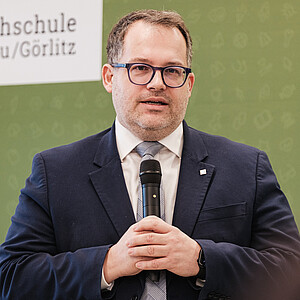
The KIA study model is a central component of our university’s development. Especially in the context of our restructuring efforts, close collaboration with our industry partners is crucial for sustainably integrating practice-oriented teaching, research, and securing a skilled workforce. I am very pleased with the positive feedback we have received from our partners regarding our planned restructuring.
”KIA Officer Kristin Groß provided an overview of the current status and ongoing developments in the KIA (sandwich-style) degree course. Over many years, the KIA model has established itself as a viable combination of vocational training, academic study, and practical experience, and it makes an important contribution to ensuring a supply of skilled workers in the region.
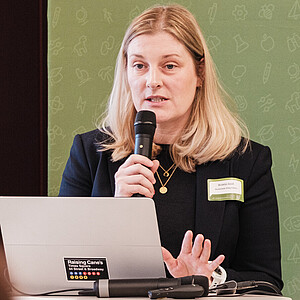
Especially during the current restructuring process, it is important to us to involve our partners early on, provide them with transparent information, and encourage their participation. KIA thrives on mutual exchange—universities and companies benefit directly from one another in this regard. I am therefore all the more pleased that so many companies took advantage of the opportunity for exchange right at the start of the year. This is a very positive sign for the KIA (sandwich-style) degree course.
”Cooperation, visibility and future prospects of the KIA model
The initial focus was on collaboration in the day-to-day operations of the KIA program. The companies affirmed the high quality of the KIA model, particularly the close ties between students and the companies, the very high rate of job placement, the low dropout rate, and the added value provided by two degrees. The individual support and the close-knit structure within the KIA network were also repeatedly highlighted as clear strengths.
Another key area of focus was attracting students to the KIA (sandwich-style) degree course and increasing its visibility. Specific measures were discussed, such as making greater use of success stories, video formats, and podcasts; establishing a clearer distinction from other dual study models; and increasing the course’s presence at trade shows, in schools, and at career counseling events. It was also emphasized that the Zittau campus should be more prominently promoted as an attractive place to live and study.
During the discussion on the future and further development of the KIA model, KIA was characterized as a low-threshold entry point into academic education and as an important tool for securing a regional skilled workforce. Looking ahead, topics discussed included greater nationwide visibility, the exploration of additional suitable degree programmes, and an even closer integration of theory and practice.
The consortium meeting was rounded off with informal discussions, a shared snack buffet, and guided tours of the DLR School Lab and selected university laboratories.
The training network meeting demonstrated once again how valuable the close exchange between the university and the professional world is—and that the KIA (sandwich-style) degree course can be further developed on a strong, shared foundation.


Special thanks go to all KIA cooperation partners for the open and constructive exchange. We would also like to thank the Celsiuz team for their provision and support on site, the moderators of the exchange rounds for their professional guidance of the discussions and Ms Sikorska for her organizational support.
Our thanks also go to Dr. Fester for the guided tour of the DLR School Lab and to Wolfgang Meinck and Ondrej Švarc for the exciting insights provided during the lab tours.
Your contact person
1st floor