
Full program in the border triangle
Head to the Neiße Film Festival with the Student Pass!

This year’s Neisse Film Festival will open in Zittau on May 17. For the 19th edition of the festival, over six days at 20 venues in the tri-border region along the Neisse River, there will be around 90 feature films, documentaries, and short films presented in three competitions and various film series, film discussions with filmmakers, and accompanying events such as concerts, a reading, exhibitions, and more. The student ticket grants access to all screenings for 20 euros. This personalized ticket is available at all festival box offices upon presentation of valid identification.
In the main competition for the good feature film, three productions each from Germany, Poland, and the Czech Republic are vying for the title; these films explore themes ranging from dystopian visions of the future and social injustices to heartfelt romances. A total of nine good productions are competing in the Best Documentary Film competition, exploring topics such as the search for identity and the relationship between tradition and modern society. The short film competition at the Neisse Film Festival, for which the Student Council of the Zittau/Görlitz University of Applied Sciences is donating prize money of 1,000 euros, once again features a wide range of short fiction films, documentaries, and animations in 2022, offering fantastical, realistic, humorous, serious, emotional, or even critical perspectives on the (un)ordinary aspects of life.
The “Regionalia” series features current works by regional filmmakers dedicated to life in Lausitz and along the German-Czech border, as well as Sorbian cinema. Under the title “Cinemascope,” a film series showcases the broad range of thematic horizons in the cinematography of Poland, Germany, the Czech Republic, and other European countries. At the Centrum Panorama in Varnsdorf, film classics such as “The Untouchables” (1987), “Aliens” (1986), and “The Battle of Midway” (1976) will be shown in 35mm or 70mm format. There is also a series of children’s films and a retrospective featuring films by the recipient of this year’s Neisse Film Festival Honorary Award, German actress Katharina Thalbach.
Under the title “Family Affairs,” the 19th Neisse Film Festival will focus on the changing concepts of family and the comparison of related ideas in Eastern and Western Europe from the pre-reunification era to the present. The program, featuring nine feature films, documentaries, and short films, explores different perspectives on this topic—which is so relevant both individually and socially—while simultaneously shining a spotlight on exciting and moving stories of contemporary history. In addition, the Kulturcafé Alte Bäckerei in Großhennersdorf will be hosting the exhibition “Familia” by photographer Oksana Yushko starting May 8. An exhibition titled “Voll der Osten. Leben in der DDR” (Full of the East: Life in the GDR), featuring photographs by Harald Hauswald and texts by Stefan Wolle, has been on view at the Sparkasse Zittau since April 1. In addition, Lutz Seiler will read from his book “Stern 111” on May 18 at the Gerhart-Hauptmann-Theater in Zittau. In it, the award-winning author tells an atmospheric family story set in the immediate post-reunification period.
DakhaBrakha live at the Kühlhaus Görlitz
One of the highlights of the supporting program is the concert featuring “DakhaBrakha” on Friday, May 20, starting at 8:00 p.m. at the Kühlhaus Görlitz. The name of the band, founded in Kyiv in 2004, comes from the ancient Ukrainian language and means “give and take.” The quartet’s music blends folk and beat, jazz and trance. Driven by drums and cellos, it creates an “ethno-chaos” that is celebrated worldwide. The band’s trademark is their towering black lambswool hats. Thanks to their unconventional sounds, ritualistic tribal rhythms, and frenzied vocals, their performances convey the power and sensuality of Eastern European folklore. For the past two years, DakhaBrakha’s concert at the Neisse Film Festival has been hanging in the balance—first due to the pandemic, now due to the war. The band has a clear statement on this: “The most effective weapon right now is DakhaBrakha’s concerts.”
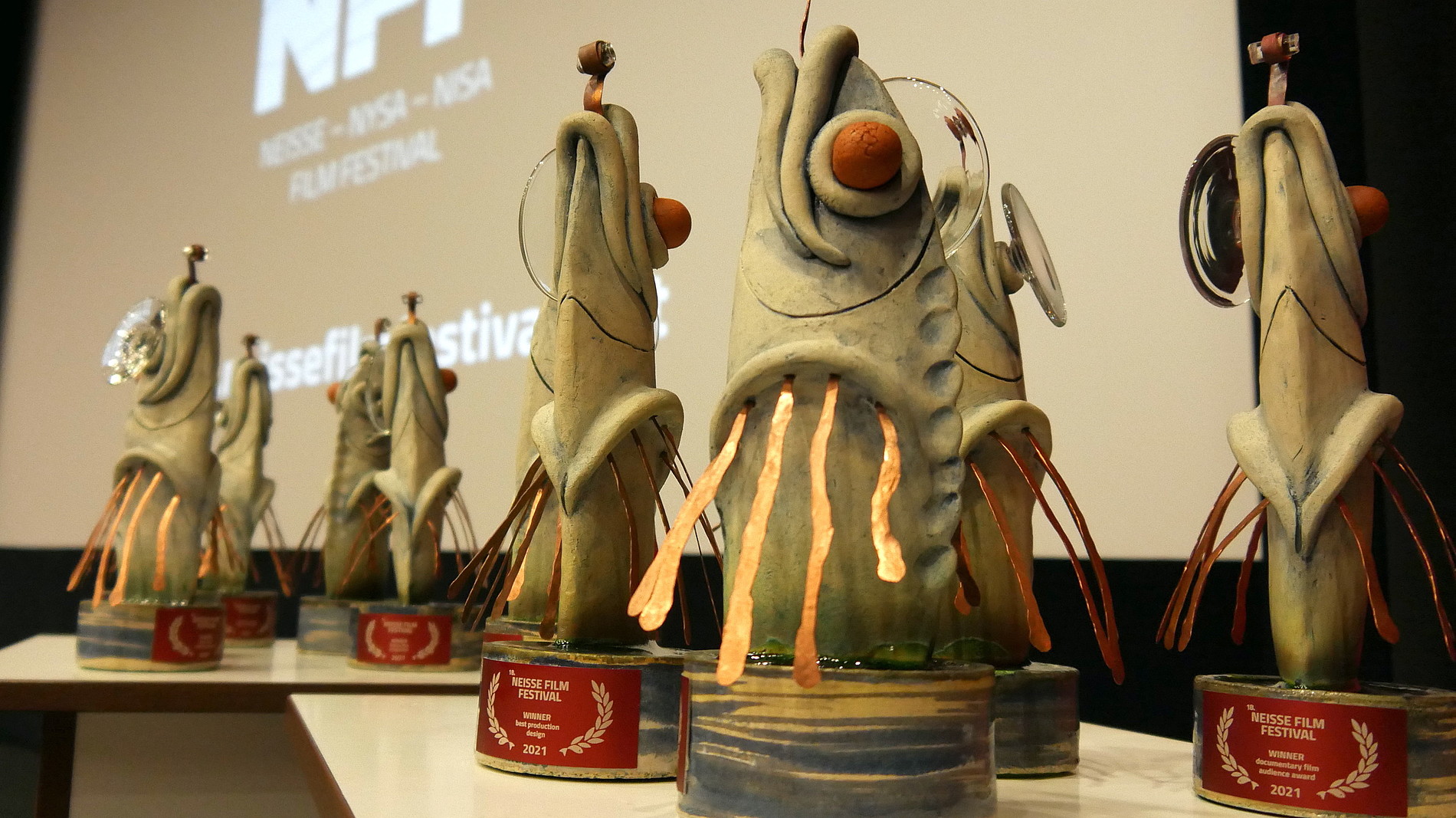
The awards ceremony will take place on May 21 at the Ebersbach Film Theater. In addition to the best feature films, documentaries, and short films, as well as the audience favorites, awards will also be presented for the best acting achievement, best screenplay, and best production design. Furthermore, a special prize will be awarded to a film dedicated to fostering an understanding of the cultural and ethnic differences between various countries or the commonalities they share.
The complete program and the latest news about the Neisse Film Festival can be found online at www.neissefilmfestival.net.


1st floor
1st floor