
Half-timbered houses in the digital age
The Umgebindehaus Information Center (IZU) hosted a lecture evening at the HSZG on the topic “Innovative Technologies in Umgebindehaus Research.”
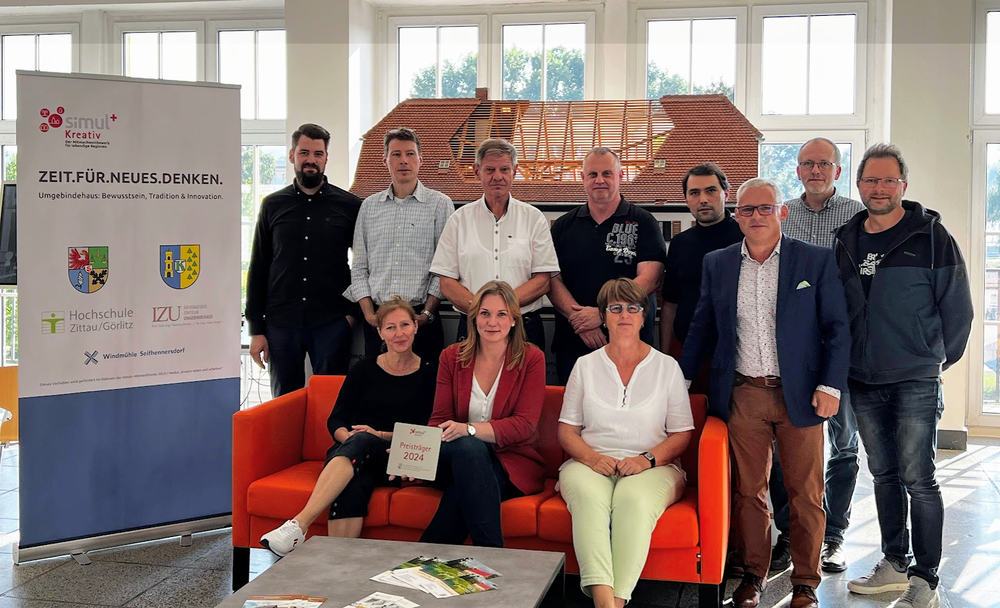
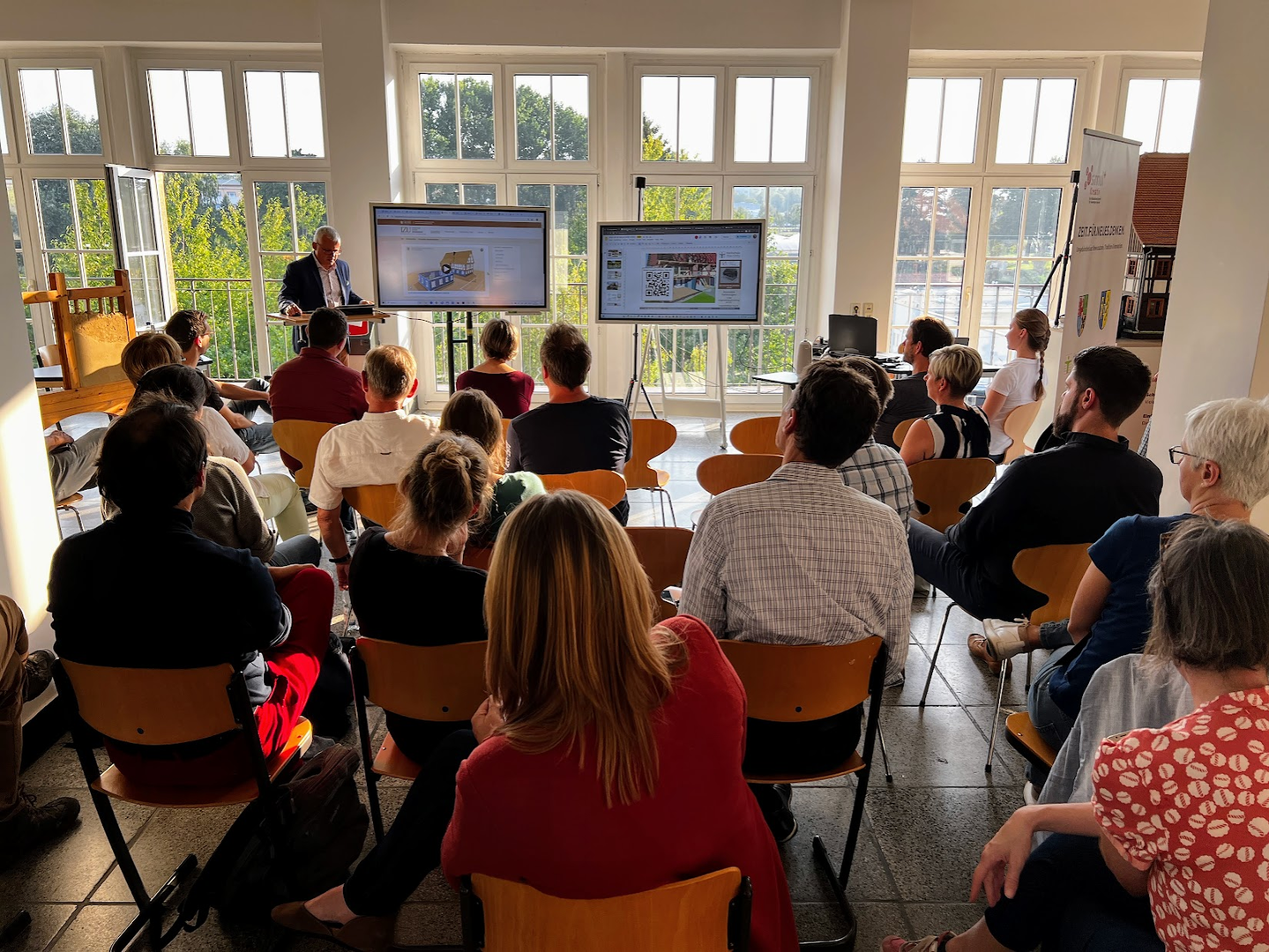
On September 18, 2024, the Umgebindehaus Information Center (IZU) hosted a lecture evening at the Zittau/Görlitz University of Applied Sciences. As part of the project “ZEIT.FOR.NEW.THINKING., the focus was on “Innovative Technologies in Umgebindehaus Research.” Our guests accepted the invitation and enjoyed an exciting evening that shed light on the future of Umgebindehaus architecture in the digital age.
Advisory Board Discusses Project Progress
The public lecture was preceded by a meeting of the advisory board. During the meeting, the work streams AWARENESS, TRADITION, and INNOVATION were discussed in depth, and concrete measures for the project’s further implementation were defined. Matthias Schwarzbach received widespread recognition for his valuable contribution to the project.
Speakers Present Digital Opportunities
Following the lecture, Prof. Thomas Worbs and Jan Fallgatter, along with student Sophie Steglich from the Housing and Real Estate Management degree programme and Lutz Westermann from .hapto GmbH, took the audience on a journey into the digital world of half-timbered house research. They presented innovative technologies ranging from 3D scanning and photogrammetry to virtual tours and VR applications.
Fascinating Insights into the Architecture
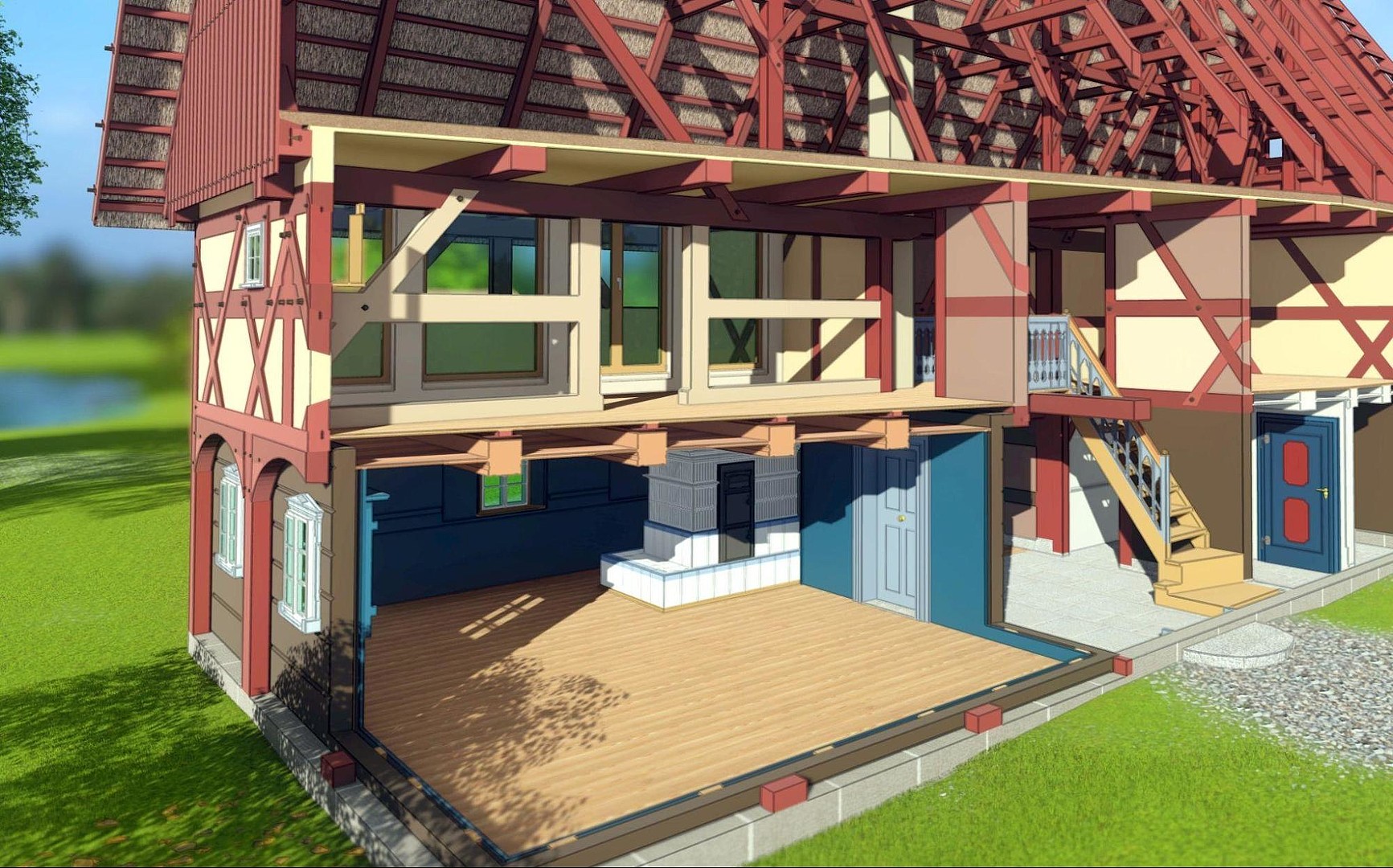
Using examples, the speakers demonstrated how digital models help capture the unique architecture of half-timbered houses in fine detail and bring it to life. Virtual tours allow visitors to explore the buildings from the inside and out and immerse themselves in the history of this architectural style.
Renovation with Digital Support - AI-Generated Visualization
Another focus was on visualizing renovation options. Digital representations make it possible to simulate various renovation scenarios and illustrate their impact on the Building’s appearance. This supports owners in their planning and decision-making and is intended to contribute to an efficient and successful renovation.
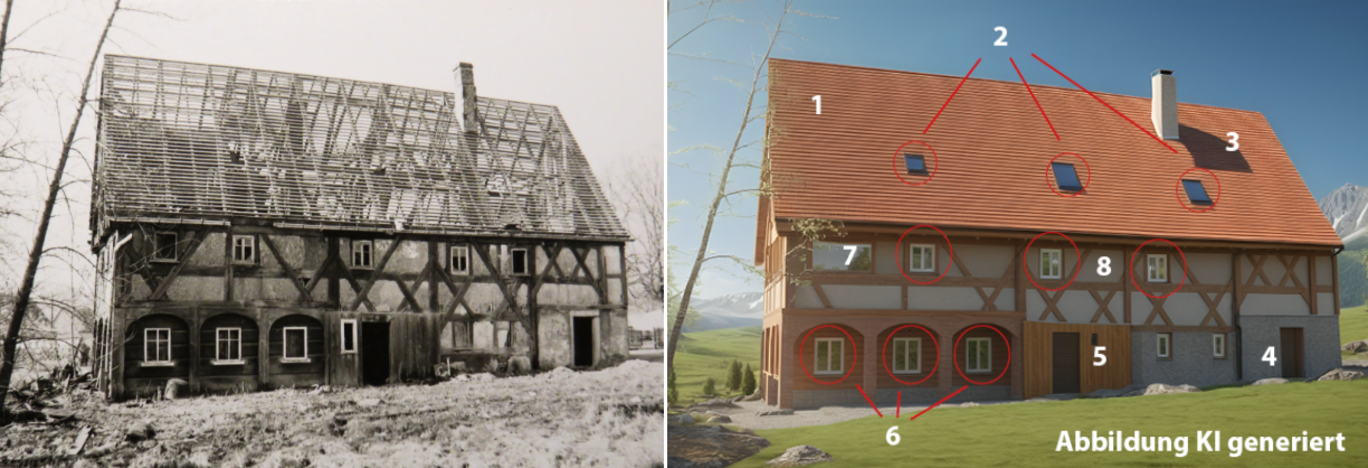
Current Shortcomings of AI-Generated Visualizations
AI images are misleading! When creating images with artificial intelligence, errors “STILL” occur that are particularly noticeable in historical buildings. For example, inappropriate structural elements and incorrect materials—such as those used for roofs or windows—are employed, or shadows are not calculated correctly.
- Failure to comply with historic preservation requirements (1, 2, 6, 7, 8): AI-generated visualizations “STILL” do not comply with the specific requirements of historic preservation. This is particularly evident in the incorrect choice of roofing materials, the inclusion of inauthentic skylights, unauthorized window designs, and atypical proportions.
- Geometric inconsistencies (3): The generated visualizations contain geometric errors. One example is the incorrect calculation of the shadow cast by the chimney onto the roof surface. These inaccuracies detract from the realism of the rendering.
- Unrealistic Material Properties (4, 5): The surface materials used often appear artificial and do not correspond to the materials typically used in building construction. This creates a sense of detachment and diminishes the visualization’s credibility.
A Bridge Between Tradition and Modernity: The Umgebindehaus App
Digitalization opens up new ways to preserve the cultural heritage of Upper Lusatia and make it accessible to future generations. Interactive applications and virtual experiences appeal particularly to young people and spark their interest in half-timbered houses.
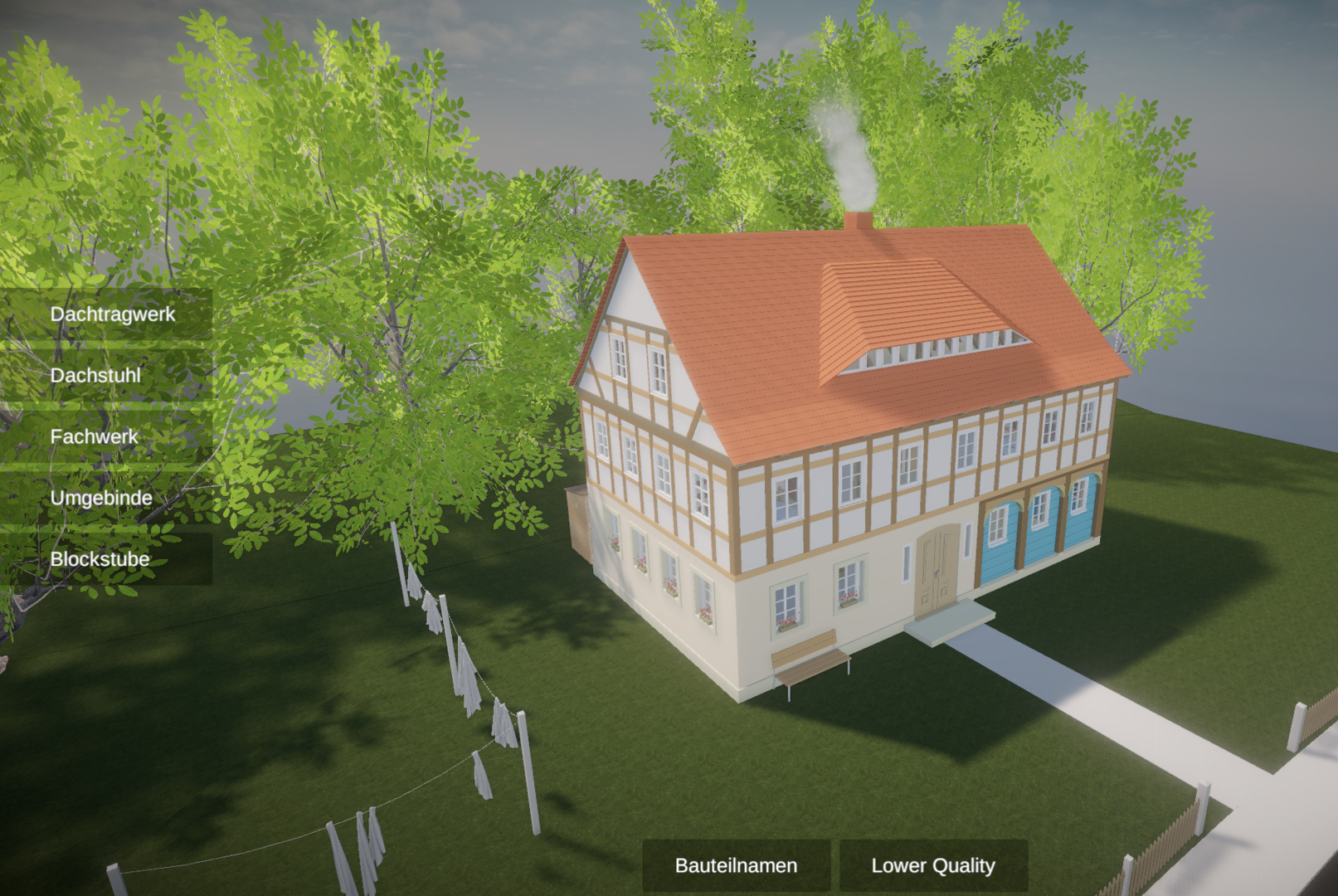
The Umgebindehaus app , developed in collaboration with .hapto GmbH, Umgebindehaus appprototype is an innovative tool that brings the tradition of Upper Lusatian Umgebinde houses into the digital world. Through virtual exploration and informative descriptions, it offers an interactive and vivid introduction to this unique architectural style.
Whether you’re an Umgebindehaus owner, a tourist, or simply someone interested in architecture—the app is aimed at a broad audience and brings the region’s cultural heritage to life. The app is thus not only an informative companion but also a valuable educational tool.
A Successful Evening with a Look Ahead
The lecture evening in Zittau was a great success and impressively demonstrated how tradition and modernity can be combined. Digitalization offers a wide range of opportunities to research, renovate, and preserve the half-timbered houses of Upper Lusatia.
It will be exciting to see how the “ZEIT.FÜR.NEUES.DENKEN.” project uses these technologies to combat vacancy and make the half-timbered houses fit for the future.
The academic hub, home to the Zittau/Görlitz University of Applied Sciences, is located in the heart of the “Umgebindeland” region. That is why the “Umgebindehaus Information Center” (IZU) is located here. Combining these historic Umgebinde buildings with the “Digital Building Survey” module opens up new ways to explore the buildings and can help raise young people’s awareness of the value of Umgebinde buildings.
”The Umgebindehaus Information Center (IZU) is based at the HSZG. It serves as the scientific point of contact for matters concerning Umgebindehaus-style buildings in Upper Lusatia. Its focus is on the specialized topics of construction, building physics, digitization, and real estate in rural areas. The Umgebindehaus Information Center (IZU) website provides comprehensive information on all aspects of Umgebindehäuser.

First floor