
Sector coupling! Huh?
This is why electricity, heat and electromobility should be linked together
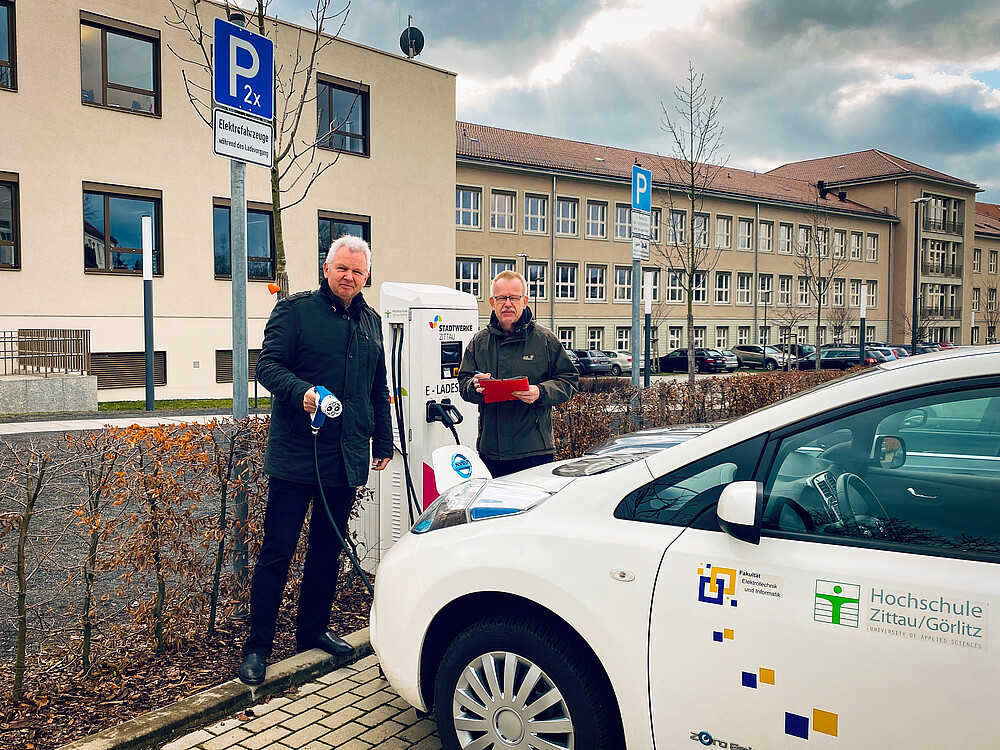
While an engineer might just nod knowingly when the buzzword "sector coupling" is mentioned, the reaction among the general public and in non-scientific faculties is likely to be rather different. For example, with a subtle: Huh?
The term "sector coupling" (sometimes also called sector coupling) is a pretty good one to grasp.
Prof. Haim and Volker Brade from the "Networked Mobility" sub-project of Saxony5 explain it like this:
“Heat generation in households, businesses, and the transportation sector still relies heavily on fossil fuels today. Unlike in the electricity sector, very little renewable energy is used in these areas. However, if, for example, solar power or the ‘waste’ heat generated during electricity production in mini-CHP (combined heat and power) plants is used for heating, this helps advance the energy transition in heat generation. Especially in rural areas, photovoltaics and the additional use of battery storage can create a self-sufficient electricity supply that offers many advantages. At the same time, this can also help relieve the strain on the power grids. Ideally, the large batteries in electric cars will take on exactly this function in the future.”
”Among other things, there are the “heating,” “electricity,” and “e-mobility” sectors, which are becoming increasingly interconnected and “support” one another. This allows for better balancing of the fluctuations in the power grid caused by renewable energy sources and improves efficiency.
At the HSZG, Prof. Haim and Volker Brade, among others, are working with researchers from the other four Saxon universities of applied sciences to explore exactly what such a smart integration might look like. All of this will become tangible in the soon-to-open e-mobility lab of the “Connected Mobility” Co-Creation Lab, a subproject of Saxony⁵.
An explanatory video on “sector coupling” has now been produced in close collaboration between Zittau/Görlitz University of Applied Sciences and Mittweida University of Applied Sciences:
Saxony⁵ is a collaborative project involving five universities in Saxony: Zittau/Görlitz University of Applied Sciences, HTW Dresden, HTWK Leipzig, West Saxon University of Applied Sciences in Zwickau, and Mittweida University of Applied Sciences. The goal of this project is to develop new, innovative solutions for knowledge and technology transfer.
You can find Saxony⁵ here on haw-sachsen.de as well as on the official project website.
Follow the activities of the five partner universities on Twitter.

1st floor