
New examination format at the HSZG
The newly introduced portfolio assessment promotes diversity, self-reflection, and support for the learning process.
At its meeting on November 17, 2025, the Senate of Zittau/Görlitz University of Applied Sciences approved the portfolio assessment as a new, university-wide assessment format. This format may be used in all existing and new degree programmes going forward. With this move, HSZG is taking another step toward competency-based, diversity-sensitive, and learning-process-oriented higher education.
In a portfolio assessment, students compile a structured collection of various work and learning products over the course of a semester. These documents reflect the individual learning process, the development of competencies, and an in-depth, process-oriented engagement with the module content.
The portfolio assessment can take various forms, such as written papers, presentations, programming projects, visualizations, audio and video recordings, exercises, or project reports.
Typically, the portfolio also includes an introduction and a concluding reflection in which students analytically assess their learning progress. The specific structure of the portfolio assessment is determined by the requirements of the respective module.
Unlike traditional assessment formats such as invigilated (written) examinations or 'written assignments / semester papers / term papers', the portfolio assessment focuses on the continuous engagement with course content, individual strengths, and the diversity of forms of expression. This provides instructors with a nuanced picture of their students’ learning progress and the development of their competencies.
A Milestone in Teaching Quality Improvement
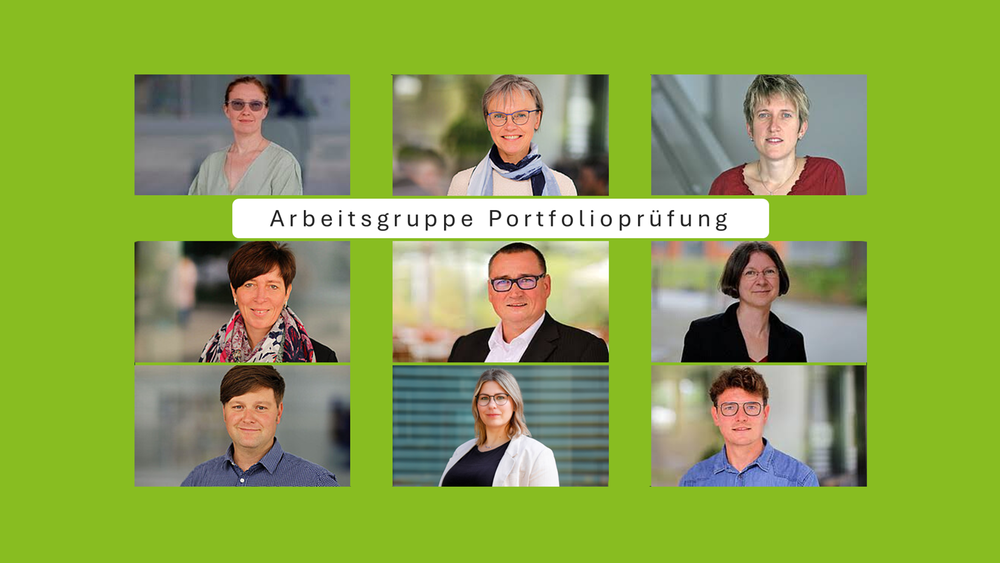
The introduction of portfolio assessment is the result of intensive work by a university-wide expert group. Chaired by the Vice President for Education and Sustainability, Professor Małgorzata Maćkowiak, the Portfolio Assessment Working Group efficiently and purposefully developed a standardized definition of portfolio assessment for incorporation into the relevant academic documents, as well as a guide. The guide explains the objectives, structure, and implementation of the format and offers faculty practical guidance for designing portfolio assessments.
Prof. Dr. phil. Małgorzata Maćkowiak (Vice President for Education and Sustainability, Chair)
Prof. Dr. rer. nat. Antje Petzold (Faculty of Social Sciences)
Prof. Dr. rer. medic. Martin Knoll (Faculty of Managerial and Cultural Studies)
Maria Zumpe, M.A. (Faculty of Managerial and Cultural Studies)
Sebastian Benad, M.A. (Faculty of Managerial and Cultural Studies)
Prof. Dr. rer. pol. Jana Brauweiler (Faculty of Natural and Environmental Sciences)
Dr. Lucie Koutková (Director of Academic Affairs and International Relations)
- Dr. Peggy Sommer (Office of University development and communication/Quality management division)
Daniel Winkler, M.A. (Advisor for Higher Education Pedagogy)
“The format we developed is the result of the work of highly motivated people who collaborated with a spirit of innovation, experience, and genuine passion,” explains Professor Maćkowiak. The Vice President for Education and Sustainability continues:“The close collaboration with this dedicated team of experienced academics has once again brought home a fundamental truth to me: A good work environment fosters an exceptionally productive team spirit—and it is precisely this that leads to unique, forward-looking results. In a short period of time, a concept has emerged that is both scientifically sound and highly practical.”
The introduction of portfolio assessment is a milestone in the ongoing development of our assessment culture. It embodies diversity, self-reflection, and a new approach to learning: moving away from one-time exams and toward continuous support of individual learning processes.
”Professor Maćkowiak emphasizes that this format will strengthen individualized learning paths, foster reflective thinking, and systematically support the development of competencies among HSZG students. “This is exactly what modern university teaching is meant to achieve—and I am proud to have helped shape this process together with such an inspiring team,” the Vice President concludes .
What sets the portfolio assessment apart?
The portfolio assessment aligns with modern higher education pedagogical recommendations and creates added value for students and faculty that goes beyond traditional forms of assessment. The format is based on three core elements:
Diversity:
Students can demonstrate different strengths and forms of expression through the various formats. Portfolios reveal what often remains hidden in traditional exam formats: creativity, problem-solving strategies, team dynamics, reflective skills, and digital achievements.
Self-reflection:
A central element of the portfolio assessment is the analytical reflection on one’s own learning process. The HSZG evaluates this not based on personal self-reports, but on the quality of the analysis: How coherently do students organize their learning process? What subject-specific development paths do they identify? And what next steps do they derive from this? The portfolio assessment thus strengthens metacognition, self-regulation, and learning awareness, and follows established standards of competency-based higher education.
Monitoring Learning Progress:
Portfolio assessments provide greater transparency regarding learning processes and enable formative feedback throughout the semester. This promotes continuous learning, strengthens self-regulation, and supports students in consciously shaping their individual development paths.
Portfolio assessments give students the opportunity to visualize, analyze, and actively guide their learning process. They allow for a nuanced evaluation that does justice to the diversity of student competencies and is not limited to isolated examination components. This format creates space for individuality while also enhancing the quality of teaching and learning.
”A Step Toward the Future of the Examinations Landscape
With the introduction of portfolio assessment, HSZG is embracing current trends in higher education pedagogy that have for years advocated for a greater focus on the learning process, equity in diversity, and competency-based assessment. Portfolios are widely regarded throughout Germany as a forward-looking format that demonstrates its strengths particularly in interdisciplinary, project-based, and application-oriented degree programmes.
For me, a portfolio assessment is a wonderful opportunity to truly watch students grow. It makes learning processes visible—not just the results—and gives students the chance to understand, reflect on, and consciously shape their own learning. I’ve seen how this format enables a nuanced, fair assessment because it does justice to the diversity of their abilities and isn’t limited to a single exam situation.
”Professor Maćkowiak emphasizes that portfolios create space for individuality, for personal paths, and for genuine engagement with one’s own progress. At the same time, she feels how much they can enhance the quality of teaching and learning. “For me, this format is a real benefit for everyone involved and an important step toward modern higher education. The Senate’s decision is therefore not just an organizational step, but a commitment to a contemporary assessment culture at the HSZG.”
The guidelines for portfolio assessment provide a reliable yet flexible framework that accommodates the diverse academic cultures at HSZG. They are available to all university members on the intranet/HIP and ensure high-quality, legally compliant implementation.
Faculty members who wish to use this format in the future may contact Daniel Winkler for guidance.
Portfolio assessments will be introduced gradually, beginning no earlier than the summer semester of 2026. This assessment format will then be listed in the module catalog. Faculty members who use this assessment format must inform their students of the specific details within the first four weeks after the start of the module.
1st floor

4th upper floor