
Multicultural way ahead!
Görlitz is the most international city in Saxony. Professors on living internationality at both university locations.

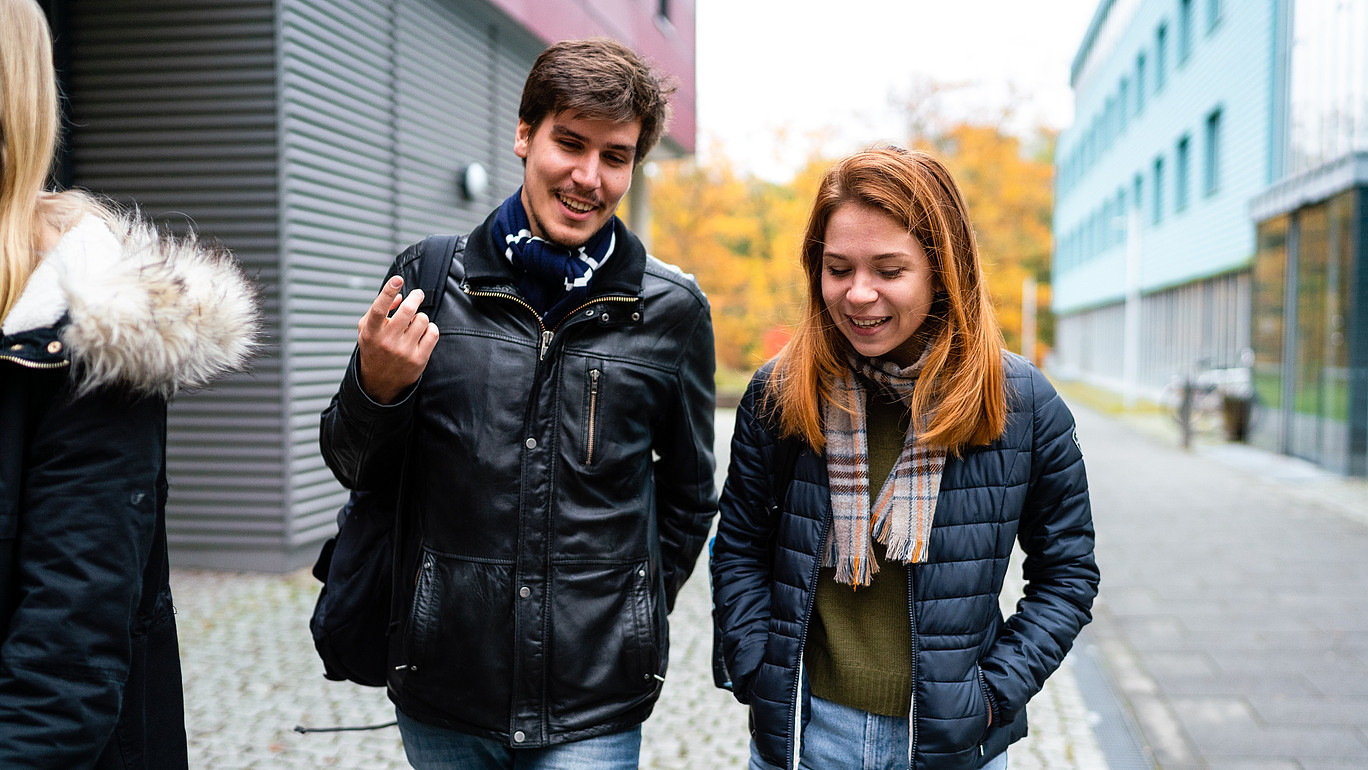
The term multiculturalism is used to describe a peaceful, mutually beneficial coexistence, cooperation and interaction between different cultures. Professor Matthias Theodor Vogt has always been committed to this philosophy. He was appointed to the Faculty of Managerial and Cultural Studies for the areas of cultural policy, cultural history and intercultural cooperation. Currently, he has been studying statistical data from the State Office of Saxony and the city of Görlitz in detail, as well as data from various employers. The result is that the city of Görlitz is more multicultural than expected in direct comparison with Saxon conurbations.
"Görlitz is the most international city in Saxony in terms of the number of residents with their main place of residence," emphasizes Professor Vogt.
”This is a theory backed by hard data that comes as no surprise to the cultural policy expert, as he experiences the international atmosphere of the HSZG’s Görlitz campus on a daily basis through his teaching in the culture and management degree programme.
Prof. Dr.-Ing. Frank Worlitz, Dean of the Faculty of Electrical Engineering and Computer Science, has a similar experience. He is a visiting lecturer and program coordinator for mechatronics at the Sino-German University of Applied Sciences (CDHAW). In this role, he regularly mentors Chinese students who are visiting the university in Zittau as part of the exchange program with Tongji University. He also enjoys seeing firsthand the progress made by German mechatronics students, who, in turn, gain valuable practical experience in Shanghai.
We have earned the very good reputation of our international exchange programs over many years. Prof. Dr.-Ing. Frank Worlitz
”In this interview, the two professors talk about what internationality looks like in practice at both HSZG campuses.
Dear Prof. Vogt, You teach at the Görlitz campus, which—as you have noted—is, statistically speaking, the most international city in Saxony. What does “lived internationalism” at a university mean to you?
It’s not just about learning about distant places from television, but when students in the “culture and management” program can hear firsthand accounts from our doctoral students about France, Georgia, Cameroon, and Mongolia—and discuss them. Or when they study alongside classmates from Slovakia, Hungary, or the Baltic states. Or when they can freely choose any country in the world for their semester abroad—both the location and the course modules. Or when they earn an entire German-Hungarian dual degree right here in Pécs. Or when a colleague from Tbilisi State University actually comes to Görlitz with his wife and child, and we teach a joint research seminar in English. Or when, every two weeks, a speaker from far away gives a guest lecture at the East-West College. Or when we regularly take shorter field trips to Wrocław and Prague and longer ones to Vienna and Budapest. Studying in a border town like Görlitz/Zgorzelec offers enormous advantages.
Culture and Management, Tourism Management, and soon International Business Communication—the HSZG offers a diverse range of programs for those interested in international experiences. How important is intercultural collaboration in teaching to you?
A crucial one. Anyone who decides to pursue a degree is aiming for a highly qualified and well-paid career. And it’s not enough to just be able to order a beer in broken English. You have to be able to engage with people whose societies function differently than German society. And just do the math: If 80 million of nearly 8 billion people live in Germany, that’s only one percent. The rest make up no less than 99 percent of the people with whom we want to interact peacefully and work together. The program must prepare students for this in terms of content, interpersonal skills, and geographical context. If I’m not mistaken, I was the first university professor in Saxony to be appointed to the field of intercultural cooperation. That makes me all the more pleased to see the importance this field now holds in so many professions.
How do you perceive the collaboration between your international students and their German peers on an intercultural level?
As a great asset. We’re currently experiencing a climate of opinion that shies away from complexity and relies on simple answers; Thomas Bauer has called this the “simplification of the world.” Collaborating with their international peers offers German students an opportunity to realize just how much we don’t know, because we’re trapped in a cage of unambiguity specific to our nation or social class and are therefore unable to recognize the opportunities offered by ambiguity. And isn’t it the very essence of science that we can recognize differences, distinctions, and otherness and name them without false zeal?
As an expert in cultural history, you deal with various aspects of lived internationalism. What is your current project?
At the moment, I’m concerned about how the nations of the world—which have accumulated unprecedented debt due to COVID-19 measures—can preserve the arts and their institutions. As a visiting professor at the Pontifical Gregorian University, I worked with students from the Congo, Bolivia, and many other countries during the 2020–21 academic year to develop cultural policy strategies for their respective home countries. This kind of dialogue is truly wonderful: these young people are, of course, much more connected to their own countries.
My current project, on the other hand, is a photo exhibition titled “Cameroon Through the Eyes of a Thousand Women.” We’ll open it on September
2 at 7:30 p.m. in Kirschau here in Upper Lusatia and later show it in Wrocław and Liberec. When Polish, Czech, and German students discuss issues with African artists, all four groups grow closer.
In which areas can multicultural cooperation at HSZG still be expanded?
In the English-language modules. If each of our degree programs had a set of, say, ten modules, significantly more visiting students could come to us and contribute to the atmosphere. It’s good that the new university administration has recognized this opportunity and is working on it at a rapid pace.
- You can see here how Saxony’s foreign population has changed from 2011 to 2019.
- You can see here just how international the “Culture and Management” degree programme at the Görlitz campus is.
- In his latest academic article, “On the Threshold of Visibility and Dignity,” Prof. Dr. Vogt explores the long history of Polish migrants in Görlitz/Zgorzelec, with a particular focus on the role of the Roman Catholic and Evangelical United Churches.
Read the essay here in German and in English. - Prof. Dr. Vogt is available at any time to answer your questions.
Professor Worlitz, as the program coordinator for mechatronics at the Sino-German University of Applied Sciences (CDHAW), you are accustomed to interacting with Chinese students who come to the HSZG in Zittau. How do these students perceive our university?
Our university enjoys a very good reputation among Chinese students. This is also evident from the fact that we admit the most students within the consortium, and the HSZG often ranks first or second on their wish lists. In recent years, the top students in their classes have consistently been in the Zittau group. The fact that two participants from the last summer school subsequently chose to come to Zittau is also a sign of the good impression the HSZG makes. That’s not something to be taken for granted. From the perspective of Shanghai, Germany is associated with Munich, Berlin, and Hamburg, and the parents who cover the costs of their children’s education look very closely at where their children will study in Germany. We have worked hard over many years to earn a good standing.
What’s behind the summer school program for Chinese students?
It has become a tradition for CDHAW students to attend a summer school in Germany during their semester breaks. What was new in 2019 was that the two-week trip to universities in Mannheim, Göttingen, Prague, Regensburg, and Munich also included a stop at the HSZG in Zittau. The summer school gives students the opportunity to learn about Europe and Germany and to explore potential university locations for their study abroad experience. In addition to selected experiments in the labs, the summer school program in Zittau included a tour of the Zittau Süd signal box, which is also used for teaching in the faculty. Of course, on such an occasion, a trip to the nearby Zittau Mountains via the narrow-gauge railway is a must. After pandemic-related suspensions of the summer school, we hope to resume the program next year.
For some time now, students in the mechatronics degree programmes have had the opportunity to participate in Tongji University’s CDHAW program to study in China for a portion of their degree. Students in Engineering Management can also take advantage of this opportunity. How did this come about?
At CDHAW, we began with the mechatronics, Automotive Service Technology, and Building Services Engineering degree programmes. In 2008, the Engineering Management degree programme was added. This program has developed well and, by far, enrolls the most German students at CDHAW. Of the total of 43 German students in 2020, 33 graduated with a double degree. This opportunity is also open to our students in the Business Informatics degree programme.
Mexican students are also frequent guests in the lecture halls of the Faculty of Electrical Engineering and Computer Science as part of the Mexican-German university cooperation. How do you experience student interaction and cultural exchange between Mexican and German cultures?
Two years ago, we welcomed Mexican students from Tec Monterrey to HSZG for the first time in the automation and mechatronics degree programme. The hospitality and openness of Mexicans in general are legendary. As a result, the students quickly make friends. The program is conducted entirely in English. The Mexican students attend lectures separately and not alongside German students. Interaction takes place primarily in the dorms or through the university’s sports programs. Another legendary event is the Mexican evening, organized by the South American students. Despite the pandemic, the program was able to continue. In the future, we will also be able to welcome Mexican students to the computer science degree programme in Görlitz.
- Here you can learn more about the CDHAW.
- Find out here why the CDHAW is a flagship project of the HSZG.
- In our campus interview, CDHAW student Xue Fan from China shares what he particularly enjoys about studying at the HSZG.
- Those interested in the German-Chinese dual Bachelor’s degree in mechatronics can contact Prof. Dr.-Ing. Frank Worlitz by email.
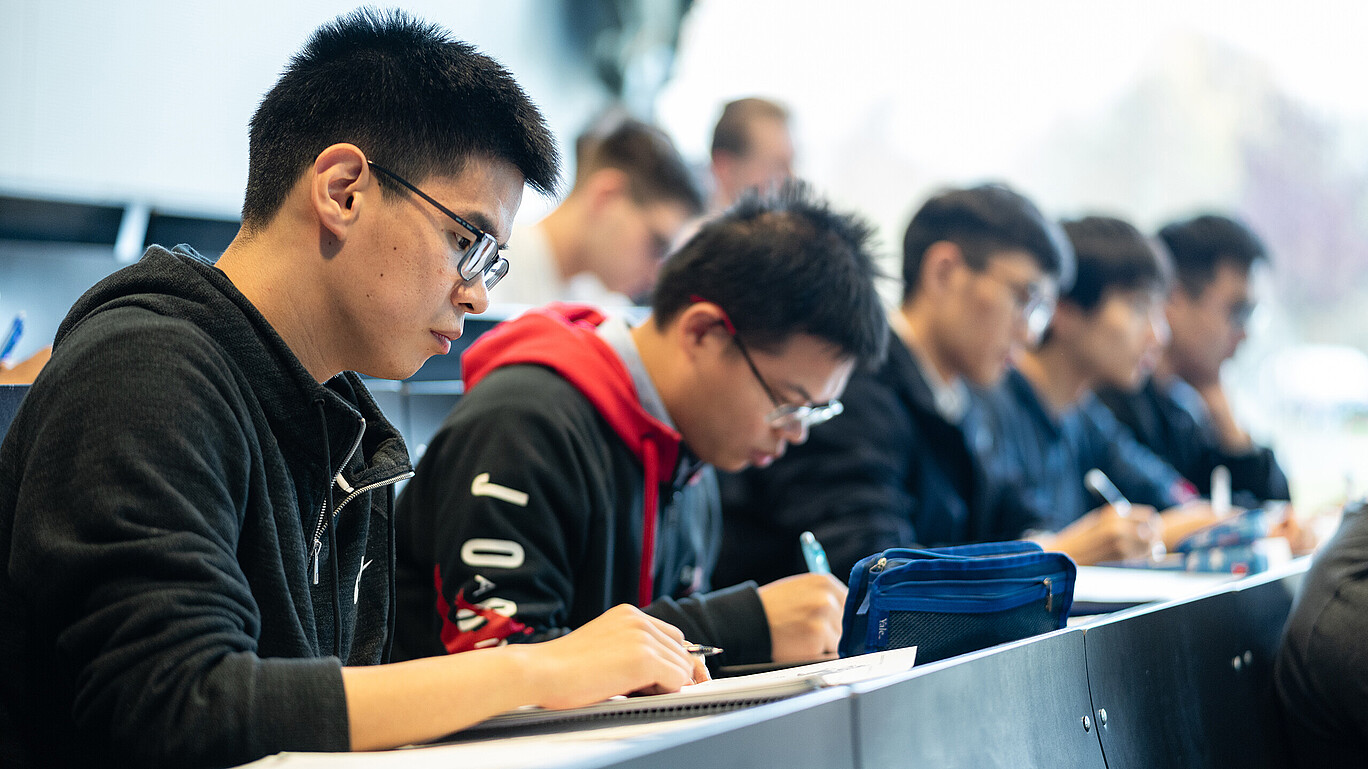
The fact that Zittau/Görlitz University of Applied Sciences is an international educational institution is underscored by the director of the university’s International Office, Ph.D. Lucie Koutková: “Our connections around the world are as diverse as our students’ aspirations and visions for the future.”
The university has higher education partnerships with over 100 institutions of higher education in more than 40 countries—from South Africa to the U.S., from Mexico through the Netherlands to Russia and China. At HSZG, the phrase “a springboard to the wider world” takes on a tangible meaning.
Are you interested in studying abroad? The International Office at HSZG will be happy to advise you!
You can obtain information about all partner universities and international collaborations through the university’s International Office.
The interviews were conducted by Cornelia Rothe M.A.