
AI tools to support scientific work
Professional development programs in higher education pedagogy provide information on AI tools, how to integrate them into university teaching, and how students benefit from them. Stefan Müller, a higher education pedagogy consultant, provides examples of areas of application.

What exactly is behind these AI tools that everyone is talking about these days? In an interview with Daniel Winkler, Stefan Müller, an advisor on higher education pedagogy at the West Saxon University of Applied Sciences in Zwickau, discusses how these tools can be integrated into university teaching and how students can benefit from them.
Information on continuing education in higher education pedagogy at the HSZG on this topic can be found below.
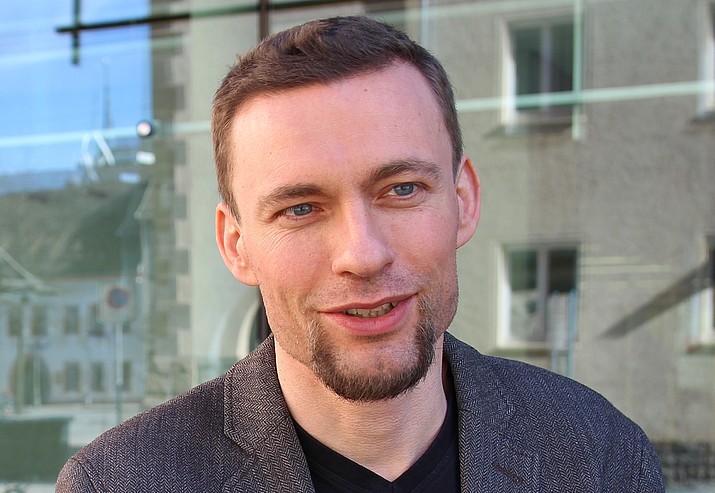
Daniel Winkler: Dear Stefan, in your course on October 26, 2023 in Görlitz, AI tools will be tested to support academic work. Can you give us some examples of these tools and their areas of application in an academic context?
Stefan Müller: In the course, we’re examining how students conduct academic work and which AI tools can effectively support that work. We’ve already gained some initial insights: together with the students, we’ve explored in which phases of the research process AI tools can be used. For example, we used text generators such as ChatGPT, Bard, and Bing Chat. We also utilized research tools like Elicit and Aomni. The students tested Deepl Write and ChatGPT to improve the linguistic quality of their work. In the course, we decide together with the participants whether the focus should be more on the AI tools themselves or on their pedagogically sound use in teaching.
An important aspect of your course is upholding academic principles when integrating AI tools into higher education. What challenges do you see in this context, and how do you address them?
Students often find it difficult to familiarize themselves with a topic and adhere to academic standards. We refer to overcoming these challenges as student learning. With the emergence of generative AI tools, students can sometimes bypass these learning activities and produce spurious academic results. On the other hand, AI tools offer an additional layer for the operationalization of academic principles. Therefore, a skillful didactic setting is required in which students learn to conduct academic work through the use of AI.
How can students benefit from using AI tools in an academic context, and what skills should they develop to successfully navigate these technologies?
Given the rapid pace of technological advancement, it is essential to prepare our students for an AI-driven world of life and work. The academic environment serves as a training ground where students can practice and refine their use of these tools. I believe universities have a responsibility to uphold high academic and ethical standards in this process: What we do serves the (academic) community and the preservation of human development. In the good case, our graduates will bring their skills in working with AI technology and their critical thinking—guided by scientific and ethical criteria—into society.
Thank you very much, Stefan, for your insights on this topic. We look forward to your continuing education workshop on university pedagogy on October 26 in Görlitz.
AI Tools and Students’ Academic Work
When: October 26, 2023, 2:00 p.m. to 5:15 p.m.
This class / course will explore AI tools designed to support academic work. It will outline instructional settings and learning pathways in which AI tools can be used while upholding academic principles and in preparation for academic or professional practice.
For more information, see the course description.
Stefan Müller has been a lecturer in higher education pedagogy at the West Saxon University of Applied Sciences in Zwickau since 2011 and has also been working for the Saxony Center for Higher Education Pedagogy since 2022. He teaches courses in higher education pedagogy, advises university faculty, evaluates classes / courses, and collaborates with professors to implement innovative teaching and learning projects. In addition, he supports students in developing their academic skills. Stefan Müller has been involved in teacher continuing education since 2004. Prior to that, he worked in therapist training and as a vocational school principal. His academic background lies in sports science and business administration (Master’s degree).
The programs offered by the Saxony Center for Higher Education Pedagogy (HDS) are designed for instructors at various levels of experience, from different professional groups, and across various departments who wish to engage in a structured way with selected topics in higher education pedagogy and/or simply want to highlight their commitment to teaching.
You can find the offerings from Zittau/Görlitz University of Applied Sciences, the event organizer, here.
You can find the complete lineup and registration information for the higher education pedagogy continuing education courses here.

4th upper floor

1st floor