
HSZG professor appointed to Science Council committee
Prof. Dr. Stefan Kornhuber will contribute his science policy expertise to the Science Council's Research Buildings Committee from the upcoming 2027 funding period.
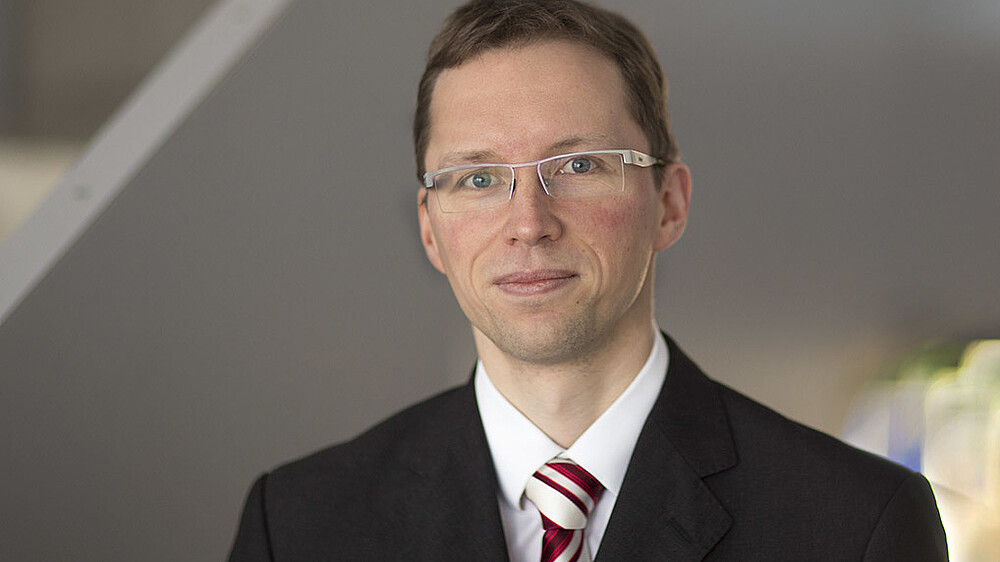
Zittau/Görlitz University of Applied Sciences is pleased to announce the appointment of Prof. Dr. Stefan Kornhuber to the Research Facilities Committee of the German Science Council. For a six-year term beginning with the upcoming funding period in 2027, he will represent the interests of universities of applied sciences (HAWs) on this important science policy committee alongside one other colleague. His work on this committee will begin in the summer of 2025.
The committee comprises a total of 16 scientists, two of whom represent universities of applied sciences. Prof. Dr. Kornhuber was appointed to the Science Council’s Committee on Research Facilities upon the recommendation of the DFG. As a professor of high-voltage engineering and theoretical electrical engineering at the HSZG, he brings his scientific excellence and expertise in science policy to the committee. His appointment is a sign of recognition for his outstanding achievements and his contribution to science. With his expertise and experience, he will represent the perspectives of the HAWs in the committee’s deliberations.
The Science Council is the central advisory body to the federal and state governments on issues relating to the content and structural development of science, research and the higher education sector in Germany. It was founded in 1957 and consists of a Scientific Commission and an Administrative Commission.
With the federalism reform, the joint task of university construction was abolished and general university construction was transferred to the sole responsibility of the federal states. At the same time, the federal and state governments have created a jointly financed instrument for investment in the higher education sector with the funding of supra-regionally important research buildings, including large-scale equipment.
The German Council of Science and Humanities has set up its own Research Buildings Committee to carry out the review process.
It consists of 16 scientists (each with one vote); the federal government (with eight votes) and eight federal states (each with one vote) are also represented. Its resolutions are passed by a simple majority. The Science Council decides on the funding recommendations submitted to it in accordance with its usual decision-making rules (two-thirds majority).
Further information on the Science Council's Research Buildings Committee can be found here.
Zittau/Görlitz University of Applied Sciences extends its warmest congratulations to Prof. Dr. Kornhuber on this significant appointment and wishes him every success in his new role.
1st floor
1st floor