
HSZG Expands Partnership with the German-Mongolian University
During a delegation trip with State Secretary Dr. Andreas Handschuh, Rector Prof. Dr.-Ing. Alexander Kratzsch signed a new cooperation agreement with the German-Mongolian University in Ulaanbaatar.
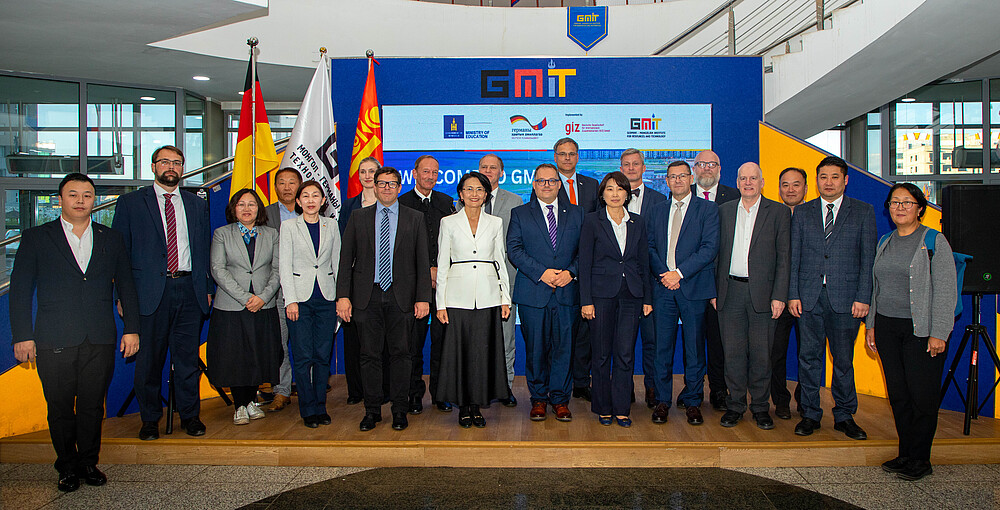
The Saxon-Mongolian university partnership, the training of future professionals, and new approaches to applied research were the focus of the delegation’s trip to Ulaanbaatar.
Prof. Dr.-Ing. Alexander Kratzsch, Rector of Zittau/Görlitz University of Applied Sciences, and Dr. Andreas Handschuh, Head of the Saxon State Chancellery and State Secretary for Federal and European Affairs, traveled to Mongolia from September 7 to 9, 2026, with a Saxon business and science delegation. The delegation was led by Dr. Handschuh. In addition to the Zittau/Görlitz University of Applied Sciences (HSZG), the scientific delegation included the Technical University of Freiberg (TU Bergakademie Freiberg) and the Dresden University of Applied Sciences. It was accompanied on site by the Saxon Science Liaison Office in Ulaanbaatar.
A key focus of the trip was the “1,000 Engineers” skilled-worker program, which operates under the patronage of the President of Mongolia. The program is designed to train Mongolian students at universities in Saxony and other German institutions.
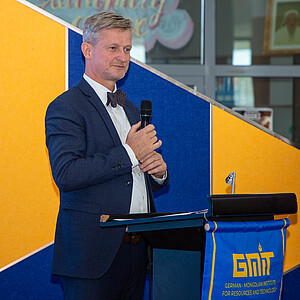
Saxony and Mongolia share a long and good tradition of cooperation, particularly in the fields of education and science.
”The trip also followed up on an exchange that had taken place just a few days earlier in Zittau. On August 27, Dr. Handschuh had visited the HSZG together with Christian Hartmann, the chair of the CDU caucus in the Saxon State Parliament. At the Zittau Power Plant Laboratory, the AQVA-Heat project, and the DLR_School_Lab, they learned about research, STEM education, and efforts to secure a skilled workforce. The discussions also focused on HighTech@HSZG and the University Development 2030+ initiative.
Collaboration with a New Research Focus
On September 8, Rector Prof. Dr.-Ing. Alexander Kratzsch and the Rector of the German-Mongolian University of Raw Materials and Technology, Prof. Dr. Battsengel Baatar, signed a new Memorandum of Understanding on the DMHT campus in Nalaikh.
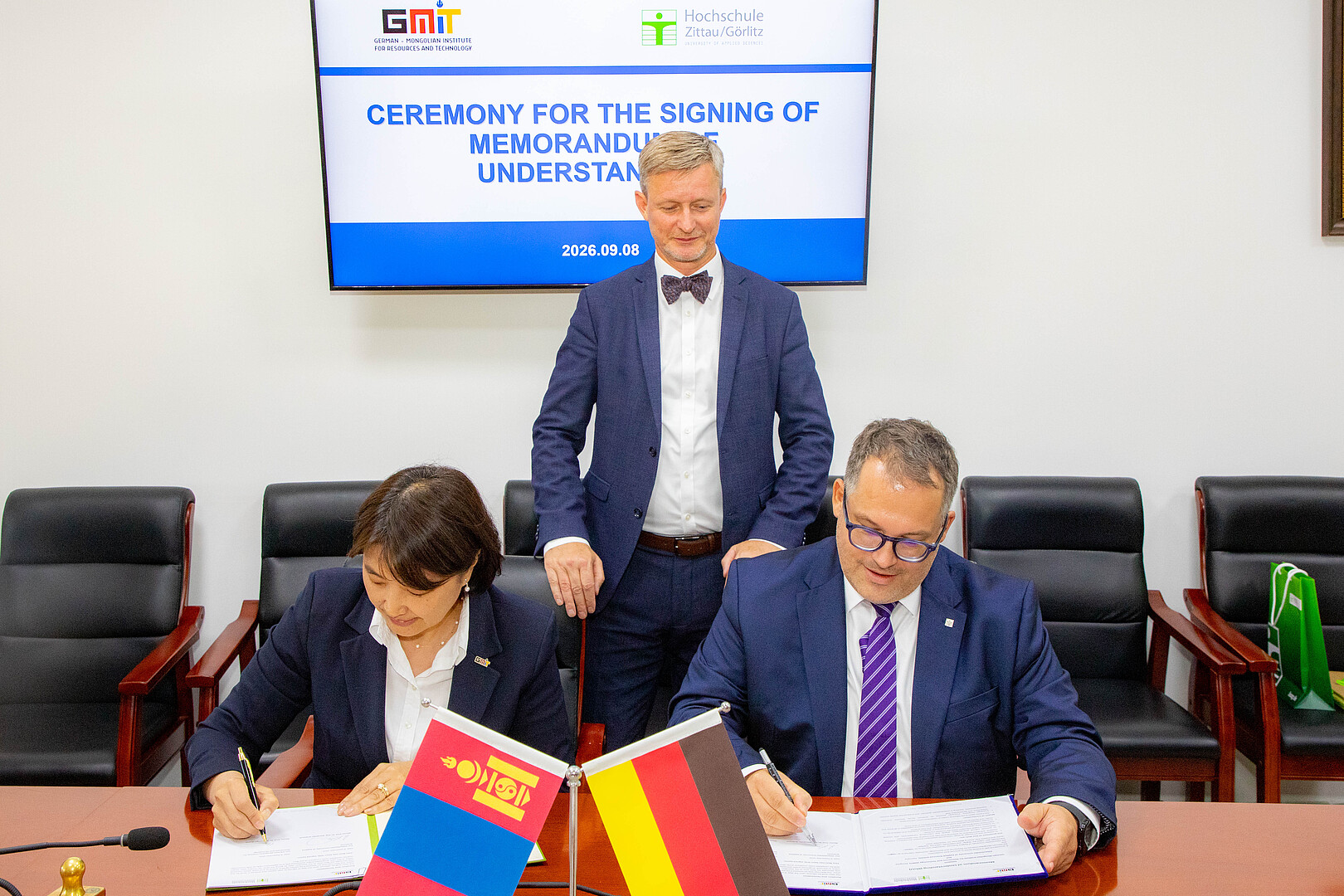
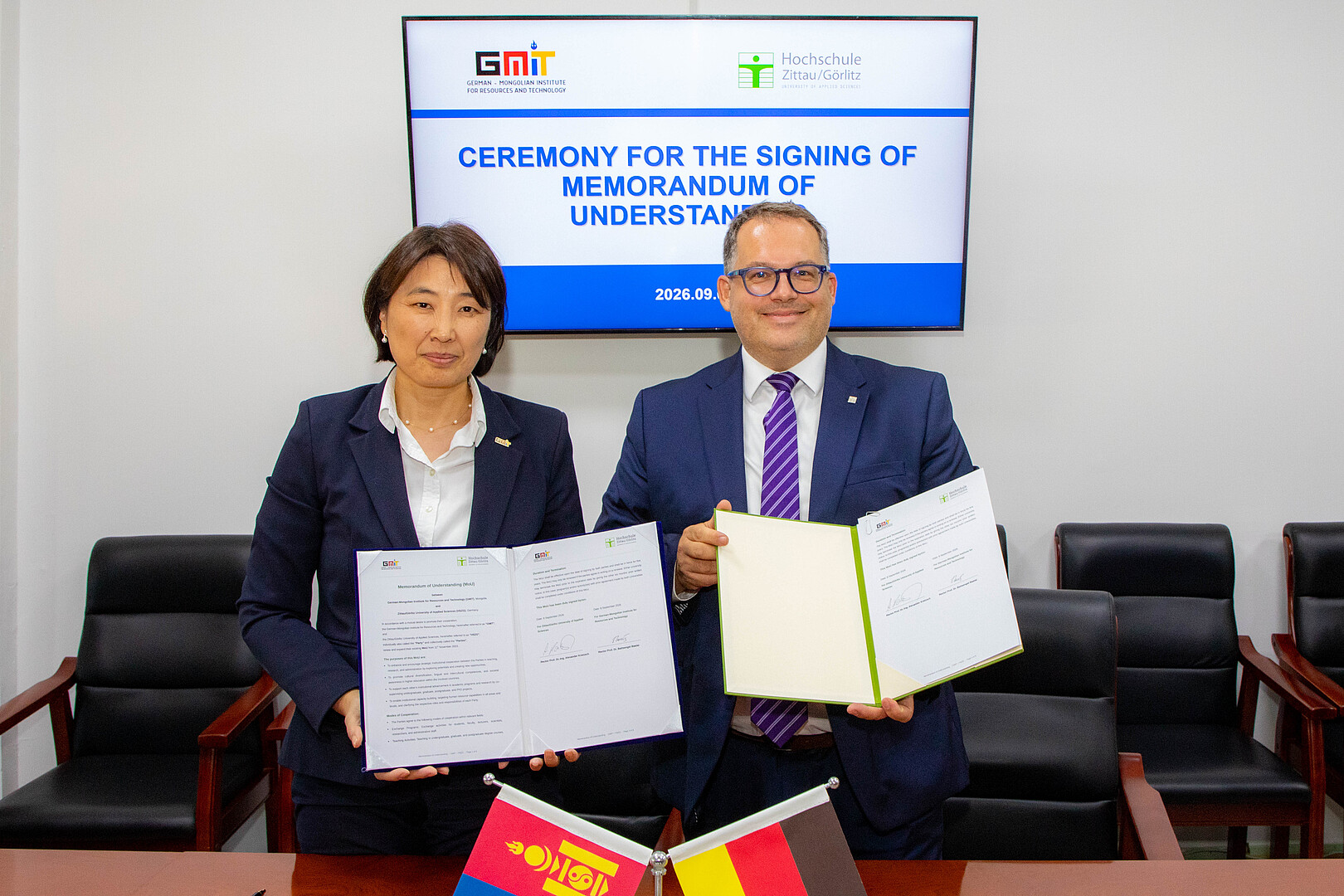
The agreement replaces the one signed in November 2023 and will remain in effect for another five years. Kratzsch also serves as chair of the DMHT advisory board. For the first time, an appendix to the memorandum identifies a joint research area: flexible DC power grids for sustainable mining.
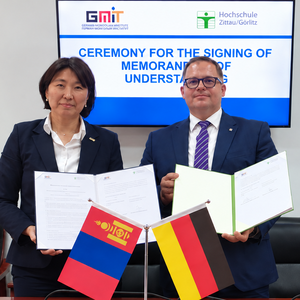
International higher education partnerships must be an integral part of a forward-looking workforce and research policy for Saxony. With the new research field on flexible DC power grids, the HSZG and the DMHT are establishing a clear scientific focus and laying the groundwork for developing practical solutions for a more sustainable energy supply in the mining industry. As part of the “1,000 Engineers” program, the partnership also opens up concrete educational pathways in Saxony—including at the HSZG—for Mongolian students.
”Ten Mongolian students are coming to Zittau
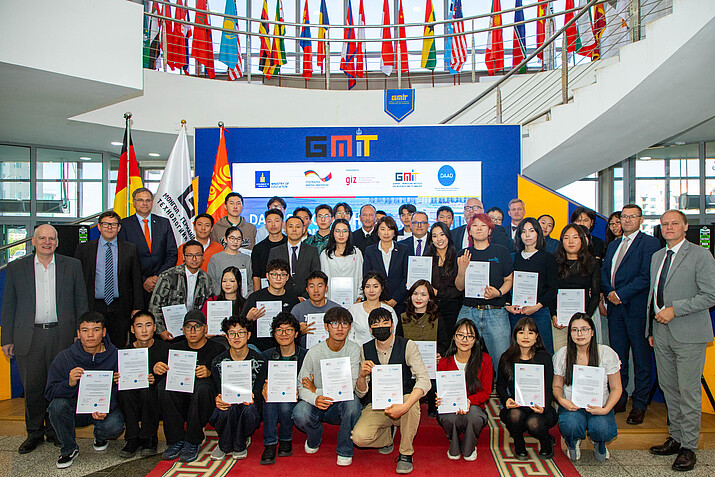
In the fall of 2026, ten students from DMHT will come to the Faculty of Electrical Engineering and Computer Science at HSZG. In Zittau, they will conduct laboratory experiments in high-voltage engineering under the supervision of Prof. Dr. Stefan Kornhuber. The visit was arranged during his working visit to DMHT in March 2026.
In addition, an internship for a DMHT student in a research project at the Faculty of Natural and Environmental Sciences is planned for the spring of 2027. There is also a regular exchange in the area of teaching. Since 2023, faculty members from HSZG have completed several teaching assignments at DMHT. Two additional teaching assignments by faculty members from the Faculties of Mechanical Engineering and Electrical Engineering and Computer Science are scheduled for late September.
Less Diesel, More Renewable Energy for Mongolia's Mining Industry
The appendix to the memorandum describes the specific requirements of the Mongolian mining industry. According to the appendix, mining operations are heavily dependent on imported diesel. Some electrical systems are powered by very long AC power lines. This results in significant voltage losses, high maintenance costs, and grid instability.
Flexible DC grids are intended to reduce energy losses and facilitate the integration of solar and wind energy as well as battery storage systems. Trolley-Assist is cited as a potential application. In this system, heavy dump trucks are supplied with power via DC overhead lines when traveling uphill.
HSZG contributes its expertise in the areas of energy systems, automation, and DC power grids, as well as the DC-LabSaxony. DMHT possesses knowledge of mining processes and the specific operating conditions in Mongolia.
The memorandum establishes the framework within which both universities can now develop concrete research projects. The details and financing of these projects will be set forth in separate agreements.
Cooperation in Both Directions
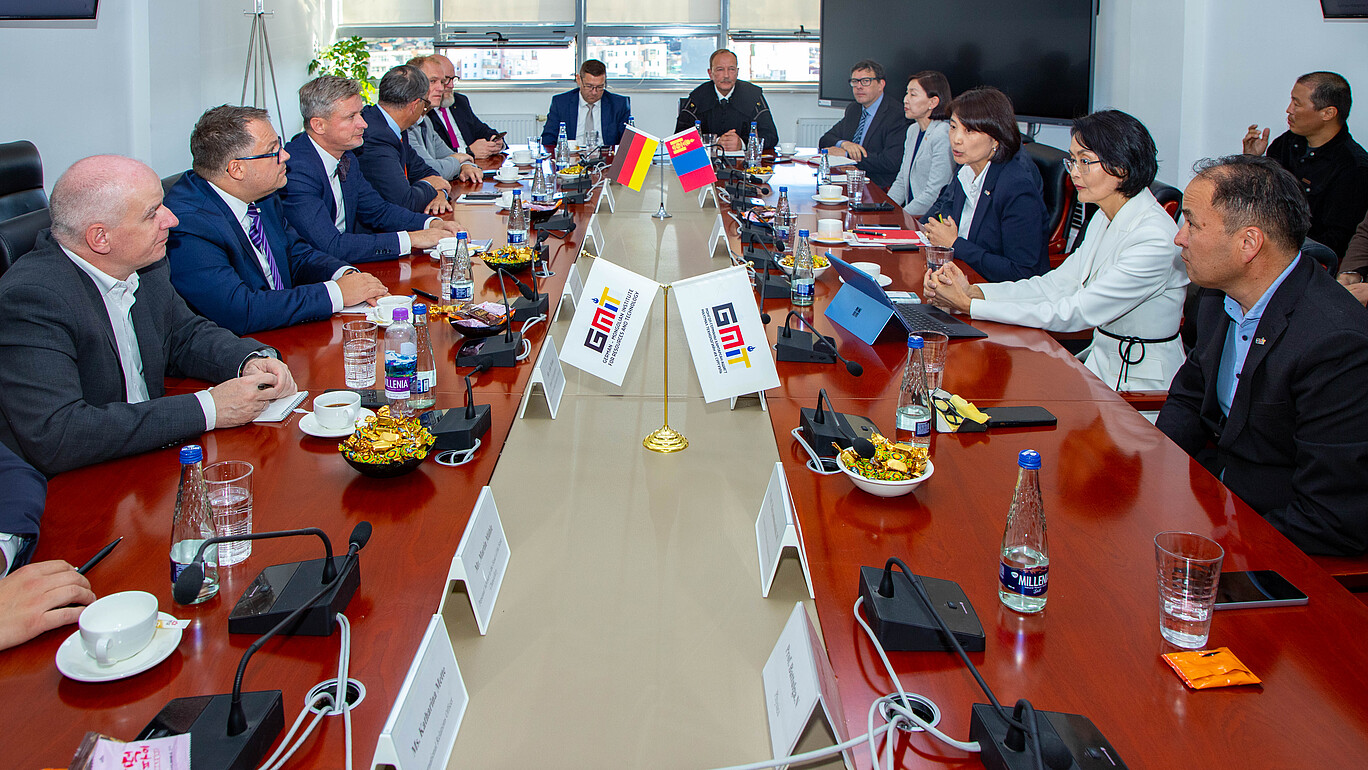
The new memorandum provides for exchange opportunities for students, faculty, researchers, and staff at both universities. The results to date show that the collaboration is already active in both directions: Since the partnership began in 2023, members of the HSZG have visited Mongolia seven times. In return, five delegations and study visits have taken place in Zittau and Görlitz. Most recently, in May 2026, a delegation from the Mongolian Ministries of Education and Finance visited the university.
The collaboration is supported by the German Society for International Cooperation (GIZ).
Your Contacts
1st floor

2nd upper floor