
Gender-specific barriers? Not a trace!
Two female and one male student from Mexico present a self-developed robotic arm as part of a mechatronic project.
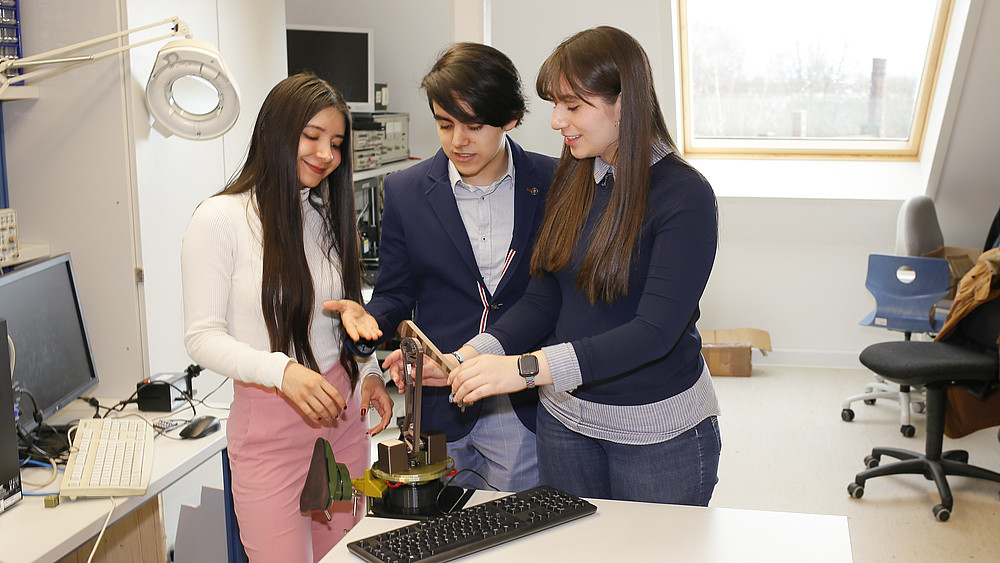
It moves and can fully extend its arm! What looks like a simple movement is the result of hard work by a group of students from Mexico. The visiting students from the Tecnológico de Monterrey—Alexia Damián Medina, Jimena Estrada Vázquez, and Miguel Ángel Valenzuela Bucio—developed a fully functional robotic arm as part of a mechatronics project and had to overcome major challenges in the process. They presented their project to the public in February.
“Part of their study abroad program at the Faculty of Electrical Engineering and Computer Science is carrying out a mechatronics project as part of the ‘Mechatronics Project Work’ module in the bachelor’s degree programme in automation and mechatronics,” explains Egmont Schreiter. The engineer with a Diplom is guiding the Mexican students through their project work. He knows exactly what matters: “The goal of the project is to demonstrate various motion sequences performed by the robotic arm using specially programmed software.”
A Challenging Project
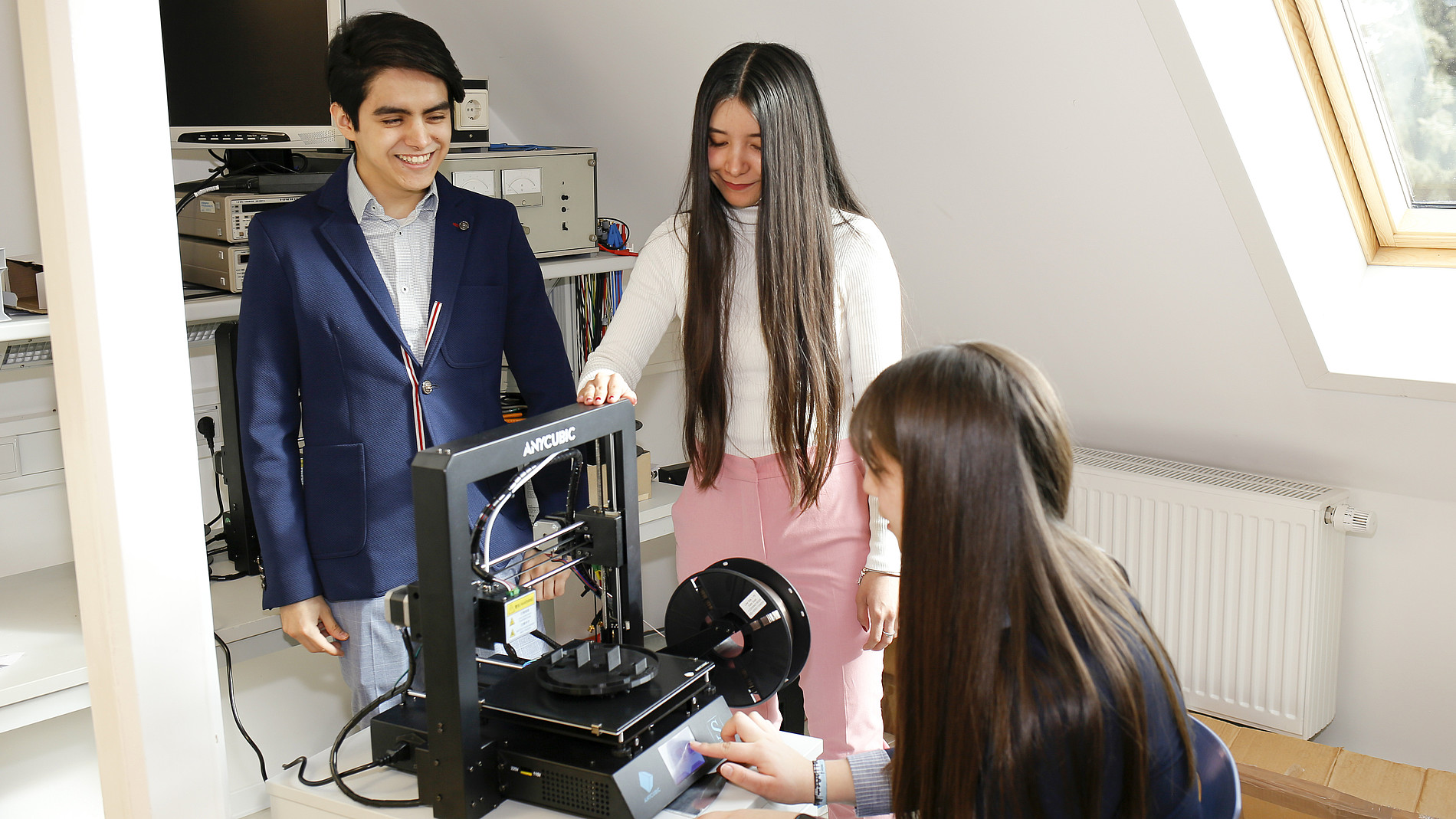
The requirements are very complex. In addition to design and additive manufacturing using a 3D printer, electronics must be wired, and software must be programmed for control, simulation, commissioning, and monitoring. Just as in a real-world professional setting, new insights must be incorporated into the work as it progresses. However, the students also have the opportunity to focus specifically on certain topics.
“The task illustrates the interconnection and interplay between mechanics, electronics, and software. Only when Mechanical Engineering, Computer Science, and Electrical Engineering are combined can a meaningful whole be created,” said Egmont Schreiter.
”A Great Learning Experience
How did the students find their project work? “This project was a great learning experience, ” says Alexia Damián Medina. “We had the opportunity to develop a project with almost complete freedom. That allowed us to improve our skills and knowledge and discover areas where we can do better.”
And how does a woman come to choose to study mechatronics, a field that seems to be dominated by men? “Studying mechatronics reflects my personal interests. Plus, as a woman in science, I’m paving the way for women who come after me. That’s exactly what motivates me to always deliver the best possible work and to keep improving every day.”
Jimena Estrada Vazquez couldn’t agree more: “Since mechatronics combines many engineering disciplines, I found it very interesting and comprehensive.” The student notes that it’s easy to see there aren’t that many women in this degree programme. That made it all the more rewarding to work on this project without any gender-based barriers. “We were able to contribute to every task, but we decided to assign specific tasks to each member to make our process more agile.”
For the Mexican students, the knowledge and experience they gained during their time at the university were immense. “Our goals for the robotic arm development allowed us to integrate many of the insights we’ve gained throughout our studies and to combine new ways of thinking and working with new technologies such as 3D printing and the Robotic Operating System (ROS),” explains Miguel Angel Valenzuela Bucio. In his view, the greatest achievement of this project was developing an operational arm that is scalable for other future projects. He notes that additive manufacturing and open-source technologies are key tools for such projects.
The Journey to Germany
HSZG academic advisor Alina Bulcsu assists Mexican students with all administrative matters. During the pandemic, this is primarily done via email. So how do the students actually get to Germany? “A list is usually compiled in April. The decision on who will be allowed to come here is made over the summer. We welcome students from Mexico every year, and in the upcoming winter semester, young Mexicans will once again continue their studies with us.”
Egmont Schreiter is certain that projects like the development of a robotic arm are a great asset for the students: “Undertaking a project like this offers visiting students good opportunities to make the most of their time in Germany. Experience shows that they can look forward to good internship contracts at large, renowned companies.”
What kind of experiences do Mexican students typically have in Germany? “As soon as they arrive, their interest in the country and life here seems to be sparked almost automatically,” says Egmont Schreiter, describing his impressions of the students from South America. “Some even return to pursue a master’s degree, though they must first complete two to three semesters in Mexico.”
The added value for the university itself from this collaboration should not be underestimated. After all, when a relatively low-cost robotic arm becomes available, it can open up entirely new areas of application in the laboratories of the university, companies, and research institutes.
“This semester was a great experience for us as engineers and, above all, on a personal level,” Miguel sums up, referring to the thrill of adapting to a new environment and culture while improving his language skills along the way. “Living and studying in Germany naturally helps develop language skills that can’t be learned from textbooks. Germany is now a part of our hearts. We’re excited to see what the future holds here as we continue our academic, professional, and personal journeys.”
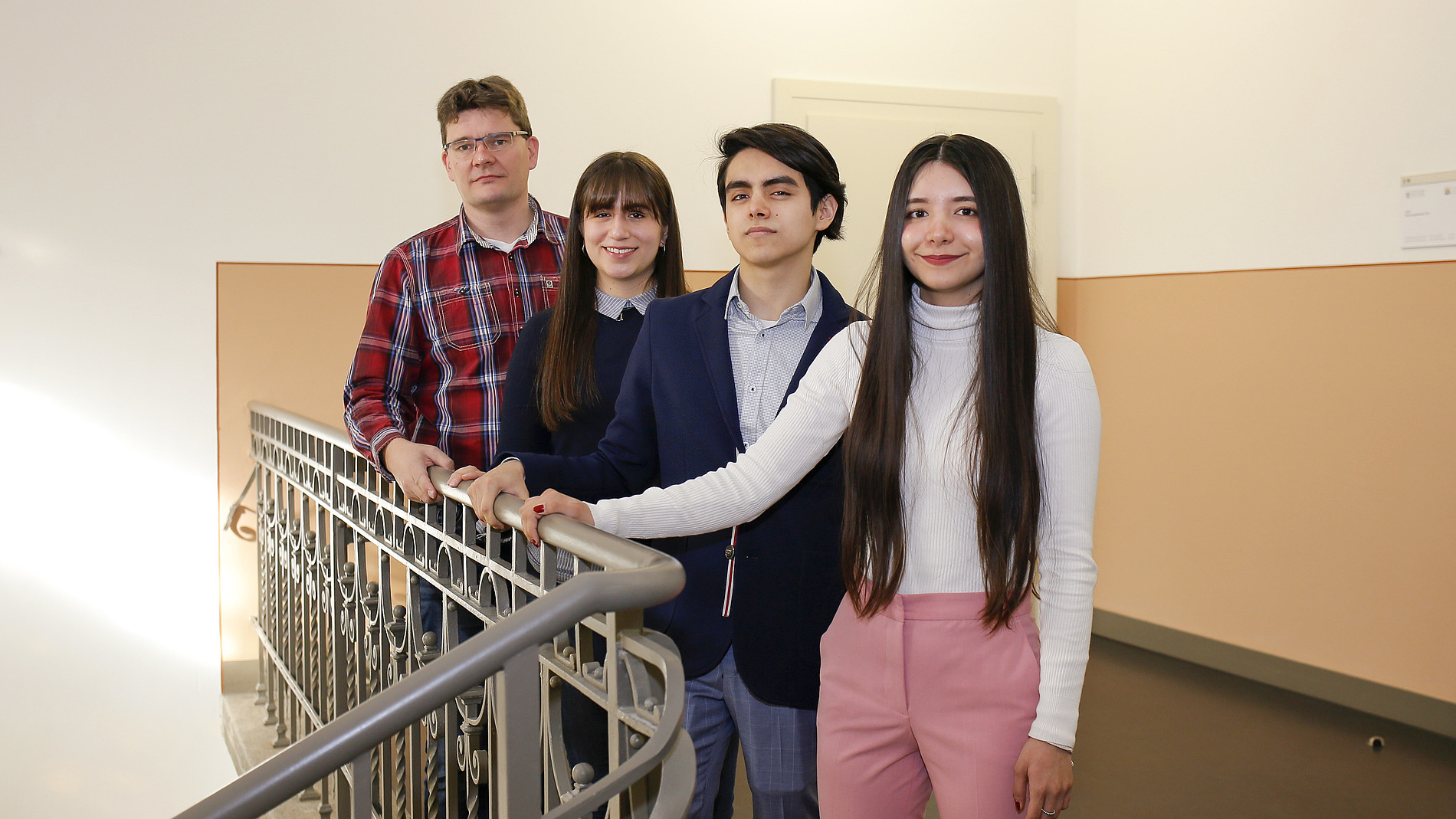
As part of a university network, the HSZG enables young Mexican students to study here.
Within the university, Prof. Uwe Schmidt serves as the program coordinator for the partnership with the Tecnológico de Monterrey. With over 25 campuses, the HSZG’s partner university is one of the largest universities in Mexico.
For more information about the partnership, visit uwe.schmidt(at)hszg.de.
Text: Cornelia Rothe M.A.